
Italy is a living museum of sacred architecture, and Romanic Churches stand among the most powerful reminders of the country’s medieval past. Built roughly between the 10th and 12th centuries, Romanic churches reflect a time of faith, stability, and regional identity. Thick stone walls, rounded arches, sturdy pillars, and symbolic carvings define this architectural style, which spread across Italy yet evolved uniquely from region to region.
In this comprehensive guide, we explore Romanic Churches in Italy from north to south, highlighting the most significant examples, their locations, and what makes each one special. Whether you are a traveler, historian, architect, or cultural enthusiast, this region-by-region journey will deepen your understanding of Italy’s Romanic heritage.
Understanding Romanic Architecture in Italy
Romanic architecture in Italy developed differently than in France or Germany. While sharing common features like rounded arches and massive forms, Italian Romanic churches often incorporated local materials, Roman ruins, Byzantine influences, and Lombard craftsmanship.
Key Characteristics of Romanic Churches
- Thick stone or brick walls
- Rounded arches and arcades
- Small, deeply set windows
- Sculpted portals with biblical symbolism
- Decorative façades using marble or stone bands
Unlike later Gothic structures, Romanic churches emphasize solidity and spiritual protection rather than height or light.
Northern Italy: Lombard and Emilian Masterpieces
Northern Italy hosts some of the most influential Romanic churches, shaped by Lombard traditions and imperial connections.
Lombardy
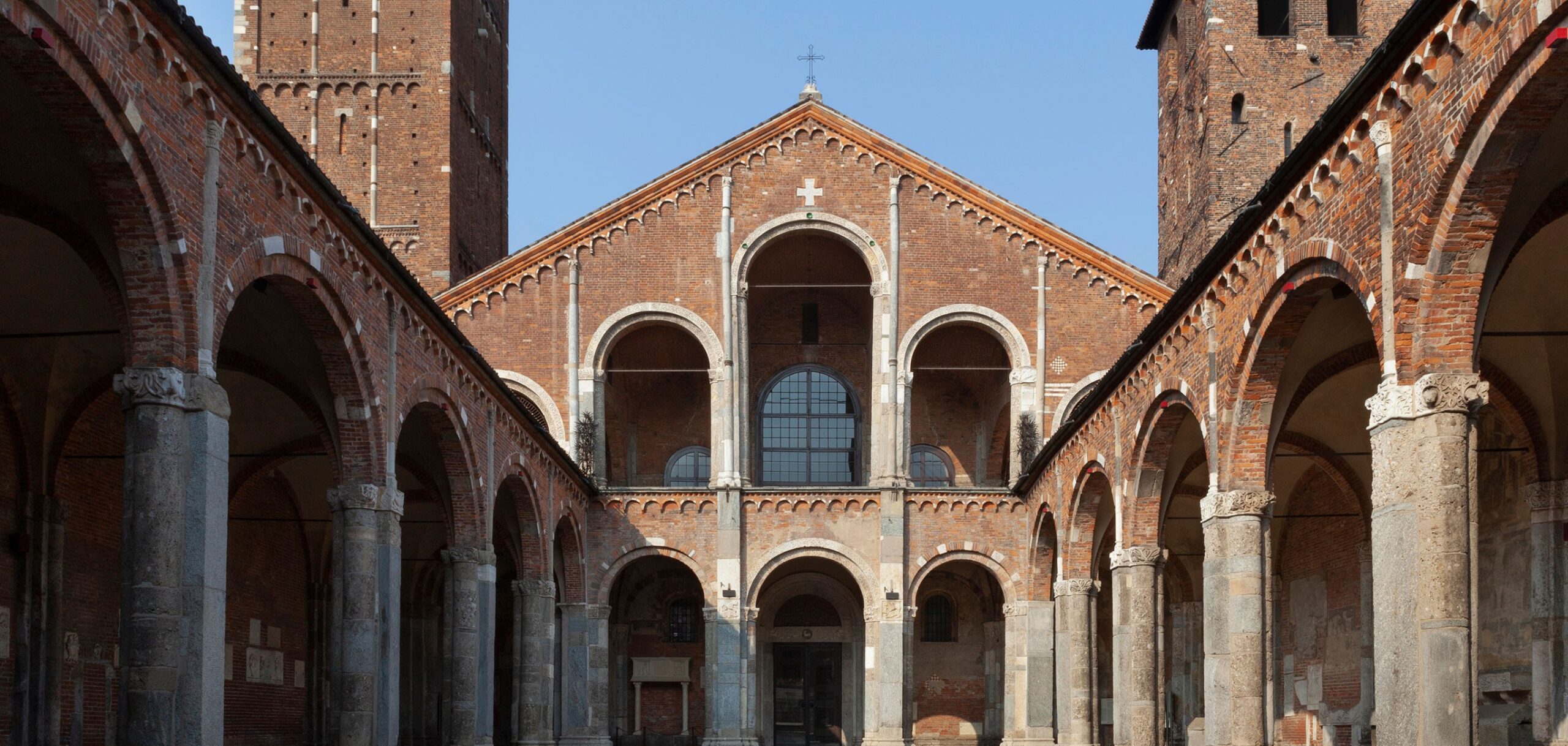
Basilica of Sant’Ambrogio – Milan
- Location: Milan, Lombardy
- Significance: One of the earliest and most important Romanic churches in Italy
- Highlights: Brick construction, atrium, twin bell towers
Sant’Ambrogio set the model for Lombard Romanic architecture and influenced church design across northern Italy.
San Michele Maggiore – Pavia
- Location: Pavia, Lombardy
- Highlights: Sandstone façade, sculptural reliefs
- Historical Note: Coronation site of medieval emperors
Emilia-Romagna
Modena Cathedral
- Location: Modena
- UNESCO World Heritage Site
- Highlights: Master Wiligelmus’ sculpted façade, harmonious proportions
Modena Cathedral is often cited as one of the finest Romanic Churches in Italy.
Parma Cathedral
- Location: Parma
- Highlights: Interior frescoes, octagonal baptistery nearby
Northwest Italy: Stone and Simplicity
Piedmont
Sacra di San Michele
- Location: Mount Pirchiriano, near Turin
- Highlights: Dramatic mountaintop setting, monumental staircases
This abbey symbolically guards the entrance to the Susa Valley and inspired later Gothic structures.
Liguria
San Lorenzo Cathedral
- Location: Genoa
- Highlights: Black-and-white striped façade, Romanic core with later Gothic additions
Liguria’s Romanic churches often reflect maritime wealth and Mediterranean influences.
Central Italy: Marble, Geometry, and Symbolism
Central Italy offers some of the most visually striking Romanic churches, especially in Tuscany.
Tuscany
Pisa Cathedral
- Location: Pisa
- Highlights: Marble façade, classical columns, bronze doors
Part of the famous Piazza dei Miracoli, Pisa Cathedral defines the Pisan Romanic style.
San Miniato al Monte
- Location: Florence
- Highlights: Geometric marble façade, elevated panoramic setting
Pistoia Cathedral (San Zeno)
- Location: Pistoia
- Highlights: Romanic façade, silver altar
Umbria
Basilica of San Salvatore
- Location: Spoleto
- Highlights: Classical Roman spolia, austere design
- UNESCO listed
Umbria’s Romanic churches are quieter, spiritual, and deeply rooted in early Christian traditions.
Marche
San Ciriaco Cathedral
- Location: Ancona
- Highlights: Greek cross plan, coastal views
This church blends Romanic and Byzantine influences unique to Adriatic regions.
Southern Italy: Norman Power and Cultural Fusion
Southern Italy presents a fascinating mix of Romanic, Byzantine, Islamic, and Norman elements.
Campania
Cathedral of Salerno
- Location: Salerno
- Highlights: Atrium, bronze doors, Norman bell tower
Apulia (Puglia)
Apulia is one of the richest regions for Romanic Churches in Italy.

Basilica of San Nicola
- Location: Bari
- Highlights: Pilgrimage site, fortress-like structure
Trani Cathedral
- Location: Trani
- Highlights: White stone, seaside location
Cathedral of Bitonto
- Location: Bitonto
- Highlights: Rose window, sculptural portals
Islands: Distinct Regional Expressions
Sicily
Monreale Cathedral
- Location: Near Palermo
- Highlights: Romanic structure with Byzantine mosaics
Cefalù Cathedral
- Location: Cefalù
- Highlights: Twin towers, Christ Pantocrator mosaic
Sicilian Romanic churches reflect Norman ambition and multicultural craftsmanship.
Sardinia
Santissima Trinità di Saccargia
- Location: Near Sassari
- Highlights: Black-and-white stone bands, rural setting
Sardinia preserves some of the purest Romanic forms due to its isolation.
Why Romanic Churches Matter Today
Romanic churches are not just architectural monuments; they are historical documents carved in stone. They reveal:
- Medieval pilgrimage routes
- Regional identities
- Early Christian symbolism
- The transition from Roman to Gothic Europe
Many remain active places of worship and cultural heritage sites.
FAQs About Romanic Churches in Italy
What defines Romanic architecture in Italy?
Rounded arches, thick walls, symbolic carvings, and regional materials define Italian Romanic architecture.
When were Romanic churches built in Italy?
Most were constructed between the 10th and early 12th centuries.
Which region has the best Romanic churches?
Tuscany, Lombardy, and Apulia are particularly rich in Romanic examples.
Are Romanic and Romanesque the same?
Yes, “Romanic” is often used interchangeably with “Romanesque,” especially in European contexts.
Can Romanic churches still be visited today?
Yes, most are open to visitors and many remain active churches.
Are Romanic churches UNESCO sites?
Several are, including Modena Cathedral and parts of Pisa’s religious complex. Learn more via UNESCO’s official heritage listings
Conclusion: A Stone-Carved Map of Italy’s Soul
Exploring Romanic Churches in Italy region by region reveals more than architectural beauty—it tells the story of medieval faith, power, and artistic innovation. From Lombard brick basilicas to Apulian seaside cathedrals and Sicilian Norman marvels, these churches form a sacred network that still shapes Italy’s cultural landscape today.