
Introduction: A Discovery That Captured National Attention
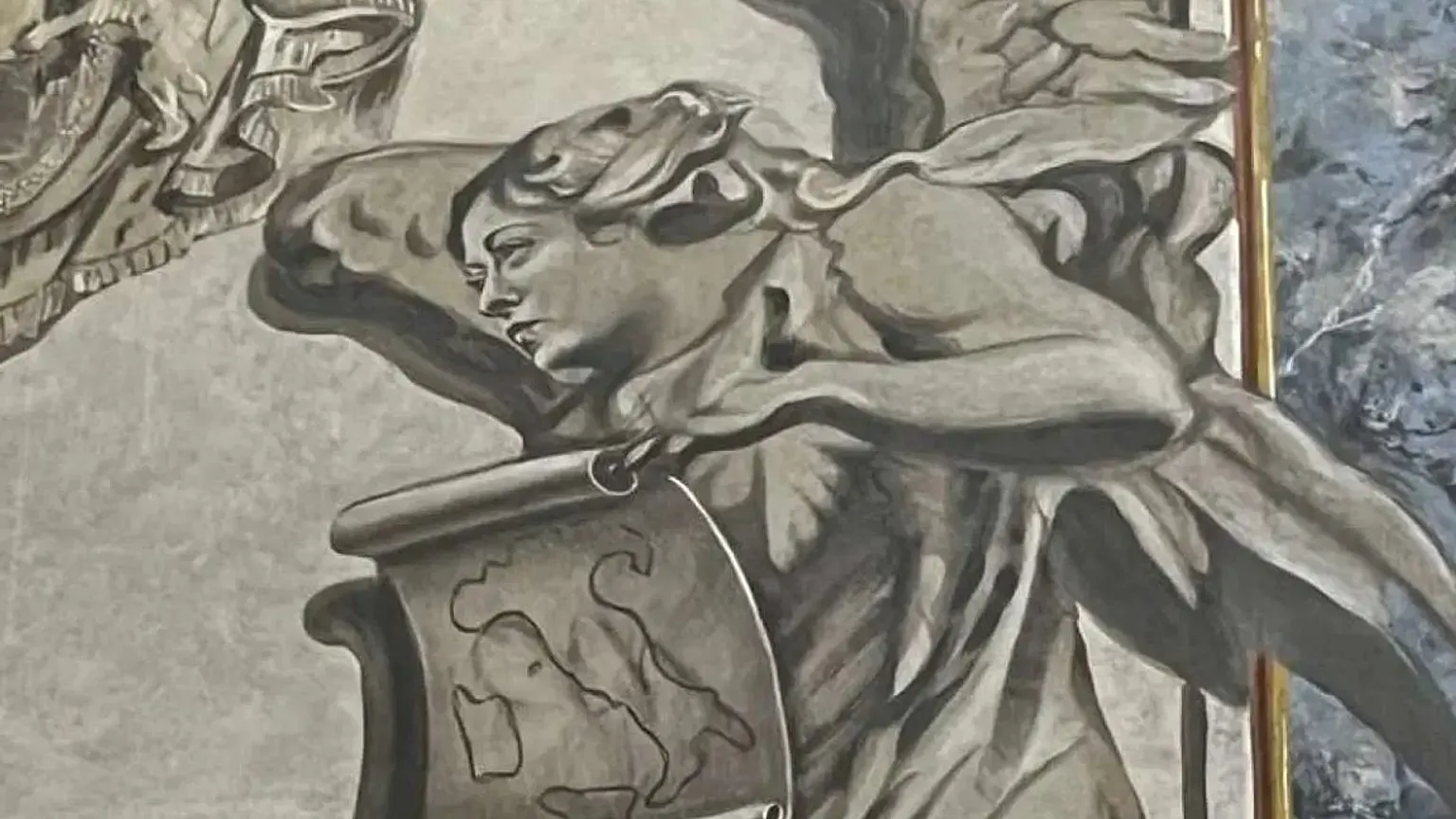
The story known as The Cherub with the Face of Giorgia Meloni in the Roman Basilica began quietly but quickly grew into a cultural talking point across Italy and beyond. Visitors to a historic Roman basilica noticed that one of the cherubs decorating the sacred interior appeared to bear a striking resemblance to Giorgia Meloni, Italy’s Prime Minister. Photos circulated online, media outlets picked up the story, and public curiosity turned into heated debate.
At the heart of the discussion lies a simple yet powerful question: can sacred art unintentionally reflect contemporary political figures, or does modern perception reshape how we see ancient imagery? This case sits at the intersection of faith, art history, psychology, and politics—making it far more than a fleeting viral moment.
The Historical Tradition of Sacred Art in Roman Basilicas
Roman basilicas are among the most important artistic and spiritual landmarks in the world. For centuries, they have served not only as places of worship but also as visual storytelling spaces designed to educate, inspire, and elevate the faithful.
The Role of Cherubs in Christian Theology
Cherubs, or cherubim, are celestial beings frequently mentioned in biblical texts. In Christian theology, they symbolize divine wisdom, protection, and closeness to God. Traditionally, cherubs are depicted as youthful figures with soft features, serene expressions, and an otherworldly innocence.
Their presence in basilicas is meant to remind worshippers of the heavenly realm and the spiritual order that transcends earthly concerns. Importantly, cherubs are not portraits of real people but idealized representations of divine beings.
Iconography and Symbolic Meaning
Sacred iconography follows strict conventions. Facial expressions, gestures, and placement all carry symbolic weight. While artists often used real-life models as references, the final image was intended to represent a universal, timeless figure rather than an individual identity.
This historical context makes The Cherub with the Face of Giorgia Meloni in the Roman Basilica particularly intriguing, as it challenges assumptions about intention, resemblance, and interpretation.
Who Is Giorgia Meloni and Why Her Image Is Widely Recognized
Giorgia Meloni is one of the most recognizable political figures in contemporary Italy. As Prime Minister, her image is omnipresent in national and international media, making her facial features instantly familiar to millions.
From Political Leadership to Cultural Visibility
Meloni’s prominence extends beyond politics. In today’s media-driven society, political leaders often become cultural symbols. Their faces, gestures, and expressions become part of the collective visual memory.
This widespread familiarity plays a crucial role in how people interpret images. When viewers encounter a face that resembles a well-known figure, the mind naturally draws connections—even if the artwork predates the individual by centuries.
The Discovery of the Cherub in the Roman Basilica
The discovery itself was not the result of scholarly research but of casual observation. Visitors noticed the resemblance and shared images online, triggering widespread attention.
Location and Architectural Context
The cherub is part of the decorative program of a Roman basilica known for its rich artistic heritage. Like many churches in Rome, it contains layers of art from different periods, restored and reinterpreted over time.
Its placement among other angelic figures makes it visually prominent, increasing the likelihood that visitors would pause and examine it closely.
Visual and Artistic Description of the Cherub
The cherub features rounded cheeks, a calm gaze, and a subtle smile—traits common in sacred art. However, observers point to the shape of the eyes, nose, and mouth as resembling Giorgia Meloni’s facial structure.
Art historians note that such features are not uncommon, yet modern viewers may interpret them differently due to contemporary visual references.
Artistic and Cultural Interpretations
The debate surrounding The Cherub with the Face of Giorgia Meloni in the Roman Basilica reveals how interpretation evolves over time.
Coincidence, Perception, or Intentional Symbolism?
Most experts agree that the resemblance is coincidental. The artwork predates Meloni by centuries, making intentional symbolism impossible. Instead, the phenomenon can be explained by pareidolia—a psychological tendency to recognize familiar patterns, especially faces.
Nevertheless, some cultural commentators argue that modern viewers inevitably reinterpret historical art through a contemporary lens, assigning new meanings that reflect current realities.
The Thin Line Between Sacred and Secular Imagery
This case highlights the delicate balance between sacred intent and secular interpretation. While the original purpose of the cherub was purely religious, modern associations introduce political and cultural layers that were never intended but are nonetheless powerful.
Public, Religious, and Media Reactions
The reaction to the cherub has been as diverse as it has been passionate.
Responses from Worshippers and Clergy
Some worshippers expressed discomfort, fearing that political associations could distract from the sacred atmosphere of the basilica. Others dismissed the debate as harmless curiosity, emphasizing that faith should transcend visual coincidences.
Clergy members largely encouraged calm reflection, reminding the public that sacred art should be approached with reverence rather than sensationalism.
Political and Media Discourse
Media coverage ranged from lighthearted commentary to serious cultural analysis. Politically, reactions were mixed. Supporters of Meloni viewed the resemblance as amusing or symbolic, while critics warned against politicizing religious spaces.
The story’s viral spread underscores how quickly art-related discussions can become politicized in the digital age.
Broader Implications for Art, Religion, and Politics
Beyond the immediate controversy, The Cherub with the Face of Giorgia Meloni in the Roman Basilica raises broader questions. How do modern audiences engage with ancient art? Can sacred spaces remain insulated from contemporary politics in an era of constant media exposure?
The case demonstrates that art is not static. Its meaning evolves as societies change, and interpretations are shaped by cultural context, collective memory, and current events. This dynamic interaction is both a challenge and a testament to the enduring power of sacred art.
For further reading on sacred iconography and interpretation, visit the Vatican Museums’ official resource on Christian art history: https://www.museivaticani.va
Frequently Asked Questions (FAQs)
1. Is the cherub officially meant to depict Giorgia Meloni?
No. The resemblance is coincidental and not intentional.
2. How old is the cherub artwork?
The artwork dates back several centuries, long before Giorgia Meloni was born.
3. Why do people see Meloni’s face in the cherub?
This is likely due to pareidolia and the familiarity of Meloni’s image.
4. Has the Church commented on the issue?
Church representatives have generally downplayed the controversy.
5. Is this a common phenomenon in art?
Yes, viewers often see modern faces in historical artworks.
6. Does this affect the religious value of the basilica?
No, the basilica’s spiritual significance remains unchanged.
Conclusion
The Cherub with the Face of Giorgia Meloni in the Roman Basilica is a compelling example of how art, perception, and contemporary culture intersect. What began as a simple observation evolved into a national conversation about symbolism, faith, and political visibility.
Ultimately, the cherub remains what it has always been: a sacred artistic figure. Yet the discussion it inspired reminds us that art continues to live, breathe, and provoke thought—bridging centuries and sparking dialogue in ways its creators could never have imagined.