
 During the 1960s and early 1970s, Italy experienced an extraordinary musical exchange with Britain and the United States. Rock, pop, soul and folk records arriving from abroad were eagerly absorbed by Italian musicians, record companies and young audiences.
But Italian singers did not simply perform these songs in English. Record companies frequently commissioned Italian-language versions, sometimes translating the original idea and sometimes giving the melody an entirely new story.
The result was one of the most fascinating chapters in Italian popular music.
Adriano Celentano, Caterina Caselli, Patty Pravo, Rita Pavone, Equipe 84, Dik Dik, Nomadi, I Camaleonti, I Corvi and many others transformed international hits into records that became part of Italian popular culture in their own right.
Some Italian listeners first encountered songs by the Rolling Stones, Procol Harum, the Moody Blues, the Mamas & the Papas and other international artists through these Italian adaptations.
Here are some of the most memorable examples.
Adriano Celentano – Pregherò
Original: “Stand by Me” – Ben E. King
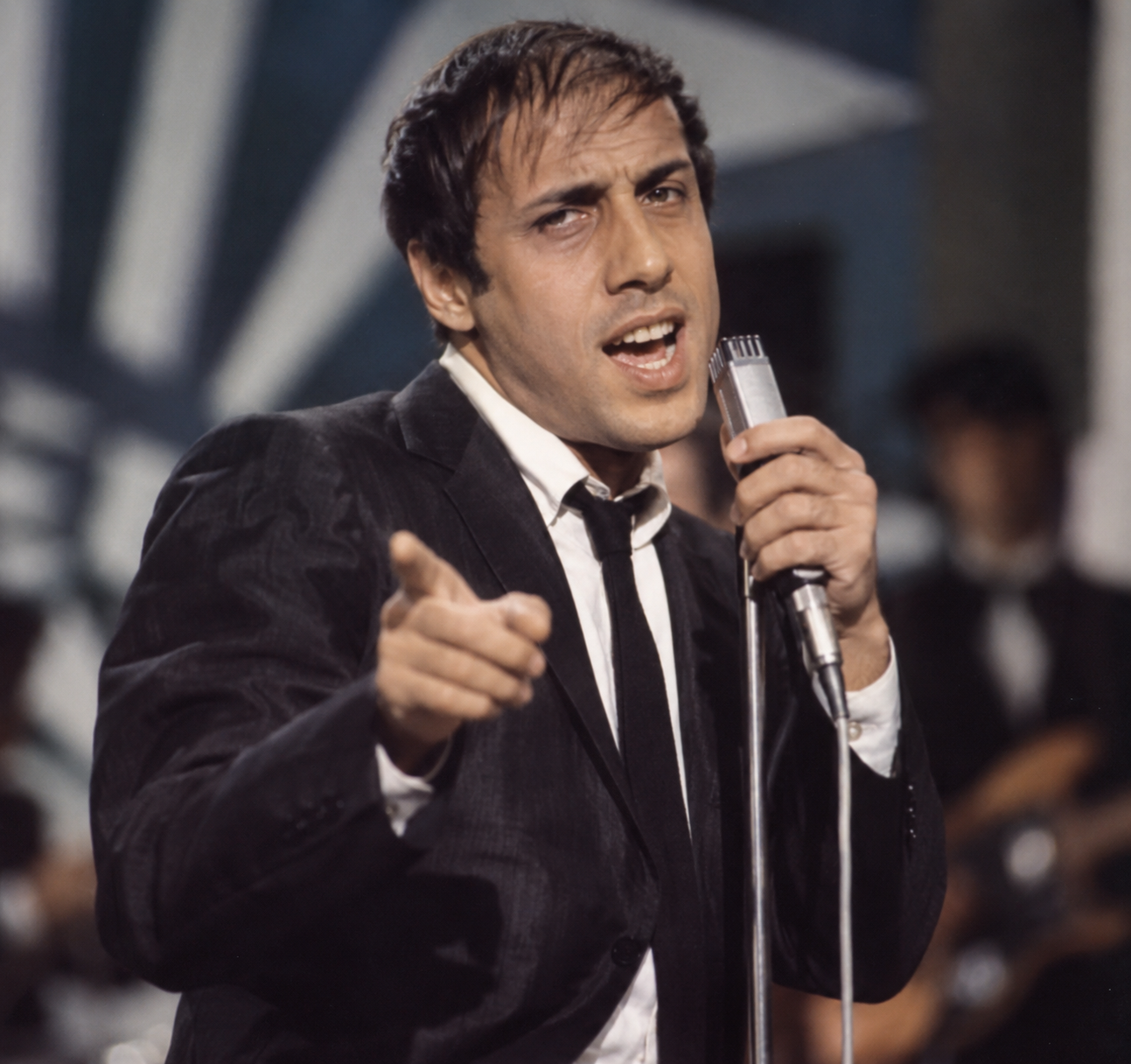
One of the best-known examples is Adriano Celentano’s “Pregherò,” based on Ben E. King’s “Stand by Me.”
Celentano does not attempt to reproduce King’s performance. His distinctive phrasing transforms the American rhythm-and-blues standard into a recording that sounds completely at home in early-1960s Italian pop.
It also demonstrates Celentano’s importance in bringing American rock, R&B and youth culture into mainstream Italian music.
Listen to Adriano Celentano – Pregherò on YouTube
Dik Dik – Sognando la California
Original: “California Dreamin’” – The Mamas & the Papas
Few adaptations became as famous in Italy as “Sognando la California.”
Dik Dik transformed the Mamas & the Papas classic into one of the signature recordings of the Italian beat era.
The fundamental contrast remains: a cold, grey reality against the fantasy of sunny California. For young Italians in the 1960s, California also represented an alluring world of freedom, youth and American popular culture.
Listen to Dik Dik – Sognando la California on YouTube
Dik Dik – Senza luce
Original: “A Whiter Shade of Pale” – Procol Harum
Dik Dik scored another major success with “Senza luce,” their Italian interpretation of Procol Harum’s atmospheric “A Whiter Shade of Pale.”
Released in 1967, the Italian version retains the haunting organ-led atmosphere that made the original so distinctive.
It became one of the classic examples of an Italian adaptation developing an identity almost independent of the English-language recording.
Listen to Dik Dik – Senza luce on YouTube
Dik Dik – Il mondo è con noi
Original: “I Saw Her Again” – The Mamas & the Papas
“California Dreamin’” was not the only Mamas & the Papas song interpreted by Dik Dik.
They also adapted “I Saw Her Again” as “Il mondo è con noi.” As frequently happened with Italian covers, the new title and lyrics were not intended as a literal translation.
Listen to Dik Dik – Il mondo è con noi on YouTube
Caterina Caselli – Tutto nero
Original: “Paint It, Black” – The Rolling Stones
Caterina Caselli’s “Tutto nero” is one of the finest Italian adaptations of a Rolling Stones song.
Released in 1966, it retains much of the dark atmosphere associated with “Paint It, Black.” Caselli’s strong personality prevents the recording from sounding like an imitation of Mick Jagger and the Stones.
Instead, it became a quintessential example of Italian beat music.
Listen to Caterina Caselli – Tutto nero on YouTube
Caterina Caselli – Sono bugiarda
Original: “I’m a Believer” – The Monkees
Another memorable Caselli adaptation was “Sono bugiarda,” based on the Monkees’ “I’m a Believer,” written by Neil Diamond.
The infectious melody fitted perfectly into the energetic Italian pop of the late 1960s.
Listen to Caterina Caselli – Sono bugiarda on YouTube
Caterina Caselli – L’umanità
Original: “Sympathy” – Rare Bird
Caselli’s catalogue demonstrates just how widely Italian artists searched British and American music for material.
“L’umanità” was adapted from “Sympathy,” the song by British progressive rock group Rare Bird.
Listen to Caterina Caselli – L’umanità on YouTube
Rita Pavone – Datemi un martello
Original: “If I Had a Hammer” – Pete Seeger and Lee Hays
Rita Pavone turned the American folk standard “If I Had a Hammer” into the enormously catchy “Datemi un martello.”
The transformation is particularly revealing.
The American original had a social and political message. The Italian version became much more closely associated with teenage pop and romantic frustrations.
It is a perfect illustration of why these recordings should be called adaptations rather than straightforward translations.
Listen to Rita Pavone – Datemi un martello on YouTube
Patty Pravo – Ragazzo triste
Original: “But You’re Mine” – Sonny & Cher
Before becoming one of Italy’s most distinctive pop personalities, Patty Pravo recorded “Ragazzo triste,” an adaptation of Sonny & Cher’s “But You’re Mine.”
Released in 1966, it was Patty Pravo’s debut single.
The recording became closely associated with the atmosphere surrounding Rome’s famous Piper Club and the new generation of Italian teenagers embracing international fashion and music.
Listen to Patty Pravo – Ragazzo triste on YouTube
Patty Pravo – Qui e là
Original: “Holy Cow” – Lee Dorsey
Patty Pravo also recorded “Qui e là,” adapted from American R&B singer Lee Dorsey’s “Holy Cow.”
It is another example of how Italian performers drew not only from British beat groups but also from American soul and rhythm and blues.
Listen to Patty Pravo – Qui e là on YouTube
Patty Pravo – Rispondi
Original: “Mandy” – Barry Manilow
The Italian-cover phenomenon did not disappear when the beat era ended.
In the 1970s Patty Pravo recorded “Rispondi,” an Italian adaptation of Barry Manilow’s international hit “Mandy.”
Listen to Patty Pravo – Rispondi on YouTube
Equipe 84 – Bang Bang
Original: “Bang Bang (My Baby Shot Me Down)” – Cher
“Bang Bang,” written by Sonny Bono and originally recorded by Cher, inspired several international adaptations.
Equipe 84 recorded one of the best-known Italian versions in 1966.
The song’s dramatic melody translated naturally into Italian beat music, even though the Italian adaptation altered elements of the original narrative.
Listen to Equipe 84 – Bang Bang on YouTube
Equipe 84 – Io ho in mente te
Original: “You Were on My Mind” – Ian & Sylvia / We Five
“Io ho in mente te” became one of Equipe 84’s signature recordings.
The song derives from “You Were on My Mind,” written by Sylvia Fricker of the Canadian folk duo Ian & Sylvia and later turned into a major pop hit by We Five.
Equipe 84’s recording became so familiar in Italy that many listeners came to regard it simply as an Italian pop classic.
Listen to Equipe 84 – Io ho in mente te on YouTube
I Camaleonti – L’ora dell’amore
Original: “Homburg” – Procol Harum
Procol Harum provided Italian groups with more than one successful melody.
After “A Whiter Shade of Pale” became “Senza luce,” their song “Homburg” was transformed into “L’ora dell’amore.”
The best-known Italian version was recorded by I Camaleonti and became one of the group’s defining songs.
Listen to I Camaleonti – L’ora dell’amore on YouTube
Nomadi – Ho difeso il mio amore
Original: “Nights in White Satin” – The Moody Blues
One of the most dramatic transformations occurred when the Moody Blues’ “Nights in White Satin” became “Ho difeso il mio amore.”
Nomadi’s version uses the celebrated melody but tells a substantially different story.
The adaptation illustrates the freedom Italian lyricists often took with foreign material: retaining a melody did not necessarily mean retaining the original subject.
Listen to Nomadi – Ho difeso il mio amore on YouTube
I Corvi – Un ragazzo di strada
Original: “I Ain’t No Miracle Worker” – The Brogues
I Corvi represented the tougher, garage-rock side of Italian beat music.
Their “Un ragazzo di strada” was adapted from “I Ain’t No Miracle Worker,” originally recorded by the American garage group the Brogues.
The Italian version ultimately became much better known in Italy than its American source.
Listen to I Corvi – Un ragazzo di strada on YouTube
The Rokes – Che colpa abbiamo noi
Original: “Cheryl’s Goin’ Home” – Bob Lind
The Rokes occupy a particularly interesting place in this story.
They were originally a British group but established their career in Italy and became an important part of the Italian beat movement.
“Che colpa abbiamo noi” was adapted from Bob Lind’s “Cheryl’s Goin’ Home” and became one of their most recognizable Italian recordings.
Listen to The Rokes – Che colpa abbiamo noi on YouTube
Jimmy Fontana – La nostra favola
Original: “Delilah” – Tom Jones
Tom Jones made “Delilah” an international hit, but Italian listeners also encountered the melody as Jimmy Fontana’s “La nostra favola.”
The transformation is especially interesting because the Italian adaptation changes the story substantially.
The dramatic melody remained, while the narrative was reworked for the Italian audience.
Listen to Jimmy Fontana – La nostra favola on YouTube
Fausto Leali – A chi
Original: “Hurt” – Roy Hamilton
Fausto Leali’s powerful, raspy voice made him particularly well suited to American soul and R&B material.
“A chi,” based on “Hurt,” became one of the songs most closely associated with him.
Leali’s intense delivery helped transform the composition into an Italian standard rather than simply another imported song.
Listen to Fausto Leali – A chi on YouTube
Fausto Leali – Devi pensare a me
Original: “Run to My Lovin’ Arms” – Billy Fury
Before establishing himself as one of Italy’s most recognizable soul-influenced voices, Fausto Leali and his group I Novelty recorded several adaptations of foreign songs.
“Devi pensare a me” came from Billy Fury’s “Run to My Lovin’ Arms.”
Listen to Fausto Leali – Devi pensare a me on YouTube
Gino Santercole – Questo vecchio pazzo mondo
Original: “Eve of Destruction” – Barry McGuire
Barry McGuire’s “Eve of Destruction” was one of the defining American protest songs of the 1960s.
Gino Santercole recorded the Italian adaptation “Questo vecchio pazzo mondo.”
As with many Italian covers, the lyrics were reshaped for the domestic audience while retaining the powerful musical framework of the original.
Listen to Gino Santercole – Questo vecchio pazzo mondo on YouTube
Gianni Morandi – Ha gli occhi chiusi la città
Original: “Everybody’s Talkin’” – Fred Neil
“Everybody’s Talkin’” was written and originally recorded by Fred Neil and later became internationally famous through Harry Nilsson’s version.
Gianni Morandi recorded an Italian adaptation titled “Ha gli occhi chiusi la città.”
It is an interesting example of a major mainstream Italian singer absorbing material from the American folk-pop tradition.
Listen to Gianni Morandi – Ha gli occhi chiusi la città on YouTube
Mia Martini – Un uomo per me
Original: “Somebody to Love” – Queen
By the late 1970s, recording Italian-language adaptations of international hits was becoming less central to the Italian record industry, but it had certainly not disappeared.
Mia Martini recorded “Un uomo per me,” an Italian version of Queen’s “Somebody to Love.”
Hearing one of Italy’s greatest vocalists reinterpret a Freddie Mercury composition makes this one of the more intriguing crossovers of the period.
Listen to Mia Martini – Un uomo per me on YouTube
Johnny Dorelli – Per chi
Original: “Without You” – Badfinger
“Without You” was written by Pete Ham and Tom Evans of Badfinger and became internationally famous through Harry Nilsson’s recording.
Johnny Dorelli recorded it in Italian as “Per chi.”
Nicola Di Bari also recorded an Italian version, demonstrating how a successful international composition could generate multiple competing adaptations in Italy.
Listen to Johnny Dorelli – Per chi on YouTube
Nicola Di Bari – Per chi
Original: “Without You” – Badfinger
Nicola Di Bari’s interpretation of “Per chi” provides an interesting opportunity to compare two Italian singers working with the same international composition.
Rather than treating Italian adaptations as definitive translations, record companies and performers frequently approached them as individual interpretations.
Listen to Nicola Di Bari – Per chi on YouTube
Adriano Celentano – Il problema più importante
Original: “If You Gotta Make a Fool of Somebody” – James Ray / Freddie & the Dreamers
Celentano’s relationship with Anglo-American music extended far beyond “Pregherò.”
“Il problema più importante” adapted “If You Gotta Make a Fool of Somebody,” a song originally recorded by James Ray and subsequently popularized in Britain by Freddie & the Dreamers.
Listen to Adriano Celentano – Il problema più importante on YouTube
More Italian Versions Worth Exploring
The examples above represent only a fraction of the English-language songs adapted for the Italian market.
The phenomenon was enormous. During the 1960s especially, record labels searched British and American charts for songs that could be quickly transformed into Italian singles.
Other interesting examples include Dik Dik’s “Eleonora credi,” adapted from the Band’s “The Weight”; Little Tony’s “Non posso fare a meno di amarti,” from “I Just Can’t Help Believin’”; Loretta Goggi’s “Ti chiedo scusa,” based on “(I Never Promised You a) Rose Garden”; and Rocky Roberts’ “Tu signora Jones,” based on Billy Paul’s “Me and Mrs. Jones.”
Listen to Dik Dik – Eleonora credi on YouTube
Listen to Little Tony – Non posso fare a meno di amarti on YouTube
Listen to Loretta Goggi – Ti chiedo scusa on YouTube
Listen to Rocky Roberts – Tu signora Jones on YouTube
Why Were Italian Versions So Common?
It is difficult to understand the phenomenon from today’s perspective.
A new song released in Los Angeles or London can now be heard in Italy within seconds. In the 1960s, music circulated through records, radio, television, jukeboxes and magazines.
Knowledge of English was also far less widespread among the Italian public.
Italian-language adaptations allowed listeners to sing along with a foreign melody without understanding English, while record companies could capitalize on musical trends already proving successful abroad.
This was particularly important during the explosion of beat music in the mid-1960s.
Italian musicians absorbed the Beatles, Rolling Stones, Animals, Byrds, Mamas & the Papas, Procol Harum, Moody Blues and American soul and garage-rock groups at remarkable speed.
They Were Often Adaptations, Not Translations
One of the most interesting aspects of these songs is how freely Italian lyricists treated the originals.
The Italian words might preserve the basic theme, but they could just as easily introduce a completely different story.
“Nights in White Satin,” for example, became Nomadi’s “Ho difeso il mio amore,” while Tom Jones’s dark and violent “Delilah” was transformed into Jimmy Fontana’s considerably different “La nostra favola.”
The priority was often the strength of the melody rather than fidelity to the original lyrics.
Consequently, describing these songs simply as “translations” does not tell the whole story. They were frequently creative reinventions.
The Italian Beat Generation
Foreign adaptations played an important role in the development of Italian beat music.
Groups learned the musical vocabulary of British beat, American garage rock, folk rock, rhythm and blues and psychedelia by performing this material.
But Italian musicians soon began developing a distinctive identity.
Equipe 84, Dik Dik, Nomadi, I Camaleonti, I Corvi and other groups gradually moved between covers and original compositions, helping establish a domestic rock and pop scene that was no longer simply imitating foreign records.
For singers such as Caterina Caselli, Patty Pravo and Fausto Leali, international material similarly provided an opportunity to develop distinctive vocal identities.
Compare the Italian and Original Versions
One of the most enjoyable ways to explore this period is to listen to the recordings side by side.
Compare “California Dreamin’” with “Sognando la California,” “A Whiter Shade of Pale” with “Senza luce,” “Paint It, Black” with “Tutto nero,” or “Nights in White Satin” with “Ho difeso il mio amore.”
The melody may be immediately familiar, yet the emotional effect can be surprisingly different.
Sometimes the arrangement remains close to the international recording. Elsewhere the singer, orchestration and new lyrics transform the song completely.
For more music from this period, explore ItaliaMia’s guide to Italian music and our selection of the 100 most famous Italian songs.
The exchange also worked in the opposite direction. International stars sometimes performed Italian songs, particularly during the golden years of the Sanremo Festival.
From Covers to an Italian Musical Identity
These recordings should not be dismissed as curiosities from an era when Italian record companies copied successful foreign music.
They document a crucial stage in the internationalization of Italian popular culture.
Young Italians were discovering British rock, American folk, soul, rhythm and blues, psychedelia and garage rock almost simultaneously. Italian singers and groups acted as intermediaries, taking this music and reshaping it for a domestic audience.
Eventually, Italian musicians needed these adaptations less and less.
The country’s singers, bands and songwriters developed their own sophisticated musical language, while younger Italian audiences became increasingly accustomed to hearing songs performed directly in English.
The covers nevertheless remain a musical time capsule.
Hearing them today reveals how melodies crossed borders long before streaming, YouTube and global digital releases made international music instantly available.
More importantly, many of these songs stopped being perceived merely as covers. “Sognando la California,” “Senza luce,” “Tutto nero,” “Io ho in mente te,” “L’ora dell’amore,” “Ho difeso il mio amore” and “Un ragazzo di strada” became part of the history of Italian popular music in their own right.
External Sources
Treccani – Italian language and popular song
Music Graffiti – Italian covers of English-language songs
Music Graffiti – Italian covers during the Beat era