
Introduction: Why 2026 Is a Pivotal Year for Italy
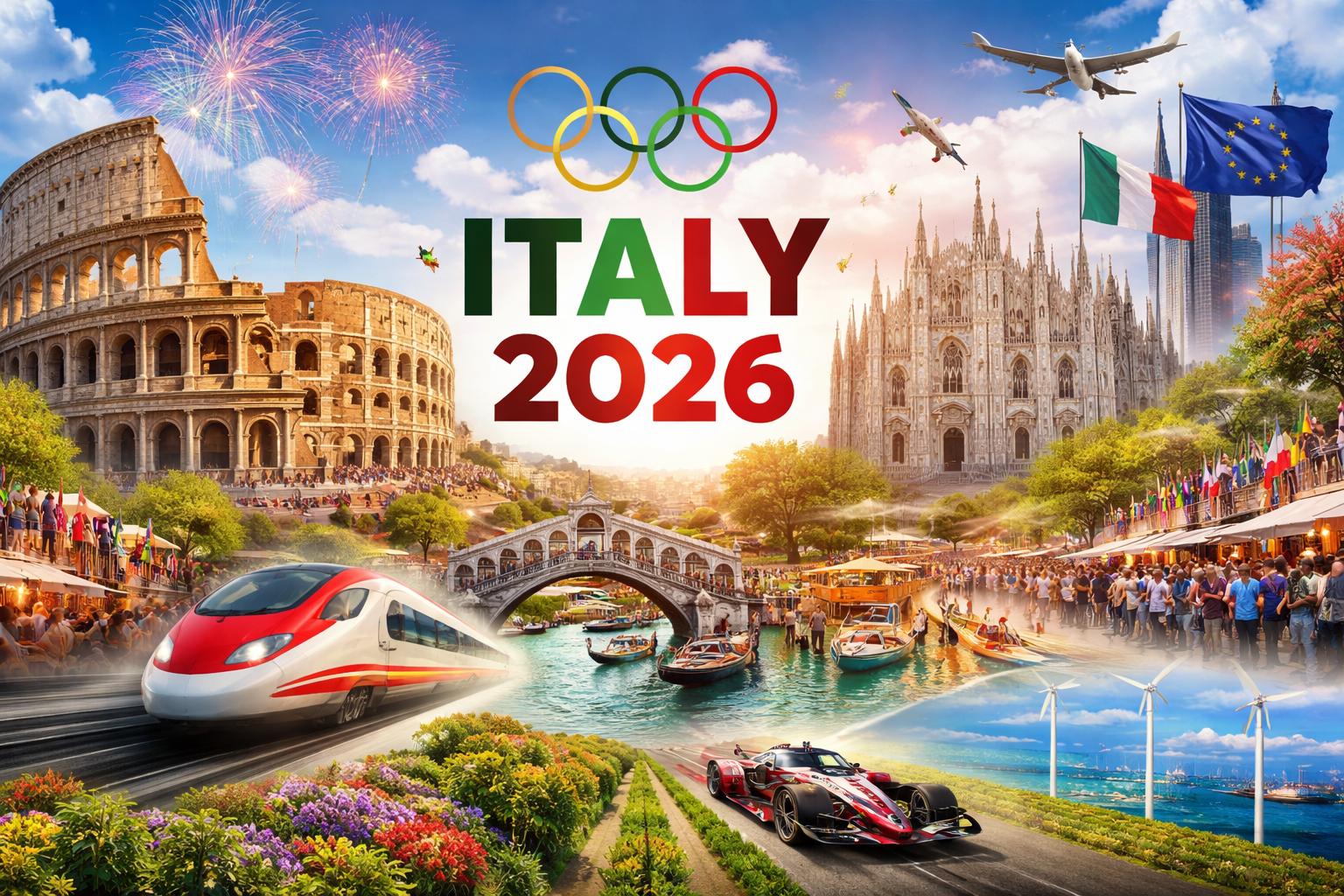
The major events planned in Italy in 2026 are not routine calendar items. From February onward, the country is set to host globally visible events, complete long-term infrastructure projects, and take part in decisions that shape Europe’s political, economic, and environmental direction.
Unlike generic annual cycles, 2026 concentrates years of preparation into one timeline: Olympic legacy projects, high-profile cultural exhibitions, EU negotiations, and major transport upgrades all converge in the same year. What happens between February and December 2026 will influence Italy well beyond the decade.
This article focuses only on specific, identifiable events and initiatives planned for the rest of 2026 — not background trends.
February–March 2026: Olympic Transition and National Infrastructure Shift
Post–Milan–Cortina Olympic Transition Phase
From February 2026 onward, Italy enters the official post-Olympic transition phase following the Milan–Cortina Winter Games. This is not symbolic — it triggers concrete actions:
- Olympic venues in Cortina d’Ampezzo, Bormio, and Milan are scheduled to be transferred to regional or municipal management
- Temporary Olympic structures are planned for dismantling or conversion
- Tourism authorities are expected to launch “Olympic Routes” linking Lombardy and Veneto
This phase is closely watched by the International Olympic Committee as a test case for sustainable post-Games legacy.
High-Speed Rail and Transport Milestones
Several high-speed rail and urban transport projects are scheduled to reach decisive phases in early 2026, including:
- Progress milestones on the Milan–Venice high-speed corridor
- Urban transit expansions in Rome, Milan, and Naples
- Airport modernization phases planned for Rome Fiumicino and Milan Malpensa
These projects are not ceremonial; they affect commuter capacity, logistics, and tourism flows before the summer season.
Spring 2026: Italy at the Center of European Decision-Making
EU Council Meetings and Ministerial Summits Hosted by Italy
Italy is scheduled to host and co-host multiple EU-level ministerial meetings in spring 2026. These meetings typically involve:
- Finance ministers (economic coordination and EU fiscal rules)
- Environment ministers (Fit for 55 implementation)
- Interior ministers (migration and border management)
Hosting duties matter: they allow Italy to shape agendas, not just vote on outcomes.
Migration and Asylum Framework Decisions
By late spring 2026, Italy is expected to be directly involved in implementation phases of the EU migration pact, including:
- Allocation mechanisms
- Border procedure coordination
- Funding distribution to frontline states
These decisions affect Italy more than most EU countries due to its geography.
April–June 2026: Cultural Flagships With Global Visibility
Venice Biennale of Art 2026
One of the most concrete and globally recognized events of the year is the Venice Biennale Arte 2026, scheduled to run from spring through autumn.
Key features include:
- National pavilions from over 80 countries
- Exhibitions across the Giardini, Arsenale, and city-wide venues
- Heavy international media coverage
This event alone brings hundreds of thousands of visitors and defines Italy’s cultural image for the year.
Rome Jubilee-Related Cultural Programming (Extended into 2026)
Although the Catholic Jubilee officially centers on 2025, major Jubilee-linked cultural, restoration, and tourism projects extend into 2026, including:
- Completion phases of historic site restorations
- Large-scale exhibitions in Rome
- Infrastructure upgrades around Vatican and pilgrimage routes
Rome remains one of Europe’s most visited cities in 2026 because of this spillover effect.
Summer 2026: Tourism, Festivals, and Peak International Exposure
Italy’s High-Season Tourism Strategy
Summer 2026 is planned as a stress test for Italy’s tourism system, especially after Olympic visibility. The government and regions plan to:
- Redirect visitors toward lesser-known destinations
- Limit overcrowding in Venice and Florence
- Promote southern regions and inland towns
Expect concrete measures such as timed entry systems, local caps, and transport incentives.
Major Summer Festivals With Fixed Calendars
Planned, recurring events with international pull include:
- Verona Opera Festival (June–September)
- Festival dei Due Mondi in Spoleto
- Umbria Jazz Festival
- Taormina Film Festival
These are not conceptual “cultural moments” — they are fixed, ticketed events that anchor Italy’s summer economy.
Autumn 2026: Economic, Industrial, and Climate Milestones
Italy’s 2027 Budget Framework Preparation
From September onward, Italy begins preparing its 2027 national budget, with public debates and parliamentary sessions focusing on:
- Public debt management
- Tax structure adjustments
- Energy pricing and subsidies
Markets and EU institutions closely monitor this period.
Major Renewable Energy Project Launches
Several large-scale renewable energy installations are scheduled to enter operational or near-operational phases in late 2026, including:
- Solar plants in southern regions
- Offshore wind planning zones
- Grid reinforcement projects
These projects tie directly to Italy’s EU climate obligations.
Sports Calendar Highlights Still to Come in 2026
Serie A, Coppa Italia, and European Competitions
The 2026–27 football season begins in late summer, with:
- Serie A kickoff
- Italian clubs entering UEFA competitions
- High-profile matches in Milan, Rome, Turin, and Naples
Football remains Italy’s single most watched domestic event category.
International Cycling and Motorsport Events
Italy’s fixed-place sporting events include:
- Autumn cycling classics
- MotoGP and motorsport weekends
- International athletics meets
These events combine tourism, broadcasting revenue, and city branding.
Science, Technology, and Space: Concrete 2026 Steps
Italian Space Sector Milestones
Italy’s aerospace industry plans new satellite launches and ESA-linked missions in the second half of 2026, involving:
- Earth observation
- Climate monitoring
- Telecommunications
These projects are led by Italian firms in cooperation with European partners.
Digital Public Administration Rollouts
Specific public platforms are scheduled for nationwide rollout or expansion in 2026, including:
- Unified digital identity services
- Healthcare data systems
- Online judicial and tax tools
These are operational changes, not pilot projects.
December 2026: Year-End Decisions With Long-Term Impact
EU and International Summits
Italy is expected to participate in end-of-year EU and international summits addressing:
- Global economic coordination
- Security and defense policy
- Climate commitments ahead of 2030 targets
Positions taken here shape Italy’s role in 2027 and beyond.
Evaluation of Olympic and Infrastructure Legacy
By December 2026, formal evaluations of:
- Olympic economic impact
- Infrastructure performance
- Tourism redistribution success
are expected to influence future investment strategies.
FAQs About Events Planned in Italy in 2026
1. What is the single most important planned event in Italy in 2026?
The Venice Biennale Arte 2026 and the post–Milan–Cortina Olympic transition stand out for global visibility.
2. Will 2026 still feel like an “Olympic year” in Italy?
Yes — infrastructure use, tourism strategy, and branding will continue throughout the year.
3. Which cities will be most affected by 2026 events?
Milan, Venice, Rome, Cortina, Florence, Naples, and major tourist regions.
4. Is 2026 mainly cultural or political for Italy?
It is both: culture drives visibility, while politics and infrastructure drive long-term impact.
5. Will tourism be higher than normal in 2026?
Yes, especially from spring to autumn due to global events and Olympic spillover.
6. Why does 2026 matter beyond Italy?
Because Italy hosts events and decisions that affect EU policy, climate targets, and global cultural calendars.
Conclusion: 2026 as a Defining Transition Year for Italy
The major events planned in Italy in 2026 are not isolated celebrations or routine policy steps. From February onward, the country moves through a dense sequence of named events, fixed festivals, infrastructure milestones, and international commitments.
By December 2026, Italy will not simply have completed another calendar year — it will have closed a chapter that began years earlier and set the framework for the next decade.