
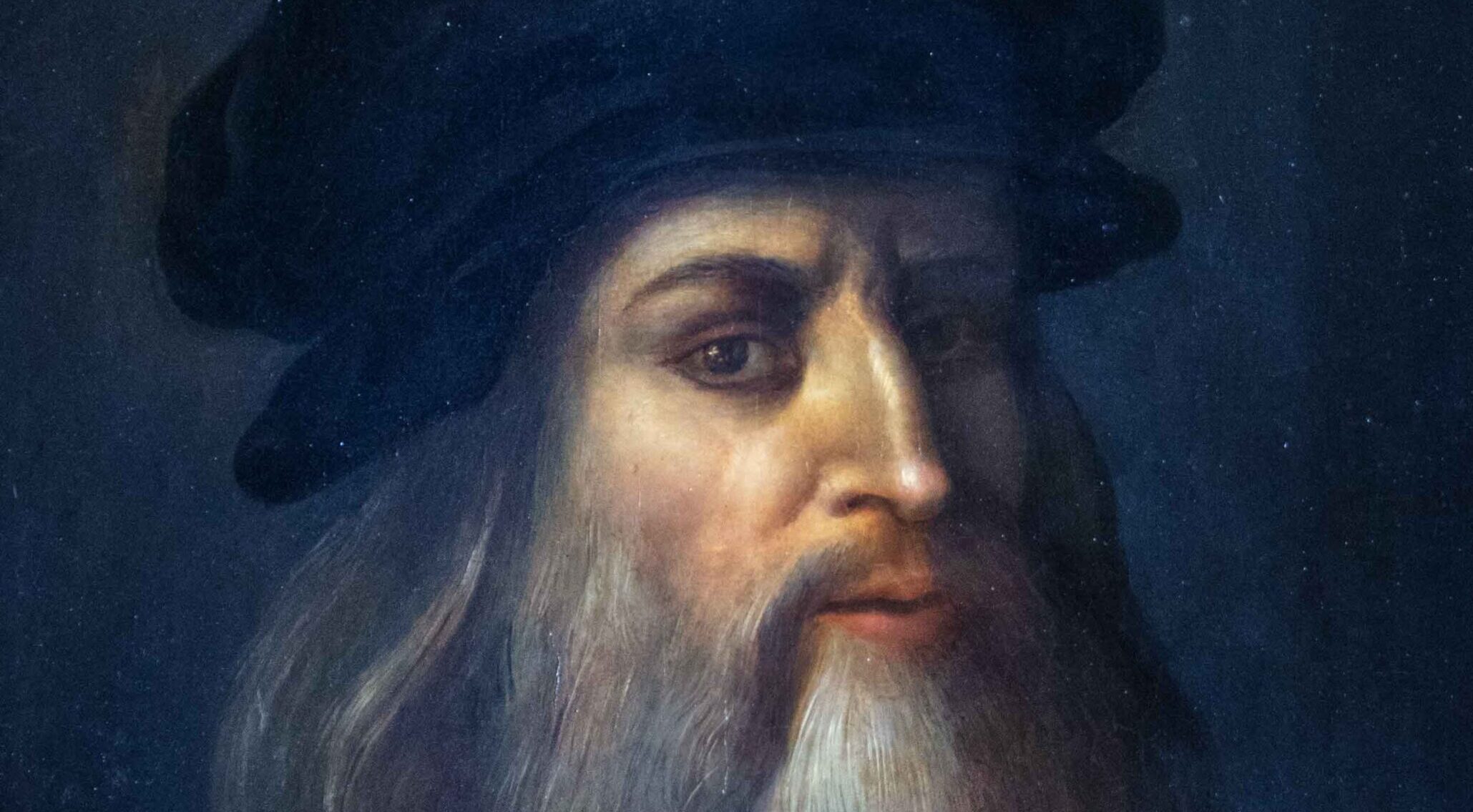
Interviewer: Maestro Leonardo, thank you for joining us today. Let’s begin at the start. What was your childhood like?
Leonardo da Vinci: Ah, my childhood! I was born in 1452 in the small town of Vinci, in Italy. I was not born into wealth or high status, but I was blessed with curiosity. As a boy, I spent much of my time outdoors—studying plants, water, rocks, and animals. Nature was my first teacher. I believe that those early observations shaped everything I later created.
Interviewer: You are known as both an artist and a scientist. Which did you consider yourself first?
Leonardo: I never separated the two. To me, art and science are companions. Painting is a science, for it requires knowledge of anatomy, light, geometry, and perspective. Likewise, science needs imagination. If I had to choose, I would say I was a student of nature above all else.
Interviewer: Your painting Mona Lisa is one of the most famous works in history. What made it so special?
Leonardo: The Mona Lisa was not simply a portrait. I wanted to capture life itself—the subtle expression, the movement of thought behind the eyes. I studied human muscles and expressions carefully. Her smile is mysterious because real smiles are never still. They change with light and perception. I worked on that painting for years because perfection requires patience.
Interviewer: You also painted The Last Supper. What challenges did you face while creating it?
Leonardo: Many challenges! First, I chose to experiment with a new painting technique instead of traditional fresco. Unfortunately, it did not last as well as I hoped. But artistically, the greatest challenge was emotion. I wanted to capture the exact moment Christ announced betrayal. Each disciple reacts differently—shock, anger, disbelief. Human emotion fascinates me deeply.
Interviewer: You designed flying machines centuries before airplanes were invented. What inspired you?
Leonardo: Birds. I studied them carefully—their wings, bones, and flight patterns. I believed that if we understood the mechanics of flight, humans could achieve it too. My designs were based on observation and mathematics. Sadly, the materials of my time were too heavy. But I always believed that one day, people would fly.
Interviewer: You kept thousands of pages of notebooks. Why did you write so much?
Leonardo: Because my mind never rested! Ideas come quickly, and one must capture them before they vanish. I wrote about anatomy, engineering, water systems, war machines, architecture, and even jokes. Curiosity is like a river—it must flow. Writing preserved my thoughts for the future.
Interviewer: You famously wrote in mirror script. Why?
Leonardo: (Smiles) Some say I wished to keep secrets. Perhaps there is truth in that. But also, I was left-handed. Writing from right to left prevented smudging the ink. Practicality and mystery—both have their charm.
Interviewer: What was your greatest struggle in life?
Leonardo: Finishing projects! I was endlessly curious. Once I learned enough to solve a problem, my mind would wander to a new one. Many commissions were left incomplete. My imagination sometimes outran my discipline.
Interviewer: Do you regret not completing more works?
Leonardo: Regret is a heavy word. I prefer reflection. Every unfinished project was still a lesson learned. Yet yes, sometimes I wish I had focused more deeply on fewer works. Mastery requires both vision and persistence.
Interviewer: You studied human anatomy by dissecting bodies. Was that controversial at the time?
Leonardo: Very much so. But I believed understanding the human body was essential to painting it truthfully. Muscles, bones, organs—these are the machinery of life. Without knowledge of structure, art becomes illusion without foundation.
Interviewer: What role did curiosity play in your success?
Leonardo: Curiosity was everything. It is the engine of genius. When you ask “Why?” and “How?” often enough, you discover truths others overlook. I never stopped questioning. Even simple things—why is the sky blue? How does water move? Why do faces express emotion the way they do?
Interviewer: If you could see the modern world, what would surprise you most?
Leonardo: Flight, certainly! And machines that calculate instantly. But I believe what would please me most is the continuation of exploration. Humans still invent, still discover, still dream. That gives me joy.
Interviewer: What advice would you give to aspiring artists and thinkers today?
Leonardo:
- Observe carefully.
- Practice constantly.
- Study beyond your chosen field.
- Be patient with mastery.
- Let curiosity guide you.
Remember: “Learning never exhausts the mind.”
Interviewer: One final question—how would you like to be remembered?
Leonardo: Not merely as a painter or inventor, but as someone who loved knowledge. I sought to understand the world deeply. If people remember me as a man driven by wonder, that is enough.
🌟 Closing Thoughts
Leonardo da Vinci remains a symbol of creativity, intelligence, and limitless curiosity. His life teaches us that art and science are not opposites—they are partners. His legacy reminds us that imagination, combined with observation and dedication, can change the world.