

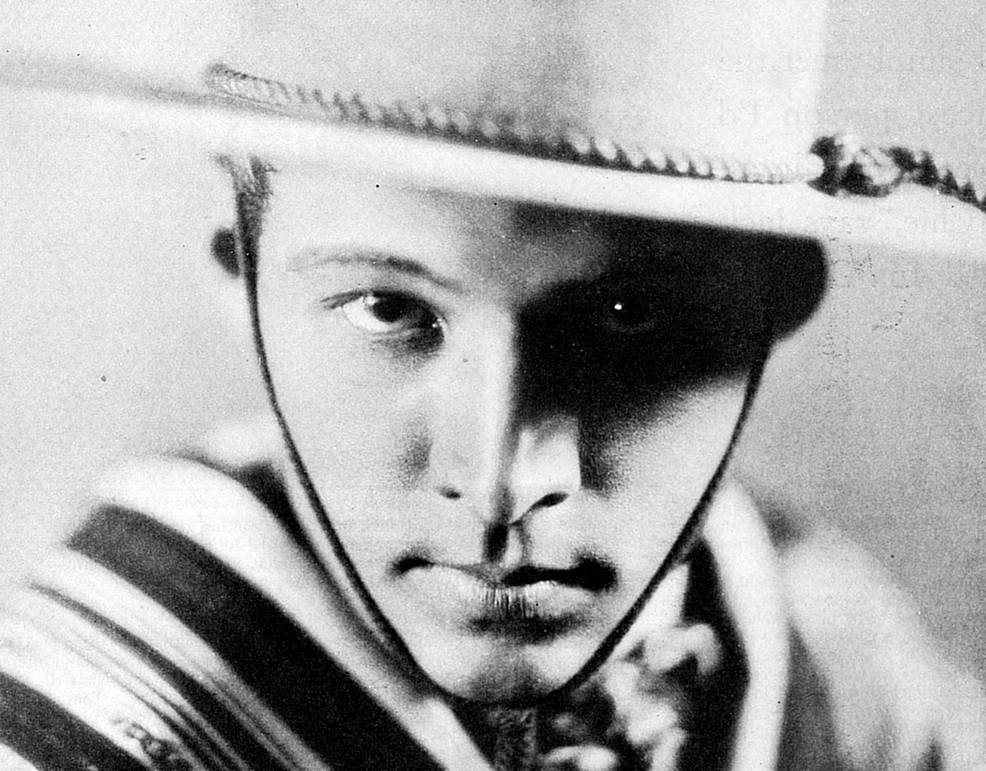
Rodolfo Pietro Filiberto Raffaello Guglielmi di Valentina d’Antonguella (May 6, 1895 – August 23, 1926), known professionally as Rudolph Valentino, was an Italian actor based in the United States who starred in several well-known silent films including The Four Horsemen of the Apocalypse, The Sheik, Blood and Sand, The Eagle, and The Son of the Sheik. He was an early pop icon, and a sex symbol of the 1920s, who was known in Hollywood as the “Latin lover” or simply as “Valentino”.
Rudolph Valentino Interview: From Castellaneta to Hollywood Legend
IM (Italia Mia): Today we revisit the life of one of cinema’s most iconic figures—Rudolph Valentino. From Italy to Hollywood, from poverty to global fame, his story remains legendary.
Early Life in Italy
IM: Let’s begin in the beginning. What was your childhood like in Italy?
Rudolph Valentino: I was born in Castellaneta, in southern Italy. Life there was simple but strict. My father was a veterinarian, my mother came from a more refined background. I was not a disciplined child—I was curious, restless, always observing people and imagining life beyond my surroundings.
IM: Did you always dream of leaving Italy?
Rudolph Valentino: Not at first. But I always felt that my world was too small for my thoughts. I didn’t know where I would go, only that I needed movement, change, something larger.
Journey to America
IM: Why did you leave for the United States?
Rudolph Valentino: Like many Italians at the time, I went to America seeking opportunity. I arrived in New York with very little money and no clear direction. I worked small jobs, sometimes as a dancer, sometimes whatever I could find. It was survival first, ambition later.
IM: Was it difficult to adapt?
Rudolph Valentino: Extremely. I was foreign, poor, and unfamiliar with how the system worked. But being different also made me noticeable. In time, that difference became my advantage.
Hollywood Breakthrough
IM: How did you enter the film industry?
Rudolph Valentino: I started with small film roles, almost invisible ones. Then came my breakthrough in The Four Horsemen of the Apocalypse and later The Sheik. Suddenly, everything changed.
IM: Why do you think The Sheik made you a global sensation?
Rudolph Valentino: It created an image of mystery and romance that audiences had not seen before. The studios shaped that image, but the public amplified it. I became something between reality and fantasy.
The “Latin Lover” Image
IM: You became known as the original “Latin Lover.” Did you like that label?
Rudolph Valentino: It was not something I created. It was a projection. I understood it helped my career, but it also reduced me to a single idea. People saw passion, not the person behind it.
IM: Did it affect your identity?
Rudolph Valentino: Yes. Fame often replaces the self with an image. You begin to wonder which one is real—the man or the myth.
Love Life and Relationships
IM: Your personal life was widely discussed. How do you reflect on your relationships?
Rudolph Valentino: I had marriages that were passionate but complicated, especially under public attention. Love in private is difficult enough—love under public scrutiny becomes even more fragile.
IM: Was it hard to maintain intimacy?
Rudolph Valentino: Yes. Fame removes privacy. It turns real emotions into stories for others.
Scandals and Public Image
IM: You were surrounded by gossip and controversy. How did you handle it?
Rudolph Valentino: I learned not to respond to everything. There were rumors about my personality, my masculinity, my relationships. Some were absurd, others hurtful. But responding to every rumor only gives it more life.
Acting in the Silent Film Era
IM: What was acting like during the silent film era?
Rudolph Valentino: It was a different language—physical expression, gesture, emotion without words. You had to communicate everything through presence alone. It was demanding but also poetic.
Fame and Pressure
IM: How did you deal with overwhelming fame?
Rudolph Valentino: Fame is not stability. It is intensity. It brings admiration and pressure at the same time. I often felt observed even in silence.
Italian Identity in Hollywood
IM: Did you still feel Italian after becoming a Hollywood star?
Rudolph Valentino: Always. Italy was never something I left behind. It lived in my manner, my expression, my instincts. Even when I became an American film star, I remained shaped by my origins.
Legacy and Memory
IM: How do you want to be remembered?
Rudolph Valentino: Not only as an image on screen, but as someone who crossed worlds—Italy and America, anonymity and fame, reality and myth. A man who lived many versions of himself.
Final Reflection
IM: If you could summarize your life in one thought?
Rudolph Valentino: Life is often seen as a story of fame or failure. But in truth, it is a story of movement—between places, identities, and the versions of ourselves we create and leave behind.