

🎯 Introduction
On 10 December 2025, UNESCO officially designated Italian cuisine as intangible cultural heritage of humanity — a first in history. ANSA.it+2Reuters+2
This recognition does not celebrate a single dish or region. Rather, it acknowledges the entire culinary and social fabric of Italy — the cooking traditions, the shared meals, the generational passing of recipes, and the deep ties between food, identity, culture, and community.
In this article, we’ll explore what this UNESCO listing means, why it matters, what its broader implications could be — for Italians at home and for people worldwide — and what challenges and opportunities might lie ahead.
🌍 What UNESCO Actually Recognized
-
A first of its kind — This is the first time in the world that a whole national cuisine has been inscribed on UNESCO’s list of intangible cultural heritage. ANSA.it+2euronews+2
-
A cultural and social system — According to UNESCO’s decision, Italian cooking is more than recipes: it’s a “cultural and social blend of culinary traditions,” a way to care for oneself and others, to express love, to rediscover cultural roots and to share history through food. ANSA.it+2ANSA.it+2
-
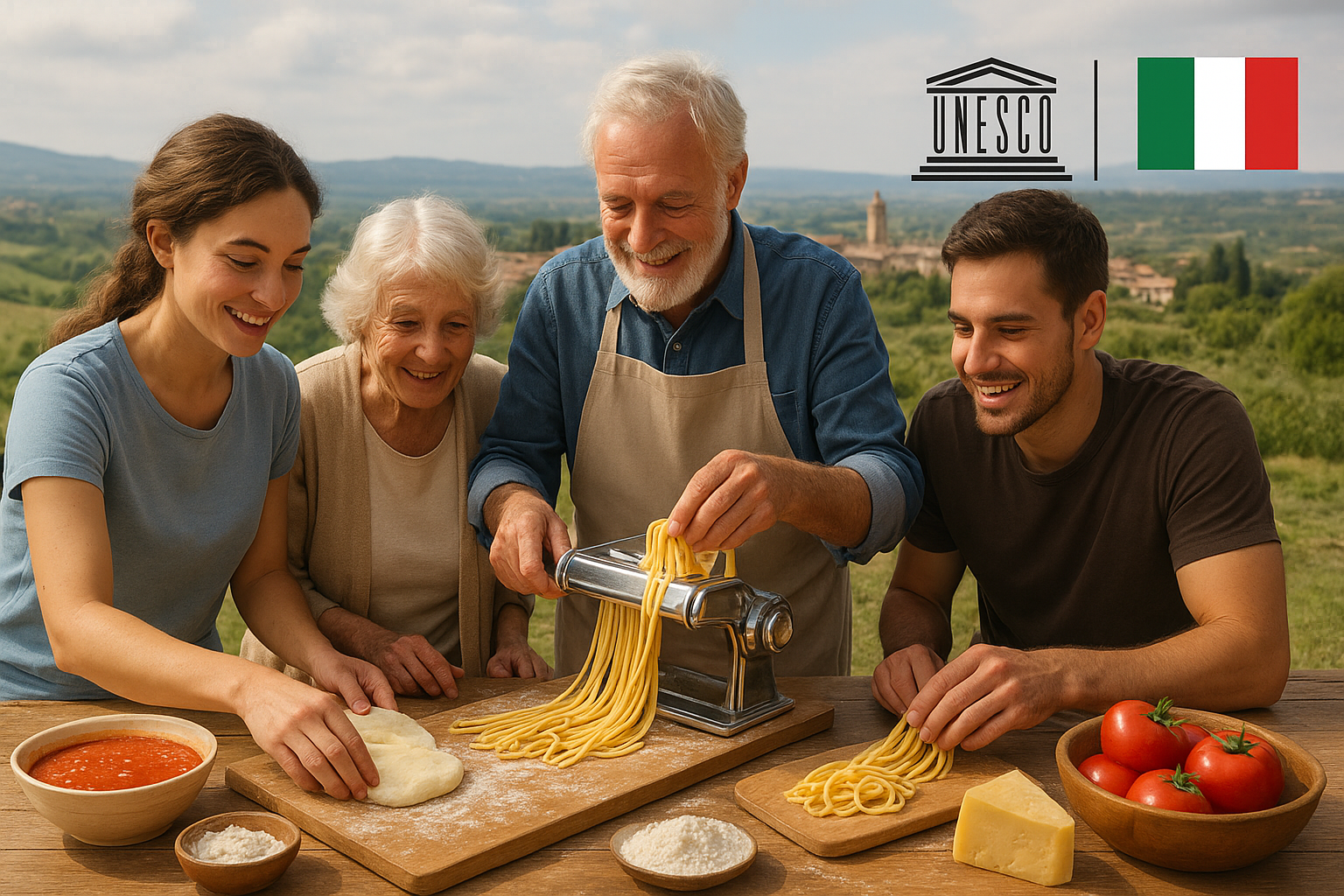
Rituals & communities over individual dishes — The inscription celebrates cooking and dining as communal and intergenerational practices: Sunday family meals, grandparents teaching grandchildren how to shape pasta, cooking with respect for ingredients, using seasonal and local produce, anti-waste recipes — and collectively sharing food, stories, and heritage. WSLS+2ANSA.it+2
-
From homes to schools to festivals — Transmission of culinary knowledge happens informally (within families, communities) and formally (through cooking schools, educational initiatives, culinary institutions), reflecting a living and evolving heritage. ANSA.it+2ANSA.it+2
✅ Why This Recognition Is So Groundbreaking
1. A Global First: National Cuisine Recognized as Heritage
While UNESCO has previously listed specific culinary practices — such as the art of crafting a type of food, or certain cultural meals — this is the first time an entire national cuisine, with all its regional diversity and social practices, is honored. That sets a new precedent in the world of cultural heritage. euronews+2The Guardian+2
2. Celebrating Food as Culture, Not Just Consumption
This decision reframes cooking and eating as fundamental to identity, community, and cultural memory — not merely nourishment. It acknowledges that food helps form bonds, carries traditions, and connects generations. ANSA.it+2ANSA.it+2
3. Recognition of Diversity, Tradition, and Regional Roots
Italian cuisine is famously diverse — from north to south, from mountains to coasts — with regional specialties, seasonal ingredients, and local cooking styles. UNESCO’s recognition honors this mosaic of traditions, not just the widely known “classic” dishes. WSLS+2Prensa Latina+2
4. A Boost for Italy’s Agri-Food and Cultural Industry
The inclusion comes as a major win for Italy’s agri-food sector and the entire “made in Italy” supply chain. Industry groups celebrated the decision as a success rooted in tradition but also marked by continuous innovation. ANSA.it+2Reuters+2
It could help protect Italian products from imitation and unfair competition, reinforce value for regional, artisanal, and high-quality food producers. ANSA.it+1
5. Cultural Diplomacy & National Identity on the World Stage
As noted by leaders, Italian cuisine becomes “our most formidable ambassador.” Reuters+1
It positions Italy’s food culture not just as a source of pride at home, but as a universal cultural asset — promoting exchange, respect, and global appreciation for Italy’s culinary heritage.
6. Strengthening Community, Social Inclusion and Intergenerational Bonds
UNESCO’s recognition highlights how cooking and sharing meals foster social inclusion, belonging, and intergenerational exchange — core values that transcend just food. ANSA.it+2ANSA.it+2
Food becomes a language of care, connection, tradition, and memory.
7. Opportunities for Tourism and Educational Growth
Past UNESCO listings of cultural heritage — including culinary traditions — have often led to increased interest in cooking schools, food tourism, local economies. Experts say this decision could boost tourism, support small family-run restaurants, and draw more interest to Italy’s lesser-known regional cuisines. Reuters+2Reuters+2
⚠️ Challenges and Criticisms: What Might Go Wrong
With great recognition comes new responsibilities — and potential pitfalls:
-
Risk of commodification and “tourist-fication”: Some fear traditional dishes and practices may be turned into tourist clichés — standardized, commercialized, and stripped of their authenticity — losing the soul and diversity of regional cuisines. Reuters+1
-
Pressure on small producers and family-run restaurants: While some see opportunities, others worry about rising costs, higher demand, or pressure to cater to tourists — which might distort traditional practices. Reuters+2ANSA.it+2
-
Balancing tradition and innovation: As cuisine evolves, maintaining respect for tradition while embracing innovation and contemporary challenges (e.g. sustainability, global dietary changes) will be a delicate balance.
-
Ensuring regional diversity isn’t overshadowed by “iconic dishes”: There’s a risk that best-known dishes (pasta, pizza, tiramisù) overshadow lesser-known regional specialties — undermining the richness and diversity that UNESCO sought to recognize.
🌿 What This Means for the Future
→ Strengthened Protection for Culinary Traditions
With UNESCO recognition, Italy gains a stronger tool to protect and promote its culinary heritage: safeguarding regional recipes, food craftsmanship, seasonal traditions, and intangible rituals associated with cooking and eating.
→ More Cultural and Food Tourism
Expect increased interest from tourists seeking “authentic” Italian culinary experiences — not only in major cities but also in smaller towns and regions. That can support local economies, small producers, rural communities.
→ Educational & Social Value
Cooking and food culture may be further integrated into education, community events, cultural festivals — helping to preserve traditions and pass them on to younger generations.
→ Global Influence & Inspiration
Italy’s achievement may inspire other countries to nominate their own national cuisines, or rethink food culture as an essential part of heritage, identity, and community — raising global awareness around gastronomy as more than just “eating.”
🍝 What It Means for Everyday People
-
For families: Cooking and sharing meals may gain renewed value — as expressions of love, identity, community, and memory.
-
For chefs and artisans: A global spotlight — an opportunity to highlight regional specialties, traditional methods, artisanal produce.
-
For food lovers & travelers: A richer, more meaningful food experience — not just tasting dishes, but discovering stories, traditions, people behind the flavors.
-
For Italian citizens: A reaffirmation that what may seem ordinary — cooking, sharing food, celebrating meals — is in fact part of the nation’s cultural heritage and identity.
❓ Frequently Asked Questions (FAQs)
Q1: Does UNESCO recognition mean only famous dishes like pizza and pasta are protected?
A: Not at all. The listing does not focus on individual dishes, but on the entire cooking culture — including everyday meals, regional recipes, cooking rituals, traditions of sharing food, seasonal ingredients, and community practices. ANSA.it+2WSLS+2
Q2: Is this the first time a country’s cuisine is recognized by UNESCO?
A: Yes — it’s the first time in history that a whole national cuisine has been recognized as intangible cultural heritage. Previous entries referred to specific meals or traditions, not the entire culinary system. euronews+2The Guardian+2
Q3: What kinds of practices are included under this heritage?
A: Practices such as cooking with seasonal local produce, anti-waste recipes, family meals, passing recipes and techniques across generations, community feasts, social rituals around food, food-handling skills, and more. ANSA.it+2ANSA.it+2
Q4: Could this recognition boost tourism in Italy?
A: Yes — many experts predict that UNESCO recognition could stimulate tourism, attract food-lovers worldwide, and offer economic relief to traditional family-run restaurants. Reuters+2Reuters+2
Q5: Are there risks that Italian cuisine becomes “tourist kitsch”?
A: Unfortunately, yes. Critics warn of the risk that traditions may be commercialized or simplified for mass tourism — potentially undermining the authenticity and regional diversity that the recognition aims to preserve. Reuters+2WSLS+2
Q6: What does this mean for Italy’s food industry and producers?
A: It strengthens legal and cultural protection for regional food products, enhances the value of traditional farming and artisanal production, and boosts the visibility of small producers and local food artisans. ANSA.it+1
🎯 Conclusion
The inclusion of Italian cuisine in UNESCO’s list of intangible cultural heritage is much more than a symbolic gesture. It is a landmark recognition of food as a pillar of culture, identity, memory, community and social bonds.
Italy has always been admired worldwide for its pasta, pizza, wines, cheeses — but this decision honours not just dishes, but the living, evolving tapestry of food rituals, regional diversity, family ties, and the respect for the land.
This heritage isn’t frozen in time: it lives in kitchens, around family tables, in markets, festivals, schools. With this recognition, Italy — and the world — now has a stronger commitment to preserve, celebrate, and pass on these traditions.
Whether you’re cooking a simple pasta at home or wandering through a trattoria in a little village, you’re part of something bigger: a global heritage built around passion, flavour, community, and identity.