Italian Truth, and Why You Can Still Find It in Restaurants Across Italy
Introduction
Few Italian dishes create more confusion than Fettuccine Alfredo.
For many Italians, the dish is considered an American invention. Tourists often hear statements like:
- “You cannot find Fettuccine Alfredo in Italy.”
- “Real Italians never eat Alfredo sauce.”
- “It only exists in the United States.”
Yet the truth is far more fascinating.
Fettuccine Alfredo was actually born in Rome, created by a real Italian chef, and continues to exist in Italy today — although often in a very different form from the creamy American version known worldwide.
This article uncovers the authentic history of Fettuccine Alfredo, explains how the dish became an international icon, and reveals why some Italian restaurants proudly continue serving it despite the myths.
The Origins of Fettuccine Alfredo in Rome
The original Fettuccine Alfredo was created in Rome in the early 20th century by Alfredo Di Lelio.
According to culinary history, Alfredo invented the dish around 1908 at his restaurant near Piazza Augusto Imperatore. He prepared it for his pregnant wife, who had lost her appetite after giving birth.
The recipe was astonishingly simple:
- Fresh fettuccine pasta
- Butter
- Parmigiano Reggiano cheese
No cream.
No garlic.
No flour.
No thick sauce.
The magic came from technique.
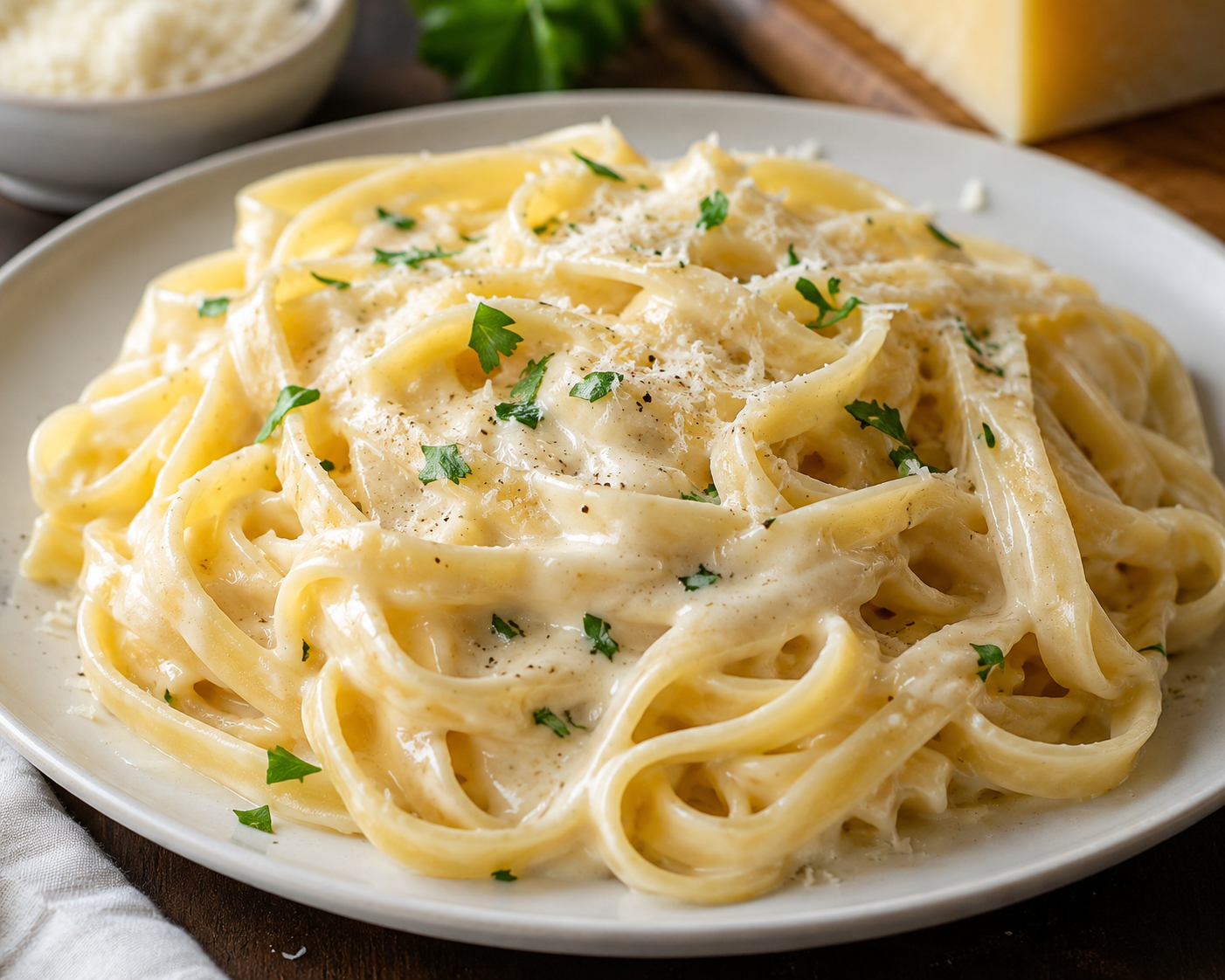
Alfredo mixed hot pasta with butter and aged Parmigiano until the ingredients emulsified into a silky coating that clung perfectly to the noodles.
The result was luxurious despite using only a few ingredients.
Why Americans Fell in Love with Fettuccine Alfredo
The international fame of Fettuccine Alfredo began thanks to Hollywood.
In the 1920s, silent film stars Douglas Fairbanks and Mary Pickford visited Alfredo’s restaurant during their honeymoon in Rome. They adored the dish and helped spread its fame in the United States.
Soon, American tourists traveling to Italy began requesting it.
As Italian immigration increased in America, chefs adapted the recipe using local ingredients and American tastes.
Over time, the American version evolved dramatically.
The American Transformation of Alfredo Sauce
In the United States, Fettuccine Alfredo became richer and heavier.
Restaurants started adding:
- Heavy cream
- Garlic
- Parsley
- Chicken
- Shrimp
- Extra butter
The creamy white sauce Americans recognize today is largely an Italian-American adaptation rather than the original Roman preparation.
Ironically, this transformation created confusion.
Many Italians reject the Americanized version because it no longer resembles the classic Roman dish. As a result, people began claiming the dish was “not Italian.”
But that statement is only partially true.
The Truth: Fettuccine Alfredo Does Exist in Italy
Contrary to popular belief, you absolutely can find Fettuccine Alfredo in Italy.
However, there are important details to understand.
It Exists Mostly in Rome
The dish remains strongly associated with Rome, especially at historic restaurants connected to Alfredo Di Lelio’s legacy.
Several Roman restaurants continue serving authentic Alfredo-style pasta using the traditional method.
These restaurants often attract:
- International tourists
- Food historians
- Italian pasta enthusiasts
- Curious locals
It Is Not an Everyday Italian Dish
One reason many Italians say “it doesn’t exist” is because most Italians do not cook it regularly at home.
Unlike carbonara or amatriciana, Alfredo pasta is not considered a central part of everyday Italian cuisine.
Italy has thousands of regional pasta recipes, and Alfredo occupies a relatively niche historical position.
Italians Often Call It “Fettuccine al Burro”
In Italy, dishes similar to Alfredo may appear under different names:
- Fettuccine al burro
- Pasta burro e parmigiano
- Fettuccine doppio burro
These preparations use the same core ingredients but may not carry the international “Alfredo” label.
Why the Myth Continues
The belief that “Fettuccine Alfredo is not Italian” survives for several reasons.
The American Version Dominates Globally
Most people outside Italy know only the heavy cream version.
When Italians see giant bowls of cream-covered pasta with chicken and broccoli, they naturally feel disconnected from it.
Italian Cuisine Values Simplicity
Traditional Italian cooking often relies on:
- Few ingredients
- High-quality products
- Balanced flavors
The American Alfredo style can seem excessive to many Italians.
Italian Regionalism Matters
Italian cuisine is deeply regional.
A dish popular in Rome may be almost unknown in Sicily or Piedmont.
Some Italians genuinely never encounter Alfredo during daily life.
The Original Alfredo Technique
The authentic preparation is surprisingly difficult despite the short ingredient list.
Essential Ingredients
| Ingredient | Purpose |
|---|---|
| Fresh fettuccine | Texture and absorption |
| High-quality butter | Richness |
| Parmigiano Reggiano | Flavor and emulsification |
| Pasta water | Creates silky sauce |
The Secret Is Emulsification
The creamy texture comes from mixing butter, cheese, and pasta water correctly.
When done properly:
- The sauce becomes velvety
- No cream is necessary
- The pasta stays light yet luxurious
This technique resembles other classic Roman pastas, where starch and fat create texture naturally.
Alfredo Di Lelio and the Famous “Golden Fork”
Alfredo Di Lelio became famous for dramatic table-side preparation.
At his restaurant, he mixed the pasta theatrically using golden utensils gifted by Hollywood stars.
This performance became part of the restaurant’s identity and helped turn the dish into a global phenomenon.
Today, some Roman restaurants still recreate the ritual for visitors.
Famous Restaurants Serving Fettuccine Alfredo in Italy
Several restaurants in Rome continue the Alfredo tradition.
Alfredo alla Scrofa
Perhaps the most famous Alfredo restaurant in Rome, Alfredo alla Scrofa claims direct historical ties to the original recipe.
The restaurant attracts celebrities, tourists, and culinary historians.
Il Vero Alfredo
Another historic Roman establishment preserving the classic preparation style.
Tourist-Oriented Italian Restaurants
Some restaurants across Italy also serve Alfredo because international visitors expect it.
This is especially common in:
- Rome
- Florence
- Venice
- Milan
Tourism shapes restaurant menus more than many people realize.
Italian Reactions to Alfredo Pasta
Italian opinions about Alfredo are mixed.
Traditionalists
Some culinary purists argue that:
- The American version damages Italian culinary identity
- Cream overwhelms the pasta
- Chicken pasta combinations feel unnatural
Historians and Chefs
Others acknowledge:
- The dish is undeniably Roman in origin
- Culinary evolution is normal
- Italian-American cuisine deserves respect
Younger Generations
Modern Italian chefs increasingly embrace culinary flexibility and cultural exchange.
Some upscale restaurants even reinterpret Alfredo using modern techniques.
The Difference Between Alfredo and Carbonara
People often confuse Alfredo with carbonara because both are Roman pasta dishes.
However, they are very different.
| Alfredo | Carbonara |
|---|---|
| Butter-based | Egg-based |
| Parmigiano | Pecorino Romano |
| Mild flavor | Strong savory flavor |
| No meat | Guanciale |
| Creamy via emulsification | Creamy via eggs |
Authentic carbonara also traditionally contains no cream.
Why Tourists Search for Alfredo in Italy
Many American tourists arrive in Italy hoping to try the “real Alfredo.”
Some are surprised when:
- Menus do not list it
- Servers recommend other Roman dishes
- The Italian version tastes lighter
This creates the mistaken belief that the dish “does not exist.”
In reality, visitors simply encounter a more authentic interpretation.
Italian-American Cuisine Deserves Respect
One important truth often ignored is that Italian-American cuisine has its own cultural legitimacy.
Dishes like:
- Chicken Parmesan
- Spaghetti and meatballs
- American Alfredo
reflect immigrant adaptation, survival, and creativity.
They may differ from modern Italian cuisine, but they remain historically meaningful.
Food constantly evolves through migration and cultural exchange.
The Global Legacy of Fettuccine Alfredo
Today, Fettuccine Alfredo exists in many forms worldwide.
You can find versions featuring:
- Seafood
- Truffles
- Mushrooms
- Chicken
- Vegan alternatives
Yet the Roman original remains beautifully minimalist.
Its enduring appeal proves that simple ingredients, when handled expertly, can become timeless.
FAQs
Is Fettuccine Alfredo really Italian?
Yes. The original version was created in Rome by Alfredo Di Lelio.
Why do people say Alfredo does not exist in Italy?
Because the heavy cream American version differs greatly from the traditional Roman recipe.
Does authentic Alfredo sauce contain cream?
No. Traditional Alfredo uses butter, Parmigiano Reggiano, and pasta water.
Can you order Fettuccine Alfredo in Rome?
Yes. Several Roman restaurants still serve authentic Alfredo pasta.
What is the difference between Italian and American Alfredo?
American Alfredo usually contains heavy cream and additional ingredients, while the Italian version is much simpler.
Is Alfredo popular among Italians today?
It exists in Italy but is less common than other Roman pasta dishes like carbonara or cacio e pepe.
Conclusion
Fettuccine Alfredo is one of the most misunderstood dishes in the world.
The truth is neither extreme.
It is not merely an American invention, nor is it a universally beloved Italian classic. Instead, it occupies a fascinating middle ground: a genuine Roman creation transformed by international popularity.
Yes, you can absolutely find Fettuccine Alfredo in Italy — especially in Rome, where its story began more than a century ago.
Understanding this history helps us appreciate both traditional Italian cuisine and the rich evolution of Italian-American food culture.
Sometimes, the most interesting culinary stories live somewhere between myth and reality.
For more about Italian culinary traditions, visit the official Italian tourism website: https://www.italia.it/en