 Italian food can fit comfortably into a healthy eating pattern. Vegetable soups, beans, fish, whole grains and olive oil offer plenty of possibilities beyond the familiar restaurant combination of pizza, pasta and dessert.
However, Italian cuisine and the Mediterranean diet are not interchangeable. One describes a diverse culinary tradition; the other describes an overall pattern of eating. The ingredients, portions and frequency of meals matter more than their nationality.
What Italy’s Obesity Figures Actually Show
The older comparison of “one in ten” Italian adults with “one in six” elsewhere needs updating and clearer context.
In its report covering 2025, published in April 2026, Istat reported that 11.6% of Italian adults aged 18 and over had obesity. Another 34.8% were classified as overweight, bringing the combined proportion to 46.4%. Obesity prevalence had increased from 9.8% in 2015. Italy therefore faces a substantial weight-related health challenge despite its celebrated food traditions.
For an international comparison, the OECD’s Health at a Glance 2025 country note reported self-reported obesity prevalence of 12% in Italy, compared with an OECD average of 19%. That comparison concerns OECD countries, rather than Europe alone, and uses the latest available observations rather than necessarily measurements taken in 2025.
These figures describe population differences. They do not establish that Italian dishes caused the lower rate, or that adopting Italian cuisine guarantees weight loss.
Italian Cuisine and the Mediterranean Dietary Pattern
Italian cuisine includes regional traditions ranging from vegetable and bean dishes to butter-rich sauces, cured meats, cheeses, pastries and fried foods. All belong to its culinary heritage, but they do not have identical nutritional profiles.
A Mediterranean dietary pattern draws on traditions across several Mediterranean countries. It emphasizes vegetables, fruit, legumes, whole grains, nuts and olive oil, with fish and other protein sources, while limiting processed meats, added sugars and excess salt. Its value comes from the combination of foods eaten regularly.
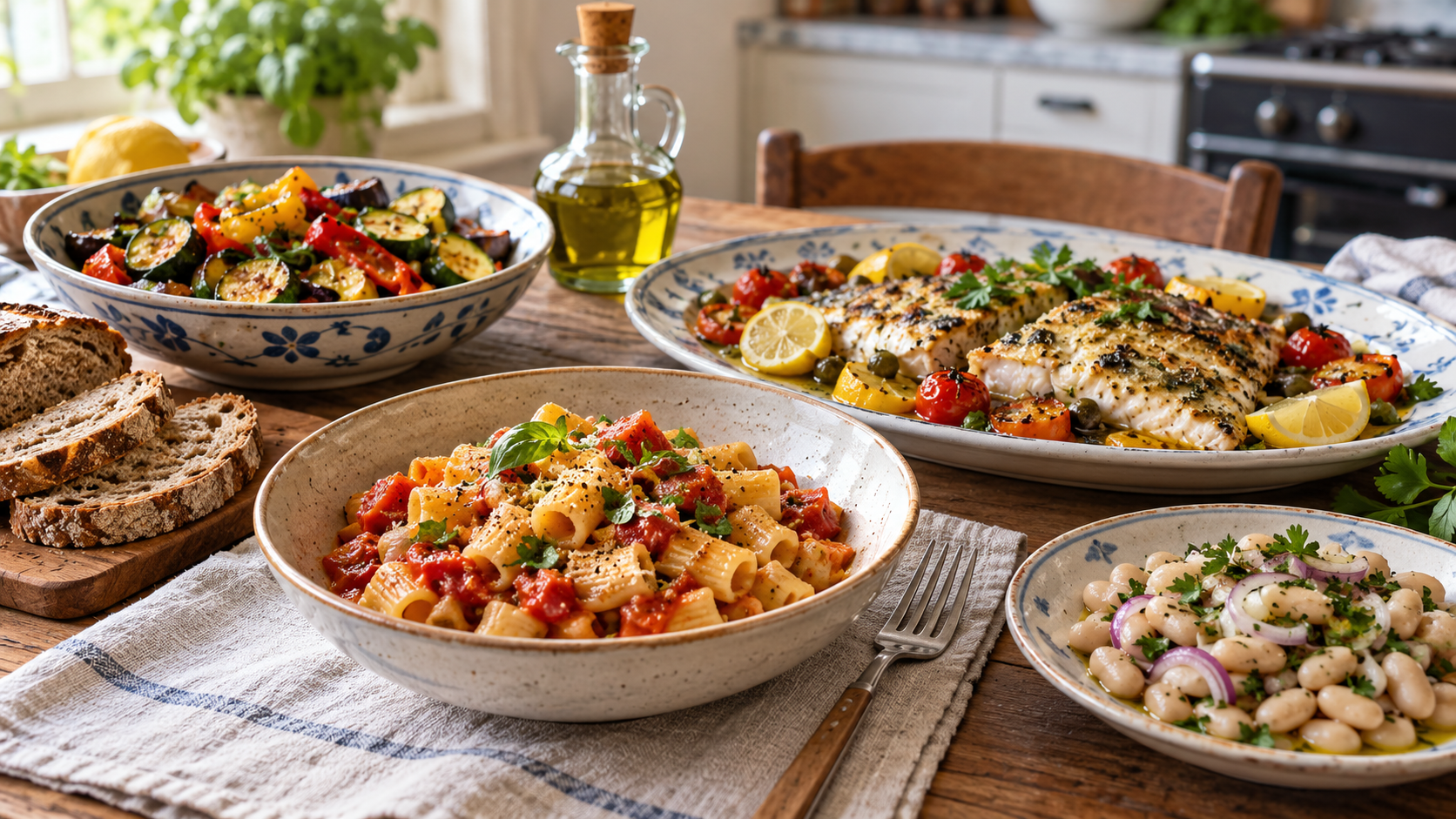
Minestrone with beans, pasta e ceci, or fish served with vegetables can illustrate that approach. A meal does not follow a Mediterranean pattern simply because it contains olive oil or comes from an Italian recipe.
Useful Italian Meals to Bring to Your Table
The most useful material in the Italian cooking tradition is its range of everyday dishes built around vegetables, legumes and grains.
For example, make minestrone with a generous variety of vegetables and beans. Prepare pasta with chickpeas, lentils or vegetables, rather than treating the sauce as a small decoration around a large serving of pasta. Serve baked fish with seasonal vegetables, or build a lunch around a bean salad.
These are adaptable meal ideas rather than prescribed menus. Choose preparations and quantities that suit your needs, and pay attention to salt from stock, cheese, olives and other additions.
Cooking from scratch gives you control over ingredients, but convenient foods can help too. Frozen vegetables and canned beans can make these meals easier to prepare.
Pasta, Olive Oil and Portions
Pasta can be part of a balanced meal. Whole-grain versions provide an option consistent with guidance to choose whole grains more often, while vegetables and legumes help broaden the meal beyond the pasta itself.
There is no universal “healthy Italian portion” of 100 grams. A portion must also specify whether the pasta is weighed dry or cooked, and its suitability depends on the person and the rest of the meal.
Olive oil is useful as a source of unsaturated fat, particularly when replacing sources of saturated fat. It still contributes energy, so generous pouring is not automatically better. Current American Heart Association guidance emphasizes both fat quality and matching energy intake to individual needs.
Tomatoes, garlic and herbs add flavor and variety. They should not be presented as ingredients that reliably produce weight loss.
A Healthy Pattern Allows Room for Enjoyment
Pizza, cheese and desserts can have a place in someone’s eating habits. Their portions and frequency should be considered alongside the overall diet, rather than assuming that traditional foods are automatically beneficial.
Wine is also unnecessary for a Mediterranean-style diet. The American Heart Association’s 2026 guidance advises people who do not drink alcohol not to start, and those who do drink to limit intake.
The practical lesson is to draw more often on Italian cuisine’s vegetable, bean, grain and fish dishes while considering how the whole meal fits together. Enjoying the cuisine does not require turning every cultural tradition into a health claim.
For advice specifically related to blood sugar, read our guide to the Mediterranean diet and diabetes.
External Sources
Istat: Health risk factors—weight, sedentary behavior, smoking and alcohol, 2025 data
OECD: Health at a Glance 2025—Italy
American Heart Association: What Is the Mediterranean Diet?
American Heart Association: 2026 Dietary Guidance to Improve Cardiovascular Health