

Introduction
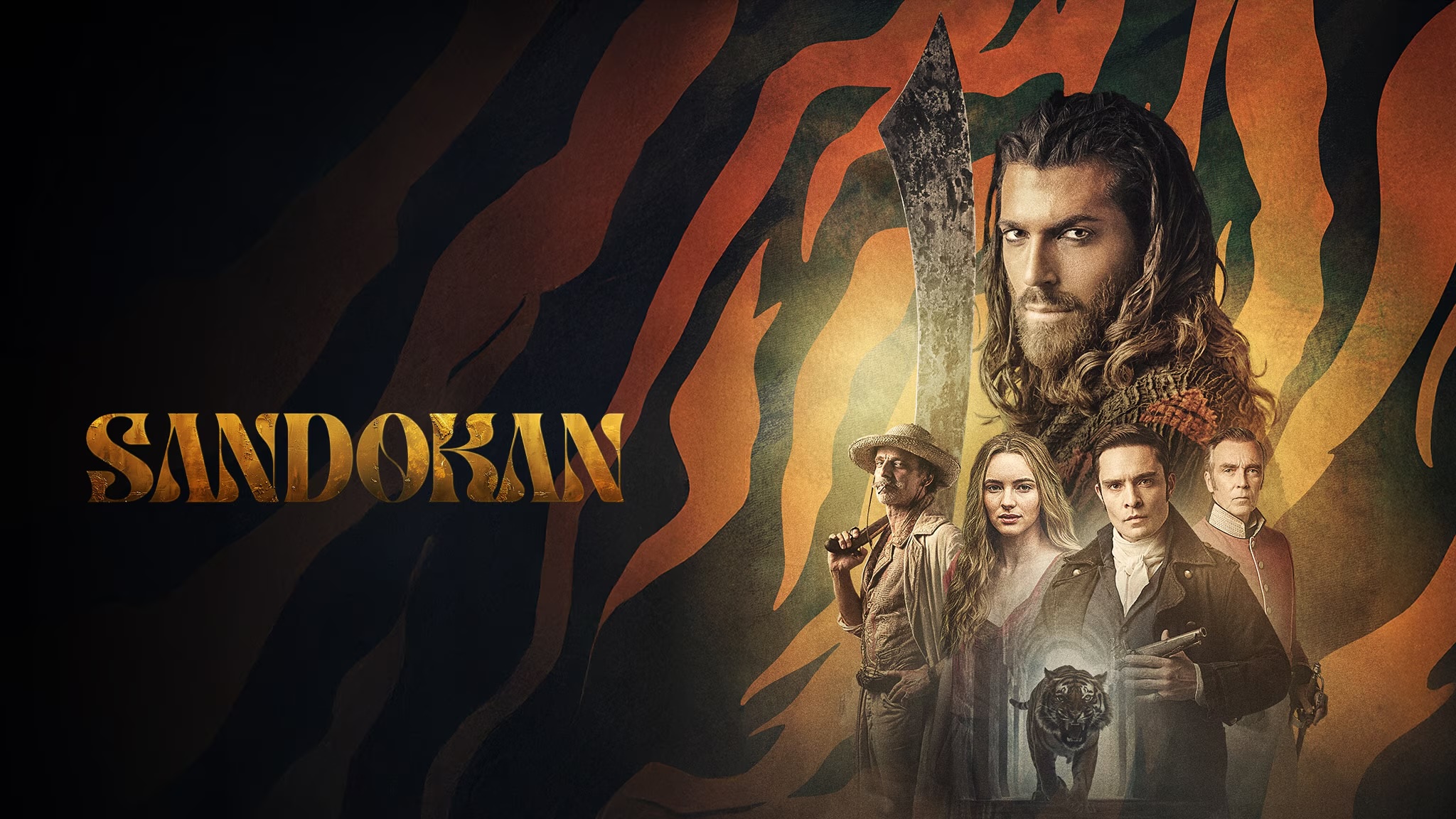
At the close of 2025, one of Italy’s most enduring fictional heroes returned to life with cinematic ambition: Sandokan, the Tiger of Malaysia. Unlike simpler reboots, this new television event — starring Can Yaman and produced by Lux Vide in collaboration with Rai Fiction — is deeply anchored in published production details, historical inspiration, and decades of audience nostalgia. It was previewed at the Festa del Cinema di Roma, scheduled for broadcast on Rai1 and Disney+, and marks a significant cultural moment in Italian and international storytelling.
As publications from La Repubblica to Wired Italia have documented, the series seeks not simply to retell classic pulp adventure, but to illuminate the internal life of its hero and rebuild the world around him with contemporary cinematic values.
From Page to Screen: Salgari, Mompracem, and Colonial Backdrop
The literary genesis of this adaptation lies in Emilio Salgari’s Le Tigri di Mompracem, published in 1900. Salgari created a fictional Malayan prince who becomes a pirate after losing his throne — a figure shaped by the author’s vivid imagination of Southeast Asian settings and resistance to British colonial power.
Though Sandokan is not a historical figure, Salgari rooted his narrative in real tensions of the 19th century, inspired by pirates and anti-colonial resistance in the Southeast Asian archipelago. Scholars and cultural commentators note that Salgari’s worlds blend historical context with myth, creating an adventurous but potent backdrop of imperial struggle.
This adaptation remains faithful to the broad thrust of Salgari’s world — the conflict with colonial forces, maritime battles, exotic locales — but also reinterprets motivations and character arcs to align with modern storytelling expectations.
A TV Event with International Scale
Production for the 2025 Sandokan began in 2024 after lengthy preparatory work interrupted by the pandemic. Filming took place across Italy — including Lazio, Tuscany, and Calabria — with the latter site hosting elaborate reconstructions of colonial settlements like Labuan.
These sets — described in Vanity Fair Italia as meticulous creations complete with wood-framed porticoes and tribal costumes — signal the ambition of the series to rival international historical dramas.
Behind the camera are directors Jan Maria Michelini and Nicola Abbatangelo, with a writing team that includes Alessandro Sermoneta, Scott Rosenbaum, and Davide Lentieri. According to release details, the eight-episode structure spans four Monday nights on Rai1, each airing two episodes that explore origin, conflict, and evolving alliances.
Casting and Characters: A Blend of Legacy and New Blood
The anchor of the series is Can Yaman, whose casting has been framed as both bold and fitting by Italian press. Yaman steps into the role with a consciousness of Sandokan’s weighty legacy, including comparisons to the beloved 1976 portrayal by Kabir Bedi — a series that once drew 27 million Italian viewers and became a continental phenomenon.
In interviews surrounding the Roma premiere, Yaman spoke about immersing himself in the role, transforming physically and mentally to embody a leader forged by hardship. He emphasized a desire to create an “original” interpretation rather than simply echo past portrayals.
Alongside him, Alessandro Preziosi embodies Yanez, the loyal companion whose moral depth and tactical support have long been a core part of the narrative in Salgari’s books. The cast also includes international names like Ed Westwick and John Hannah, underscoring the production’s global aspirations.
Plot and Setting Across Time and Tone
According to Il Giornale d’Italia, the series begins in the Borneo of 1841, mapping an arc from Sandokan’s early life through his transformation into pirate leader and revolutionary. The narrative combines classic adventure — battles at sea, guerrilla skirmishes, and duels — with love plotlines and interpersonal conflict.
The first two episodes, “La Tigre della Malesia” and “La Perla di Labuan,” dive into the mythic world of piracies and colonial pressures, setting a tone of romantic danger.
This mix of spectacle and emotional core is a deliberate strategy, positioning the series between historical drama and character-driven adventure, rather than pure escapism. Production notes suggest a fight between authenticity and theatricality — the jungles of Borneo are recreated amidst Italian landscapes with heavy reliance on sets and cinematography.
Comparisons to the 1976 Classic
The shadow of the original Sandokan television series looms large. Directed by Sergio Sollima and starring Kabir Bedi, that 1970s production became an Italian cultural landmark, spawning sequels and cinematic releases and selling to over 85 countries worldwide.
In contrast, the 2025 version leans into psychological complexity and narrative coherence. Whereas the original lived in grand, sometimes operatic adventure with straightforward moral dichotomies, the new series is consciously reflective, scrutinizing its hero’s motivations, fears, and formative choices. Unofficial commentary from viewer threads indicates debate about this balance — traditional adventure versus deeper character introspection — suggesting the adaptation may polarize fans but also enrich the storytelling.
Visual and Thematic Ambition
Technical production values are high: Wired Italia reported that the crew comprised around 150 fixed personnel plus thousands of extras, with scenes ranging from naval battles to intimate encounters. The tactical decision to film in Italy while recreating Southeast Asian geography illustrates a globalized approach to visual storytelling.
Costume design, set creation, and attention to tribal culture details — even if at times stylized — demonstrate a commitment to world-building that echoes international competition.
The series also stages the famous “fight with the tiger,” a sequence long discussed among fans of Salgari’s work and adaptations alike, blending fantasy spectacle with character trial.
Cultural Reception and Ratings
Early viewer data shows that the series debut dominated its Monday night slot on Rai1, with reports of nearly 5.8 million viewers and a share around 33.9 %, confirming widespread interest and television impact.
Social media and audience threads illustrate spirited discussion, with some praising the chemistry among actors like Alessandro Preziosi, while others debate fidelity to source material. These conversations reflect broader cultural engagement, not just passive consumption.
What This Adaptation Signals for Modern Audiences
In returning to Salgari’s world, this new Sandokan addresses questions often sidelined in adventure adaptations: what makes a legend resonate across eras? How does colonial conflict translate into modern sensibilities without losing dramatic urgency? How does one balance mythic stature with emotional vulnerability?
By foregrounding origin stories, character psychology, and sociopolitical context, the series builds a textured narrative that aims to satisfy fans of classic adventure while engaging contemporary viewers accustomed to hybrid genres — blending historical drama, romance, and introspection.
Conclusion
This Sandokan revival stands at a crossroads of literary legacy and modern television ambition. Supported by major production investment, veteran directors, and an international cast led by Can Yaman, the series reconnects with Salgari’s mythic pirate while reshaping him for a new age.
Rich in theme, grounded in history, and expansive in scope, the show offers both homage and evolution — a testament to the enduring power of a character who has captured imaginations for more than a century.