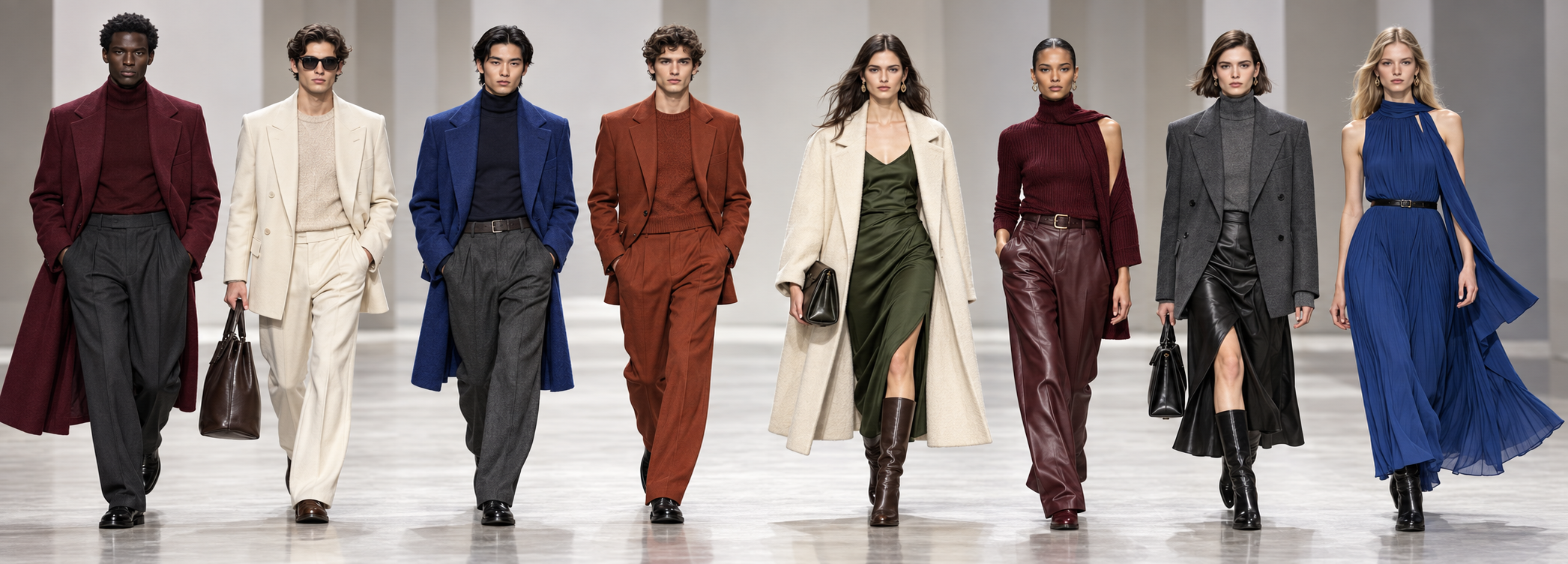
Italian fashion is not defined by a single look. It can be as restrained as an impeccably cut Giorgio Armani jacket, as theatrical as a Dolce & Gabbana dress, as intellectual as a Prada collection or as finely engineered as a pair of handmade shoes from the Marche. What connects these different expressions is a culture of design supported by skilled manufacturing, specialist workshops and regional traditions.
Italy’s reputation for fashion extends far beyond the runway. It includes textiles from Como and Prato, leather goods from Tuscany, footwear from the Marche and Veneto, knitwear from Emilia-Romagna and Umbria, jewelry from Vicenza, Valenza and Arezzo, and eyewear from northeastern Italy. Together, these industries have made Italian fashion one of the most recognizable expressions of Made in Italy.
What Makes Italian Fashion Distinctive?
Italian fashion is often associated with elegance, but elegance alone does not explain its influence. Its greatest strength is the close relationship between creative design and production knowledge. Designers can work with mills, tanneries, embroiderers, pattern cutters, metalworkers and other specialists whose expertise may have been refined over several generations.
This relationship gives Italian fashion several recurring characteristics:
- Strong materials, including wool, silk, linen, cashmere and leather
- Precise tailoring and careful proportions
- Attention to how a garment moves and feels, not only how it photographs
- A balance between heritage and experimentation
- Regional production networks capable of making everything from buttons and buckles to finished luxury goods
There is no universal “Italian style.” Milanese understatement, Roman glamour, Florentine craftsmanship and southern color all belong to the same story. Italian fashion succeeds partly because it can accommodate these contrasts.
The Roots of Fashion in Italy
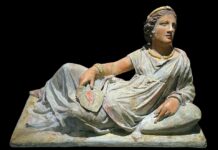
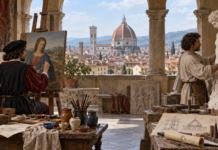
Italy’s textile and clothing traditions long predate the modern fashion industry. During the Renaissance, courts in Florence, Mantua, Ferrara, Milan and Venice used clothing to communicate wealth, rank and political influence. Italian cities became known for silk, velvet, brocade, lace, jewelry and skilled tailoring.
Political fragmentation later made it difficult for Italy to develop a unified national fashion identity. Paris dominated international couture, while Italian dressmakers, textile producers and artisans often worked within regional markets. Nevertheless, the knowledge required for a modern fashion system—fine fabrics, tailoring, leatherworking, jewelry and decorative arts—was already deeply established.
The Birth of Modern Italian Fashion in Florence
The symbolic beginning of modern Italian fashion is usually dated to February 12, 1951. On that day, businessman Giovanni Battista Giorgini presented work by Italian fashion houses at Villa Torrigiani in Florence to an audience that included American buyers and journalists.
Giorgini understood that postwar Italy could offer international customers an appealing alternative to Paris: beautifully made clothing that combined sophistication, originality and greater wearability.
The success of Giorgini’s initiative led to larger presentations. In 1952, the shows moved to the Sala Bianca in Palazzo Pitti, whose elegant setting became internationally associated with Italian fashion. Designers and houses such as Emilio Pucci, Roberto Capucci, the Fontana sisters, Simonetta, Jole Veneziani and Emilio Schuberth helped establish the new identity of Italian style.
Florence remains important today, particularly through Pitti Uomo, one of the world’s leading menswear events. The city is also central to the history of Italian leather goods and several major luxury houses.
From Rome to Milan
Rome became a center of postwar couture and celebrity fashion. Its ateliers dressed aristocrats, international stars and actresses working at Cinecittà. The Fontana sisters, Valentino, Roberto Capucci, Fernanda Gattinoni and other designers helped create a glamorous image of Italian high fashion that circulated through magazines and films.
Milan’s ascent followed a different path. The city was closely connected to northern Italy’s textile manufacturers, publishing industry, advertising agencies and business culture. During the 1970s and 1980s, ready-to-wear became increasingly important, and Milan offered the infrastructure needed to turn designer collections into an international industry.
Giorgio Armani transformed modern tailoring with softer construction and a controlled palette. Gianni Versace combined classical references, pop culture and sensuality. Gianfranco Ferré brought an architectural approach to clothing, while Miuccia Prada later challenged conventional ideas of beauty and luxury.
These designers did not create one Milanese formula. They demonstrated how many different identities Italian ready-to-wear could support.
For a deeper look at the people and houses behind this evolution, read Italian Fashion Designers: The Icons Who Defined Made in Italy.
Italy’s Fashion Districts: The Strength Behind the Labels
Famous names receive the publicity, but Italian fashion depends on a network of specialized production areas. A finished garment or accessory may draw on knowledge from several regions.
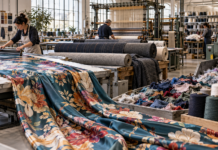
Como is internationally known for silk and printed textiles. Prato has a centuries-old textile tradition and is especially important for wool and fabric recycling. Biella is associated with fine woolen cloth. Tuscany is renowned for leatherworking, bags and accessories, while Santa Croce sull’Arno is one of the country’s principal tanning areas.
The Marche has a major footwear tradition, and Veneto is important for shoes, leather goods and eyewear. Belluno’s eyewear district helped make Italy a global force in frames and sunglasses.
Carpi is known for knitwear and clothing production, while Umbria has a strong cashmere tradition. Vicenza, Valenza and Arezzo are important jewelry centers.
These districts are not frozen in the past. They combine hand skills with industrial machinery, digital design, materials research and highly organized supply chains. That mixture of workshop culture and advanced production is essential to understanding why Italy remains influential.
Italian Clothing and Tailoring
Italian tailoring is admired for fit, proportion and ease. In menswear, it ranges from the soft, light construction associated with Naples to the more structured traditions of northern Italy.
In womenswear, Italian designers have repeatedly moved between clean modernism, elaborate decoration, sensuality and practical luxury.
The country is also strong in knitwear, outerwear, sportswear and casual clothing. Italian fashion is not limited to couture or expensive evening wear. Ready-to-wear, family-run manufacturers, contemporary independent labels and specialized makers are all part of the system.
If you want an overview of the most influential names, continue with our guide to Italian fashion designers. For the calendar, history and role of the industry’s principal showcase, see Milan Fashion Week: History, Designers, Shows and Complete Guide.
Italian Leather Goods and Shoes
Italian leather is prized because of both the raw material and the skill used to transform it. Tanning, cutting, coloring, stitching and finishing all affect the quality of a bag, shoe, belt or jacket.
Tuscany is especially celebrated for leather production, but important footwear and accessory businesses are found across several regions.
Consumers should be cautious with market stalls and online listings that use Italian-sounding names without clearly identifying where an item was made. A high price, an Italian flag or the word “leather” does not guarantee Italian production or excellent workmanship.
Examine the label, materials, stitching, hardware, lining and the company’s production information.
Italian Jewelry
Italian jewelry ranges from ancient goldsmithing traditions to bold contemporary design. Vicenza is a major center for gold jewelry and international trade; Valenza is associated with high-end craftsmanship; and Arezzo is an important production district.
Rome, Florence, Milan, Naples and other cities also support distinctive jewelry traditions and luxury houses.
Bulgari is the best-known Roman jewelry name internationally, while Buccellati is admired for intricate surface work inspired by textiles, lace and Renaissance ornament. Pomellato helped popularize a more relaxed, colorful approach to fine jewelry.
Alongside these famous houses are many smaller goldsmiths and family workshops.
Italian Eyewear
Eyewear is one of Italy’s most important fashion specializations. The district around Belluno in Veneto became a center for frame production, combining technical expertise with fashion licensing, branding and large-scale manufacturing.
Italian companies produce optical frames and sunglasses for their own brands as well as for international fashion houses.
Design matters, but so do engineering, comfort, hinges, lens specifications and fit. As with other products, an Italian brand name does not necessarily mean that every component or manufacturing stage is Italian, so the product label remains important.
Fragrance and Beauty
Perfume is another extension of Italian fashion. Major houses including Armani, Prada, Valentino, Gucci, Versace and Dolce & Gabbana have built global fragrance businesses.
Italy also has historic and artisanal perfumers such as Acqua di Parma, Santa Maria Novella and Carthusia, whose identities are linked to particular cities and landscapes.
See our guide to best-selling Italian fragrances for examples of classic and contemporary scents.
What “Made in Italy” Really Means
Made in Italy is both a legal origin indication and a powerful cultural idea, but it should not be confused with an absolute guarantee of luxury or hand production.
Fashion supply chains are complex. A company may be Italian-owned, design its products in Italy, manufacture them entirely in Italy or combine Italian and international production. These are not the same claim.
The origin label generally relates to customs rules governing where a product underwent its last substantial transformation. It does not automatically tell you where every fiber, hide, zipper or component originated.
Brands that want to demonstrate a deeper commitment to Italian production increasingly provide more detailed information about factories, suppliers, materials and craftsmanship.
When shopping, look beyond the flag on the label:
- Ask where the item was cut, assembled and finished.
- Identify the material precisely.
- Check whether the brand explains its supply chain.
- Examine the quality of the stitching, lining and hardware.
- Consider whether construction and durability justify the price.
Milan Fashion Week and Italy’s Global Influence
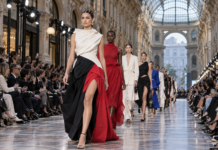
Milan Fashion Week is one of the four principal international fashion weeks, alongside Paris, London and New York. Organized by Camera Nazionale della Moda Italiana, it brings together established houses, emerging designers, buyers, journalists and digital audiences.
The event is important not simply because it produces striking runway images. It connects design with manufacturing, retail, communication and international trade.
Physical shows now coexist with presentations and digital content, while the schedule increasingly includes conversations about inclusion, responsible production and support for younger designers.
Visitors should know that official runway shows are generally industry events accessible by invitation, not public attractions with ordinary tickets. Fashion exhibitions, brand events, store installations and some presentations may be more accessible during fashion week.
Our complete Milan Fashion Week guide explains how the event works.
Italian Fashion in Everyday Life
Most Italians do not dress like runway models, and there is no national uniform. Everyday style varies by age, profession, climate, city and personal taste.
Yet a few habits recur: attention to fit, good shoes, restrained coordination and clothing appropriate to the setting.
The concept of bella figura is often misunderstood as vanity. It is better understood as awareness of presentation and social context. Clothing can be a form of respect for an occasion as well as an expression of personality.
This does not require designer labels. A simple outfit that fits well and appears intentional may look more characteristically Italian than an ensemble covered in luxury logos.
Travelers can find practical advice in How to Look Like a Local in Italy: Clothing and Style Guide.
Those interested in shopping can also consult Shopping in Milano: A Guide to the City’s Best Shops and Boutiques.
Sustainability, Traceability and the Future of Italian Fashion
Italian fashion faces the same difficult questions as the wider global industry: environmental impact, overproduction, labor conditions, waste, animal welfare and the need for reliable supply-chain information.
These issues are especially important for a country whose reputation rests heavily on quality and craftsmanship.
Camera Nazionale della Moda Italiana has made sustainability a strategic priority and has developed guidelines and industry initiatives. Manufacturers are investing in cleaner processes, recycled and lower-impact materials, traceability tools and more efficient production.
Prato’s experience with recovered wool demonstrates that reuse is not entirely new to Italian textiles, even though present-day scale and regulation create new challenges.
At the same time, sustainability language can be vague. Buyers should look for specific evidence rather than broad claims such as “green,” “conscious” or “eco.” Repair services, durable construction, transparent sourcing and credible certifications are more informative than marketing language alone.
The future of Italian fashion will depend on more than its famous logos. It will require investment in artisans, training, responsible innovation and the survival of specialist suppliers.
The strongest version of Made in Italy is not nostalgia: it is the ability to preserve valuable knowledge while adapting it to contemporary expectations.
How to Explore Italian Fashion
Fashion in Italy can be experienced through more than shopping. Museums and archives preserve historic clothing and document the relationship between dress, art and society.
The Museo della Moda e del Costume at Palazzo Pitti in Florence is a natural starting point, while Armani/Silos in Milan focuses on the work of Giorgio Armani. The Museo del Tessuto in Prato explores textile history and production, and the Museo del Gioiello in Vicenza is devoted to jewelry.
In Milan, the Quadrilatero della Moda contains many luxury flagships, but Brera, Corso Como, Navigli and other neighborhoods offer concept stores, independent labels and vintage fashion.
Florence combines international luxury houses with leather workshops and historic boutiques. Rome offers couture heritage, luxury shopping and contemporary designers, while smaller cities often reveal the regional manufacturing traditions behind the national image.
Readers who want to browse current Italian luxury collections can shop Italian fashion at Italist.
This is an affiliate link, which may earn Italia Mia a commission without changing the price paid by the customer.
Italian Fashion Is a Living System
The history of Italian fashion is often told through a handful of famous designers, but its real achievement is broader. It connects creative vision with material knowledge, regional specialization, industry and everyday culture.
Florence supplied the international launch, Rome contributed cinematic glamour and couture, and Milan built a powerful ready-to-wear and business platform. Around them, production districts and craftspeople continue to provide the expertise that makes the system possible.
Italian fashion changes constantly, yet its most persuasive qualities remain consistent: respect for materials, attention to proportion, technical skill and a belief that useful objects can also be beautiful.
That combination—not a single trend or logo—is the enduring meaning of Italian style.
External Sources
Gallerie degli Uffizi — Fashion in Florence and the Origins of Made in Italy
Camera Nazionale della Moda Italiana — Official Organization and Milan Fashion Week
Camera Nazionale della Moda Italiana — Sustainability Initiatives
Invest in Italy — Fashion, Design and Furniture Sector Overview
Italian Ministry of Foreign Affairs — Made in Italy and Industrial Districts