Sports in Italy: Popular Disciplines and Legendary Athletes
Italy’s sporting culture extends far beyond football. Meet the athletes, competitions and local traditions behind tennis, cycling, motorsport, volleyball and more.
Sport offers a revealing introduction to Italian life. Club loyalties pass through families, cycling champions become household names, and a national-team victory can bring strangers together in a crowded piazza.
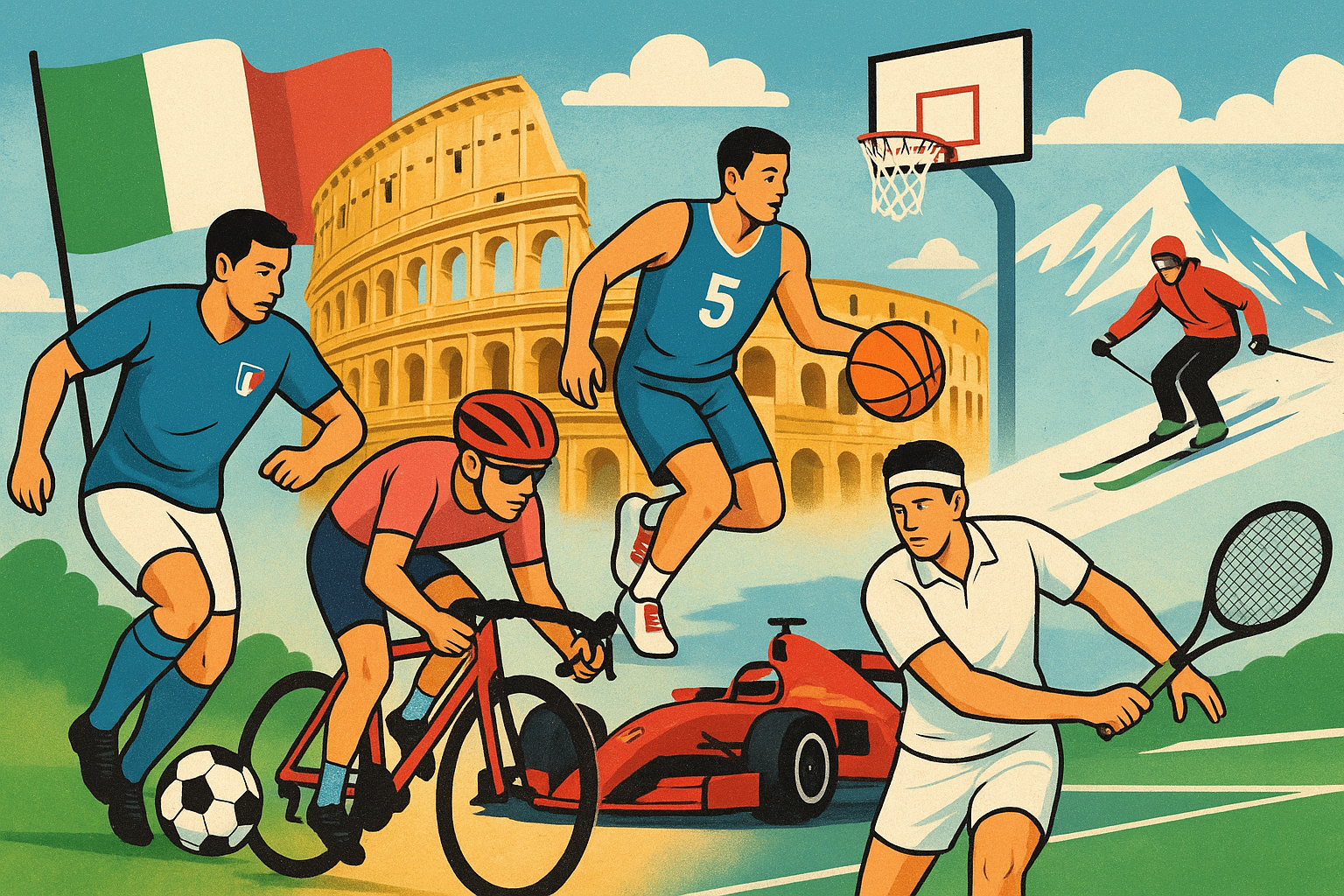
Football commands enormous attention, but Italy’s sporting identity also includes tennis, motorcycle racing, volleyball, swimming, skiing and many other disciplines. Their importance varies by region, generation and whether people are watching or taking part.
What Are the Most Popular Sports in Italy?
Football is Italy’s leading spectator sport, although television audiences and recreational participation measure different things. A devoted football supporter might spend the weekend swimming, cycling or playing tennis rather than kicking a ball.
ISTAT reported that more than 21.5 million residents aged three and over practiced sport in their leisure time in 2024, representing 37.5% of that population. These figures describe participation across sports, rather than a ranking of their audiences.
The following disciplines provide a useful introduction to Italy’s sporting culture.
Football: Club Loyalty and the Azzurri
Known as calcio, football connects elite competition with neighborhood pitches and everyday conversation. Juventus, Inter, AC Milan, Roma, Lazio, Napoli and other clubs attract supporters whose loyalty often begins in childhood.
Local rivalries add another layer. Milan’s derby pits Inter against AC Milan, while Roma and Lazio contest the capital’s derby. These matches carry civic and family associations alongside their sporting significance.
The men’s national team, the Azzurri, won the World Cup in 1934, 1938, 1982 and 2006. Its European Championship titles came in 1968 and at Euro 2020, which was played in 2021.
Giuseppe Meazza, Dino Zoff, Paolo Rossi, Roberto Baggio, Paolo Maldini, Francesco Totti and Gianluigi Buffon belong to different chapters of that history. Together, they illustrate the variety of Italian football: creative forwards, commanding goalkeepers and defenders admired for their reading of the game.
For a match-day introduction, see How to Attend a Soccer Match in Italy.
Tennis: Historic Champions and a New Generation
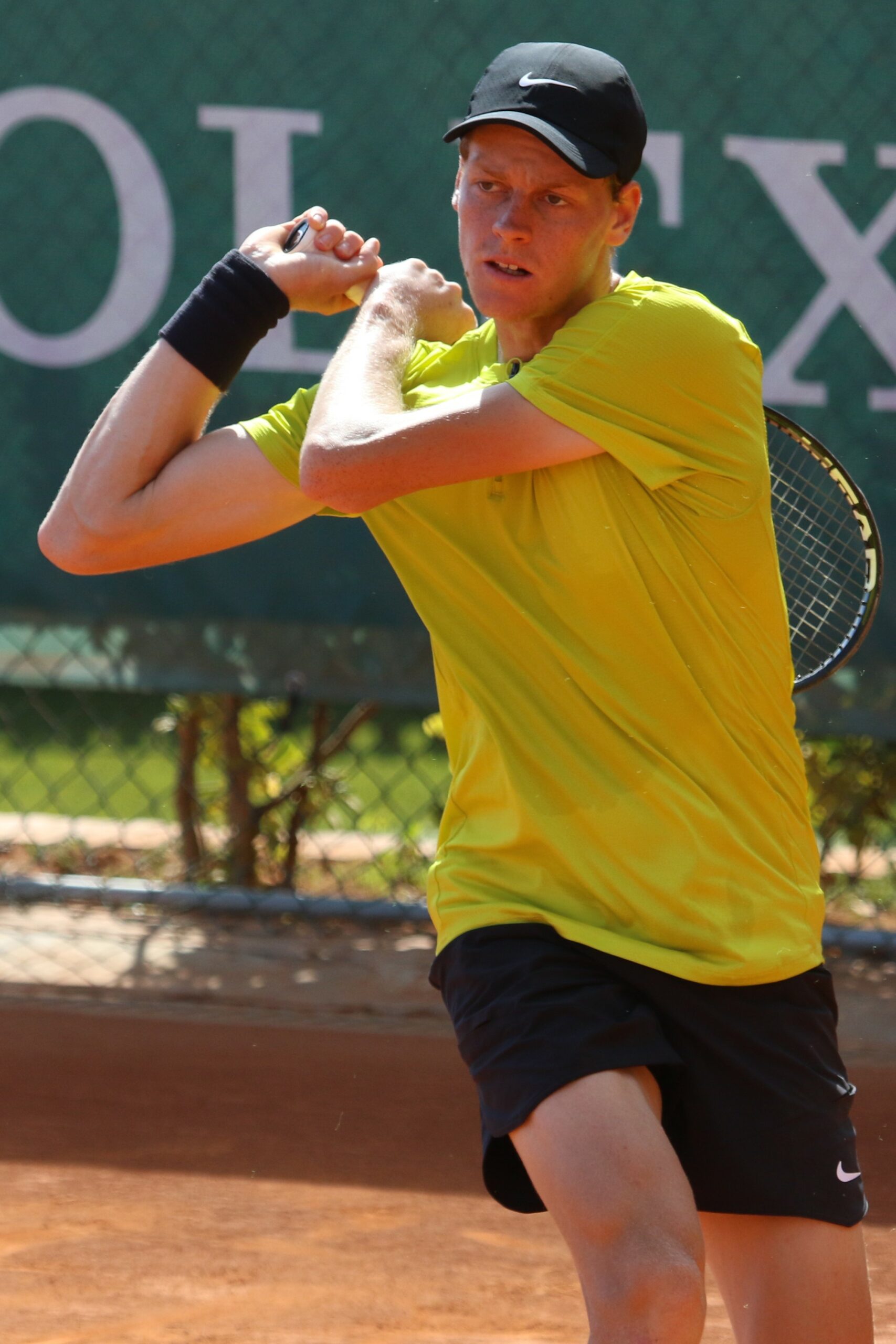
Italian tennis connects a distinguished past with a particularly visible modern generation. Nicola Pietrangeli, Adriano Panatta, Francesca Schiavone and Flavia Pennetta helped establish the country’s international reputation.
Jannik Sinner added a major milestone on June 10, 2024, when he became the first Italian to reach world No. 1 in the ATP singles rankings. Jasmine Paolini reached both the Roland Garros and Wimbledon singles finals that same year, bringing women’s tennis into the national spotlight alongside the men’s game.
Rome’s Italian Open at the Foro Italico gives spectators an opportunity to watch international tennis in a distinctive setting. Away from professional tournaments, tennis clubs offer lessons, social matches and junior programs.
Padel also has a visible place in Italian sports centers. Its doubles format makes it an appealing social activity, though its popularity should be distinguished from tennis rather than counted as the same discipline.
Cycling: The Giro and Italy’s Great Riders
Few sporting events connect competition and landscape as closely as the Giro d’Italia. Spectators experience the race beside roads and mountain climbs, often making the arrival of a stage a community occasion.
The leader’s pink jersey, the maglia rosa, was introduced in 1931. Its color comes from La Gazzetta dello Sport, the newspaper behind the race.
Fausto Coppi and Gino Bartali remain central figures in Italian cycling memory. Later generations celebrated Felice Gimondi, Francesco Moser, Marco Pantani and Vincenzo Nibali.
Pantani’s victory in both the Giro and Tour de France in 1998 remains a defining sporting achievement. His life and career also deserve thoughtful treatment beyond the mythology surrounding his climbing performances.
Recreational cycling offers another connection with the country, from gentle routes through farmland to demanding Alpine ascents.
Motorsport: Ferrari and Motorcycle Racing
Italy’s racing culture combines sporting allegiance with pride in engineering. Ferrari gives Formula One a particularly strong emotional presence, while Monza is one of the sport’s most recognizable circuits.
Motorcycle racing has its own devoted following. Ducati and Aprilia connect manufacturers with competition, and Italian riders have shaped several generations of the championship.
Giacomo Agostini and Valentino Rossi are enduring names in that history. Rossi won nine world championships across motorcycle racing’s different classes, including seven in the premier category. His achievements and personality helped draw audiences well beyond Italy.
For visitors, a race weekend requires advance planning: circuit access, accommodation and transport can be as important as choosing a grandstand.
Volleyball and Basketball: Passion Beyond Football
Indoor team sports reveal another side of Italian sporting life. Volleyball and basketball clubs can be central to a city’s identity, with committed supporters and extensive youth programs.
Italy’s women won their first Olympic volleyball gold at Paris 2024. Paola Egonu was named the tournament’s Most Valuable Player, while teammates including Monica De Gennaro, Myriam Sylla, Anna Danesi and Alessia Orro also received individual recognition.
That achievement belongs within a longer volleyball tradition associated with players such as Andrea Giani, Lorenzo Bernardi and Francesca Piccinini.
Basketball has historic centers including Bologna, Milan, Varese, Cantù and Pesaro. Dino Meneghin and Pierluigi Marzorati represent an earlier era, while Marco Belinelli, Danilo Gallinari and Nicolò Melli helped introduce later audiences to Italian players competing internationally.
Read more in Italy’s Love Affair With Indoor Sports.
Swimming, Water Polo and Other Aquatic Sports
Pools, swimming clubs, lakes and coastal communities support Italy’s varied relationship with water sports.
Federica Pellegrini became a landmark figure through her Olympic and world championship performances. Her gold medal in the 200-meter freestyle at Beijing 2008 remains one of Italian swimming’s most memorable achievements.
Gregorio Paltrinieri, Simona Quadarella and Thomas Ceccon represent other important strands of the country’s swimming tradition. Ceccon won Olympic gold in the 100-meter backstroke at Paris 2024.
Water polo has a distinct national following: the men’s team is known as the Settebello and the women’s as the Setterosa. Sailing, rowing, canoeing and recreational swimming broaden the picture beyond pool competitions.
Athletics and Fencing: Italy’s Olympic Traditions
Athletics offers some of Italy’s most powerful sporting memories, from Pietro Mennea and Sara Simeoni to modern sprinters, jumpers and race walkers.
At the Tokyo Olympics, held in 2021, Marcell Jacobs won the men’s 100 meters and Gianmarco Tamberi shared high-jump gold with Mutaz Essa Barshim. Their victories became defining moments of the same extraordinary evening.
Fencing deserves its own recognition. Valentina Vezzali won six Olympic gold medals, making her one of the country’s outstanding sporting figures. Foil, épée and sabre each contribute to a tradition sustained by specialist clubs and successive generations of athletes.
Winter Sports in the Alps and Dolomites
Mountain communities bring skiing and snow sports into everyday life. Italy’s winter destinations range from large interconnected ski areas to smaller resorts with a more local atmosphere.
Alberto Tomba, Deborah Compagnoni and Gustav Thöni are among the historic names associated with Italian Alpine skiing. Compagnoni won three Olympic gold medals across three Winter Games. Federica Brignone and Sofia Goggia belong to the sport’s more recent generation of prominent Italian athletes.
For trip planning, read Winter Sports in Italy: Skiing, Snowboarding and Ice Skating.
Rugby, Traditional Games and Local Sporting Life
Rugby has devoted communities, particularly in parts of northern Italy, and the national team’s participation in the Six Nations brings international attention to the sport. Sergio Parisse, Diego Domínguez and Martin Castrogiovanni are among its recognizable figures.
Other disciplines have strong local roots, including baseball, roller hockey, rowing and equestrian sports. Historic games offer a different perspective again, connecting competition with regional customs.
Our guide to Traditional Sports of Italy introduces calcio storico, pallapugno and other distinctive traditions.
Experiencing Sport During a Visit to Italy
A sporting experience can fit naturally into an Italian trip. Consider a local basketball game, a volleyball match, a cycling event or a lesson at a neighborhood tennis club alongside the better-known stadiums and circuits.
Check the organizer’s current schedule before arranging travel. Purchase tickets through official channels or authorized sellers, and review identification, entry and transport requirements for the specific venue.
The most revealing experience may be a modest one: watching supporters greet familiar players, seeing children train after school, or listening to a lively discussion of yesterday’s match. These encounters show how sport becomes part of a community’s daily rhythm.