
Cash or Trash: Italy’s Unusual Television Success Story
Italian television has no shortage of game shows, talent competitions, reality programs and celebrity-driven entertainment. Yet one of the most successful and distinctive programs on the Nove network has a remarkably simple concept: people bring objects from their homes, experts determine what they might be worth, and professional dealers compete to buy them at auction.
That program is Cash or Trash – Chi offre di più?, the Italian adaptation of the international Cash or Trash format.
First broadcast in Italy in 2021, the program has developed a loyal following and turned antiques, vintage objects, design and collectibles into mainstream television entertainment.
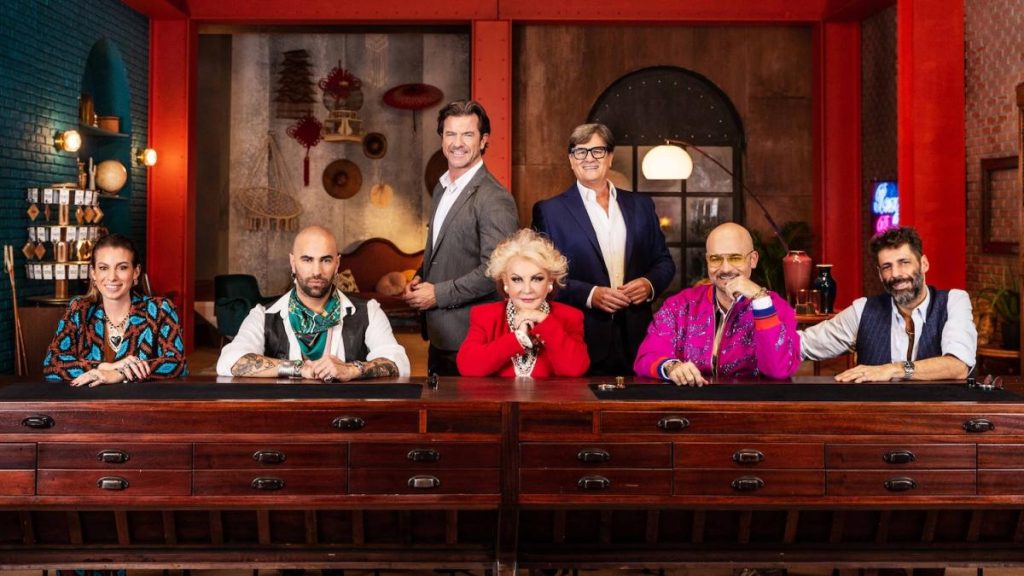
Hosted by Paolo Conticini, the show combines the atmosphere of an antiques fair with the excitement of an auction. Before the bidding begins, expert Alessandro Rosa examines each object and provides an assessment of its characteristics and potential value.
Then the dealers take over.
The result can be anything from an amusingly low offer to a surprisingly intense bidding battle.
How Does Cash or Trash Work?
The concept is easy to understand.
An ordinary person arrives with an object that they believe may have some value. It could have belonged to a parent or grandparent, been discovered in an attic, purchased years earlier at a flea market, or simply been sitting unused in the house.
The first stage is the examination.
Alessandro Rosa, the show’s expert, studies the object and explains what makes it interesting—or perhaps why it is worth much less than the owner expected.
He considers factors such as:
- age
- condition
- rarity
- provenance
- maker or designer
- materials
- historical importance
- artistic value
- current demand among collectors
After the valuation, the object is presented to the dealers.
The bidding begins.
The dealers must decide how much they are prepared to risk. They are not bidding simply for entertainment: they are professional buyers who need to believe that they can eventually make a profit from the objects they purchase.
The seller then has an important decision to make.
Accept the highest offer—or take the object home.
That simple choice is one of the elements that makes Cash or Trash so entertaining.
Paolo Conticini: The Host of Cash or Trash
Actor and television presenter Paolo Conticini plays an important role in the show’s success.
Rather than behaving like a traditional, formal auctioneer, Conticini creates a relaxed atmosphere between the sellers, the expert and the dealers.
He keeps the auction moving, encourages the dealers to bid against one another and reacts to the often unexpected valuations.
His personality also helps make a specialized subject—antiques and collecting—accessible to a general television audience.
You do not need to know anything about antiques to enjoy Cash or Trash.
You simply have to wonder:
“How much is that really worth?”
Alessandro Rosa: The Expert Behind the Valuations
Before the dealers can start bidding, there is another important figure: Alessandro Rosa.
His role is particularly interesting because he provides the audience with the background needed to understand the object.
A seemingly ordinary lamp may turn out to be an important piece of Italian design.
An old toy may be worth considerably more than expected because only a small number were produced.
A painting may have little commercial value—or it may have an important signature or provenance that changes everything.
Rosa explains these details and establishes a reference point for the auction.
However, his valuation is not necessarily the final price.
The dealers determine the actual market value during the auction.
That difference between estimated value and real-world bidding is one of the central attractions of the show.
Who Are the Cash or Trash Dealers?
The dealers are arguably the other major stars of the program.
They come from different areas of the antiques, art, design, restoration and collectibles markets, and each has a different area of expertise.
Among the best-known dealers associated with the program are Roberta Tagliavini, Giano Del Bufalo, Ada Egidio, Stefano D’Onghia and Federico Bellucci, alongside other dealers who have appeared during different seasons.
Their personalities and different collecting interests create much of the competition.
One dealer may immediately recognize the potential of an object while another sees little commercial value in it.
That makes the auction unpredictable.
Roberta Tagliavini
Roberta Tagliavini is one of the show’s most recognizable dealers.
She is an established art and design dealer associated with Milan’s gallery world and is particularly well known for her expertise in decorative arts, design and modernism.
Her experience allows her to recognize pieces that may have considerable value in the international art and design market.
She is also associated with the historic Robertaebasta gallery in Milan, founded in 1967.
Her presence gives Cash or Trash a strong connection to Italy’s professional antiques and design market.
Giano Del Bufalo
Giano Del Bufalo brings a very different perspective to the show.
The Roman antiquarian and collector is known for his broad and unusual interests, including objects from different cultures, antiques, curiosities and ethnographic pieces.
He is associated with the Diorama Gallery in Rome, and his particular taste means that he can become especially interested in objects that other dealers might overlook.
His enthusiasm for unusual and exotic pieces has made him one of the program’s most recognizable personalities.
Ada Egidio
Ada Egidio is another familiar figure among the dealers.
Her background in antiques and collecting gives her a distinctive approach to the objects presented on the show.
One of the fascinating aspects of Cash or Trash is watching several professionals look at exactly the same object and reach very different conclusions about its potential.
For one dealer, something may be a wonderful opportunity.
For another, it may be too risky.
Stefano D’Onghia
Stefano D’Onghia is known for his energetic personality and his background in the second-hand and vintage market.
His experience demonstrates another important aspect of the program: valuable objects are not necessarily found only in prestigious antique shops.
The world of second-hand goods, flea markets and vintage collecting can also contain remarkable discoveries.
Federico Bellucci
Federico Bellucci, a Milanese dealer and restorer, has a particular interest in twentieth-century design and furnishings.
Furniture, lighting, seating and decorative objects from the postwar period can attract considerable attention from collectors, especially when they are associated with important designers.
His expertise illustrates how Cash or Trash goes beyond traditional antiques and embraces Italian modernism, vintage and design.
The Objects Are the Real Stars
The dealers may provide the personalities, but the objects are ultimately the stars of the show.
And there is enormous variety.
Over the seasons, viewers have seen objects including:
- paintings
- ceramics
- furniture
- jewelry
- clocks and watches
- toys
- musical instruments
- cameras
- books
- photographs
- advertising memorabilia
- religious objects
- scientific curiosities
- collectibles
- Italian design pieces
- household objects
- sporting memorabilia
- historical artifacts
Some objects are worth only a modest amount.
Others can be surprisingly valuable.
And sometimes the most fascinating object is not the one with the highest price.
Why Ordinary Objects Can Be Worth So Much
One of the lessons of Cash or Trash is that age alone does not determine value.
An object can be 100 years old and worth relatively little.
Another object from the 1960s or 1970s can be worth thousands because it was designed by an important artist or produced in very limited quantities.
Collectors often look for rarity, authenticity, provenance and design.
Condition is also extremely important.
A vintage object that has survived in excellent original condition can be much more desirable than a similar object that has been heavily restored or modified.
This is particularly true in the market for Italian design and twentieth-century collectibles.
The Mikiphone: One of the Show’s Rarest Objects
Among the extraordinary objects to appear on Cash or Trash was the Mikiphone, a tiny portable phonograph often described as the world’s smallest gramophone.
Its extraordinary compact size makes it fascinating even before its historical and collecting value are considered.
The Mikiphone is an excellent example of the kind of object that makes the show work.
At first glance, it looks like a small curiosity.
For a collector, however, its rarity and historical significance make it much more interesting.
It has been described as one of the rarest objects ever presented on the program.
The Wifredo Lam Dinner Service: A Remarkable Bargain
One of the most remarkable stories associated with the program concerns a dinner service created in 1970 in Albissola by Cuban artist Wifredo Lam.
The pieces were purchased by Roberta Tagliavini on Cash or Trash for approximately €2,500.
The set was later sold at auction in New York for $60,000.
The story demonstrates why professional knowledge is so important in the antiques business.
The object was not valuable simply because it was old.
Its connection to an internationally recognized artist, its provenance and its place in the history of twentieth-century Italian ceramics transformed it into a much more valuable collectible.
For the dealer, it became an extraordinary purchase.
What Was the Most Expensive Object Sold on Cash or Trash?
There is an important distinction between the highest price paid during an auction on the show and the most profitable purchase subsequently made by a dealer.
The highest reported sale in the program’s earlier seasons reached €19,000.
That is the figure generally cited for the show’s biggest auction sale.
The Wifredo Lam dinner service is a different story.
It was purchased for €2,500 on the program and later sold for $60,000, making it one of the most spectacular examples of a dealer recognizing an opportunity.
The distinction can therefore be summarized as follows:
- Highest reported auction sale: €19,000.
- One of the biggest subsequent resale successes: Wifredo Lam dinner service, purchased for €2,500 and later sold for $60,000.
- One of the rarest objects: the Mikiphone miniature phonograph.
- Among the oldest objects presented: an eighteenth-century French board game.
The Emotional Value of Objects
Not every Cash or Trash story is about money.
Sometimes the emotional story behind an object is more important than its market price.
A seller may bring an item that belonged to a parent or grandparent.
Another may have inherited something that has been in the family for generations.
Someone else may have purchased an unusual object decades earlier without knowing that it would eventually become collectible.
This creates one of the show’s most interesting contrasts:
sentimental value is not necessarily the same as market value.
An object can be priceless to a family and worth very little commercially.
Conversely, an apparently insignificant object can be worth thousands to a collector.
Why Italians Love Cash or Trash
The appeal of Cash or Trash is surprisingly universal.
Almost everyone has objects at home that they no longer use.
There may be an old camera in a drawer, a painting inherited from a relative, a collection of coins, an antique clock, a piece of furniture, an old toy or a decorative object that nobody in the family really understands.
Watching Cash or Trash naturally leads to one question:
“Could I have something like that at home?”
That is perhaps the show’s most powerful attraction.
The audience is not simply watching somebody else’s auction.
Viewers are mentally searching their own homes for potential treasures.
A Successful Format for the Nove Network
The success of Cash or Trash has been particularly significant for Nove.
In 2024, ANSA reported that the previous season had reached a record of approximately 800,000 viewers and more than 3.5% share, while prime-time specials helped expand the show’s audience.
Other audience analyses have reported strong regular performances, with individual episodes reaching hundreds of thousands of viewers.
For a program devoted primarily to antiques, collectibles and auctions, these numbers are significant.
The success also led to prime-time specials and additional versions of the format, demonstrating that Cash or Trash had evolved from a daytime-style television program into an established Nove brand.
From Attics to Television
One of the show’s most remarkable achievements is the way it has encouraged Italians to reconsider the objects they already own.
According to figures reported during the show’s earlier years, the production had received thousands of applications from people hoping to present their objects, with hundreds eventually making it to the auction.
That tells us something about the show’s cultural impact.
Cash or Trash has effectively turned the attic, basement, garage and family storage room into potential treasure hunts.
The program has also helped popularize terms such as vintage, modernariato, collecting, provenance and design among viewers who might never normally visit an antique fair.
Cash or Trash and Italy’s Vintage Culture
The popularity of the show coincides with a broader Italian and international interest in vintage and second-hand culture.
Furniture from the 1950s, 1960s and 1970s has become increasingly desirable.
Italian lighting, chairs, tables, ceramics and decorative objects by important designers can command substantial prices.
At the same time, younger collectors have become increasingly interested in old toys, advertising memorabilia, vinyl records, cameras, watches and other objects associated with popular culture.
Cash or Trash brings all of these worlds together.
It also demonstrates that collecting is no longer restricted to traditional antiques.
A modern object can become tomorrow’s collectible.
The Secret Behind the Show’s Success
The formula behind Cash or Trash is remarkably simple:
interesting objects + surprising stories + professional expertise + competition + money.
There is no need for complicated rules.
The audience sees something unusual, learns its story, discovers its estimated value and then watches professional dealers compete for it.
The suspense comes from the uncertainty.
Will the dealers be interested?
Will someone recognize something that the others have missed?
Will the price exceed the seller’s expectations?
And, ultimately, will the seller accept the offer?
Every object provides a miniature story.
More Than an Auction Show
The success of Cash or Trash – Chi offre di più? demonstrates that television audiences can become fascinated by subjects that initially appear relatively specialized.
Antiques, auctions, design and collecting may not sound like obvious prime-time entertainment.
Yet the program has made them accessible, entertaining and occasionally thrilling.
The real genius of the format is that it connects the professional world of antiques with something almost everyone understands: the possibility of discovering that something you own is worth far more than you imagined.
That is why viewers keep watching.
Every object could be ordinary.
Every object could be valuable.
And somewhere in an Italian attic, garage, basement or cupboard, there may be another object waiting to answer the question at the heart of the show:
Cash or Trash?