Milan Fashion Week is one of the most important events in the international fashion calendar and one of the clearest expressions of Italy’s influence on modern style.
For several days each season, Milan becomes a vast fashion stage. Designers present new collections, models move between shows, editors and buyers fill the city’s hotels and restaurants, celebrities appear at runway events, and photographers transform streets such as Via Montenapoleone, Via della Spiga and Corso Venezia into unofficial catwalks.
But Milan Fashion Week is much more than a series of runway shows.
It represents the meeting point of Italian craftsmanship, industrial production, luxury, contemporary design, architecture, photography, business and popular culture. It is also a reflection of how Milan became the center of Italy’s ready-to-wear fashion industry and one of the world’s great fashion capitals.
For a broader introduction to the subject, see Italia Mia’s Italian Fashion: An Introduction.
What Is Milan Fashion Week?
Milan Fashion Week, officially organized within the fashion calendar of the Camera Nazionale della Moda Italiana (CNMI), is a series of fashion shows, presentations, events and related activities held in Milan to present new collections.
There are separate women’s and men’s fashion calendars, with the major seasonal cycles generally divided into:
- Fall/Winter collections
- Spring/Summer collections
- Women’s fashion
- Men’s fashion
The official calendar is considerably broader than the traditional idea of a runway show. Depending on the season, it can include fashion shows, presentations, appointments, special events and digital presentations.
That distinction is important. A designer appearing in the Milan Fashion Week calendar does not necessarily mean that the designer will stage a conventional runway show.
The official CNMI calendar demonstrates how varied the program can be, with presentations and appointments taking place alongside major runway shows.
When Is Milan Fashion Week?
Milan Fashion Week takes place several times a year according to the fashion industry’s seasonal calendar.
The principal women’s editions traditionally occur around February and September, while men’s collections are generally presented in January and June.
Milan Fashion Week dates for 2026–2027
As of September 2026, the official CNMI calendar lists the following upcoming women’s editions:
| Season | Dates |
|---|---|
| Spring/Summer 2027 – Women’s | September 22–28, 2026 |
| Autumn/Winter 2027/2028 – Women’s | February 23–March 1, 2027 |
| Spring/Summer 2028 – Women’s | September 21–27, 2027 |
For men’s fashion, the published schedule includes:
| Season | Dates |
|---|---|
| Autumn/Winter 2027/2028 – Men’s | January 15–19, 2027 |
| Spring/Summer 2028 – Men’s | June 18–22, 2027 |
These dates come from the official Camera Nazionale della Moda Italiana calendar and should always be checked again before planning travel, because fashion calendars can change.
Is Milan Fashion Week always in Milan?
Yes. The event is centered in Milan, although individual shows and presentations can take place in very different parts of the city.
One of the fascinating aspects of Milan Fashion Week is that the city itself becomes part of the event. Historic palaces, industrial spaces, galleries, museums, showrooms, theaters and purpose-built fashion venues can all become temporary stages.
The official June 2026 men’s calendar, for example, included events at locations ranging from Via Montenapoleone and Via Manzoni to Via Tortona, Via Savona and Via Bovisasca.
The History of Milan Fashion Week
The history of Milan Fashion Week cannot be separated from the development of Italian fashion itself.
Italy had an important tradition of textiles, tailoring and craftsmanship long before the modern fashion system existed. However, postwar Italy created something new: a fashion industry that combined designers with manufacturers, textile companies, artisans and an increasingly sophisticated international market.
The early development of Italian fashion was closely associated with Florence and Rome.
In 1951, Giovanni Battista Giorgini organized an important presentation of Italian fashion in Florence, helping demonstrate that Italian designers and manufacturers could compete internationally.
Milan’s role developed later and became increasingly important as Italian ready-to-wear emerged.
The turning point of the 1970s
One particularly important moment came in 1971, when Walter Albini chose Milan for the first show of his own line.
The period from 1971 to 2001 is considered by the Camera Nazionale della Moda Italiana’s Italiana project to be a seminal period for the Italian fashion system. It marked the transition from the older haute couture-centered model toward Italian ready-to-wear and the rise of the designer as a major creative and commercial force.
This transformation helped make Milan the natural home of a new generation of Italian fashion.
Designers were no longer simply producing clothes for elite clients. They were creating recognizable brands, working with industrial manufacturers and developing collections that could be distributed internationally.
The creation of the Camera Nazionale della Moda Italiana
The institutional history is also important.
The organization that became the Camera Nazionale della Moda Italiana began in Rome in 1958 as the Camera Sindacale della Moda Italiana. In 1962, the organization was reorganized as the Camera Nazionale della Moda Italiana, with the goal of coordinating and promoting Italian fashion.
The CNMI now plays a central role in organizing and promoting Milan’s official fashion calendar.
This means that today’s Milan Fashion Week is the result of decades of evolution rather than an event that simply appeared in a particular year.
Why Milan Became Italy’s Fashion Capital
Several factors helped Milan become the center of Italian fashion.
Industry and manufacturing
Milan sits within one of Europe’s most important industrial regions.
Northern Italy has long had extensive textile, manufacturing, footwear, leather, machinery and design expertise. Milan provided the commercial and financial infrastructure needed to connect designers with manufacturers and international buyers.
Business and international connections
Milan is also Italy’s principal business capital.
Fashion houses benefited from the city’s international connections, publishing industry, advertising agencies, showrooms, photography studios and luxury retail network.
Fashion became not simply a creative activity but a sophisticated business ecosystem.
Design culture
Milan’s influence extends well beyond clothing.
Architecture, furniture, industrial design, graphics, photography and fashion constantly interact in the city. This is one reason Milan Fashion Week often feels different from fashion events elsewhere.
Fashion shows can resemble theatrical productions, art installations or architectural experiences.
The relationship between fashion and design is so strong that the CNMI also organizes Milano Moda Design, an initiative that connects fashion houses with Milan’s famous Design Week and Salone del Mobile.
The Designers Who Define Milan Fashion Week
Milan’s fashion calendar includes a constantly changing mixture of established luxury houses, independent designers and emerging talent.
Some names, however, have become inseparable from Milan’s fashion identity.
Giorgio Armani
Giorgio Armani fundamentally changed modern Italian fashion through his relaxed tailoring, understated luxury and soft construction.
His Milan-based house became one of the defining forces in Italian fashion from the late 1970s onward.
Armani’s influence extends beyond womenswear and menswear into accessories, beauty, interiors, hospitality and lifestyle.
Italia Mia’s Giorgio Armani explores his career and influence in greater detail.
Prada
Prada is another essential part of Milan’s fashion identity.
Founded in Milan in 1913 by Mario Prada, the company began as a luxury leather-goods business before becoming one of the world’s most influential fashion houses.
Miuccia Prada transformed the brand into a major force in contemporary fashion, combining intellectual design with commercial success.
Prada’s Milan presence is particularly important because it demonstrates how the city connects heritage with experimentation.
Dolce & Gabbana
Domenico Dolce and Stefano Gabbana established their company in Milan in the 1980s.
Their approach to Italian fashion drew heavily on Mediterranean culture, Sicily, cinema, sensuality and traditional Italian imagery.
The result was a very different vision from Armani’s restraint: expressive, theatrical and immediately recognizable.
Versace
Gianni Versace helped establish Milan as a center of glamorous, provocative international fashion.
His designs became associated with vivid colors, powerful prints, sensual silhouettes and a willingness to challenge conventional ideas of luxury.
Versace’s influence also helped create the modern relationship between fashion, celebrities, music and popular culture.
Gucci
Although Gucci was founded in Florence rather than Milan, the house became an important participant in Milan’s international fashion ecosystem.
Guccio Gucci established the company in Florence in 1921, initially concentrating on luggage and leather goods.
Gucci illustrates an important point about Milan Fashion Week: the event represents Italian fashion as a whole, not only brands originally founded in Milan.
Fendi
The Roman house of Fendi is another major Italian luxury brand that has contributed to Milan’s fashion calendar.
Its history demonstrates the geographical diversity of Italian fashion. Rome, Florence, Milan and other Italian cities each developed their own fashion traditions, while Milan became the principal international meeting place for ready-to-wear.
Ferragamo
Salvatore Ferragamo represents the extraordinary connection between Italian craftsmanship, footwear and luxury fashion.
The company established its first company in Florence in 1927, following Ferragamo’s earlier career in the United States and Hollywood.
Ferragamo remains an important presence in the Italian fashion system and appears in contemporary Milan Fashion Week calendars.
Zegna
Ermenegildo Zegna is particularly important to Italian menswear.
The company’s origins are in textile production: Ermenegildo Zegna established his wool mill in Trivero in 1910.
Zegna demonstrates why Italian fashion cannot be understood solely through designers. Fabrics, mills and manufacturing expertise are fundamental to the country’s fashion identity.
Other important names
The Milan fashion ecosystem has included or continues to include many other important Italian and international houses, including:
- Bottega Veneta
- Brunello Cucinelli
- Canali
- Etro
- Jil Sander
- Max Mara
- Missoni
- Moschino
- Moncler
- Roberto Cavalli
- Tod’s
- Valentino
- Versace
- Dolce & Gabbana
- Dsquared2
- Ferragamo
The official CNMI calendars show just how broad the contemporary Milan fashion system has become, with established houses appearing alongside newer and international designers.
For a broader look at the people behind Italian fashion, see Italia Mia’s Italian Fashion Designers.
What Happens During Milan Fashion Week?
A common misconception is that Milan Fashion Week consists exclusively of glamorous runway shows.
In reality, there are several different types of events.
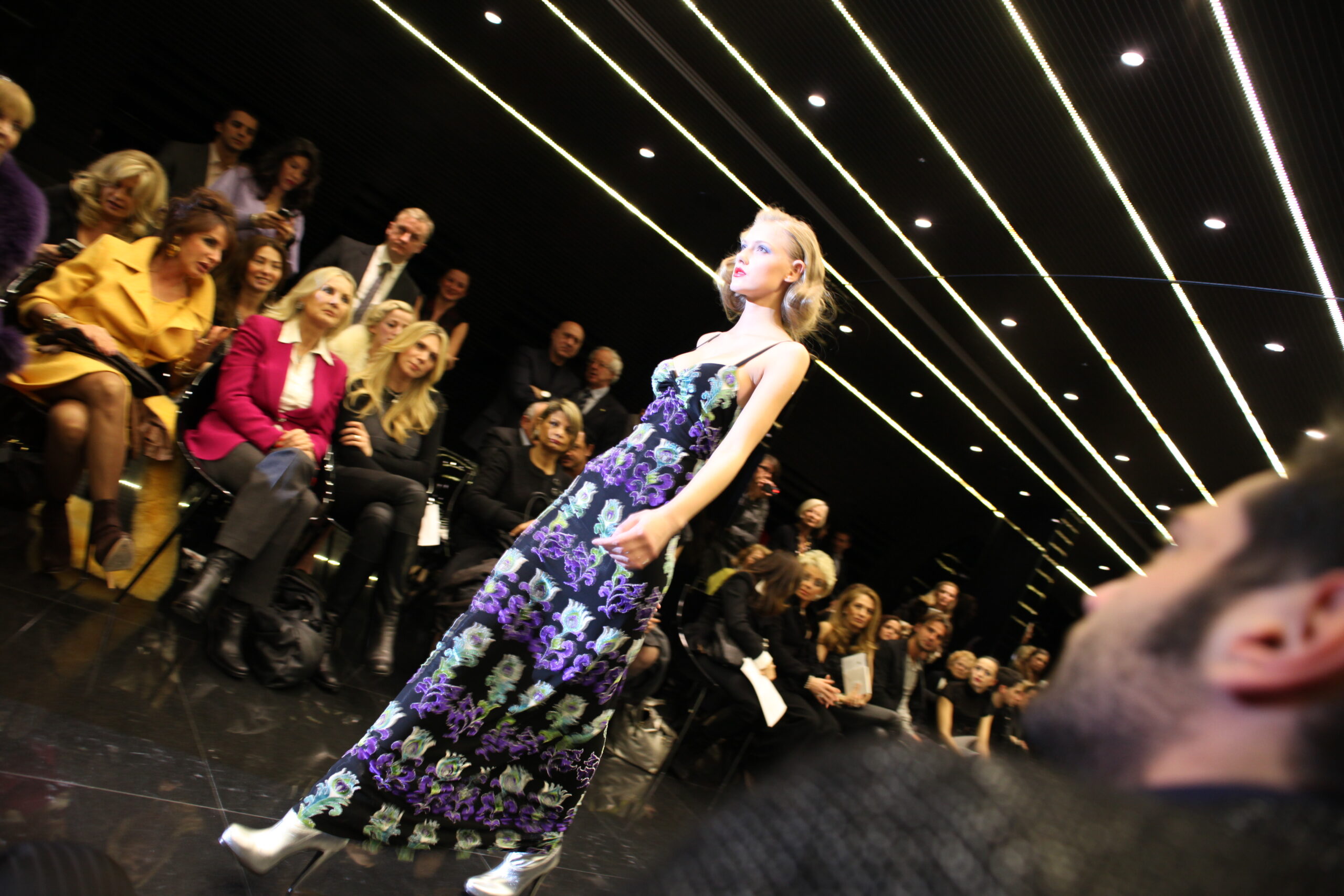
Fashion shows
These are traditional runway presentations.
Models walk through a carefully designed venue while photographers, journalists, buyers, celebrities and industry professionals watch the collection.
The staging itself can be almost as important as the clothing.
Lighting, music, architecture, casting and choreography all contribute to the message a designer wants to communicate.
Presentations
A presentation is more static or less traditionally theatrical.
Models may remain in a space while guests move around them, or a collection may be displayed in an environment designed specifically for viewing.
Presentations can allow buyers and journalists more time to examine garments.
Appointments
Some brands organize private appointments rather than public runway events.
These can be particularly important for buyers, journalists and fashion professionals.
Digital presentations
Digital formats remain part of the contemporary fashion system.
The official calendars have included digital shows and presentations alongside physical events.
Where Are Milan Fashion Week Shows Held?
There is no single Milan Fashion Week building.
That is one of the event’s defining characteristics.
Shows and presentations can take place throughout the city.
Important areas include:
- Quadrilatero della Moda
- Brera
- Porta Venezia
- Tortona
- Corso Venezia
- Via Savona
- Via Manzoni
- Via Montenapoleone
- Via Durini
- Porta Romana
- Various historic palaces and cultural institutions
The location can be part of the collection’s visual identity.
A designer might choose a minimalist industrial building for a contemporary collection, a historic palazzo for a more traditional presentation or an unusual cultural venue to create a conceptual contrast.
The Quadrilatero della Moda During Fashion Week
For visitors, the Quadrilatero della Moda is probably the most recognizable part of Milan’s fashion world.
The district is defined by four principal streets:
- Via Montenapoleone
- Via della Spiga
- Via Manzoni
- Corso Venezia
The area also includes smaller streets such as Via Sant’Andrea, Via Santo Spirito, Via Gesù and Via Borgospesso.
The official Milan tourism organization describes the Quadrilatero as the city’s luxury fashion district, with flagship stores, boutiques, historic architecture and cultural attractions concentrated in a compact area.
During Fashion Week, the neighborhood becomes even more animated.
Models, photographers, influencers, fashion editors, buyers and celebrities move between events, while photographers gather outside venues hoping to capture memorable street-style looks.
Italia Mia’s Shopping in Milano: A guide to the city’s best shops and boutiques provides a more detailed guide to the district and Milan’s other shopping neighborhoods.
Via Monte Napoleone and Fashion Week
Via Monte Napoleone is one of the most famous streets in the Quadrilatero.
Its boutiques, jewelry stores and luxury flagships make it an essential stop for anyone interested in Italian fashion.
During Fashion Week, however, the street becomes more than a shopping destination.
It becomes a place for observing fashion culture itself.
Street-style photographers look for editors, celebrities and industry professionals. Visitors can watch the movement of people between shows and admire elaborate window displays.
Italia Mia’s Via Monte Napoleone: The Most Expensive Fashion Street in the World explores the street’s history and luxury-shopping significance.
Can Tourists Attend Milan Fashion Week?
This is one of the most important things to understand.
Most official Milan Fashion Week events are invitation-only.
The Camera Nazionale della Moda Italiana specifically warns visitors about third parties advertising tickets or services connected with Milano Fashion Week, stating that the official events are accessible on an invitation basis.
A tourist therefore should not assume that buying a ticket online will provide legitimate access to an official runway show.
Access generally depends on professional credentials, invitations from brands, media accreditation, buyer status or other relationships with the fashion industry.
However, this does not mean that tourists cannot experience Fashion Week.
Quite the opposite.
How Tourists Can Experience Milan Fashion Week
Even without attending a runway show, visitors can experience the atmosphere of Fashion Week throughout the city.
Walk the Quadrilatero
Start around Via Montenapoleone and continue toward Via della Spiga, Via Sant’Andrea and Via Manzoni.
This is one of the easiest ways to see the fashion environment without needing an invitation.
Watch the street style
Fashion Week attracts people who dress specifically for the occasion.
Outside popular venues, you may see stylists, models, editors, influencers, photographers and fashion students.
Street style has become an important part of the fashion-week ecosystem.
Visit the boutiques
Fashion Week is an excellent time to explore Milan’s luxury boutiques, even if you have no intention of buying.
The window displays can be spectacular.
Explore Brera
Brera offers a different atmosphere from the Quadrilatero, with independent boutiques, galleries, restaurants and historic streets.
It is a particularly good area for visitors who want to combine fashion with art and architecture.
Explore Tortona
The Tortona area has become strongly associated with creative industries, showrooms, design and fashion events.
Its former industrial character provides a very different backdrop from the palazzi of the city center.
Milan Fashion Week and Street Style
Street style has become one of the most visible parts of modern Fashion Week.
The clothes worn by guests can attract almost as much photographic attention as the collections themselves.
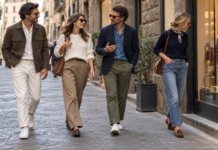
Milan’s street style has traditionally emphasized:
- Tailoring
- Leather
- Neutral colors
- Quality footwear
- Structured handbags
- Sunglasses
- Carefully chosen accessories
- Sophisticated layering
But contemporary Milan is far more diverse than the stereotype of the perfectly tailored Italian.
Fashion Week brings together minimalist designers, maximalists, avant-garde fashion, vintage clothing, streetwear and experimental styling.
The result is an unofficial outdoor fashion show spread across the city.
For everyday visitors interested in adopting some of this aesthetic, Italia Mia’s How to Look Like a Local in Italy: Clothing and Style Guide is a useful companion.
Milan Fashion Week and Made in Italy
Milan Fashion Week is one of the strongest international expressions of Made in Italy.
But Made in Italy is not simply a label attached to expensive clothing.
It represents an interconnected system involving:
- Designers
- Textile manufacturers
- Leather producers
- Shoemakers
- Tailors
- Pattern makers
- Artisans
- Industrial manufacturers
- Photographers
- Architects
- Retailers
- Luxury companies
This combination of creativity and manufacturing is one of Italy’s greatest competitive advantages.
It also explains why Milan’s fashion identity extends beyond clothing into furniture, jewelry, eyewear, automobiles and industrial design.
Italia Mia’s Italian Leather Guide: Finest Craftsmanship, Authentic Products and Where to Buy in Italy explores one of the most important components of this wider Made in Italy tradition.
Milan Fashion Week and Italian Design
Fashion and design are deeply connected in Milan.
A fashion house may design furniture, lighting, interiors, hotels or home collections. Designers regularly collaborate with architects and artists.
This relationship is especially visible during Milan Design Week, when fashion companies participate in exhibitions and design installations throughout the city.
The connection reinforces Milan’s reputation as a city where fashion is treated not merely as clothing but as part of a broader creative culture.
What Is the Difference Between Milan Fashion Week and the Other Big Fashion Weeks?
Milan is one of the traditional Big Four fashion capitals, together with:
- New York
- London
- Milan
- Paris
Each city has developed its own identity.
New York
New York is often associated with commercial sportswear, American pragmatism, contemporary streetwear and a strong connection between fashion and popular culture.
London
London is known for experimentation, subculture, tailoring and emerging designers.
Milan
Milan is particularly associated with:
- Italian luxury
- Tailoring
- Craftsmanship
- Industrial production
- Sophisticated ready-to-wear
- Leather goods
- Footwear
- Contemporary Italian design
Paris
Paris remains strongly associated with haute couture, luxury heritage and some of the world’s most prestigious fashion houses.
The distinctions are not absolute, of course. Designers work internationally and many brands participate in multiple fashion capitals.
What Should You Wear to Milan Fashion Week?
If you are attending Milan during Fashion Week, you do not need to dress like a runway model.
A more useful approach is to aim for polished Italian city style.
Good choices include:
- A well-cut blazer
- Tailored trousers
- A quality shirt or knit
- Leather shoes or sophisticated sneakers
- A structured coat
- Neutral colors with one distinctive accent
- A good handbag or leather accessory
- Quality sunglasses
- Minimal but deliberate jewelry
Comfort matters too.
Fashion Week involves a surprising amount of walking, waiting and standing.
The best outfit is one that looks sophisticated while allowing you to move around the city comfortably.
What Is the Best Area to Stay During Milan Fashion Week?
If fashion is the principal reason for your trip, staying near central Milan can be advantageous.
The areas around:
- Duomo
- Brera
- San Babila
- Quadrilatero della Moda
- Porta Venezia
- Brera
provide relatively easy access to many central fashion locations.
However, the official calendar is spread across the city, so there is no single hotel district that guarantees proximity to every show.
During Fashion Week, hotel demand can also be unusually high.
Booking well in advance is therefore advisable.
Is Milan Fashion Week Worth Visiting If You Are Not in the Fashion Industry?
Yes.
For a fashion professional, Fashion Week is primarily a business event.
For a tourist, it can be an opportunity to see another side of Milan.
The combination of architecture, luxury stores, street photography, restaurants, cafés, museums and fashion creates an atmosphere that is difficult to reproduce at another time of year.
You may not enter a runway show, but you can still experience the city when its fashion identity is especially visible.
Milan Fashion Week for Photographers and Content Creators
Milan Fashion Week is particularly attractive to photographers and social-media creators.
The city offers a remarkable combination of:
- Historic architecture
- Fashion boutiques
- Street style
- Models
- Luxury automobiles
- Art
- Café culture
- Modern design
The Quadrilatero is especially photogenic, but photographers should remember that fashion events can be private and that not everyone outside a venue wants to be photographed.
Respect for personal privacy and event security is essential.
How Milan Fashion Week Has Changed
Milan Fashion Week has evolved substantially since the emergence of Milan as the center of Italian ready-to-wear.
The biggest changes include:
From industry to global entertainment
Fashion shows have become major cultural events involving celebrities, musicians, influencers and global media.
From physical to hybrid
Digital presentations and online coverage now complement physical shows.
From seasonal collections to year-round communication
Fashion houses now communicate with consumers continuously through social media, digital campaigns, collaborations and special events.
Greater attention to sustainability
Environmental impact, materials, supply chains and production methods have become increasingly important subjects within the fashion industry.
A stronger role for emerging designers
The contemporary Milan calendar is not limited to the traditional luxury houses. New designers and smaller labels are increasingly incorporated into the wider fashion system.
Milan Fashion Week and the Future of Italian Fashion
The future of Milan Fashion Week will likely involve an increasingly complicated balance between tradition and innovation.
The fundamental strengths of Italian fashion remain remarkably relevant:
- Craftsmanship
- Materials
- Tailoring
- Manufacturing
- Design
- Brand heritage
At the same time, fashion companies face major challenges involving sustainability, digital commerce, artificial intelligence, changing consumer behavior and the expectations of younger generations.
Milan’s advantage is that it has repeatedly reinvented itself.
The city transformed from a manufacturing and commercial center into the heart of Italian ready-to-wear. It then became a global luxury capital and an increasingly important center for design, culture and creative industries.
That ability to evolve may ultimately be Milan Fashion Week’s greatest strength.
A Short History of Milan Fashion Week
For quick reference, the development of Milan’s fashion system can be summarized as follows:
1951: Giovanni Battista Giorgini’s Florence presentations help establish modern Italian fashion internationally.
1958: The Camera Sindacale della Moda Italiana is established in Rome.
1962: The organization evolves into the Camera Nazionale della Moda Italiana.
1971: Walter Albini presents his own line in Milan, symbolizing the growing importance of Milan and Italian ready-to-wear.
1970s: Milan becomes increasingly important as Italian designer fashion develops.
1980s: Armani, Versace, Dolce & Gabbana and other designers help establish Milan as an international fashion capital.
1990s: Italian fashion becomes increasingly global, with major houses expanding internationally.
2000s: Luxury groups, globalization and international creative directors transform the fashion business.
2010s: Digital media, social networks and street style become increasingly important.
2020s: Milan Fashion Week combines physical runway shows, presentations, digital formats, sustainability initiatives and a growing international designer community.
The historical progression from haute couture to industrial ready-to-wear and finally to global luxury is one reason Milan’s fashion story is so distinctive.
Milan Fashion Week FAQs
When is Milan Fashion Week?
Women’s Milan Fashion Week generally takes place in February and September, while men’s collections are generally presented in January and June. Exact dates change from year to year.
When is the next Milan Fashion Week?
The next women’s edition listed by CNMI is September 22–28, 2026, for Spring/Summer 2027 collections. The next women’s Fall/Winter edition is scheduled for February 23–March 1, 2027.
Can tourists attend Milan Fashion Week shows?
Most official events are invitation-only. Visitors should not purchase tickets from unofficial third parties claiming to provide access to official Milan Fashion Week events.
Where does Milan Fashion Week take place?
There is no single venue. Shows and presentations take place throughout Milan, including the Quadrilatero della Moda, Brera, Tortona, Porta Venezia and other neighborhoods.
What is Milano Moda Donna?
Milano Moda Donna is the official women’s fashion program associated with the Milan fashion calendar.
What is Milano Moda Uomo?
Milano Moda Uomo is the men’s fashion program.
Which designers are associated with Milan Fashion Week?
Major Italian and international houses have participated in the Milan calendar, including Armani, Prada, Dolce & Gabbana, Versace, Fendi, Ferragamo, Zegna, Bottega Veneta, Etro, Tod’s, Missoni, Moschino and many others.
Is Milan the fashion capital of Italy?
Milan is widely regarded as Italy’s principal fashion capital, particularly for ready-to-wear and the modern fashion industry. Florence, Rome, Naples and other Italian cities have their own important fashion and craftsmanship traditions.
Can I experience Milan Fashion Week without attending a show?
Absolutely. Walking through the Quadrilatero, visiting boutiques, observing street style and exploring Milan’s fashion neighborhoods can provide a genuine Fashion Week experience.
Final Thoughts: Why Milan Fashion Week Matters
Milan Fashion Week is ultimately about much more than clothes.
It is a showcase for a particular Italian approach to creativity: combining design with manufacturing, tradition with innovation, luxury with practicality and fashion with architecture, art and everyday life.
The runway shows may last only a few minutes, but the system behind them represents decades of Italian craftsmanship, entrepreneurship and creative development.
From the elegant streets of the Quadrilatero della Moda to the industrial spaces of Tortona, Milan turns itself into a living fashion laboratory several times a year.
For anyone interested in Italian fashion, Made in Italy, luxury, design or contemporary Italian culture, Milan Fashion Week is an essential part of understanding Italy today.
Related Italia Mia Guides
- Italian Fashion: An Introduction
- Italian Fashion Designers
- Giorgio Armani
- Valentino Garavani: The Life, Legacy & Lasting Impact of the Fashion Icon
- Shopping in Milano: A Guide to the City’s Best Shops and Boutiques
- Via Monte Napoleone: The Most Expensive Fashion Street in the World
- Italian Leather Guide
- How to Look Like a Local in Italy: Clothing and Style Guide
- Fashion in Italy for Spring and Summer 2026
External Links
- Camera Nazionale della Moda Italiana — Official organization representing and coordinating Italian fashion.
- Milano Fashion Week Official Calendar — Official shows, presentations and events.
- Camera Nazionale della Moda Italiana — History — History of the organization and its role in Italian fashion.
- YesMilano — Quadrilatero della Moda — Official Milan tourism information about the city’s fashion district.
- ITALIANA — Camera Nazionale della Moda Italiana — Historical resource on the development of Italian fashion.