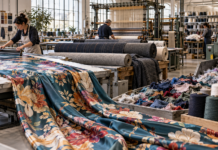

A good suit does not need to announce itself. I notice the shoulder first, then how the jacket moves when its wearer sits, stands and reaches for something. If the cloth pulls across the chest or the trousers bunch at the shoes, an expensive label cannot rescue it.
There is no single “Italian suit.” A softly constructed jacket from Naples can look and feel quite different from a suit made by a Milanese tailor. Neither city offers one fixed pattern, and contemporary makers borrow freely from both traditions. Understanding the differences gives you a better starting point when you shop.
Naples and Milan: Two Approaches to Tailoring
Neapolitan tailoring is often associated with a soft shoulder, a light-feeling jacket and a natural line through the chest. A shirt-style sleeve attachment, sometimes called spalla camicia, can give the shoulder a relaxed appearance. It may have small gathers where the sleeve meets the armhole. Some jackets use less lining or internal structure, though a soft Neapolitan suit can still be fully canvassed. ISAIA, for example, makes both soft-shouldered, full-canvas suits and lighter, partly lined jackets.
That ease is useful if you want a suit you can wear for hours without feeling enclosed by it. It does not mean the jacket should be loose. The shoulder, chest and waist still need careful shaping.
Milanese tailoring is often associated with a cleaner, more controlled silhouette, but it is a mistake to treat every Milan suit as rigid or heavily padded. Houses have their own cuts. Milan’s Caraceni tailoring tradition, for instance, places considerable emphasis on a client’s posture, proportions and the shape of the jacket’s shoulder. The practical difference to look for is the result on your body: does the jacket give you the line you want while allowing you to move comfortably?
Try both approaches if you can. A soft shoulder may suit your build and daily life; a more defined shoulder may give you a line you prefer for work or formal occasions. The city on the label is less useful than the jacket in the mirror.
What Is Inside the Jacket?
The cloth you see is only part of a suit. Inside the front of a traditionally tailored jacket, a layer of canvas helps shape the chest and lapels.
A full-canvas jacket has that floating internal layer extending farther down the front. A half-canvas jacket generally uses canvas through the chest and lapel area, with a different construction below. A fused jacket relies more on an adhesive-backed interlining. Construction affects how a jacket feels and drapes, but it should not become a shortcut for judging every suit. Examine the finished garment as well as its specification.
Ask the retailer what the jacket’s construction actually is. “Italian fabric,” “tailored” and “hand-finished” do not answer that question. Also check the lining: a partly lined jacket may feel more comfortable in warm weather, while a fully lined one may slide more easily over a shirt. Neither choice guarantees quality on its own.
A good first test is simple. Button the jacket and look at the lapels and chest. They should lie cleanly rather than bow away from your body or strain at the button. Then unbutton it, walk a little and sit down. A suit has to work when you move.
Choose Fabric for the Life You Will Give It
For a first versatile suit, I would start with wool in navy or mid-to-dark grey. Wool is available in many weights and weaves, so the label “100% wool” alone tells you little about how warm or cool a suit will feel. Handle the cloth and ask when and where the suit is meant to be worn.
For warmer conditions, consider a lighter or more open-weave wool. Linen offers a distinct, relaxed look, but its creases are part of the bargain. Wool-and-linen blends can be a middle ground if you like texture without wanting a fully linen suit. For colder months, flannel has a softer surface and a more seasonal appearance. Choose cloth for your climate and frequency of wear before paying extra for an unusually fine or delicate fabric.
Pattern matters too. A plain navy or grey suit is easier to use for work, weddings and other occasions than a conspicuous check. Once you know what you actually wear, a subtle stripe, textured weave or warmer color becomes an easier decision. Black is appropriate for some settings, but it is not the automatic choice for every first suit.
How the Jacket Should Fit
Shoulders: Start here. The jacket should follow your shoulders without conspicuous overhang, tightness or a ridge of excess fabric at the upper sleeve. Shoulder reconstruction is difficult and can be costly. If this area is substantially wrong, try another size or cut.
Collar and back: The collar should rest against your shirt collar. Look behind you for a large gap at the neck, strong diagonal pulls or an excess of cloth that collapses under the collar. Posture can affect all three, which is one reason a fitting is more useful than a size chart.
Chest: Button the jacket as you normally would. The fronts should meet without an obvious X-shaped pull from the button. You should be able to breathe and move your arms naturally. Excess cloth that billows around the chest is a problem too.
Waist: Shaping should define the jacket without making it cling. Do not size down merely to create a narrow waist; that usually produces pulling elsewhere. A tailor may be able to take in the waist of a jacket that otherwise fits well.
Length and sleeves: Jacket length varies with the cut and your proportions. Check it in a full-length mirror from the front and side rather than following a single rule. The sleeves should finish at a length that works with your usual shirts and shows a modest amount of cuff if that is the look you want. Check each arm separately.
The best-fitting jacket is not necessarily the tightest one. If you spend a day wishing you could take it off, the fit has failed a practical test.
Give the Trousers Equal Attention
Try the trousers with the shoes you expect to wear. Check that the waistband stays comfortably in place, the seat is neither pulling nor sagging, and there is room through the thigh when you sit. A narrow leg can look clean while standing and become uncomfortable at a desk or over dinner.
The trouser hem can meet the shoe with little break or a more noticeable fold, depending on the cut and your preference. What you want to avoid is unplanned pooling of fabric at the ankle. Decide on the hem while wearing the trousers at their intended waist position; pulling them unusually high or low changes the result.
If a jacket fits but its matching trousers do not, ask whether the shop offers separate jacket and trouser sizes. A suit is a two-piece fitting problem, and accepting badly fitted trousers to secure a good jacket rarely makes sense.
Which Alterations Are Worth Paying For?
Many ready-to-wear suits need finishing work. Hemming trousers, adjusting sleeve length and modestly shaping a jacket waist are common requests. Depending on the garment, a tailor may also adjust trouser taper, waistband or seat. The available seam allowance and construction determine what is possible.
Other changes deserve more caution. Major shoulder work, a substantial change to the chest or a dramatic shortening of the jacket can be complicated, expensive and uncertain. Working buttonholes at the sleeve cuff can also limit how easily sleeves are shortened from that end. Ask about the alteration before you buy, then include its cost in the real price of the suit.
Bring the shirt and shoes you plan to wear to the fitting. Tell the tailor how you want the trousers to fall and how much shirt cuff you prefer to show. Before collecting the suit, try it on again. Check it both standing and seated.
Ready-to-Wear, Made-to-Measure or Bespoke?
Ready-to-wear is the fastest route and can be excellent when a maker’s cut already suits you. Allow time and money for alterations.
Made-to-measure generally starts from an existing pattern that is adjusted to your measurements and chosen details. It can help if standard sizes are close but never quite right. Ask how many fittings are included and what happens if the finished garment needs correction.
Bespoke involves a pattern developed for the individual client and fittings during construction. It may offer more scope for addressing posture and proportion, but the quality of the result still depends on the tailor and the working relationship. It also requires more time. If you are buying during a short trip to Italy, establish the fitting schedule and delivery arrangements before committing.
These terms are sometimes used loosely in marketing. Ask the seller to describe the process rather than relying on the label.
A Buying Checklist I Would Use
Before paying for a suit, I would answer these questions:
- Where will I wear it? Choose formality, color and fabric for real occasions on your calendar.
- Does the shoulder fit now? Do not make a difficult alteration the basis of the purchase.
- Can I move and sit comfortably? A mirror pose is only the beginning of a fitting.
- Do both pieces fit? Inspect the jacket and trousers separately.
- What is the construction? Ask about canvas, fusing and lining in plain terms.
- What will alterations cost, and when will they be ready? Include both in your decision.
- Can I return it? Confirm the policy before any alteration begins.
If I were choosing one suit to wear often, I would take a comfortable navy or grey wool suit with an excellent shoulder and well-fitted trousers over a more dramatic suit that needed extensive rebuilding. The pleasure of Italian tailoring is in the relationship between cloth, cut and the person wearing it. You should be able to feel that relationship long after you have left the shop.
Contributor credit: This article was originally contributed by George Lazãr of BeStylish.org. Italia Mia has substantially rewritten and expanded it with current guidance on tailoring, construction, fit and buying.
External Sources
- ISAIA: Made to Measure
- ISAIA: Sanita Suit construction and fit
- Ferdinando Caraceni: The Caraceni-style jacket
- A. Caraceni: Milan tailoring and its process
- Canali: The KEI jacket and full-canvas construction
- Brioni: Alterations and garment longevity