


Learning Italian becomes more rewarding when you can use it for something you enjoy: ordering lunch, understanding a song or speaking with relatives. A course can give your study time structure, while a well-chosen book gives you another way to work with the language.
This guide brings together Rosetta Stone Italian course options and supporting books. Start with one course and one useful companion; you do not need to buy every resource below.
Affiliate disclosure: As an Amazon Associate I earn from qualifying purchases. Amazon links below are affiliate search links; they help you find available editions and offers. Prices, sellers, formats and availability vary between Amazon.com and Amazon.it.
How Rosetta Stone Fits into an Italian Study Routine
Rosetta Stone combines interactive lessons with listening, reading and pronunciation practice. Its TruAccent speech tool provides feedback when you speak aloud. The current official Italian page also advertises an all-access membership with additional learning tools. Check the exact plan before buying: a retailer license should not automatically be assumed to include every feature shown on the current website.
Our suggested approach is to use the course for regular practice, a grammar book when you want an explanation, and short readings when you are ready to follow connected sentences. Add conversation with another person so you also practise responding without knowing the answer in advance.
Rosetta Stone Course Options
1. Rosetta Stone Italian: Compare Available Course Offers
Consider it for: a regular digital learning routine with opportunities to listen and speak aloud.
Compare the official membership with any retailer offer you find. Check the access period, included languages, activation country and delivery method. A physical package may contain an activation code rather than printed learning materials.
Do not assume tutoring is included. Rosetta Stone offers separate tutoring packages, and availability depends on the account and region.
Compare with the official Rosetta Stone Italian offering.
2. Rosetta Stone Lifetime Access: Read the License Details
Consider it for: longer-term study, if the particular license includes the languages and features you want.
Lifetime access lasts while the purchased products and services remain available and supported. The license is for one person and cannot be transferred. Check the listing carefully before buying an activation code.
Compare the total cost with a shorter subscription based on how you expect to study. Avoid paying more for multiple languages if Italian is your only goal. Treat any dictionary or grammar-book bonus as an extra only when the seller explicitly lists it.
These are alternative purchasing routes, not two courses you need to buy.
Books to Support Your Italian Learning
The following books serve different purposes: one explains the structure of Italian, while the other helps you practise reading. Both are aimed at learners using English-language guidance.

3. Easy Italian Step-by-Step — Paola Nanni-Tate
Choose it for: grammar explanations and a structured route through the basics.
This guide introduces sentence structure, verbs and vocabulary progressively, with exercises and reading passages. It is a useful companion when you can recognise a phrase in an app but want to understand how its words fit together.
Work through a small section, then write three sentences about your own life using the same pattern. You can also return to a relevant chapter whenever a course exercise raises a question.
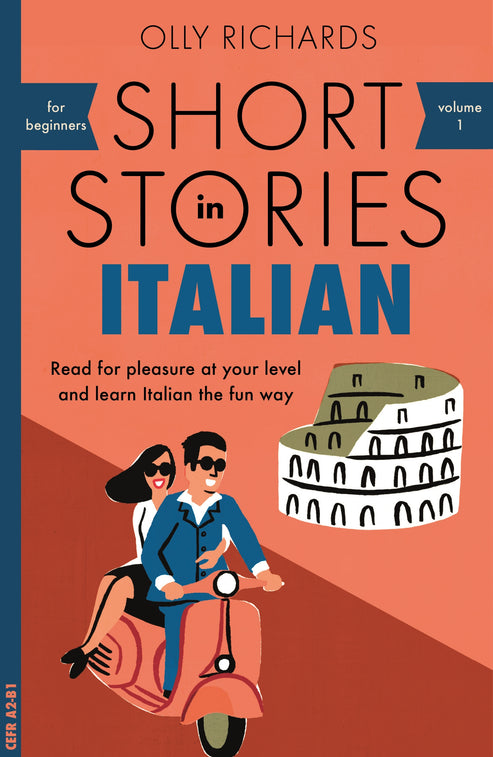
4. Short Stories in Italian for Beginners — Olly Richards
Choose it for: reading practice once you have some Italian foundations.
The publisher places this collection at A2–B1, so the word “beginners” should not be read as “no Italian required.” Its eight stories include vocabulary support, summaries and comprehension questions.
Read a short section first for the main idea. On a second pass, select a few useful expressions rather than stopping at every unfamiliar word. If following the plot is still exhausting, return to shorter texts and revisit the book later.
Check the format before ordering; a separate audiobook should not be assumed to accompany the paperback.
A Simple Way to Combine These Resources
- Practise with your course: set aside a manageable session and say the answers aloud.
- Resolve one question: use your grammar book to explore a pattern that confused you.
- Use the language: write a short message, read a passage or speak with a learning partner.
- Review: return to useful phrases later in the week and try them without looking.
Before a trip, start with our guide to Italian greetings and etiquette. Then explore when to use tu and Lei to make those exchanges more appropriate to the situation.
Which Resource Should You Start With?
Choose a course first if you want a clear practice routine. Add Easy Italian Step-by-Step if explanations help you learn. Introduce Short Stories in Italian for Beginners when you are comfortable reading simple connected sentences. Choose according to your current difficulty, rather than building a shelf of resources you will not use.
No single purchase guarantees fluency. Aim for small, observable progress: introducing yourself without notes, understanding a short passage or asking a follow-up question in a conversation. Explore more activities in our Italian language guides.