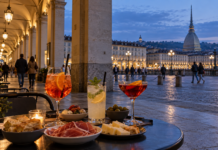
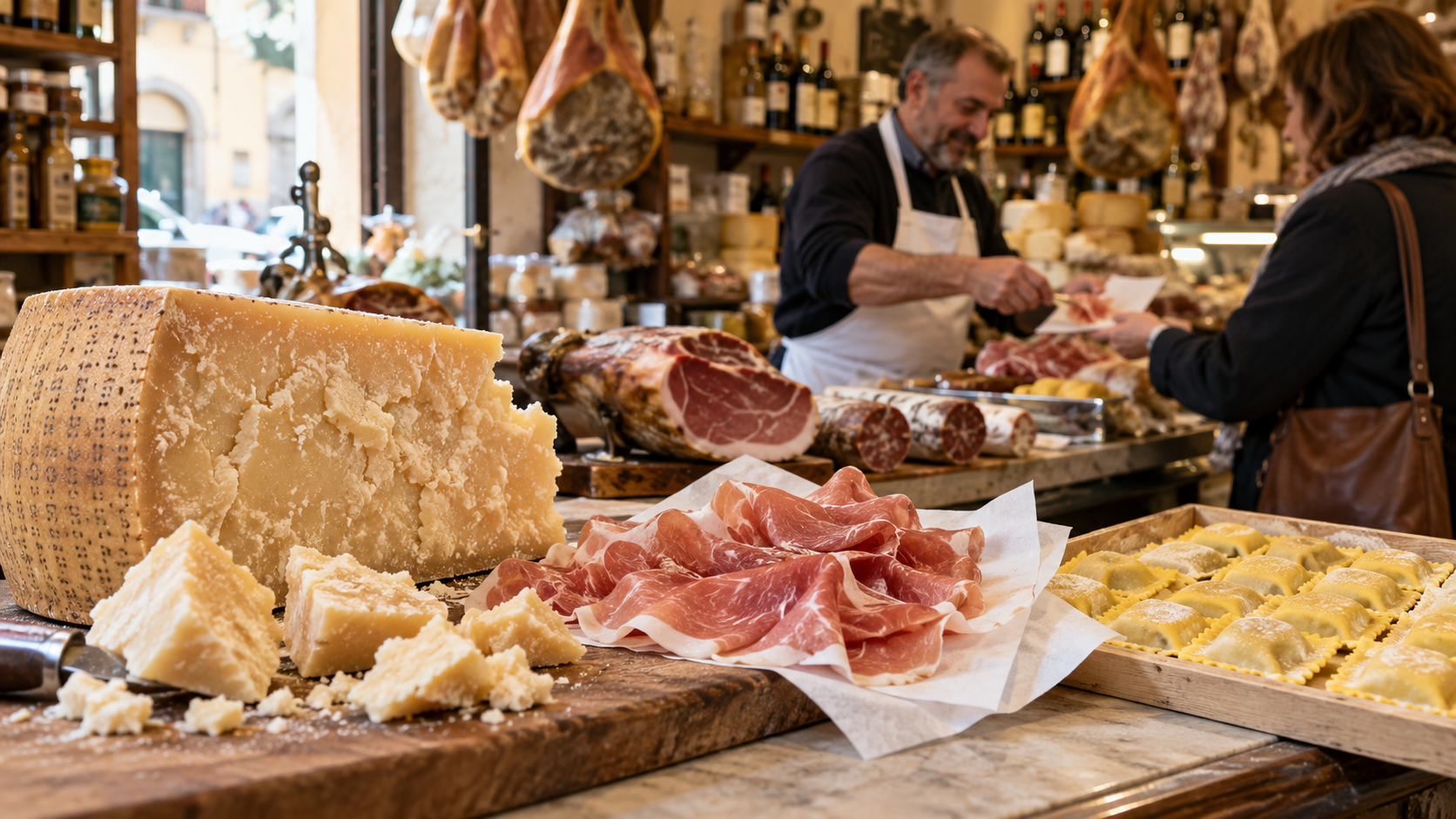
 A weekend in Parma can begin with a plate of delicate prosciutto and end with a suitcase carrying a carefully wrapped wedge of Parmigiano Reggiano. Between those two moments, however, lies something more interesting than a succession of good meals.
There are farmers selling seasonal produce, cheesemakers working to a morning rhythm, fresh pasta counters, and museums explaining how everyday ingredients became internationally recognized foods. Beyond the city, the landscape changes from plains to gentle hills, with different specialties telling different stories about the places that produce them.
This guide to Parma for food lovers combines those experiences into a manageable weekend: Saturday in the city, followed by a Sunday exploring one part of the surrounding countryside. Leave room for a proper lunch, but also for conversations, a little walking, and a closer look at what goes into the food.
Why Parma Deserves a Food Weekend
Parma joined the UNESCO Creative Cities Network as a City of Gastronomy in 2015. The designation reflects a food culture connected to local production, skills, and the relationship between city and countryside.
For visitors, that relationship offers a useful way to organize a trip. Parma’s shops and restaurants introduce the flavors; visits outside the center help explain their origins.
You do not need to approach the weekend as a specialist. A few simple questions can transform a tasting: How long has this cheese matured? Where was this cured meat produced? What makes this pasta filling typical of Parma?
If you are planning a longer journey through Emilia-Romagna, combine this itinerary with Modena in Two Days or Bologna on a Budget. Give each city time for its own food traditions instead of trying to cover all three in a weekend.
Your Parma Food Weekend at a Glance
The following is a suggested itinerary. Confirm your Sunday producer visit before booking transport around it.
| When | Suggested plan | Practical point |
|---|---|---|
| Friday evening, if arriving early | Settle in and have a relaxed dinner | Keep the first evening simple |
| Saturday morning | Visit a food market, then explore the center | Markets have specific days and seasonal closures |
| Saturday lunch | Try tortelli d’erbetta and a small selection of local specialties | Leave room for later tastings |
| Saturday afternoon | Browse food shops and walk through Oltretorrente | Buy perishable food closer to departure |
| Saturday evening | Enjoy an aperitivo or a traditional dinner | Reserve your preferred restaurant |
| Sunday morning | Take a prebooked dairy visit | Confirm whether the tour includes live production |
| Sunday afternoon | Choose one countryside area or return to Parma | Allow time for transfers and your journey home |
Saturday Morning: Start at a Food Market
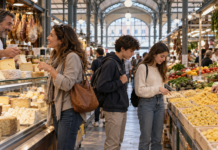
A market makes a useful first stop because it places Parma’s famous products alongside ordinary ingredients: vegetables, bread, eggs, fruit, and whatever the season brings.
According to Parma’s official tourism listings, Saturday options include:
- Piazza Ghiaia: Campagna Amica market, listed from 8:30 a.m. to 2:30 p.m.
- Largo Calamandrei: Saturday market, listed from 8 a.m. to 12:30 p.m.
- Via Imbriani: La Corte farmers’ market, listed from 7 a.m. to 12:30 p.m.
Check the official food-market calendar shortly before visiting. The page also notes a summer closure for the Piazza Ghiaia market, so its regular schedule should not be treated as year-round availability.
Choose one market rather than rushing between all three. Piazza Ghiaia is a convenient starting point for a morning in the center; Via Imbriani works well with a walk through Oltretorrente.
Look for something you can enjoy immediately and something you can learn about. Ask a cheese seller to explain the differences between maturation ages, or ask which seasonal vegetables customers are buying for home cooking.
If tastings are offered, keep them small. The purpose is to discover what interests you enough to try again later.
Explore Parma Between Food Stops
Build a walking break into the morning. Head toward Piazza Garibaldi, then continue to Piazza Duomo, where the cathedral and baptistery provide a natural pause in a food-focused itinerary.
Later, cross the Parma stream into Oltretorrente and leave time for Parco Ducale. These walks give the weekend a sense of place beyond shop counters and dining rooms.
Avoid scheduling every hour. A bakery window, a quiet square, or an unexpectedly interesting food shop deserves a little flexibility.
For a short visit, choose one substantial cultural stop. Trying to combine several museum interiors with markets, shopping, and a long lunch can turn an enjoyable day into a timetable.
What to Eat in Parma
The most rewarding approach is to compare a few specialties across the weekend, rather than ordering everything at the first meal.
Tortelli d’erbetta
These filled pasta parcels are one of Parma’s signature dishes. Ricotta and leafy greens form the filling, while butter and Parmigiano Reggiano provide a simple, generous finish.
They also have a place in local celebrations: the evening of June 23, associated with San Giovanni, is traditionally marked by communal tortellate. You do not need to visit in June to enjoy them, but knowing that connection adds something to the plate.
Torta fritta and local salumi
Despite its name, torta fritta is a savory fried dough accompaniment. Order it with a modest selection of cured meats, then taste each separately before combining them.
Prosciutto di Parma, Salame Felino, Culatello di Zibello, and Spalla Cotta di San Secondo offer different textures and flavors. A mixed board can be a useful introduction, especially when the menu identifies the individual products.
Parmigiano Reggiano
Give the cheese a moment of its own instead of treating it only as something grated over pasta.
If a shop or tasting offers different maturations, compare them side by side. Notice texture, aroma, and how long the flavor remains. Ask which age the seller prefers for eating in pieces and which they suggest for cooking.
Anolini and other local dishes
Look for anolini, particularly if you enjoy filled pasta served in broth. Parma’s official visitor guide includes anolini and tortelli among the foods visitors can purchase to cook themselves, making a fresh pasta shop another worthwhile stop.
Let the season and the menu guide the rest of your meal. You will learn more from a thoughtfully chosen dish than from ordering an oversized selection simply to complete a checklist.
A glass of local wine
For those who drink wine, ask about local Malvasia or Lambrusco. Specify whether you prefer dry or sweeter styles, and consider ordering by the glass so you can try something different at another meal. Both appear among the wines highlighted by Parma’s tourism listings.
Saturday Afternoon: Shop With Questions
A food shop can be as revealing as a formal tasting if you arrive with curiosity.
At a cheese counter, ask about the producer and maturation. At a delicatessen, request a small quantity of a particular cured meat rather than automatically choosing the largest mixed selection.
Useful questions include:
- “Which producer does this come from?”
- “How would you serve it?”
- “How should I store it?”
- “Will it travel well?”
- “Can you pack a smaller portion?”
Buy according to the journey ahead. Fresh pasta and sliced meats need more planning than a souvenir jar, and vacuum packing does not automatically remove refrigeration requirements.
If you are flying internationally, check your destination’s official food-import rules before buying. Packaging alone does not establish whether a product can cross a border.
For Saturday evening, choose between a substantial aperitivo and a full dinner according to your appetite. You do not need both to have a successful food weekend.
Sunday Morning: Visit a Parmigiano Reggiano Dairy
A dairy visit is a strong centerpiece for the second day because it connects a familiar food with the people and processes behind it.
Start with the Parmigiano Reggiano Consortium’s official visitor information, which provides access to dairy information and visit planning.
Before booking, establish exactly what the experience includes. A tasting, a visit to maturation rooms, and a tour during cheesemaking are different experiences.
Ask the dairy or operator:
- Is the visit available on the Sunday you need?
- Will you see production taking place?
- What time must you arrive?
- Is the tour offered in English?
- Does the price include a tasting?
- Is transport from Parma included?
- Are there accessibility requirements or restrictions?
Choose the visit first and arrange the rest of Sunday around its confirmed timing. A nearby dairy with a suitable appointment may be a better choice than a more distant one that creates a rushed morning.
At the tasting, revisit whatever you learned in Saturday’s shops. You now have a useful basis for comparing the cheeses instead of simply deciding which tastes strongest.
Sunday Afternoon: Choose One Countryside Route
Parma’s food attractions are spread across the province. Select one area that fits your dairy booking and departure plans.
Option One: Langhirano and Torrechiara
Choose this route if Prosciutto di Parma is a priority.
The Museo del Prosciutto di Parma, at Via Bocchialini 7 in Langhirano, explores the history and production culture of the region’s ham. Its published regular opening season runs from March 1 to December 8, on Saturdays, Sundays, and public holidays, from 10 a.m. to 6 p.m. Check the museum’s official website for your date before setting out.
A museum visit and a working ham-producer tour are separate activities. If you want the latter, contact a business in advance and confirm visitor access. The Consorzio del Prosciutto di Parma producer directory is a useful starting point, but inclusion does not itself guarantee tours.
Nearby Torrechiara Castle adds architecture and landscape to the excursion. The castle was rebuilt in the fifteenth century by Pier Maria Rossi and offers a compelling cultural stop in the same general area. Check its current visiting arrangements separately.
For a relaxed afternoon, choose the museum or a producer visit, then add the castle only if the timings work.
Option Two: Polesine and the Culatello Tradition
Choose the northern countryside if you are especially interested in culatello and the food culture of the Po plain.
The Museo del Culatello e del Masalén, at Antica Corte Pallavicina in Polesine, provides a focused introduction to this tradition. It belongs to the province’s food-museum network.
Check the museum’s official visitor information and confirm exactly what your ticket or reservation includes. Museum admission, a tasting, cellar access, and a restaurant booking should not be assumed to be interchangeable.
Make this an alternative to Langhirano rather than another stop on the same afternoon.
Option Three: Pasta, Tomatoes, and Wine
For a broader look at the local food economy, consider the Pasta and Tomato Museums at Corte di Giarola, near Collecchio, or the Wine Museum at Sala Baganza.
The official museum network groups these destinations into countryside routes, making them useful choices for visitors who want to explore beyond cheese and cured meats.
Choose according to your interests and the opening calendar. One museum explored properly is more satisfying than several hurried visits.
Can You Enjoy Parma Without a Car?
Yes. A weekend focused on the city’s markets, food shops, restaurants, and cultural sights works well on foot.
The countryside requires more preparation. For a dairy or other producer visit, compare an organized excursion with transport against the cost and practicality of arranging your own transfers.
Before paying, check the meeting point, return time, and whether the operator collects passengers in central Parma. A tour advertised as “from Parma” should still have its actual departure arrangements verified.
If you prefer to stay entirely in the city, replace the Sunday countryside excursion with a prebooked tasting or cooking class. Ask whether a cooking session is hands-on, what you will prepare, and whether the meal is included.
Where to Stay and Where to Spend
For this itinerary, a central base is the simplest choice. It keeps Saturday’s walks convenient and makes it easier to return after dinner.
A property near the railway station may suit an early arrival or departure. A countryside stay makes more sense when you have arranged transport and want the rural portion of the trip to be the main event.
Spend first on the experience you care about most: a dairy visit, a cooking class, or a special meal. Then keep other meals flexible.
A useful booking order is:
- Confirm your main food experience.
- Arrange transport around it.
- Choose accommodation.
- Reserve one restaurant you particularly want to try.
- Leave space for markets, shops, and spontaneous stops.
Practical Tips for a Better Parma Food Weekend
Check Sunday availability early. Production may continue when public tours are unavailable.
Distinguish museums from working producers. They offer different kinds of insight and may require separate reservations.
Explain dietary needs when booking. Traditional dishes can contain ingredients that are not obvious from their names; ask about cheese, stock, fillings, and cooking fats.
Avoid collecting too many perishable purchases. Shop with your accommodation and return journey in mind.
Leave a generous departure buffer. A countryside lunch and a fixed train departure can be an awkward combination if you have planned too tightly.
Keep room for an ordinary moment. Coffee at a counter, a conversation with a seller, or a walk after lunch can become as memorable as the booked experience.
A rewarding weekend in Parma leaves you with more than a list of foods you have eaten. You begin to recognize differences between products, understand why their places of origin matter, and appreciate the work behind familiar names. The next time you break a piece of Parmigiano Reggiano or order a plate of prosciutto, the taste will carry a little more of the landscape with it.
External Links and Visitor Resources
- Parma Welcome: Official tourism website
- Parma food markets: Locations and schedules
- Parmigiano Reggiano: Dairy visits and tastings
- Prosciutto di Parma: Official producer directory
- Musei del Cibo: Parma’s food-museum network
- Museo del Prosciutto di Parma
- Museo del Culatello e del Masalén
- Torrechiara Castle: Visitor information
Visitor information checked in October 2026. Confirm opening days, seasonal closures, tour availability, and transport before booking.