

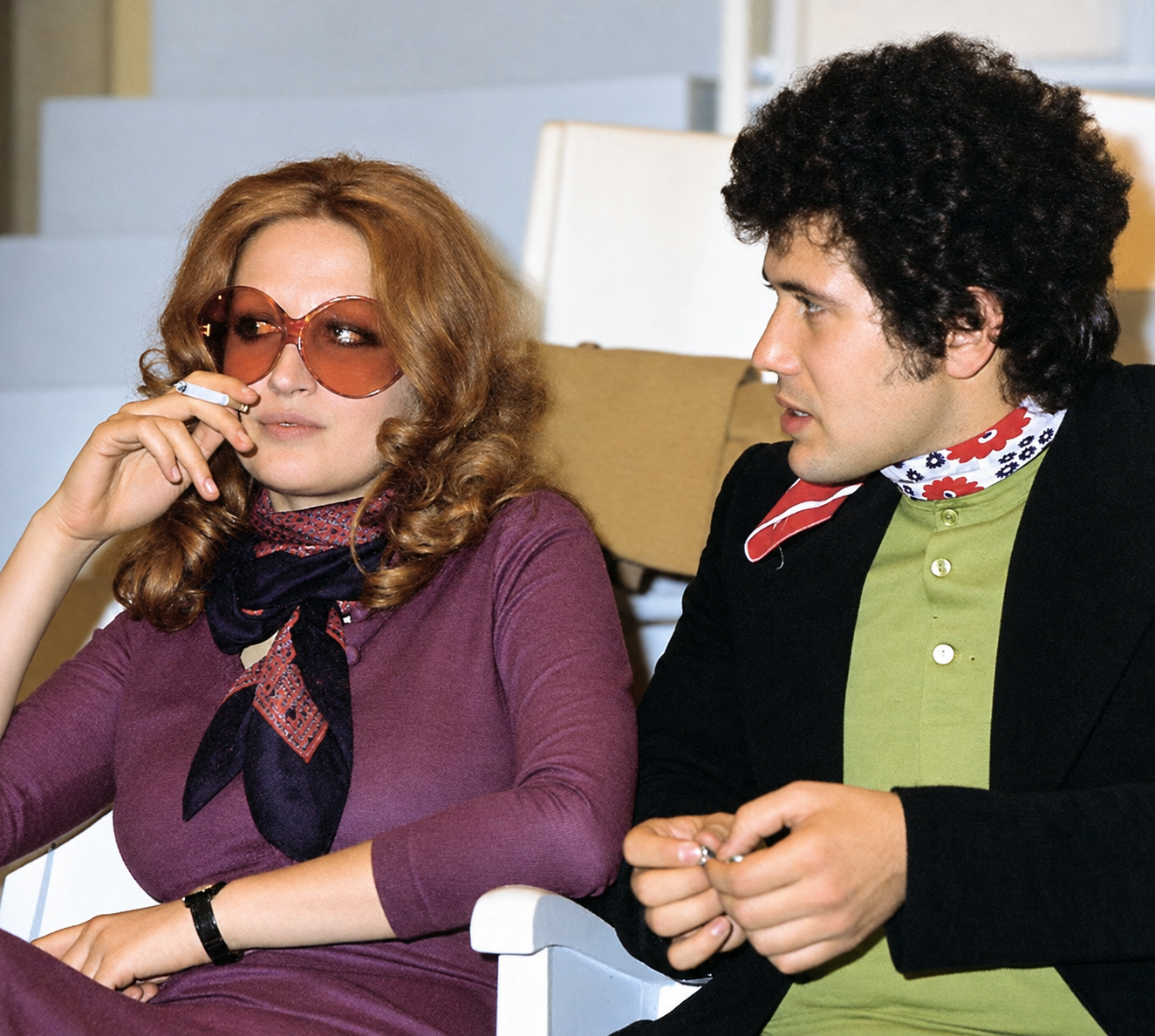
 Few artists changed Italian popular music as profoundly as Lucio Battisti. With his unmistakable voice, adventurous arrangements and extraordinary gift for melody, Battisti brought the sounds of rock, soul, rhythm and blues, progressive music and electronic pop into the heart of the Italian song.
His recordings with lyricist Mogol produced some of the best-known songs in modern Italian culture, including “Acqua azzurra, acqua chiara,” “Emozioni,” “I giardini di marzo,” “Il mio canto libero” and “La canzone del sole.” Yet Battisti was far more than a successful performer of romantic songs. Throughout his career, he repeatedly abandoned familiar formulas, experimented with new recording techniques and challenged listeners to follow him into unexpected musical territory.
Childhood and First Experiences as a Musician
Lucio Battisti was born on March 5, 1943, in Poggio Bustone, a small town in the province of Rieti in Lazio. His family later moved to Rome, where he developed an interest in the guitar and began teaching himself to play.
During the early 1960s, Battisti gained practical experience with several groups, including I Mattatori and I Satiri. He later joined I Campioni, a more established band that had worked with singer Tony Dallara. Playing in clubs and touring outside Italy exposed the young guitarist to British and American rock, blues, soul and rhythm and blues.
These influences were crucial. Italian popular music was still largely dominated by traditional melodies, orchestral arrangements and polished vocal performances. Battisti admired that melodic tradition, but he also heard new possibilities in electric guitars, syncopated rhythms, unusual vocal phrasing and the energy of Anglo-American pop.
The Meeting with Mogol
Battisti’s career changed after he moved into Milan’s music scene and met Giulio Rapetti, better known as Mogol. Already an established lyricist, Mogol recognized Battisti’s talent as a composer even when record executives were uncertain about his unconventional voice.
Their collaboration began in the mid-1960s. Battisti composed the music, while Mogol generally wrote the lyrics. Together they developed songs that combined memorable melodies with conversational language and emotionally complex stories.
One of their first major successes was “29 settembre,” recorded by Equipe 84 in 1967. The song was remarkably innovative for Italian pop, both in its narrative structure and in its psychedelic production. Instead of presenting a conventional love story, it follows a man through a moment of infidelity, using fragments of memory and radio announcements to mark the passing of time.
Battisti initially achieved greater recognition as a composer than as a singer. His unusual, slightly rough voice did not conform to the traditional ideal of the powerful Italian vocalist. It eventually became one of his greatest strengths: vulnerable, urgent and instantly recognizable.
Sanremo and the Beginning of Solo Success
In 1969, Battisti appeared at the Sanremo Music Festival with “Un’avventura,” performed in the festival’s double-version format with American soul singer Wilson Pickett. The song united an Italian melody with rhythm-and-blues influences and helped introduce Battisti to a much larger public.
His self-titled debut album, Lucio Battisti, was released that same year. It included songs he had already written for other performers as well as recordings that established his identity as a solo artist.
“Acqua azzurra, acqua chiara” became one of the defining hits of 1969 and won the Festivalbar. Battisti returned to the competition’s success the following year with “Fiori rosa, fiori di pesco.”
By this point, the Battisti-Mogol partnership had become one of the most influential creative collaborations in Italian music.
The Battisti-Mogol Years
During the 1970s, Battisti and Mogol produced an exceptional succession of singles and albums. Their songs explored love, jealousy, freedom, separation, memory and the fragile misunderstandings of everyday relationships.
Mogol’s lyrics often sounded direct and accessible, but they rarely offered simple romantic reassurance. The narrators could be insecure, selfish, confused or painfully aware of their own mistakes. Battisti gave those emotions musical form through unexpected changes in rhythm, soaring melodies and arrangements that continually shifted around his voice.
Among the most important albums from this period were:
Emozioni (1970), which helped establish Battisti as a major interpreter of intimate and emotionally charged songs.
Amore e non amore (1971), an ambitious work divided between vocal songs and experimental instrumentals.
Umanamente uomo: il sogno (1972), featuring “I giardini di marzo,” one of Battisti and Mogol’s most evocative reflections on childhood, poverty and memory.
Il mio canto libero (1972), whose title track became an enduring anthem of love, personal independence and emotional liberation.
Il nostro caro angelo (1973), which combined accessible songs with increasingly sophisticated arrangements.
Anima latina (1974), one of Battisti’s boldest and most experimental recordings.
La batteria, il contrabbasso, eccetera (1976), containing the enormously successful “Ancora tu.”
Io tu noi tutti (1977), recorded partly in the United States and influenced by contemporary international production.
Una donna per amico (1978), one of the greatest commercial successes of his career.
Una giornata uggiosa (1980), the final studio album created with Mogol.
This music belongs naturally within the wider history of Italian music and its most influential performers, but Battisti occupied a distinctive position. He is frequently described as a cantautore, although he normally did not write his own lyrics. His authorship was primarily musical: melody, composition, arrangement, performance and production were the tools through which he transformed the Italian song.
Songs Written for Other Artists
Battisti’s importance cannot be understood only through the records released under his own name. With Mogol, he created songs for many other Italian performers.
Equipe 84 recorded “29 settembre” and “Nel cuore, nell’anima.” Dik Dik made “Sognando la California” and Battisti-Mogol compositions part of the Italian beat era, while Formula 3 became closely associated with songs such as “Eppur mi son scordato di te” and “Questo folle sentimento.”
Mina gave powerful interpretations to “Insieme,” “Io e te da soli” and “Amor mio.” Bruno Lauzi recorded “E penso a te,” a song subsequently performed by numerous Italian and international artists.
Battisti was therefore both a star and an important creative force behind the work of other singers. His melodies could survive radically different interpretations because their emotional structures were exceptionally strong.
The Famous Duet with Mina
One of the most celebrated moments in Italian television history occurred in 1972, when Battisti and Mina appeared together on the program Teatro 10.
Accompanied by musicians in an informal studio setting, they performed a medley of songs connected with the Battisti-Mogol partnership. The performance demonstrated how naturally Battisti’s introspective delivery could interact with Mina’s extraordinary vocal power.
It has since become a treasured document of Italian popular culture. It is also remembered as one of Battisti’s final major television appearances before he progressively withdrew from public performance.
Anima Latina and the Desire to Experiment
Battisti could easily have continued producing variations on his established hits. Instead, he increasingly used his success to pursue more adventurous ideas.
Anima latina, released in 1974 after a journey through Brazil with Mogol, represented a dramatic break with conventional Italian pop. Brazilian rhythms, progressive rock, electronic textures, layered voices and extended instrumental passages frequently displaced the traditional verse-and-chorus structure.
Battisti’s voice sometimes appeared low in the mix, functioning as one element within the complete sound rather than always occupying the center. The album initially surprised listeners expecting another collection of immediate romantic hits, but it later became one of the most critically admired works in his catalogue.
The record revealed an essential aspect of Battisti’s character: he did not regard popularity as a reason to remain musically stationary.
Withdrawal from Public Life
As his fame increased, Battisti became increasingly uncomfortable with the machinery of celebrity. He reduced his television appearances, stopped performing concerts and rarely granted interviews.
This withdrawal contributed to the mystery surrounding him, but it was not simply a publicity strategy. Battisti appeared to believe that the completed recording should stand between the artist and the audience. He preferred the controlled environment of the studio to live performance and public discussion of his private life.
He lived with Grazia Letizia Veronese, whom he later married, and their son, Luca. Battisti guarded his family life closely and spent many of his later years in relative seclusion in Molteno, in Lombardy.
His absence from television did not diminish public interest. On the contrary, each new record became an event precisely because audiences heard so little from him outside his music.
The End of the Partnership with Mogol
The artistic partnership between Battisti and Mogol ended after Una giornata uggiosa in 1980. Their separation closed one of the most successful chapters in Italian recording history.
The reasons included artistic and business disagreements, but the split should not be understood simply as the end of Battisti’s creative importance. He was ready to move into a new, more experimental phase, even at the risk of losing part of his mass audience.
In 1982, he released E già, with lyrics credited to Velezia, the pseudonym used by Grazia Letizia Veronese. The album made extensive use of synthesizers and electronic instrumentation, pointing toward the increasingly abstract music of his final period.
The Collaboration with Pasquale Panella
Battisti returned in 1986 with Don Giovanni, the first of five albums created with lyricist Pasquale Panella. The others were L’apparenza (1988), La sposa occidentale (1990), Cosa succederà alla ragazza (1992) and Hegel (1994).
Panella’s lyrics were radically different from Mogol’s. Instead of apparently straightforward stories about relationships, they employed puns, interruptions, double meanings, literary references and deliberately unstable sentences. The words often resisted a single interpretation.
Battisti responded with music that could be elegant and melodic but also fragmented, electronic and structurally unpredictable. On some recordings, the music was composed before the lyrics, requiring Panella to fit language into already established melodic patterns.
These albums divided listeners. Some missed the immediate emotional accessibility of the Mogol period, while others considered the Battisti-Panella collaboration among the most daring experiments ever attempted by a major Italian pop artist.
The five records have since attracted extensive critical reassessment. They show an artist refusing to live on nostalgia and attempting to reinvent the relationship between words, voice and music.
Battisti’s Voice and Musical Style
Battisti did not possess a conventionally polished voice. His singing could sound strained, nasal or fragile, particularly when he pushed toward the top of his range. Yet those apparent imperfections communicated an emotional vulnerability that a more formal vocal style might have lost.
His sense of melody was accompanied by a sophisticated understanding of rhythm and arrangement. Across his career, he absorbed elements of soul, folk, funk, progressive rock, Latin music, disco and electronic pop without merely imitating foreign models.
He helped prove that Italian songs could retain their melodic identity while engaging directly with international musical developments. This achievement influenced generations of performers, composers and producers.
Ten Essential Lucio Battisti Songs
For listeners approaching his music for the first time, these recordings provide an introduction to different parts of his career:
- “29 settembre” – a landmark composition first made famous by Equipe 84.
- “Acqua azzurra, acqua chiara” – one of the most recognizable songs of Italian pop.
- “Emozioni” – a sequence of vivid experiences transformed into music.
- “La canzone del sole” – a deceptively simple song that generations of Italians learned to play on guitar.
- “I giardini di marzo” – an intensely personal portrait of childhood memories.
- “Il mio canto libero” – one of Battisti and Mogol’s most enduring declarations of emotional freedom.
- “Il nostro caro angelo” – a darker, more complex example of their songwriting.
- “Ancora tu” – a hypnotic combination of romantic tension, rhythm and repetition.
- “Con il nastro rosa” – a graceful but uncertain reflection on love and commitment.
- “Don Giovanni” – an accessible entrance into the more enigmatic Battisti-Panella period.
Death and National Mourning
Lucio Battisti died in Milan on September 9, 1998, at the age of 55, following a period of hospitalization. Because he and his family had always protected his privacy, the precise details of his illness were never fully explained publicly.
His death produced an enormous national response. Italians who had grown up with his records mourned an artist whose songs had accompanied first loves, separations, family journeys and private moments for nearly three decades.
The widespread grief also revealed something remarkable: despite his long withdrawal from public life, Battisti had never disappeared from Italian culture.
Lucio Battisti’s Legacy
Battisti changed the sound of Italian popular music without rejecting its melodic foundations. He showed that an Italian song could be intimate and experimental, immediately memorable and musically sophisticated.
His partnership with Mogol created a body of work that entered everyday life. Many of their songs are so familiar in Italy that they can seem almost traditional, passed from one generation to another rather than belonging to a single historical period.
His later recordings with Panella offer another kind of legacy. They demonstrate Battisti’s determination to resist repetition, even when experimentation risked misunderstanding and lower sales.
Today, his music continues to be reissued, studied, covered and introduced to new audiences. Younger Italian artists cite him not only as a master of melody but also as a producer and studio innovator. Outside Italy, albums such as Anima latina have helped inspire a broader reassessment of his work.
Lucio Battisti remains difficult to place within a single category. He was a pop star who distrusted celebrity, a romantic icon who protected his private life, and a creator of enormously popular songs who repeatedly moved toward experimentation. That combination of familiarity and mystery is one reason his music continues to feel alive.
External Sources
Lucio Battisti – Treccani Encyclopedia
Lucio Battisti discography – Discogs
Lucio Battisti artist page – Spotify
Lucio Battisti recordings and performances – YouTube