
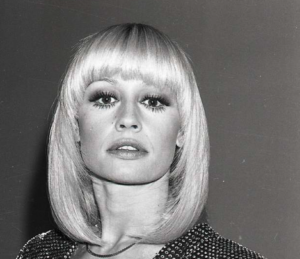
Raffaella Carrà helped change what a woman could do on Italian television. She sang, danced, interviewed guests, led elaborate variety shows and spoke to viewers with the ease of someone visiting their home. Her blonde bob became instantly recognizable, but her lasting achievement was the combination of discipline, humor and confidence behind it.
For Italian audiences, she was a familiar presence across generations. In Spain and Latin America, she became a star in her own right. Her songs offered a joyful language of independence and desire, while her television programs brought spectacular performances and ordinary people’s stories into the spotlight.
To understand Carrà’s influence, it helps to follow those careers together: the dancer who became an actress, the actress who became a singer, and the singer who became one of television’s most versatile hosts.
Early Life and Cinema Beginnings
Born Raffaella Pelloni in Bologna on June 18, 1943, she trained in dance in Rome and later graduated from the Centro Sperimentale di Cinematografia. Her screen appearances began as a child with Tormento del passato in 1952.
Her professional surname had an artistic origin. Screenwriter Dante Guardamagna suggested pairing Raffaella, which recalled Renaissance painter Raphael, with the surname of Italian painter Carlo Carrà.
During the 1960s, she appeared in La lunga notte del ’43 and I compagni. In 1965, she acted alongside Frank Sinatra in Von Ryan’s Express. The following year, the stage musical Ciao Rudy, with Marcello Mastroianni, brought her singing and dancing together before a theatre audience. Raffaella Carrà Ufficiale
These experiences supplied the foundations for her television work. Acting gave her an understanding of character and timing; dance brought physical precision; musical theatre taught her how to hold an audience through an entire performance.
Canzonissima and the Making of a Television Star
Carrà’s major television breakthrough came with Canzonissima in 1970, alongside Corrado. Her opening number, “Ma che musica maestro,” demonstrated how effectively she could combine a song with movement, personality and the camera. Rai’s archive identifies the 1970–71 season as a decisive launch for her musical career. raffaellacarra.com
She returned for the 1971–72 season, when “Tuca Tuca” became one of her defining performances. Its playful choreography challenged the boundaries of respectable television entertainment. A celebrated appearance with Alberto Sordi helped turn the number into a popular cultural reference. raffaellacarra.com
The appeal was partly her command of tone. Carrà could suggest flirtation without losing humor and make demanding dance routines look welcoming. Viewers could admire the professional and still imagine joining the dance.
Her Canzonissima appearances belonged to three separate seasons: 1970–71, 1971–72 and 1974–75. Another landmark arrived in 1974 with Milleluci, co-hosted with Mina. The pairing placed two distinctive women at the center of a major variety production. www.radiocorrieretv.rai.it
Raffaella Carrà’s Most Famous Songs
Carrà’s recordings had a life beyond their television settings. “Rumore” appeared in 1974, “A far l’amore comincia tu” became an international signature song in 1976, and “Fiesta” followed in 1977. Spanish television specials in 1976 helped strengthen her international career. raffaellacarra.com
Her musical identity depended on the complete performance: voice, arrangement, dancers, costumes and visual rhythm. Watching an original television number can reveal as much about her appeal as listening to the recording alone.
For a first introduction, start with these songs:
| Song | What makes it memorable |
|---|---|
| Ma che musica maestro | The confidence and energy of her early television breakthrough |
| Tuca Tuca | Humor and choreography working together |
| Rumore | The force of her dance-oriented sound |
| A far l’amore comincia tu | An immediately recognizable invitation to take the initiative |
| Fiesta | Her ability to turn a refrain into a shared celebration |
| Ballo ballo | The close relationship between her records and television openings |
“Ballo ballo” was the theme for Fantastico 3 in 1982. Decades later, she was still recording: the Christmas album Ogni volta che è Natale appeared in 2018. RadioCorriereTV
Explore more performers and musical traditions in Italia Mia’s Italian music section.
Pronto, Raffaella? and the Lunchtime Television Revolution
Pronto, Raffaella? began on October 3, 1983, with Gianni Boncompagni directing. Broadcast at lunchtime, it made the telephone central to the relationship between presenter and audience. Its best-remembered competition asked callers to guess how many beans were in a jar. teche.rai.it
The simplicity was part of its appeal. Carrà could move from a polished performance to a spontaneous exchange with someone at home. Her responsiveness mattered as much as the script: she listened, laughed and allowed a conversation to develop.
The program demonstrated another side of her talent. A performer associated with elaborate dance numbers could also hold attention through the smallest interaction.
Buonasera Raffaella, which followed in the 1985–86 season, carried that mixture of music, guests and telephone games into the evening. Its New York broadcasts connected the show with Italian American audiences. Choreographer Sergio Japino was a key collaborator in its ambitious production. teche.rai.it
Spain and Hola Raffaella!
Carrà’s Spanish career deserves its own place in her biography. She established an enduring relationship with audiences there, working in their language and becoming a familiar television host.
Hola Raffaella! aired on Spain’s TVE between 1992 and 1994. The live variety program combined interviews, musical performances, humor and games, including the celebrity guessing game “Si fuera.” Programa de entretenimiento en RTVE Play
The format suited her ability to give a large production a conversational atmosphere. She could make an international guest feel approachable and turn a small exchange into entertainment.
Her success in Spain helps explain why her memory belongs to more than one national television culture. For many viewers, she was part of their own entertainment history.
Carràmba! Che sorpresa and the Power of Reunion
Returning to Italian television with Carràmba! Che sorpresa in 1995, Carrà placed unexpected meetings and emotional reunions at the center of a major entertainment show. Its stories included people separated for years, sometimes by migration and the cost of travelling between countries. www.radiocorrieretv.rai.it
Those reunions gave a personal shape to a wider Italian experience. A meeting between relatives could carry memories of departure, work abroad and family life interrupted by distance. Carrà’s task was to guide that emotion while keeping the program moving.
The original show returned for several editions, including 2002. The related Carràmba! Che fortuna, introduced in 1998, incorporated the Lotteria Italia and later returned in 2008. Distinguishing the two programs makes the later stages of her career easier to follow. www.radiocorrieretv.rai.it
Sanremo and Her Later Television Career
In 2001, Carrà hosted the Festival di Sanremo. Rai’s production credits also identify her as one of the festival’s authors, with Sergio Japino directing. Her contribution therefore extended beyond what viewers saw on stage. 2001Rai Teche
She subsequently worked with a younger generation of singers as a coach on The Voice of Italy, appearing in 2013–14 and returning in 2016. Raffaella Carrà Ufficiale
Her final television series, A raccontare comincia tu, aired in 2019. Its encounters with figures including Sophia Loren, Riccardo Muti and Paolo Sorrentino emphasized conversation and curiosity. www.radiocorrieretv.rai.it
The setting was quieter, but the essential skill remained familiar: helping another person feel comfortable enough to tell a story.
Personal Life and Important Collaborations
Two significant relationships also formed part of Carrà’s creative life.
Gianni Boncompagni was both a romantic partner and a close professional collaborator. After their relationship ended, they maintained their friendship and continued working together.
Sergio Japino, a choreographer and director, became another important partner. Although their romantic relationship also ended, they remained deeply close. It was Japino who announced her death. Carrà never married and had no children. rtve.es
These connections help explain the continuity behind changing television formats. Her work developed through trusted collaborations as well as her own skill as a performer and presenter.
Why Raffaella Carrà Became an LGBTQ+ Icon
Carrà’s status as an LGBTQ+ icon grew from more than a flamboyant stage image. Her songs and performances made independence, pleasure and self-expression feel accessible within mainstream entertainment.
RTVE’s retrospective highlights “Lucas,” a song that addressed homosexuality, as part of that history. Her relationship with LGBTQ+ audiences became an enduring element of her public identity. rtve.es
There is no need to turn every performance into a political declaration to recognize its significance. A woman appearing relaxed, assertive and in control of her public presence could offer viewers a powerful example. Her warmth helped those possibilities reach audiences who might never have sought out an explicitly political program.
She made confidence look inviting, and difference feel worthy of celebration.
Death and an Enduring Legacy
Raffaella Carrà died on July 5, 2021, aged 78. Her funeral took place on July 9 at Rome’s Basilica of Santa Maria in Aracoeli and was broadcast live by Rai. Crowds gathered to say goodbye. www.rainews.it
Her life has since received further attention through Raffa, the 2023 documentary series combining performance footage, private archive material and testimony from people who knew her. It offers another way to explore the distance between the public star and the woman behind the work. Disney+
Her surviving performances remain the most direct introduction. Watch the timing of a gesture, the precision of a dance routine or the way she responds to an unexpected answer. The pleasure feels immediate, even when the television world around her has changed.
That is the achievement connecting her songs, interviews and variety shows: Carrà made a demanding profession feel like an invitation to take part.
Sources and Archive Viewing
- Raffaella Carrà: Official Biography
- Rai RadioCorriereTV: Television Career and Final Interview Series
- Rai Teche: Buonasera Raffaella
- RTVE: Hola Raffaella Archive
- Disney+: Raffa Documentary Series