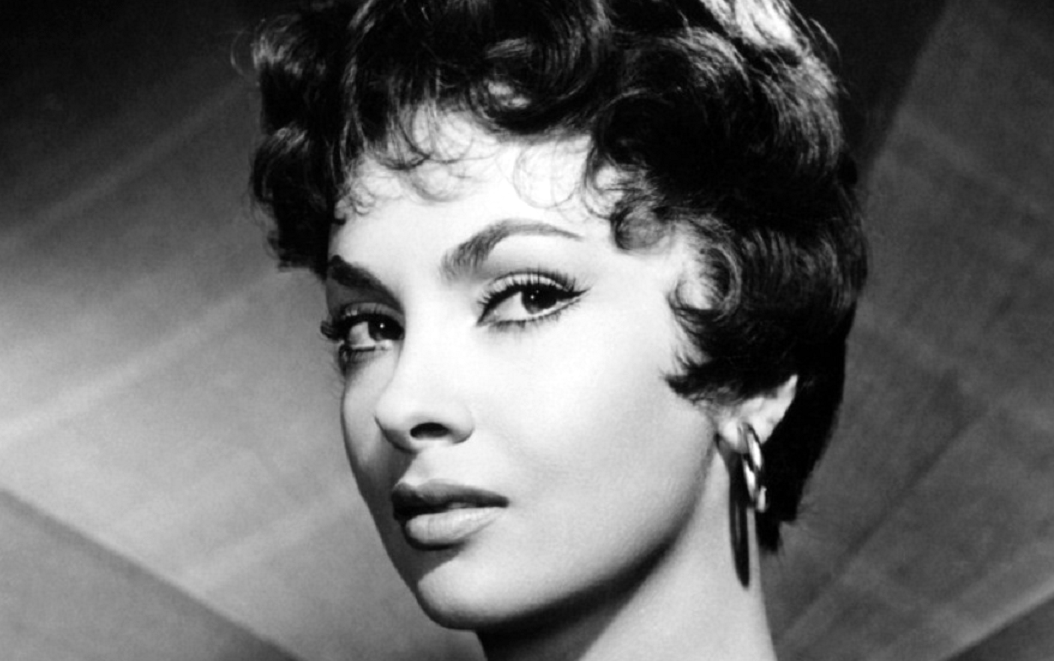
Gina Lollobrigida became one of the most recognizable faces of postwar Italian cinema. Audiences knew her as the spirited village beauty of Pane, amore e fantasia, the Esmeralda of The Hunchback of Notre Dame and a leading lady opposite some of Hollywood’s biggest stars. Yet the screen tells only part of her story.
Photography and sculpture gave her other ways to express herself. A woman whose appearance had been photographed, publicized and discussed around the world became an image-maker in her own right. Her career connects the popular cinema of the 1950s with a much longer personal commitment to the visual arts.
Early Life: From Subiaco to the Arts
Gina Lollobrigida was born on July 4, 1927, in Subiaco, in the hills east of Rome. Her early ambitions included art and music: she attended an artistic secondary school and studied singing with the aim of becoming a soprano.
Cinema gradually offered a different path. She appeared in small roles and entered the 1947 Miss Italia competition, finishing third. The contest provided exposure at a time when beauty pageants and illustrated magazines could open doors into the expanding Italian film industry.
Her first screen appearances did not immediately establish the personality audiences would later recognize. Early roles sometimes emphasized sweetness or reserve; subsequent filmmakers found room for greater boldness, humor and dramatic intensity.
Becoming “La Lollo”
Lollobrigida’s rise crossed national borders early. In the French adventure Fanfan la Tulipe (1952), she appeared opposite Gérard Philipe, gaining international attention. She also worked with René Clair on Les Belles de nuit, released the same year.
These films helped establish “La Lollo” as a star whose appeal traveled beyond Italy. Adventure, romance and comedy gave her opportunities to project a more mischievous and assertive screen presence.
Her work also included more serious material. Films such as La provinciale (1953), directed by Mario Soldati, and La romana (1954), directed by Luigi Zampa, belong alongside the glamorous productions in any account of her career. They show why a biography built entirely around beauty misses an important part of the actress.
Pane, Amore e Fantasia and Italian Popular Stardom
For many Italian viewers, Lollobrigida remains inseparable from Pane, amore e fantasia (1953), directed by Luigi Comencini. Playing Maria, nicknamed “la Bersagliera,” opposite Vittorio De Sica, she helped turn the film into a defining work of postwar popular cinema.
The film belongs to the movement commonly called neorealismo rosa, or pink neorealism. Its village setting and modest circumstances retain a connection to everyday life, while romance and humor soften the harsher emphasis associated with earlier neorealist films.
Lollobrigida’s appeal rests on more than her appearance. The character’s pride, quick reactions and refusal to be easily managed make her an active force in the comedy. She returned in Pane, amore e gelosia (1954), strengthening her association with the role.
International Fame: From John Huston to Hollywood Spectacle
In Beat the Devil (1953), directed by John Huston, Lollobrigida joined a cast including Humphrey Bogart and Jennifer Jones. The production demonstrated how an Italian actress could build an international career through films made in Europe.
Her range of projects widened during the decade. In Carol Reed’s Trapeze (1956), she appeared with Burt Lancaster and Tony Curtis in a circus drama. That same year, she played Esmeralda opposite Anthony Quinn’s Quasimodo in Jean Delannoy’s The Hunchback of Notre Dame.
Historical spectacle followed with Solomon and Sheba (1959), opposite Yul Brynner. These productions placed her within a film industry that increasingly brought together European locations, international casts and American financing.
Her name became a selling point across different markets. She could move from an Italian village comedy to a French literary adaptation or a large historical production without losing her recognizable star identity.
Comedy, Glamour and Recognition
Lollobrigida’s international career also made room for lighter material. Come September (1961), opposite Rock Hudson, offered romantic comedy in an Italian setting. Woman of Straw (1964), with Sean Connery, took her into thriller territory, while Buona Sera, Mrs. Campbell (1968) provided another substantial comic showcase.
Her awards history requires a small but useful distinction. The Golden Globes’ official record lists her 1961 victory in the World Film Favorites category. It also records nominations for Buona Sera, Mrs. Campbell in 1969 and Falcon Crest in 1985.
Those entries reflect both her international popularity and the length of her screen career. Her later television work extended that career beyond the period most closely associated with her movie stardom.
Gina Lollobrigida and Sophia Loren
Accounts of Lollobrigida’s life frequently place her beside Sophia Loren. Both became international symbols of Italian cinema, and comparisons between them became part of their public identities.
The rivalry is less useful as a way of understanding their work than the careers themselves. Each moved between Italian filmmaking and international productions, but their performances, collaborators and choices deserve individual attention.
Lollobrigida’s later commitment to photography and sculpture makes that particularly clear. Her story eventually leads well beyond the familiar comparison between two screen stars.
Photography: Looking Through the Lens
Photography was a sustained activity for Lollobrigida, rather than simply an occupation adopted after leaving films. Palazzo delle Esposizioni’s account of her work dates her photographic practice to 1959, when her acting career was still flourishing.
Her subjects included everyday people as well as prominent figures. Travel brought her into contact with different communities, while her portraits included personalities from cinema, politics and the arts.
In 1973, she published Italia mia, which received the Prix Nadar. The book is a central part of her photographic legacy: an Italy observed by a woman who had already helped shape its international screen image.
Her work also extended to documentary filmmaking, including films about Fidel Castro in 1974 and Indira Gandhi in 1976. In 2009, a Rome retrospective curated by Philippe Daverio presented more than 250 photographs, giving audiences a substantial view of this side of her career.
Sculpture: Returning to an Early Ambition
Sculpture brought Lollobrigida back to an interest that preceded her film fame. It also allowed her to revisit the roles and images through which audiences knew her.
Her 2008 Vissi d’Arte exhibition in Pietrasanta included works inspired by her screen characters. Esmeralda and la Bersagliera appeared in sculptural form, creating a direct conversation between her acting career and her later art.
That connection is revealing. The characters were no longer solely performances preserved on film: they became subjects she could reinterpret through physical form, scale and movement.
Her sculptures were also exhibited at Moscow’s Pushkin Museum in 2003 and the Monnaie de Paris in 2004. These exhibitions form an important part of her biography, demonstrating the public scope of work sometimes overshadowed by her celebrity.
Five Gina Lollobrigida Films to Start With
These five films provide an accessible introduction to different aspects of her screen career:
| Film | Year | Why start here |
|---|---|---|
| Fanfan la Tulipe | 1952 | An early international success, combining adventure, romance and lively comic energy. |
| Pane, amore e fantasia | 1953 | Her signature Italian role and an essential introduction to la Bersagliera. |
| Trapeze | 1956 | A major international drama alongside Burt Lancaster and Tony Curtis. |
| Come September | 1961 | A showcase for her romantic-comedy partnership with Rock Hudson. |
| Buona Sera, Mrs. Campbell | 1968 | A later leading role that earned a Golden Globe nomination. |
Together, they trace her movement from European breakthrough to established international star.
Later Recognition and Legacy
In February 2018, Lollobrigida received a star on the Hollywood Walk of Fame. She died in Rome on January 16, 2023, aged 95.
Her films remain the most immediate way to encounter her: the spirited exchanges of village comedy, the visual grandeur of historical productions, the assurance of an international leading lady.
Her photographs and sculptures widen that encounter. They invite us to consider what she chose to observe and create, as well as how she appeared to others. Seen together, these bodies of work reveal an artist whose curiosity outlasted the era that made her famous.
External Links
- Treccani: Gina Lollobrigida in the Enciclopedia del Cinema — Biographical background and critical assessment.
- Centro Sperimentale di Cinematografia: Tribute to Gina Lollobrigida — Her place in Italian and international film.
- Palazzo Esposizioni Roma: Gina Lollobrigida fotografa — The 2009 photographic retrospective.
- Golden Globes: Gina Lollobrigida — Official award and nomination record.
- Hollywood Walk of Fame: Gina Lollobrigida — Her 2018 star ceremony.
- i-Italy: Gina Lollobrigida’s Sculpture — Coverage of her Pietrasanta exhibition.