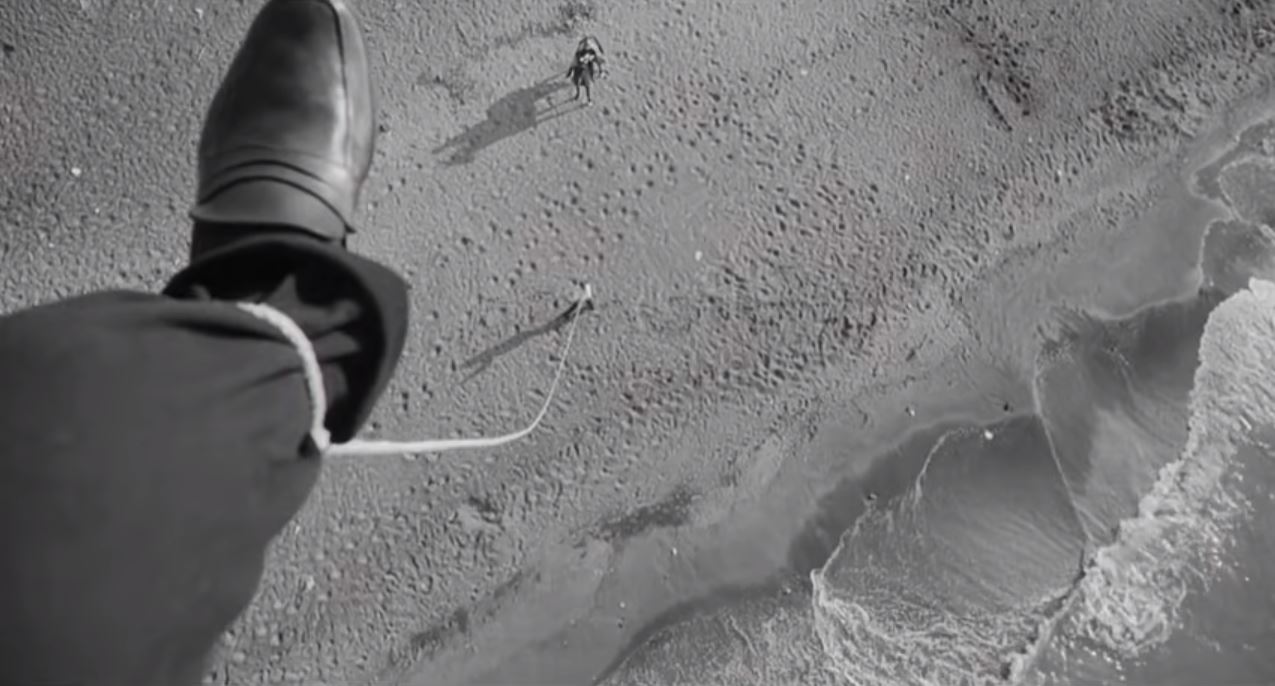
 Federico Fellini’s 8½ begins with a man who cannot move. Trapped in a traffic jam, Guido Anselmi looks around at the silent faces watching him through their car windows. Then his predicament becomes a dream. It is a startling introduction to a film in which a director’s stalled work, private memories and fears occupy the same world.
Released in 1963, 8½ is playful, uncomfortable and sometimes bewildering. I find it easier to enter the film by watching Guido as a person before trying to separate every dream from every waking scene. Fellini gives us plenty to recognize: the pressure to have an answer, the wish to escape an awkward conversation, and the temptation to imagine ourselves more admirable than we are.
The Story
Guido is a celebrated director preparing a large new film, but he cannot explain what it is about. He retreats to a spa, hoping to recover his health and find an idea. His producer, actors and crew follow him there. A vast structure has already been built for the production, while its director remains unable to tell anyone what he intends to shoot.
His wife Luisa arrives, as does his mistress Carla. Claudia, an actress he has imagined as the answer to his film, enters the story too. Their encounters draw Guido into childhood memories, fantasies and dreams. The shifts can come without an announcement. A scene that first appears to show us what happened may instead reveal what Guido fears or wishes had happened.
Spoiler notice: The following paragraph discusses the ending. Guido cannot rescue his project by producing one perfect idea. In the finale, people from different parts of his life gather in a circular procession. I read it as a moment of acceptance, though the film leaves open how much Guido has truly learned about the people around him. Its joy does not erase the hurt he has caused.
Cast and Characters
Marcello Mastroianni plays Guido Anselmi, charming enough to keep people near him and evasive enough to disappoint them. He makes Guido’s exhaustion visible even when the director is dressed and behaving like a man in control.
Anouk Aimée plays Luisa, Guido’s wife. Her intelligence and anger give weight to scenes that Guido might prefer to turn into another fantasy. Sandra Milo plays Carla, his mistress, whose presence makes his divided private life impossible to hide. Claudia Cardinale plays Claudia, an actress onto whom Guido projects hopes for both his film and himself.
Among the larger cast, Rossella Falk plays Rossella, one of the people closest to Guido during his retreat; Jean Rougeul plays Daumier, the critic who challenges his ideas; and Guido Alberti plays Pace, the producer waiting for a film. Fellini fills the edges of the story with people who need something from Guido, remember a different version of him, or refuse the role he has assigned them.
Awards and Recognition
At the 1964 Academy Awards, 8½ won Foreign Language Film for Italy and Black-and-White Costume Design for Piero Gherardi. It also received nominations for Fellini’s direction, its original screenplay and black-and-white art direction: five nominations and two wins in all. The film won the Grand Prize at the 1963 Moscow International Film Festival.
Its standing extends beyond awards. In Sight and Sound’s 2022 greatest-films polls, 8½ placed joint 31st among critics and joint sixth among directors. Those are two separate polls, a distinction that matters when its ranking is quoted.
How the Film Was Made
The title is Fellini’s count of the films he had made up to that point, including shared and anthology-film work counted as fractions. He followed the international success of La dolce vita with a story about a filmmaker who cannot find his next film. That parallel is part of 8½’s wit, although Guido should not be mistaken for a complete portrait of Fellini.
Fellini wrote the screenplay with Ennio Flaiano, Tullio Pinelli and Brunello Rondi. Gianni Di Venanzo’s black-and-white cinematography gives the spa, the crowds and Guido’s dreams a shared visual language; Nino Rota’s music helps the film move between anxiety and spectacle. Fellini and his collaborators made the director’s unfinished production tangible through the enormous structure standing ready for a film that may never be made.
The ending might have been very different. Fellini previewed a more downbeat version before choosing the procession seen in the finished film. Criterion’s physical edition includes The Last Sequence, a documentary about the lost alternate ending, alongside other material on the production.
Why It Still Matters
Many films show an artist at work. 8½ lets us experience how an artist avoids working: Guido turns a question into a memory, a memory into a fantasy, and a fantasy into something that might appear in his film. The structure puts us close to his imagination without requiring us to approve of his behavior.
That is what makes the women’s scenes so important. Guido may imagine Claudia as a solution and try to arrange other people into a pleasing picture, but they have needs and judgments of their own. The film’s beauty becomes more interesting when I hold both things in view: Guido’s extraordinary imagination and the limits of what it allows him to see.
8½ also gave later filmmakers a way to put their doubts, memories and working lives on screen. Its influence is visible in films about creators trying to make sense of themselves through the very work they cannot finish.
Where to Watch or Buy
Availability checked for the United States and Italy on September 29, 2026. Catalogs, rental offers and disc stock can change. Check the service in your country, and check language and subtitle options before paying.
Subscription streaming — United States: The Criterion Channel’s film page lists 8½ for subscribers. The U.S. JustWatch listing also lists HBO Max and HBO Max’s Amazon channel. An Amazon channel subscription is a separate viewing offer; it does not mean the film is included with a standard Prime membership.
Subscription streaming — Italy: The Italian JustWatch listing lists Infinity Selection Amazon Channel and CineAutore Amazon Channel. One other Prime Video film page I checked displayed “currently unavailable,” so I would verify the specific channel offer in an Italian account before relying on it.
Digital rental or purchase — United States: The U.S. listing shows rentals and digital purchases through Amazon Video, Apple TV Store and Fandango at Home. These are transactions distinct from subscription streaming. The Italian listing did not show a rental or digital-purchase option when checked; readers in Italy can revisit its page for changes.
Physical editions: Criterion confirms a U.S. 4K UHD + Blu-ray special edition and a Blu-ray edition, with supplements including commentary and Fellini: A Director’s Notebook. See the edition details directly from Criterion. For an Amazon purchase, use the tagged Amazon.com search for the Criterion 4K/Blu-ray edition or the tagged Amazon.it search for Otto e mezzo on Blu-ray. These are search links, because I could not verify a specific Amazon product listing and its stock. Compare the cover, format, disc region and subtitles with the seller’s description before ordering.
Disclosure: Italia Mia may earn a commission from qualifying purchases through the Amazon links, at no extra cost to you.
External Sources
The Criterion Collection: 8½ · Academy Awards: 1964 ceremony · BFI: 8½ and the Sight and Sound polls · BFI: Fellini’s 8½ turns 50 · JustWatch U.S. · JustWatch Italy