
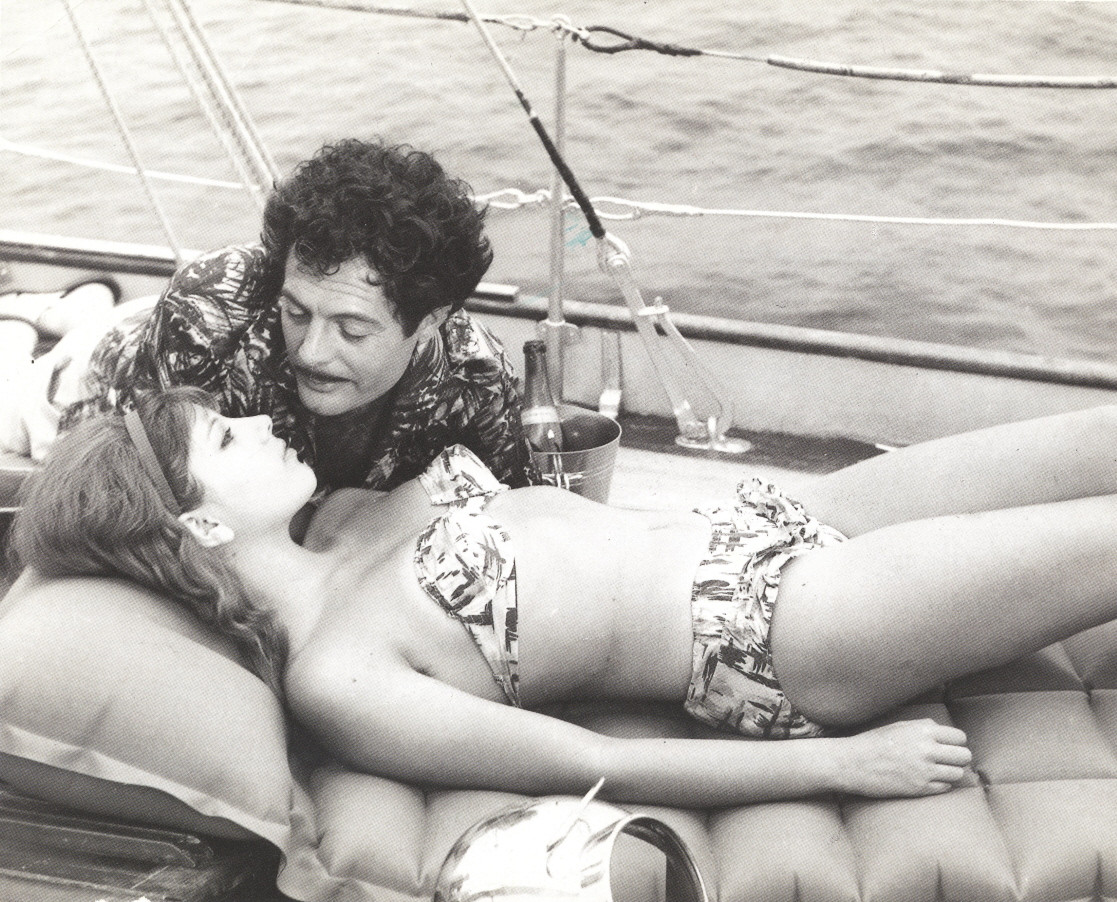
 Some of the greatest Italian films make us cry. Divorce Italian Style makes us laugh—and then leaves us wondering what, exactly, we have been laughing at.
Released in 1961, Pietro Germi’s Divorzio all’italiana stars Marcello Mastroianni as a Sicilian aristocrat who dreams of escaping his marriage. His proposed solution is monstrous, but the society around him provides the excuses that make it seem respectable.
That combination of irresistible comedy and uncomfortable social criticism earns the film its place in our selection of the best Italian movies. It also offers an excellent introduction to commedia all’italiana: cinema in which human weakness, public hypocrisy and serious social problems become the material for laughter.
The Story
Spoiler notice: This synopsis explains Ferdinando’s plan and the circumstances behind it, but leaves the ending unrevealed.
Baron Ferdinando Cefalù, known as Fefè, lives in the fictional Sicilian town of Agramonte. His aristocratic title gives him status, but his domestic life offers little of the grandeur he associates with his ancestry.
He shares a family palace with relatives, endures the attentions of his wife Rosalia, and becomes obsessed with Angela, his sixteen-year-old cousin. In his imagination, Angela represents everything his marriage supposedly denies him.
Rosalia, meanwhile, loves her husband. Her affection makes his predicament more absurd: he wants to present himself as an unfortunate man trapped by circumstances, while privately fantasizing about her death.
Because divorce is unavailable in Italy at the time, Fefè begins considering another route. The legal treatment of so-called honor killings suggests that a husband who murders an adulterous wife might receive a substantially reduced sentence.
Rather than accept his marriage or confront his own desires honestly, he sets out to manufacture the circumstances that could excuse a murder.
The arrival of Carmelo Patanè, a painter with a romantic connection to Rosalia’s past, appears to offer an opportunity. Fefè hopes to encourage an affair, discover the lovers together, and turn calculated violence into a public performance of wounded honor. The premise is confirmed by the film’s distributor and Rai’s synopsis.
The comedy comes from the distance between his elaborate plans and the people he tries to control. Rosalia, Carmelo and Angela have desires of their own. Fefè’s confidence repeatedly outruns his understanding.
Germi also makes the town part of the machinery. Gossip, family expectations and appearances matter enormously. Fefè is planning for an audience as much as for himself.
Cast and Characters
Marcello Mastroianni as Ferdinando “Fefè” Cefalù
Mastroianni makes Fefè memorable through tiny gestures: a sideways glance, a twitch of the mouth, an expression of exaggerated suffering. The character’s vanity is visible even when he says very little.
His elegance becomes part of the joke. Here is a man who considers himself cultivated and superior, yet applies his intelligence to an appalling scheme.
Daniela Rocca as Rosalia Cefalù
Rosalia is affectionate, persistent and oblivious to much of her husband’s hostility. Rocca’s performance supports the comedy, but the character’s vulnerability gives the story its disturbing weight.
We see much of Rosalia through Fefè’s impatient perspective. Watching critically means recognizing that his contempt is evidence against him, rather than an objective judgment of her worth.
Stefania Sandrelli as Angela
Angela is Fefè’s young cousin and the focus of his fantasies. Her presence exposes both his sexual entitlement and his tendency to confuse desire with destiny.
She is also a reminder of how little he understands other people when they cease to serve the roles he has assigned them.
Leopoldo Trieste as Carmelo Patanè
The painter becomes the essential ingredient in Fefè’s plan. Trieste brings nervousness and uncertainty to a character whom the baron would prefer to treat as a convenient instrument.
Odoardo Spadaro as Don Gaetano Cefalù
Fefè’s father helps establish the family atmosphere, where inherited position and private appetites coexist with public respectability.
Lando Buzzanca as Rosario Mulè
Buzzanca contributes to the surrounding network of family relationships and comic complications. These principal roles are listed in Criterion’s cast credits.
Awards and Recognition
Divorce Italian Style received major recognition both in Europe and in the United States.
At the Academy Awards ceremony held on April 8, 1963, it won the award now commonly described as Best Original Screenplay. The credited winners were Ennio De Concini, Alfredo Giannetti and Pietro Germi.
The film also received nominations for Best Actor, for Marcello Mastroianni, and Best Director, for Germi. Its Oscar success therefore amounted to three nominations and one win. The ceremony honored films released in 1962, which helps explain the differing dates sometimes attached to the award.
At the 1962 Cannes Film Festival, Germi received the Best Comedy prize. This was a specific comedy award, rather than the Palme d’Or.
At the 1963 Golden Globes, the film won in the foreign-language film category, while Mastroianni won Best Actor in a Motion Picture—Musical or Comedy.
These awards recognized a film whose subject was rooted in Italian society but whose portrait of self-deception traveled remarkably well.
How the Film Was Made
Germi wrote the screenplay with Ennio De Concini and Alfredo Giannetti. Franco Cristaldi produced the film, with Vides working alongside Lux Film and Galatea.
Documents preserved by the Cineteca di Bologna reveal an earlier working title, Capriccio all’italiana. The archive also records plans for a follow-up centered on Fefè. That project did not materialize, although Germi subsequently returned to Sicilian marriage customs in Seduced and Abandoned.
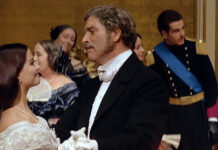
The finished film uses black-and-white photography and a widescreen composition. Carlo Rustichelli composed the music, and Roberto Cinquini edited the film.
Its most effective formal device is Fefè’s narration. We hear his explanations while the images expose the selfishness beneath them. Fantasy sequences allow him to rehearse possible escapes from Rosalia, turning murderous thoughts into grotesque comic episodes.
Germi shifts between the baron’s distorted view of events and scenes that reveal how ridiculous he looks from the outside. Film critic Stuart Klawans identifies this movement between subjective and external perspectives as central to the film’s construction.
Another memorable detail connects the film with Fellini: the inhabitants of Agramonte flock to a screening of La dolce vita, whose star is also Mastroianni. The reference places modern celebrity and sexual fascination inside a community preoccupied with moral appearances.
Rai Cultura also traces the name commedia all’italiana to a variation on the film’s title. The comic tradition had earlier foundations, but Germi’s success helped give it the name by which it became internationally known.
Why It Still Matters
The historical contradiction behind Divorce Italian Style is essential to understanding it.
Italy introduced divorce through legislation in 1970, nine years after the film’s release. The provisions associated with honor killings survived until their abolition in 1981. These were separate reforms, arriving at different moments.
Germi turns that contradiction into a devastating comic premise. A man cannot legally end his marriage through divorce, yet believes he can exploit the treatment of “honor” to reduce the punishment for killing his wife.
The satire reaches beyond legislation. Fefè wants the benefits of social respectability while arranging circumstances that should destroy any claim to it. His concern is how his conduct will be interpreted.
That remains recognizable. People still disguise selfish decisions as obligations, appeal to tradition when it serves them, and confuse public approval with moral justification.
The film also rewards attention to perspective. Its humor encourages us to follow Fefè’s reasoning, but following him does not require agreeing with him. His charm is part of the trap.
Rosalia’s treatment can be uncomfortable, particularly when her appearance and affection become comic targets. That discomfort belongs in a thoughtful viewing of the film. It raises the question of how readily an audience accepts a husband’s description of a wife he wants to discard.
For me, the film’s strongest achievement is the way it makes a corrupt outlook entertaining enough to examine closely. Mastroianni keeps us watching; Germi keeps supplying reasons to distrust the man he plays.
Alongside the dramas in our Italian Movies collection, Divorce Italian Style demonstrates how forcefully Italian cinema can challenge society through comedy.
Where to Watch or Buy
Availability checked on September 29, 2026, for the United States and Italy. Catalogs, prices and territorial rights can change.
Streaming in the United States
The film has a current listing on The Criterion Channel. U.S. availability listings also identify HBO Max and the HBO Max Amazon Channel as subscription options. The Amazon Channel requires the relevant channel subscription; it should not be assumed to be included with ordinary Prime membership.
Streaming in Italy
RaiPlay has a dedicated Divorzio all’italiana film page. JustWatch’s Italian listing currently identifies RaiPlay as a free viewing option with advertising. Readers outside Italy should check territorial access, and English-speaking viewers should confirm the available subtitles.
Digital rental and purchase
For U.S. viewers, current listings identify Fandango at Home for both rental and digital purchase. The U.S. availability page provides links to the offers.
The Italian availability page currently lists RaiPlay without a separate rental or digital-purchase offer.
Physical editions
Criterion has announced new Blu-ray and 4K UHD editions for December 1, 2026. At the time of checking, these are preorders. Its official edition page describes a new 4K restoration and supplementary interviews, screen tests and a documentary about Germi.
In Italy, CG Entertainment lists DVD and Blu-ray editions. Subtitle specifications differ: its DVD lists English subtitles, while its Blu-ray lists Italian subtitles and Italian subtitles for viewers with hearing impairments. English-speaking buyers should pay particular attention to that distinction.
To compare Amazon sellers, use these clearly labeled searches:
Search Amazon.com for Divorce Italian Style physical editions
Search Amazon.it for Divorzio all’italiana DVD and Blu-ray editions
These are search links, rather than verified individual product offers. Before ordering, confirm the edition, release date, subtitles, disc-region compatibility and seller’s shipping terms.
Affiliate disclosure: As an Amazon Associate, Italia Mia earns from qualifying purchases.
External Sources
Academy Awards: Official 1963 Results
Festival de Cannes: Divorzio all’italiana
Golden Globes: Divorce, Italian Style
Cineteca di Bologna: Cristaldi Production Archive
Criterion: The Facts and Fancies of Murder
Rai Cultura: Divorzio all’italiana