

 Italian cooking is often associated with luxurious ingredients: aged Parmigiano Reggiano, prosciutto, truffles, extra-virgin olive oil and handmade pasta. Yet many of Italy’s most satisfying dishes were created in homes where none of these things could be taken for granted.
Cucina povera—literally “poor cooking”—grew from the daily realities of farmers, shepherds, fishermen, laborers and large families with limited resources. Its cooks learned to build meals around bread, beans, seasonal vegetables, inexpensive cuts of meat and whatever could be gathered, preserved or stretched to feed another person.
It was not a single national cuisine. A Tuscan sharecropper, a Venetian farm worker and a Sicilian fisherman lived in different landscapes and cooked with different ingredients. What connected them was an approach: waste nothing, buy little, cook according to the season and extract as much flavor and nourishment as possible from what was available.
Today, dishes born from necessity appear in celebrated restaurants and glossy cookbooks. Their appeal, however, still rests on the same simple truth: expensive ingredients are not required to make memorable food.
What Does Cucina Povera Really Mean?
The expression cucina povera is now used rather loosely. It can describe rustic food, grandmother’s cooking, regional recipes or any dish made from inexpensive ingredients. Historically, its meaning was more specific.
This was the cooking of households that had to make careful use of every harvest, loaf and animal. Meals depended on local agriculture, the seasons and the economic conditions of a particular community. Families did not choose stale bread or beans because these ingredients were fashionable. They used them because throwing food away was unthinkable.
The Accademia Italiana della Cucina describes Italian peasant cooking as poor in material resources but rich in inventiveness, shaped by wild herbs, soups, vegetables, legumes and knowledge passed through rural society.
The term therefore refers less to a fixed collection of recipes than to a way of thinking about food.
Its fundamental principles included:
- Eating what the land produced in that season.
- Extending meals with bread, pasta, polenta or grains.
- Using legumes as affordable and filling sources of nourishment.
- Preserving vegetables, fruit, fish and meat for leaner months.
- Transforming leftovers into a different meal.
- Using every edible part of an animal.
- Building flavor through time, technique, herbs and careful cooking.
Cucina povera was resourceful, but it should not be excessively romanticized. Poverty meant uncertainty, repetitive diets and sometimes genuine hunger. The beauty lies not in deprivation itself, but in the intelligence with which generations of cooks responded to it.
Bread Was Never Just a Side Dish
Few ingredients reveal the philosophy of cucina povera as clearly as bread.
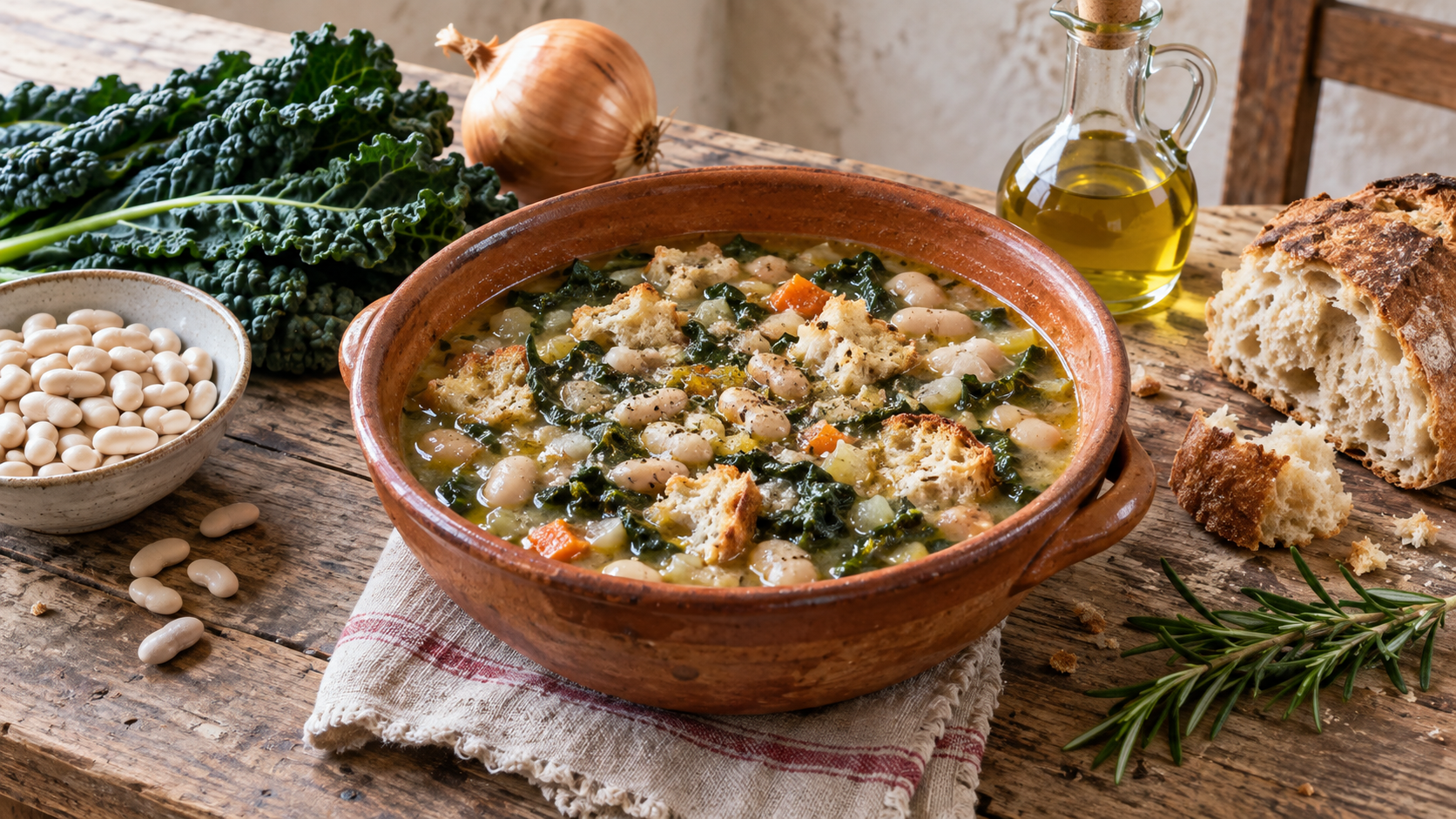
Bread required grain, labor, fuel and time. Once baked, it had to last. When a loaf became hard, it was softened with water, broth, tomatoes, vegetables or cooking juices. Stale bread was not considered rubbish; it had simply reached the next stage of its usefulness.
In Tuscany, it became the foundation of several enduring dishes. Panzanella combines moistened bread with tomatoes, onion, cucumber, basil and olive oil. Ribollita thickens a soup of beans and vegetables with old bread and becomes even better when reheated—its name means “reboiled.”
Pappa al pomodoro turns bread, tomatoes, garlic, basil and olive oil into a dense, comforting dish. In the Maremma, acquacotta began as a flexible soup prepared by agricultural workers with water, vegetables, herbs and bread, sometimes enriched with an egg when one was available.
Bread-reuse traditions appear throughout Italy. Pancotto—bread cooked in liquid—has numerous regional versions. In Puglia it may include greens, potatoes and tomatoes; elsewhere, the preparation changes according to the contents of the kitchen.
Breadcrumbs also became an ingredient in their own right. They could thicken soups, coat vegetables, extend fillings or replace more costly grated cheese. In Basilicata and other parts of southern Italy, toasted breadcrumbs are sometimes called formaggio dei poveri, or “the poor person’s cheese.”
Even dishes such as Emilia-Romagna’s passatelli, made with breadcrumbs, eggs and grated cheese, show how an ingredient considered past its prime could become the basis of something distinctive.
Beans, Chickpeas and the Art of Making a Meal Last
Legumes were among the great foundations of ordinary Italian cooking. Dried beans, chickpeas, lentils, peas and broad beans could be stored for long periods and combined with grains or pasta to produce filling meals.
There is no single recipe for pasta e fagioli. Veneto, Friuli-Venezia Giulia, Tuscany, Lazio, Campania and other regions all developed their own versions. Some are brothy; others are dense enough to eat with a fork. Some contain pork fat, pancetta or a ham bone, while others depend entirely on beans, vegetables and olive oil.
The same principle produced pasta e ceci, lentil soups, chickpea stews and mixed vegetable minestrone. These dishes blurred the modern distinction between soup and pasta course. They were complete meals designed to satisfy a household from one pot.
In Puglia, fave e cicorie pairs a smooth purée of dried broad beans with bitter wild or cultivated greens. The ingredients are modest, but their contrast—soft and sharp, earthy and vegetal—makes the dish remarkably sophisticated.
Liguria’s farinata uses chickpea flour, water, olive oil and salt to produce a thin, crisp-edged pancake. Tuscany has a related preparation called cecina. Both demonstrate how a handful of shelf-stable ingredients can be transformed by a very hot oven.
These recipes remain relevant because they deliver flavor without depending on large quantities of meat. They also represent the kind of regional diversity that defines Italian food and cooking far more accurately than the idea of one uniform national cuisine.
Pasta as an Ingredient, Not an Excess
Pasta is central to Italian food, but cucina povera rarely treated it as a vehicle for an oversized quantity of sauce. Instead, a relatively small amount of pasta could extend vegetables, beans, potatoes or broth.
Naples offers one of the clearest examples: pasta e patate. The combination of two starches may seem unusual to outsiders, but its purpose was practical. Potatoes made a limited quantity of pasta feed more people, while slow cooking released starch and created a naturally creamy texture.
Traditional versions often incorporated mixed pieces of pasta left at the bottom of different packets. This assortment, known as pasta mista, prevented small quantities from being wasted.
Other combinations follow the same logic: pasta with chickpeas, lentils, peas, cauliflower or broccoli; pasta cooked directly in bean broth; and simple sauces built from garlic, olive oil, anchovies or preserved tomatoes.
The complexity came from controlling texture and concentration rather than adding numerous ingredients. Understanding this principle helps explain why the history of Italian pasta cannot be separated from domestic economy and regional agriculture.
Polenta, Grains and Regional Survival Foods
Before pasta became an everyday national symbol, much of Italy relied heavily on other starches.
In northern and central regions, polenta provided calories at relatively low cost. After maize spread through Europe following contact with the Americas, cornmeal polenta became especially important in rural areas of Veneto, Lombardy, Friuli-Venezia Giulia and the Alpine foothills. Earlier porridges had been made from grains such as spelt, millet, barley and rye.
Polenta could accompany vegetables, cheese, a small amount of meat or the cooking juices from another dish. Leftover polenta could be grilled, fried or layered and reheated the following day.
Elsewhere, barley and farro appeared in soups, while chestnut flour sustained communities in parts of Tuscany, Liguria, Emilia-Romagna and the Apennines. Chestnuts could be dried and ground into flour for breads, porridges and cakes.
These foods were closely connected to geography. Mountain households cooked differently from coastal communities because survival depended on what could be cultivated, gathered or transported in each landscape.
The Fifth Quarter: When Nothing Was Discarded
Cucina povera was not necessarily vegetarian. Meat was less frequent in many households, but when an animal was slaughtered, almost every edible part had a purpose.
The Roman tradition of the quinto quarto, or “fifth quarter,” developed around parts left after the most valuable cuts had been sold. Tripe, oxtail, liver, heart, intestines and other organs became the basis of dishes requiring knowledge, long cooking and assertive seasoning.
Trippa alla romana combines tripe with tomato, mint and Pecorino Romano. Coda alla vaccinara slowly braises oxtail with vegetables. In Florence, lampredotto—made from one of a cow’s stomachs—is simmered, sliced and served in a bread roll, traditionally with salsa verde or spicy sauce.
Similar practices existed throughout the country. Pork fat flavored vegetable soups. Bones enriched broth. Tough cuts became tender through braising. Blood, skin and organs were turned into local specialties rather than discarded.
Some of these dishes are now restaurant attractions, but they originated in a practical hierarchy of food: the wealthiest customers bought the prized cuts, while poorer cooks developed ways to make the remaining parts delicious.
Preservation Before Refrigeration
Cucina povera was also a cuisine of preparation for the future. A successful household had to make seasonal abundance last.
Tomatoes were cooked into sauces or dried. Vegetables were placed under oil or vinegar. Grapes became wine, vinegar or dried fruit. Olives were cured, milk became cheese and pork was salted or transformed into sausages. Coastal communities salted anchovies, sardines and other fish.
Preservation did more than prevent hunger during winter. It created many of the intense flavors now considered characteristic of Italian cooking: capers, anchovies, dried tomatoes, cured pork, aged cheese and concentrated tomato preserves.
Salt, fermentation, drying and time turned temporary abundance into a pantry. They also allowed small quantities of flavorful foods to season much larger portions of bread, vegetables, polenta or pasta.
A Journey Through Italy’s Humble Dishes
Because cucina povera reflects local conditions, its clearest expression is found in regional food.
Northern Italy
Polenta, rice, beans, cabbage, potatoes and preserved pork shaped many northern rural diets. Dishes such as polenta with cheese, bean soups and vegetable-filled broths provided warmth and energy during long winters.
In Liguria, chickpea farinata, vegetable pies and herb-filled pasta reflect a landscape where cultivable land was limited and garden produce had to be used creatively.
Central Italy
Tuscany is particularly associated with the modern idea of cucina povera. Ribollita, pappa al pomodoro, panzanella, acquacotta and beans cooked slowly with herbs all reflect rural thrift.
Lazio contributes pasta and chickpea soups, bread-based dishes and the Roman fifth-quarter tradition. In Abruzzo, legumes, handmade flour-and-water pastas, wild greens and sheep-farming products reveal the meeting of agricultural and pastoral life.
Southern Italy
In Campania, pasta with potatoes, beans, peas or lentils shows how inexpensive ingredients could become cohesive one-pot meals. Tomatoes, leafy greens and stale bread were central to everyday cooking.
Puglia’s cucina povera is rich in durum wheat, chickpeas, broad beans, wild greens, onions and olive oil. Dishes such as fave e cicorie, acquasale and pancotto depend on contrasts of texture and strong, clear flavors.
In Basilicata and Calabria, dried peppers, legumes, homemade pasta, breadcrumbs and preserved pork stretched limited resources while giving food character.
Sicily and Sardinia
Sicilian cuisine combines agricultural thrift with the island’s complex history. Bread, pasta, wild fennel, eggplant, pulses, inexpensive fish and breadcrumbs appear in many household preparations. A little anchovy, cheese or toasted crumb could transform an otherwise plain dish.
In Sardinia, pastoral and agricultural traditions produced durable breads, legume soups and dishes such as pane frattau, in which thin pane carasau is softened and layered with tomato, pecorino and, when available, an egg.
The Flavor Was in the Method
Calling cucina povera “simple food” can be misleading. Its ingredient lists may be short, but success depends on judgment.
Onions must cook long enough to become sweet. Beans need proper soaking and gentle simmering. Stale bread must absorb liquid without dissolving completely. Bitter greens require balancing. A small piece of cured pork, a cheese rind or an anchovy may season an entire pot.
Italian cooks also used inexpensive flavor builders with precision:
- Garlic and onion created an aromatic base.
- Rosemary, sage, bay leaves, mint and wild fennel added regional character.
- Olive oil carried flavor and enriched plant-based dishes.
- Vinegar and citrus provided acidity.
- Anchovies supplied salt and depth.
- Chili peppers enlivened simple vegetables and pasta.
- Cheese rinds flavored soups rather than being thrown away.
- Toasting, frying and slow simmering changed texture and intensified taste.
What appeared effortless at the table was often the result of experience accumulated over generations.
From Poverty Food to Restaurant Menu
During Italy’s postwar economic transformation, many people moved away from rural life and gained access to a wider range of foods. Meat, packaged products and refined ingredients became signs of prosperity, while some peasant dishes were associated with hardship.
Over time, attitudes changed. Regional cooking attracted renewed interest, traditional varieties were recovered and chefs began presenting humble dishes in contemporary restaurants. Ribollita, polenta, tripe and pasta with legumes could now appear as expressions of authenticity rather than necessity.
This revival has produced a contradiction. Foods once created because they were inexpensive may become costly when served in fashionable surroundings. The context changes, even when the recipe remains recognizable.
Preservation efforts by organizations such as the Slow Food Foundation for Biodiversity have also drawn attention to threatened ingredients, traditional production methods and local food knowledge. Such work helps protect culinary diversity, although preserving a dish involves more than writing down its recipe. It also requires maintaining the farms, skills and communities from which it came.
Cucina Povera and the Mediterranean Diet
Many cucina povera traditions share characteristics associated with the Mediterranean diet: vegetables, grains, legumes, olive oil, moderate quantities of animal products and meals shaped by season and place.
UNESCO emphasizes that the Mediterranean diet is not simply a nutritional plan. It includes knowledge, skills, rituals, traditions and the social practice of preparing and sharing food.
Cucina povera belongs within this broader cultural world, but the terms are not interchangeable. Italy also has humble traditions based on animal fat, preserved pork, fried foods and large quantities of refined starch. Scarcity did not automatically produce a perfectly balanced diet.
Its most valuable modern lesson is therefore not that every old recipe was healthy. It is that good cooking begins with respect for ingredients, knowledge of the seasons and an unwillingness to waste what can still be eaten.
What Cucina Povera Can Teach Today’s Cook
Few people want to reproduce the insecurity that created these traditions. Yet their methods are remarkably useful in a time of rising food costs and concern about waste.
A modern cucina povera kitchen might:
- Plan meals around vegetables rather than treating them only as side dishes.
- Cook a pot of beans and use it in soups, pasta and salads.
- Turn stale bread into breadcrumbs, croutons, soups or bread salads.
- Save vegetable trimmings and cheese rinds for broth.
- Use leftovers as ingredients for a new dish rather than reheating the same meal.
- Buy seasonal produce when it is plentiful.
- Learn one-pot recipes that combine grains, pasta or potatoes with legumes.
- Use small quantities of strongly flavored ingredients instead of excessive amounts.
- Freeze or preserve food before it spoils.
Food waste remains a major contemporary issue, and the European Commission’s food-waste program encourages prevention throughout the food system. Traditional Italian habits cannot solve that problem by themselves, but they offer a practical domestic principle: the best leftover is one deliberately incorporated into the next meal.
Essential Cucina Povera Dishes to Try
For an introduction to the tradition, begin with dishes that express its central techniques:
- Ribollita: Tuscan vegetable and bean soup thickened with stale bread.
- Panzanella: Bread salad with tomatoes, onion, basil and seasonal vegetables.
- Pappa al pomodoro: A dense Tuscan preparation of bread, tomato, garlic and olive oil.
- Acquacotta: A flexible vegetable-and-bread soup associated with the Maremma.
- Pasta e fagioli: Pasta and beans in one of its many regional forms.
- Pasta e ceci: Pasta cooked with chickpeas, aromatics and herbs.
- Pasta e patate: A creamy Neapolitan combination often made with mixed pasta shapes.
- Fave e cicorie: Puglian broad-bean purée served with bitter greens.
- Farinata: Ligurian chickpea-flour pancake baked at high heat.
- Pancotto: Stale bread cooked with broth, vegetables or herbs.
- Trippa alla romana: Tripe slowly cooked with tomato, mint and pecorino.
- Pane frattau: Sardinian carasau bread softened and layered with tomato and pecorino.
These foods do not belong to a frozen or idealized past. They continue to change as they move between family kitchens, trattorias and contemporary restaurants.
Recommended Reading
Readers interested in exploring the subject through recipes can find books about cucina povera and Italian peasant cooking on Amazon.
Affiliate disclosure: Italia Mia may earn a commission from qualifying purchases made through this link, at no additional cost to you.
The Lasting Genius of Humble Cooking
Cucina povera did not become important because poverty was picturesque. It became important because Italian cooks transformed strict limitations into a remarkably varied food culture.
They learned that stale bread could thicken a soup, that beans and pasta could satisfy an entire family, that bitter greens could balance sweet purées and that time could make an unwanted cut of meat tender. They preserved summer for winter and turned yesterday’s food into tomorrow’s meal.
The result was not one cuisine but hundreds of local solutions—each shaped by a particular landscape, economy and community.
That may be the greatest lesson of cucina povera. Great food does not necessarily begin with abundance. It begins with attention: to the ingredient, to the season, to the people around the table and to everything that should not be wasted.
External Sources
Accademia Italiana della Cucina – Library of Gastronomic Culture
Accademia Italiana della Cucina – Regional Recipe Archive
UNESCO – The Mediterranean Diet as Intangible Cultural Heritage
Slow Food Foundation for Biodiversity – Slow Food Presidia
European Commission – Food Waste