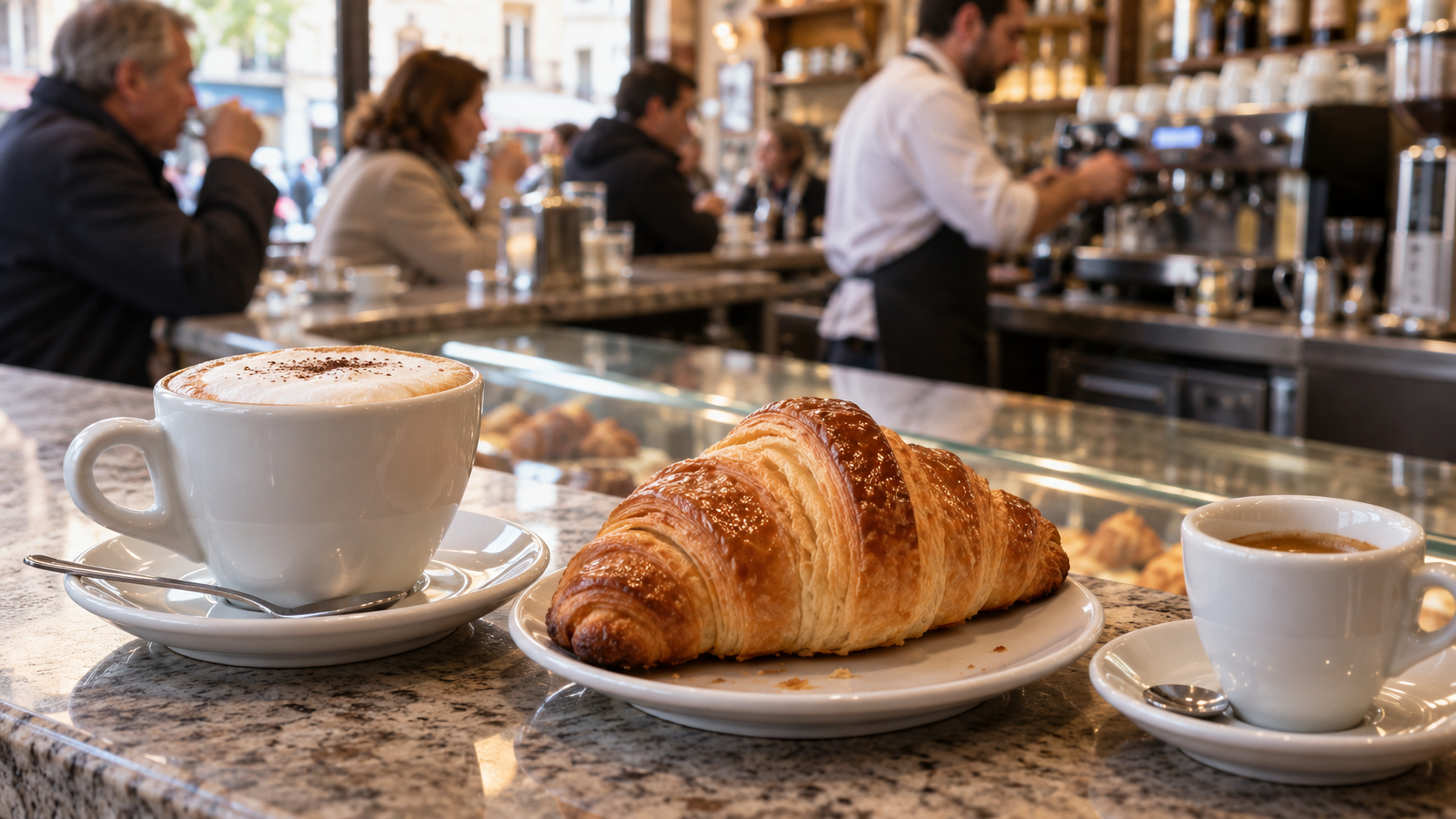
 An Italian breakfast usually begins with something to drink and something small to eat: coffee and biscuits at home, a cappuccino and cornetto at the neighborhood bar, or bread with butter and jam. Sweet flavors dominate the familiar picture, although regional traditions leave room for savory focaccia, rustic bread, and other alternatives.
Called colazione or prima colazione, breakfast can be a hurried weekday routine or a leisurely stop at a pastry shop. The pleasure lies in choosing what suits the morning—and, when traveling, discovering what changes from one place to another.
What Is a Typical Italian Breakfast?
The traditional pattern is simple: a hot drink accompanied by bread, biscuits, or a sweet baked item. Italy’s Ministry of Education describes both the modest breakfast eaten at home and the familiar café combination of espresso or cappuccino with a cornetto.
That does not mean everyone eats the same thing. Household routines, working hours, appetite, and personal preferences all matter. A hotel buffet, a family kitchen, and a busy railway-station bar offer different versions of the morning meal.
For visitors, it helps to think of breakfast in two settings: at home, where convenience often shapes the choice, and at the bar, where coffee and pastries take center stage.
Italian Breakfast at Home
An everyday breakfast rarely needs elaborate preparation. Bread, jam, a packet of biscuits, and a favorite cup can be enough.
Biscuits and a hot drink
Breakfast biscuits are an ordinary part of Italian food culture. These are often simple biscuits intended for dipping rather than elaborate cookies served as a special treat.
Coffee, milk, tea, or a combination of coffee and milk may accompany them. The small ritual of dipping a biscuit brings its own timing: long enough to soften it, briefly enough to keep it from disappearing into the cup.
Bread, butter, and jam
Pane, burro e marmellata is another familiar choice. Fresh or toasted bread provides a straightforward base for butter and fruit preserves.
You may also encounter fette biscottate: dry, crisp slices of twice-baked bread, usually sold in packets. Their firm surface makes them convenient for spreading, and they keep longer than fresh bread.
A slice of homemade cake
Breakfast is also a natural home for simple Italian cakes. Ciambellone, yogurt plumcake, apple cake, and jam crostata fit the table without needing frosting or elaborate decoration.
For recipes and baking advice, see our guide to Italian breakfast cakes, including ciambellone, plumcake, and homemade favorites.
These cakes, biscuits, and crostate belong to a broad breakfast tradition found across regions, alongside more distinctive local specialties.
Breakfast at an Italian Bar
An Italian bar is often a place for morning coffee, pastries, conversation, and a quick pause before work.
Standing at the counter is a familiar way to have breakfast. Sitting down makes sense when you want more time, especially if the café has a pleasant terrace or a view worth enjoying.
Before ordering, look at the pastry display. This gives you a chance to choose something appealing and avoids having to identify an unfamiliar pastry while the barista waits.
Cornetto, brioche, or croissant?
The terminology can be confusing. In parts of northern Italy, brioche commonly describes the crescent-shaped pastry that many people elsewhere call a cornetto. In pastry-making terms, however, brioche, cornetto, and croissant are different preparations.
A cornetto is generally sweeter than a classic French croissant, while recipes, textures, and fillings vary between bakeries. Regional vocabulary does not always follow a textbook definition.
Useful filling words include:
| Italian | What it means |
|---|---|
| Vuoto or semplice | Plain, without filling |
| Alla crema | With pastry cream |
| Alla marmellata | With jam |
| Al cioccolato | With chocolate |
| Al pistacchio | With pistachio filling |
If several filled pastries look alike, ask what is inside: “Che ripieno ha?”
What to Drink with Breakfast
Knowing a few coffee terms makes ordering easier.
Caffè: At an Italian bar, ordering un caffè normally means an espresso.
Cappuccino: Espresso with steamed milk and milk foam, commonly associated with breakfast.
Caffè macchiato: Espresso with a small amount of milk or milk foam.
Latte macchiato: A milk-based drink with coffee added, usually served in a glass.
Caffellatte: Coffee with a more generous quantity of milk, particularly suited to a relaxed breakfast at home.
Decaffeinato: Decaffeinated coffee, often shortened to deca.
Be careful with the word latte: on its own, it means milk. Say latte macchiato or describe the coffee drink you want.
If you would like to recreate the morning ritual in your kitchen, our guide to making Italian coffee at home explains moka coffee, espresso, and milk preparation.
Regional Italian Breakfasts Worth Trying
A cappuccino and pastry make an easy starting point, but local specialties give breakfast much of its character.
Genoa: focaccia with your morning coffee
In Genoa, breakfast can include focaccia genovese, with its olive-oil richness, dimpled surface, and salty finish.
The combination with cappuccino may surprise visitors accustomed to keeping sweet and savory flavors apart. Some people even dip the focaccia into the drink. Try a small piece first and decide how you prefer the pairing.
Rome: maritozzo con la panna
A Roman maritozzo con la panna is a soft sweet bun split open and generously filled with whipped cream.
It makes a memorable pastry-shop breakfast, especially when you have time to sit down. Start with a napkin close at hand: the cream rarely respects the boundaries of the bun.
Naples: sfogliatella
A Neapolitan pastry counter presents an appealing choice between sfogliatella riccia and sfogliatella frolla.
The riccia has a crisp, layered shell; the frolla has a smoother shortcrust exterior. The traditional filling includes ricotta, semolina, and candied fruit. Choose the riccia for its brittle layers or the frolla for a softer bite.
Sicily: granita and brioche
In Sicily, especially in warm weather, granita with brioche col tuppo offers a different breakfast experience.
The brioche is a soft bun with a small topknot. Granita flavors vary by location and shop, with almond, coffee, lemon, and mulberry among the possibilities.
Take a spoonful of granita, tear off some brioche, and enjoy the contrast between the cold dessert and soft bread. This is a breakfast worth allowing time for.
Trentino-Alto Adige: bread, butter, and preserves
Regional rye breads and seeded loaves offer another direction. Served with butter and preserves, they make a satisfying breakfast with an emphasis on the bread itself.
A bakery is a useful place to explore these local varieties and choose something for the following morning.
How to Order Breakfast in Italian
You do not need a long sentence. A greeting, a clear order, and per favore are enough.
| What you want to say | Italian |
|---|---|
| Good morning | Buongiorno |
| A cappuccino and a plain cornetto, please | Un cappuccino e un cornetto vuoto, per favore |
| A decaf coffee, please | Un caffè decaffeinato, per favore |
| Do you have anything savory? | Avete qualcosa di salato? |
| Do you have oat milk? | Avete latte d’avena? |
| Do I pay first? | Si paga prima? |
| Can we sit outside? | Possiamo sederci fuori? |
Payment routines vary. Some bars ask customers to pay at the till before ordering; others collect payment afterward. Watch the process or ask.
Counter Service, Tables, and Prices
Check whether the café lists separate prices for al banco—at the counter—and al tavolo, at a table.
Table service can cost more, particularly in prominent squares or historic cafés. Before sitting down, read the menu and decide whether the setting is worth the price to you.
There is no single reliable nationwide price for an Italian breakfast. Location, pastry size, ingredients, and service all affect the bill. Comparing the displayed menu is more useful than expecting every café to charge the same amount.
Can You Have a Savory Breakfast in Italy?
Yes. Ask what is available rather than assuming you must order something sweet.
A bakery may offer focaccia or filled bread, while some cafés serve sandwiches or savory pastries in the morning. Hotels and cafés with broader breakfast menus may provide eggs, cheese, yogurt, or other options.
If you want a substantial meal before a long day of sightseeing, check the menu before ordering coffee. A pastry display alone may not tell you everything the kitchen offers.
Breakfast Without the Anxiety About “Rules”
Italian food customs are interesting, but breakfast should remain enjoyable.
Cappuccino is strongly associated with the morning; that does not make a later order a serious breach of etiquette. Drink what you enjoy, greet the staff politely, and be clear about what you want.
The same applies to regional specialties. You can appreciate Genoese focaccia without dipping it into coffee, or choose an ordinary cornetto in Sicily even when granita is available.
For a first morning in Italy, keep things simple: find a café, inspect the display, order a drink and something appealing, and give yourself a few minutes to enjoy them. Tomorrow, try something different.
External Sources
- Italia.it: Traditional Italian breakfast in six cities
- Gambero Rosso: Regional Italian breakfast traditions
- La Cucina Italiana: Brioche, croissant, or cornetto?
- Study in Italy: Eating the Italian way