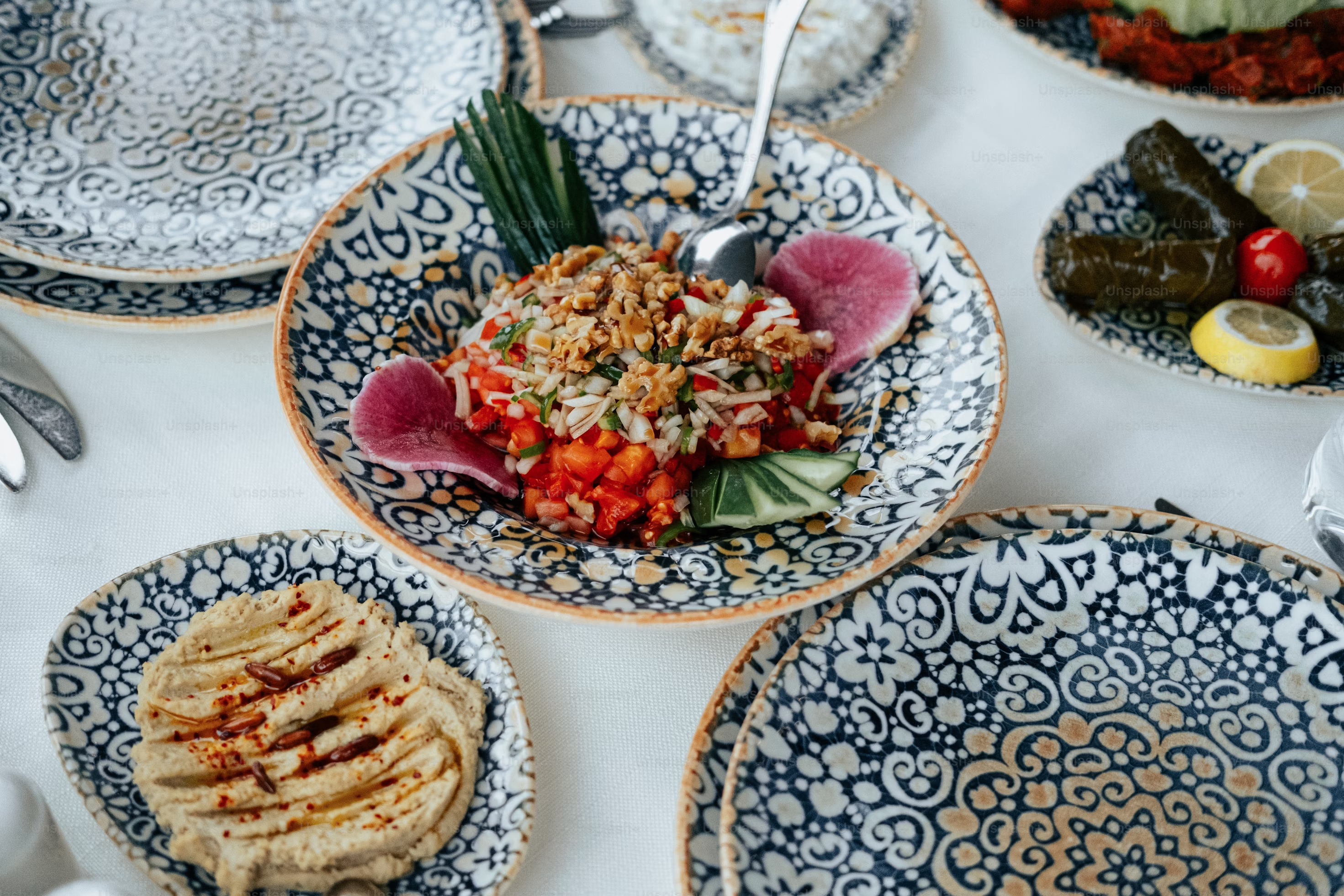
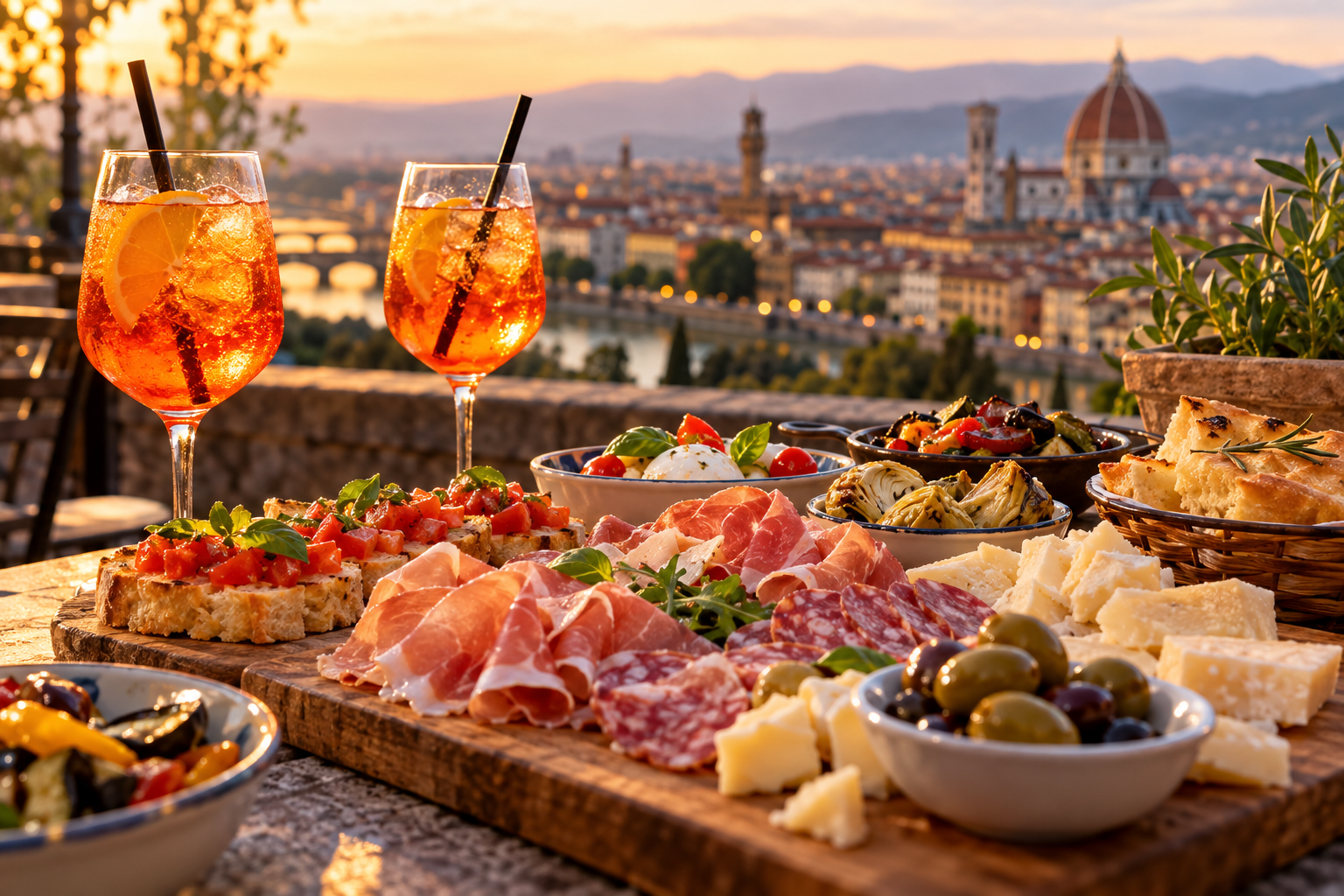
 There is a wonderful moment in Italy when the working day is over, the streets begin to fill, and nobody seems particularly interested in rushing home. Friends gather around outdoor tables, glasses of wine appear, and waiters bring plates of focaccia, olives, cheeses and other small dishes.
Sometimes this is a simple aperitivo before dinner. Other times, the food keeps coming until the gathering becomes dinner itself.
That is apericena, one of the most enjoyable expressions of contemporary Italian social life.
The word combines aperitivo, a pre-dinner drink, with cena, the Italian word for dinner. The result is an informal evening meal built around drinks, small plates and conversation.
I particularly appreciate the flexibility of apericena. There is no obligation to order several courses, no elaborate dinner schedule, and no need for everyone to eat the same thing. You can enjoy a glass of wine, sample regional specialties and spend an evening talking with friends.
For visitors, understanding apericena also means discovering how Italians approach food as a social experience rather than simply something to eat.
What Is Apericena in Italy?
Apericena is a substantial version of the traditional Italian aperitivo. Instead of serving only a few snacks alongside drinks, bars and restaurants offer enough food to make a light or complete evening meal.
The food may arrive as a buffet, a generous sharing platter, a series of small dishes or a fixed-price tasting menu.
Depending on the establishment, you might find:
- Bruschetta topped with fresh tomatoes and basil
- Small pizzas, focaccia and savory pastries
- Italian cheeses and cured meats
- Grilled vegetables and marinated artichokes
- Mini sandwiches and tramezzini
- Rice salads, pasta salads or small portions of pasta
- Frittata, meatballs or regional specialties
- Olives, breadsticks, taralli and other savory snacks
The important distinction is that apericena can replace dinner, while a traditional aperitivo usually precedes it.
This does not mean every Italian bar offers apericena. Many establishments continue to serve only a drink and a few simple snacks.
For a broader introduction to this custom, read our complete guide to Italian aperitivo, including drinks, etiquette and regional traditions.
Aperitivo vs. Apericena: What Is the Difference?
Although the two experiences are related, they are not identical.
| Aperitivo | Apericena |
|---|---|
| A drink with a few snacks | A drink accompanied by a substantial selection of food |
| Usually before dinner | Often replaces dinner |
| Olives, chips or small appetizers | Platters, buffets or multiple small dishes |
| Generally shorter | Often a longer social gathering |
| Food may be included with the drink | Food may be included or charged separately |
An aperitivo might consist of a Spritz and a bowl of olives before going to a restaurant.
An apericena could involve the same Spritz accompanied by bruschetta, vegetables, cheese, focaccia and enough additional dishes to constitute dinner.
The distinction is not always advertised clearly. One establishment may call its generous buffet an aperitivo, while another promotes a similar offering as apericena.
When in doubt, ask what the price includes.
How Apericena Developed in Italy
The older tradition behind apericena is the Italian aperitivo, whose history is closely associated with northern Italy.
Turin played an important role in the development of the modern aperitivo. In 1786, Antonio Benedetto Carpano began producing the aromatized wine that became associated with Vermouth di Torino.
Vermouth helped establish the custom of enjoying a drink before dinner, particularly in the elegant cafés of Piedmont.
The tradition gradually expanded across Italy, developing different regional expressions.
Milan became especially influential in popularizing the more elaborate buffet-style aperitivo during the late twentieth century. Instead of a drink accompanied by a few olives, customers could choose from substantial selections of food.
This increasingly generous format helped establish what we now call apericena.
Unlike traditional regional dishes with centuries of documented history, apericena is a relatively modern and evolving concept. Its popularity reflects changes in urban lifestyles, casual dining and the way people socialize after work.
Today, the distinction between an extended aperitivo and a light dinner is often deliberately blurred.
The underlying idea, however, is familiar throughout Italian food culture: enjoy good ingredients, share food and make time for conversation.
Where to Enjoy Apericena in Italy
Apericena is available in many Italian cities, although the food, atmosphere and terminology vary considerably.
Milan: the classic buffet tradition
Milan remains one of the most recognizable destinations for a substantial evening aperitivo.
The Navigli district, with its canals and numerous bars, is especially associated with the ritual. Brera, Porta Venezia and Isola also offer plenty of choices.
Some establishments provide buffet-style food with a drink, while others specialize in prepared sharing plates.
Milan can be an excellent introduction to apericena, but I would compare menus rather than assume the largest buffet offers the best experience.
Turin: vermouth and Piedmontese flavors
Turin connects contemporary apericena with the history of the Italian aperitivo.
Order a local vermouth and look for dishes such as tramezzini, Piedmontese cheeses, cured meats or regional appetizers.
The city’s historic cafés provide a different atmosphere from Milan’s busy nightlife districts.
Our guide to Italian vermouth and Vermouth di Torino explains the drink’s history and traditional serving styles.
Bologna: mortadella, cheeses and regional specialties
Bologna is a natural destination for anyone who enjoys an evening built around food.
Apericena here may incorporate mortadella, Parmigiano Reggiano, focaccia, regional cured meats and savory preparations.
The university population contributes to a lively bar scene, but the city’s appeal also lies in its exceptional food traditions.
Venice: cicchetti and small glasses of wine
Venice offers a related but distinct experience.
In a traditional bacaro, customers order cicchetti, small savory bites accompanied by wine or a Spritz.
Cicchetti may include seafood, vegetables, crostini, meat or regional specialties.
Ordering several can easily become a casual evening meal, although this Venetian tradition should not automatically be described as apericena.
Rome, Florence and Southern Italy
In Rome and Florence, apericena may take the form of generous platters, small dishes or elaborate cocktail-bar offerings.
Southern cities have their own evening drinking and dining traditions. In Naples, for example, visitors may encounter fried specialties, small pizzas and other substantial snacks.
The food varies with the local culture.
For ideas about what to taste throughout the country, see our guide to 100 regional Italian food specialties.
What Food Is Served at an Italian Apericena?
An enjoyable apericena balances different flavors, textures and ingredients.
The best selections offer more than an impressive quantity of food. They introduce guests to regional products and provide enough variety to create a satisfying meal.
Italian cheeses
A selection of cheeses is a natural starting point.
Parmigiano Reggiano offers a firm, nutty flavor, while Gorgonzola contributes a creamier and more assertive character. Pecorino, Taleggio, burrata and other regional cheeses provide additional variety.
Cheese can be accompanied by honey, fresh fruit, bread or nuts.
Explore our guide to 20 famous Italian cheeses and their ideal pairings.
Salumi and cured meats
Prosciutto crudo, salami, mortadella, bresaola and other Italian cured meats frequently appear on apericena platters.
The quality and regional origin of these products can make a simple plate particularly memorable.
Our Italian prosciutto and charcuterie guide explains the different varieties and how to serve them.
Bread, focaccia and savory snacks
Fresh focaccia is one of the easiest foods to share.
Small pieces can accompany cheese, vegetables or cured meats. Bruschetta, crostini and miniature panini are equally practical.
Regional variations make the selection more interesting.
Discover the differences in our guide to Italian panini, focacce and sandwiches.
Vegetables and warm dishes
A complete apericena should offer more than bread and cold cuts.
Grilled zucchini, roasted peppers, marinated artichokes, olives, vegetable frittata and savory pies introduce color and balance.
Warm dishes such as croquettes, polpette or small portions of pasta can make the meal more substantial.
Vegetarian and vegan choices are increasingly important, although their availability depends on the establishment.
What Do Italians Drink at Apericena?
There is no single obligatory apericena drink.
The choice depends on the food, the season and personal preference.
Spritz
The Aperol Spritz is one of Italy’s most internationally recognizable aperitivo cocktails.
It traditionally combines Prosecco, Aperol and soda water, served over ice with orange.
Other versions use Campari, Select or a different bitter aperitivo.
Negroni
A Negroni combines gin, red vermouth and Campari.
Its pronounced bitterness and higher alcohol content make it quite different from a Spritz. It is better suited to slow sipping than casual drinking in large quantities.
Vermouth and Americano
Vermouth can be served chilled, over ice or in cocktails.
An Americano combines Campari, red vermouth and soda, offering a sparkling alternative to the stronger Negroni.
Prosecco and Franciacorta
A glass of sparkling wine pairs naturally with savory snacks, cheeses, vegetables and seafood.
Prosecco generally offers a fresh and lively character, while Franciacorta can provide more complexity and structure.
Our Prosecco vs. Franciacorta guide explains the differences and suggests food pairings.
Alcohol-free choices
You do not need to drink alcohol to enjoy apericena.
Crodino, Sanbittèr, alcohol-free Spritz variations, fruit-based drinks and sparkling water are common alternatives.
A good apericena is about the entire experience, not the alcoholic content of the glass.
What Time Is Apericena Served, and How Much Does It Cost?
Apericena usually takes place in the early evening, often between approximately 6:30 p.m. and 9:00 p.m.
Some venues begin earlier, particularly in business districts, while others continue later.
Summer evenings and southern Italian cities may follow a later schedule.
Prices vary substantially.
As a broad planning estimate for 2026, a casual apericena may cost approximately €10–20 per person for a drink and food, while more elaborate platters, premium cocktails, central tourist locations and rooftop establishments may cost considerably more.
This is not a national fixed price. Some neighborhood bars charge less, while others price every dish individually.
Before ordering, check:
- Whether food is included with the drink
- Whether the price covers a buffet or one individual platter
- Whether additional drinks cost extra
- Whether table service changes the price
- Whether there is a minimum order per person
- Whether the offering is substantial enough to replace dinner
A large buffet is not necessarily a bargain if the quality is disappointing.
Sometimes a modest platter of excellent regional products offers a much better experience.
Apericena Etiquette: How to Enjoy It Like a Local
Apericena is informal, but a little consideration makes the experience more enjoyable.
First, do not assume that every drink includes unlimited food. Ask about the establishment’s formula before ordering.
If there is a buffet, take reasonable portions. You can return for more when the establishment permits it, but avoid filling several plates that you cannot finish.
If the food arrives as a sharing platter, allow everyone at the table to participate.
Do not expect the same pace as a fast-food restaurant. Conversation is part of the experience, and there is usually no reason to hurry.
However, a busy bar may have reservations or defined seating periods, so follow its arrangements.
Dress codes are generally relaxed, although elegant cocktail bars may expect smarter clothing.
And remember that tipping is not obligatory in Italy. A small additional amount for particularly good service is welcome but should never be treated as mandatory.
For more information about restaurant customs, read our Italian food etiquette guide.
How to Organize an Authentic Italian Apericena at Home
One of the advantages of apericena is that it translates beautifully into home entertaining.
You do not need a professional kitchen or an elaborate menu. The objective is to create a relaxed gathering with enough food to replace dinner.
For six guests, I would prepare the following selection.
Cold dishes
- A platter of Parmigiano Reggiano, pecorino and one soft cheese
- Prosciutto, mortadella and salami
- Cherry tomatoes, olives and marinated artichokes
- Bruschetta with tomatoes and basil
- Focaccia and breadsticks
Warm dishes
- One large vegetable frittata, cut into squares
- Small meatballs or vegetarian croquettes
- A tray of roasted seasonal vegetables
- Mini pizzas or another savory baked dish
Drinks
Offer chilled Prosecco, one classic aperitivo cocktail, an alcohol-free option and plenty of water.
Serve the food in several small dishes instead of presenting everything at once. This keeps the table interesting and allows you to replenish items as needed.
Prepare most dishes in advance so that you can spend time with your guests.
An apericena should not become an exhausting cooking project.
Apericena, the Passeggiata and Italian Social Life
What I find most appealing about apericena is its connection with everyday Italian life.
It belongs to the same informal social world as the passeggiata, the evening walk when people meet friends, greet neighbors and enjoy public spaces.
You might begin with a stroll through the historic center, stop at a café for a drink and discover that the evening has naturally developed into dinner.
There is no complicated itinerary.
In Italy, many of the most memorable experiences happen during these ordinary moments rather than during organized activities.
Our article on the Italian passeggiata and the art of the evening stroll explores this tradition in greater detail.
Frequently Asked Questions About Apericena
Is apericena the same as happy hour?
Not exactly. Happy hour often emphasizes discounted drinks during a specific period. Apericena focuses on combining an evening drink with a substantial selection of food, often replacing dinner.
Is food included in the apericena price?
Sometimes. Some bars include food with the purchase of a drink. Others charge a fixed price per person or offer platters and small dishes separately.
Can apericena replace dinner?
Yes. That is its defining feature. However, the quantity of food varies, so check the menu before assuming you will receive a complete meal.
What time should I arrive?
Between about 6:30 p.m. and 8:00 p.m. is a useful starting point in many cities. Check individual venues because schedules vary by location and season.
Is apericena popular throughout Italy?
The custom is particularly associated with northern urban aperitivo culture, especially Milan, but substantial pre-dinner food offerings are found throughout the country. Local terminology and traditions vary.
Can children attend apericena?
Many cafés and casual establishments welcome families, especially in the early evening. Some nightlife-focused cocktail bars may be less suitable. Children can enjoy the food with alcohol-free drinks.
Do I need a reservation?
Usually not for a casual neighborhood bar, but reservations are sensible for popular establishments, large groups, weekends and venues offering a fixed-price menu.
Why Apericena Is Worth Experiencing
Apericena is not a centuries-old ceremony with rigid rules. It is a modern expression of something deeply rooted in Italian culture: the pleasure of sharing food and spending time together.
Its greatest advantage is flexibility.
You can enjoy a modest plate of regional specialties in a quiet neighborhood bar or choose a more elaborate evening in a fashionable city venue.
Both experiences can be enjoyable when the food is good and the atmosphere encourages conversation.
My preference is always for places that focus on quality rather than the sheer quantity of food.
A few excellent cheeses, fresh focaccia, local vegetables and a carefully chosen drink can be much more satisfying than an enormous buffet.
When visiting Italy, leave one evening free of formal restaurant reservations and look for a welcoming place where you can enjoy apericena.
It may become one of the simplest and most memorable meals of your trip.
External Sources
- Italia.it — Practical information about Italian dining times and aperitivo
- Italia.it — Milan’s Navigli district and aperitivo culture
- Turismo Torino — Vermouth and Piedmontese aperitivo traditions
- International Bartenders Association — Official Spritz recipe