 Italian Aperitivo: More Than a Drink Before Dinner
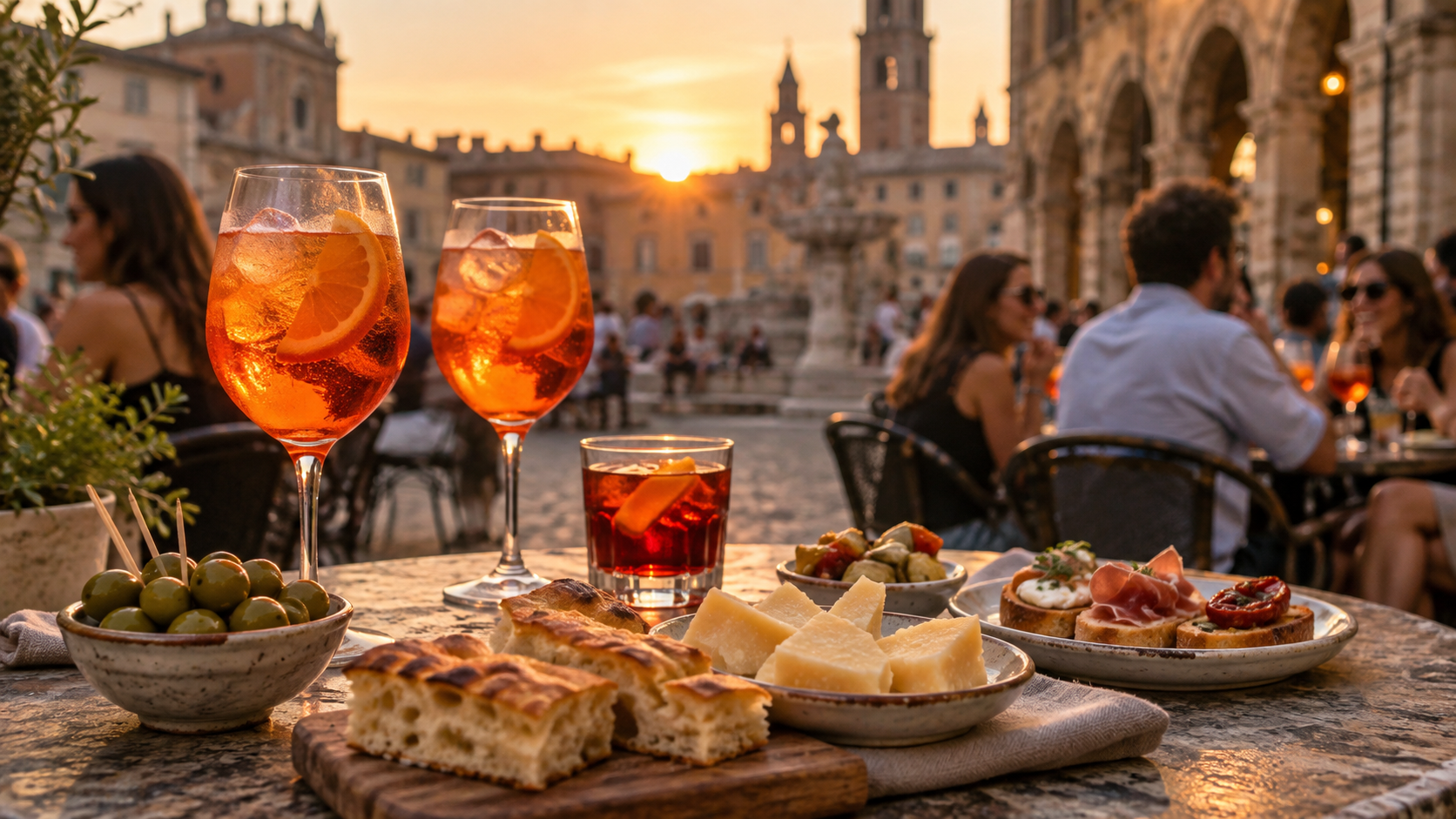
At about six in the evening, something changes in Italian cities. Office workers loosen their pace, café tables begin to fill, glasses catch the late sunlight and small dishes of olives, chips, cheese or focaccia appear beside brightly colored drinks.
This is aperitivo: one of Italy’s most enjoyable social rituals and one of the easiest for visitors to misunderstand.
An Italian aperitivo is not simply a cocktail. It is the interval between the working day and dinner—a chance to meet friends, talk, unwind and stimulate the appetite with a drink and a few savory bites. The drink may be alcoholic or alcohol-free. The food may be no more than a bowl of olives, or it may be generous enough to resemble a light meal.
The point, however, is not to consume as much as possible. The point is to make time for other people.
For American travelers, “happy hour” is the nearest familiar comparison, but it is not an exact translation. Happy hour often emphasizes discounted drinks. Aperitivo emphasizes the ritual itself: the hour, the company, the conversation and the transition toward dinner.
Like the Italian passeggiata and the daily stop at an Italian coffee bar, aperitivo turns an ordinary part of the day into a small social occasion.
What Does Aperitivo Mean?
The word aperitivo is related to the idea of opening. Its roots reach back to the Latin aperire, “to open,” and the original purpose of an aperitif was to open or awaken the appetite before a meal.
In modern Italy, the word can refer to several related things:
- the pre-dinner drink itself;
- the food served with the drink;
- the time of day when people gather;
- or the entire social occasion.
If an Italian friend asks, “Facciamo un aperitivo?” the natural meaning is not merely “Shall we drink an aperitif?” It is closer to “Shall we meet for a drink and something to nibble before dinner?”
That invitation may lead to half an hour at a neighborhood bar, a long conversation beside a canal, or an evening that continues into dinner.
What Time Is Aperitivo in Italy?
Aperitivo normally begins around 6:00 or 6:30 p.m. and continues until approximately 8:00 or 9:00 p.m. The precise rhythm varies by city, season and local dining habits.
In smaller towns, people may meet soon after work and go home for dinner. In Milan, Rome or another large city, aperitivo can begin later and continue well into the evening. During summer, especially in southern Italy, the entire schedule may shift later because of the heat.
Italy’s official tourism website describes aperitivo as an appointment beginning at roughly 6:00 p.m. and lasting until dinner. That does not make 6:00 a rigid starting time. It simply identifies the transition between afternoon and evening.
The busiest period is often between 7:00 and 8:30 p.m.
Arriving at 4:30 and ordering a Spritz is perfectly possible, particularly in a tourist center, but it may feel more like having an afternoon drink than participating in the local aperitivo ritual.
How Does Aperitivo Work?
The procedure is usually simple:
- Choose a bar, café, enoteca or cocktail bar.
- Ask whether the table is available for aperitivo.
- Order a drink.
- Snacks arrive with the drink, or you are invited to choose food from a counter or buffet.
- Relax and take your time.
At many traditional bars, the food is included in the price of the drink. At others, especially venues offering elaborate platters, there may be a set aperitivo formula or an additional charge. Some establishments price drinks differently during aperitivo hours because food is included.
Never assume that an extensive buffet is complimentary. Check the menu or ask:
“Il cibo è incluso?” — Is the food included?
“Come funziona l’aperitivo?” — How does the aperitivo work?
These are completely normal questions, particularly because the system varies so much from one venue to another.
Aperitivo Versus Happy Hour
The two customs overlap, but their emphasis is different.
| Italian aperitivo | American-style happy hour |
|---|---|
| A pre-dinner social ritual | A promotional period at a bar |
| Usually includes small snacks | Food may be discounted or ordered separately |
| Intended to prepare for dinner | May replace dinner or continue late |
| The atmosphere and company are central | Price reductions are often central |
| Drinks are not necessarily discounted | Drink specials are common |
Some Italian bars advertise “happy hour,” particularly in tourist areas and fashionable city neighborhoods. In practice, they may still be offering an Italian-style aperitivo with food.
The most useful distinction is cultural: aperitivo is something Italians do, not merely a discount they purchase.
What Do Italians Drink at Aperitivo?
There is no mandatory aperitivo drink. Italians may order cocktails, wine, sparkling wine, beer, bitters with soda or a sophisticated alcohol-free drink.
Certain choices, however, are closely associated with the ritual.
| Drink | Main character | Best for |
|---|---|---|
| Aperol Spritz | Light, sparkling, bittersweet and citrusy | First-time aperitivo drinkers |
| Campari Spritz | More bitter and assertive than Aperol | Those who prefer less sweetness |
| Select Spritz | Aromatic, bittersweet Venetian style | A traditional choice in Venice |
| Negroni | Strong, bitter and botanical | Slow sipping and bold flavors |
| Americano | Bitter, sparkling and lighter than a Negroni | A long, refreshing aperitivo |
| Negroni Sbagliato | Sparkling and slightly softer than a Negroni | Celebratory aperitivo |
| Vermouth | Aromatic, herbal and wine-based | A classic Turin experience |
| Prosecco | Dry, sparkling and uncomplicated | A light aperitivo |
| White or red wine | Varies by region | Sampling a local wine |
| Crodino or Sanbittèr | Bitter, sparkling and alcohol-free | A classic analcolico |
Spritz
The Spritz is now the international symbol of Italian aperitivo. Its familiar form combines prosecco, a bitter aperitivo and soda water, usually served over ice with an orange slice. The International Bartenders Association recipe uses Aperol, although Campari, Select and Cynar create different versions.
The drink’s cultural home is northeastern Italy, especially Veneto. In Venice, ordering a Spritz with Select offers a more local alternative to the globally familiar Aperol version.
Negroni
The classic Negroni combines gin, red vermouth and Campari in equal proportions. It is considerably stronger and more bitter than a Spritz, so it is meant to be sipped rather than consumed quickly.
Florence is most closely associated with the Negroni’s origin story, traditionally linked to Count Camillo Negroni and Caffè Casoni in the early twentieth century. Today it is one of the world’s most recognized Italian cocktails.
Americano
Despite its name, the Americano is an Italian cocktail. Campari and red vermouth are lengthened with soda water, producing a drink with the bitter complexity of a Negroni but without gin.
It is an excellent choice for someone who wants a classic aperitivo that is refreshing and less alcoholic than a Negroni.
Negroni Sbagliato
Sbagliato means mistaken or incorrect. In this Milanese variation, sparkling wine replaces the gin in a Negroni. The result is lighter, livelier and particularly well suited to aperitivo.
Vermouth
Turin is the city most closely associated with vermouth and the historical development of modern Italian aperitivo. Vermouth is aromatized fortified wine, available in styles ranging from sweet and dark to dry and pale.
It can be served neat, over ice, with a twist of citrus or mixed into cocktails. Ordering a local Vermouth di Torino in a historic Turin café connects the contemporary ritual with its Piedmontese roots.
Wine, Prosecco and Beer
You do not need to order a cocktail. A glass of local wine is often the most interesting regional choice. Prosecco is common, especially in the northeast, while craft beer has become increasingly visible in contemporary bars.
When uncertain, ask:
“Quale vino locale consiglia per l’aperitivo?” — Which local wine do you recommend for aperitivo?
Can You Have Aperitivo Without Alcohol?
Absolutely. The social ritual does not require alcohol, and asking for an aperitivo analcolico is entirely normal.
Classic bottled options such as Crodino and Sanbittèr deliver the bitter, herbal quality associated with aperitivo without alcohol. Many cocktail bars also offer zero-proof Spritz variations, botanical drinks, fruit-based cocktails and tonic-based alternatives.
You can say:
“Vorrei un aperitivo analcolico, per favore.” — I would like a nonalcoholic aperitivo, please.
If sweetness is a concern, add:
“Non troppo dolce.” — Not too sweet.
Mineral water or a soft drink is also acceptable. Aperitivo is about participation, not pressure to drink.
What Food Is Served at Aperitivo?
The simplest aperitivo might include potato chips, green olives and peanuts. A more generous bar may add small sandwiches, focaccia, cheese, cured meats, bruschetta, vegetables, savory pastries or slices of pizza.
Common aperitivo foods include:
- olives and lupini beans;
- potato chips, taralli and grissini;
- focaccia and small pieces of pizza;
- crostini and bruschetta;
- tramezzini, small sandwiches and panini;
- salumi and regional cheeses;
- fried vegetables, arancini or croquettes;
- vegetable frittata and savory pies;
- pasta salad or rice salad;
- local specialties served in tasting portions.
The food should complement the drink and take the edge off your hunger without necessarily replacing dinner.
That “necessarily” matters. In many modern bars, the line between aperitivo and a meal has become blurred.
Aperitivo Versus Apericena
For a more detailed look at this modern Italian dining tradition, read our complete guide to apericena in Italy, including typical foods, drinks, prices, regional variations and practical etiquette.
Apericena combines aperitivo and cena, the Italian word for dinner. It describes a more substantial version of aperitivo in which the quantity and variety of food may be enough to replace the evening meal.
| Aperitivo | Apericena |
|---|---|
| Small snacks with a drink | A large buffet, platter or multiple dishes |
| Usually precedes dinner | Often replaces dinner |
| Focus remains on the drink and conversation | Food has a more important role |
| Common throughout Italy | Particularly associated with modern urban nightlife |
Apericena is convenient and can be good value, but it is not synonymous with every aperitivo. If you expect dinner-sized portions at a traditional bar that serves only olives and chips, you may be disappointed. If you eat repeatedly from an abundant Milan buffet and then attend a full Italian dinner, you may regret your enthusiasm.
Italia Mia’s Italian-language guide to aperitivo and apericena explores this distinction from a local perspective.
The History of Italian Aperitivo
Drinks intended to awaken the appetite have long histories, but the modern Italian aperitivo is particularly connected to Turin and the development of vermouth.
In 1786, Antonio Benedetto Carpano created an aromatized wine in Turin that became enormously influential. The drink’s success helped establish vermouth as a fashionable pre-dinner choice in the city’s elegant cafés. Turin’s royal, political and literary life gave the custom prestige, while new producers helped carry vermouth far beyond Piedmont.
The ritual spread and evolved. Milan developed its own energetic aperitivo identity, associated with fashionable bars, Campari and later abundant food offerings. Veneto created a distinctive Spritz culture. Other regions adapted the occasion to their own wines, foods and social rhythms.
During the twentieth century, Italian cafés, design, advertising and cocktail culture turned aperitivo into an expression of modern urban life. Today it can take place in a century-old café, a neighborhood bar, a wine cellar, a beach club or a rooftop overlooking a historic city.
The setting changes. The social purpose survives.
Aperitivo Across Italy: Six Cities, Six Styles
The basic ritual is national, but the most rewarding aperitivo often reflects its city.
Turin: Vermouth and Historic Cafés
Turin is the historical capital of Italian aperitivo. This is the place to order Vermouth di Torino, perhaps served over ice with citrus, and pair it with grissini, cheese, salumi or small Piedmontese specialties.
The city’s arcaded streets and historic cafés create an elegant setting, but contemporary cocktail bars have also renewed the tradition. Visitors interested in origins should resist automatically ordering an Aperol Spritz everywhere. In Turin, vermouth tells the deeper story.
Milan: The After-Work Institution
In Milan, aperitivo marks the release from a fast working day. The city’s official tourism portal describes it as a transition toward dinner dedicated to conversation and exchanging ideas.
The Navigli are famous for lively canal-side aperitivo, while Brera offers a polished, central atmosphere. Isola, Porta Venezia and other neighborhoods provide everything from natural wine bars to inventive cocktail venues.
Milan is also strongly associated with the Negroni Sbagliato and with generous food. This is where visitors are most likely to encounter an aperitivo that approaches apericena.
Venice: Bacari, Ombre and Cicchetti
Venetian drinking culture has its own vocabulary. A bacaro is a small traditional wine bar. An ombra is a small glass of wine. Cicchetti are individual savory bites displayed at the counter.
Rather than settling in for one large aperitivo, Venetians and informed visitors may move from bacaro to bacaro, ordering a glass and one or two cicchetti at each stop. Toppings and fillings might include baccalà mantecato, sardines, anchovies, polenta, meatballs, cheese, cured meats or seasonal vegetables.
Unlike complimentary bowls of chips at a conventional bar, cicchetti are normally selected and paid for individually. This makes Venice’s tradition closer to a progressive tasting experience.
Florence: Wine and the Negroni
Florence offers everything from simple glasses of Tuscan wine to ambitious cocktails. The city’s connection to the Negroni makes that drink a natural choice, but a local Chianti or another Tuscan wine may suit a lighter evening.
For atmosphere, look beyond the most heavily touristed squares. Neighborhood wine bars and Oltrarno addresses often feel more relaxed. Combine aperitivo with a walk through the city—the ritual naturally complements the Italian habit of lingering in beautiful public spaces.
Rome: From Piazza to Neighborhood Bar
Roman aperitivo ranges from traditional neighborhood bars to glamorous rooftops. In central areas, the setting may be spectacular and the prices equally memorable. In districts such as Testaccio, Monti, San Lorenzo, Ostiense or Pigneto, the experience can feel more connected to everyday city life.
Food might include pizza bianca, supplì, cheese, salumi and other Roman flavors. A Spritz remains easy to find, but local wine or a well-made bitter cocktail can be more memorable.
Rome demonstrates why the Italian piazza matters. A drink at an outdoor table is not separated from urban life; it is a way of watching and participating in it.
Naples: A Later, Livelier Rhythm
Naples brings its own energy to aperitivo. The hour may begin later, particularly in warm weather, and the street often feels as important as the bar. Drinks can be accompanied by taralli, olives, small fried foods, pizza bites and other local snacks.
The most authentic choice is not necessarily the fanciest venue. A busy bar filled with Neapolitans, a table in a lively piazza or a waterfront stop can reveal more than a generic cocktail lounge designed for visitors.
Italian Aperitivo Etiquette
Aperitivo is informal, but a few customs make the experience smoother.
Do not treat the buffet as a competitive sport
If food is offered at a shared buffet, take a reasonable amount and return later if appropriate. Loading a plate to overflowing can make a poor impression and contradicts the relaxed spirit of the occasion.
Check whether food is included
Formats differ. Read the menu or ask before ordering, especially when platters or buffet access are involved.
Allow time
Aperitivo is not designed for drinking quickly and leaving immediately. Even half an hour allows the ritual to work as intended.
Order one drink per person
Complimentary food accompanies paying customers. Sharing one drink while several people eat from the snacks is inappropriate.
Dress for the setting
A neighborhood bar may be extremely casual. A historic café, fashionable hotel or Milanese cocktail bar may call for a smarter appearance. Italians tend to judge the context rather than follow one national dress code. Italia Mia’s guide to la bella figura explains the wider cultural value placed on presenting yourself appropriately.
Do not insist on an early dinner afterward
If your restaurant reservation is at 7:00, you will have little time for aperitivo and may be dining in a room filled mainly with visitors. An 8:00 or 8:30 dinner fits the rhythm more naturally in many parts of Italy.
Tip modestly, if you wish
Tipping is not required in the American manner. If service is good, rounding up or leaving a euro or two is appreciated. Check first for servizio or coperto on the bill.
Remember that “free food” is not really free
The price of the drink supports what is served with it. Evaluate the overall experience rather than comparing only the cocktail price with a bar that provides no food.
Useful Italian Phrases for Aperitivo
You do not need fluent Italian, but a few phrases make ordering easier.
| Italian | English |
|---|---|
| Facciamo un aperitivo? | Shall we have an aperitivo? |
| Due Spritz, per favore. | Two Spritzes, please. |
| Cosa consiglia? | What do you recommend? |
| Avete un aperitivo analcolico? | Do you have a nonalcoholic aperitivo? |
| Non troppo dolce, per favore. | Not too sweet, please. |
| Il cibo è incluso? | Is the food included? |
| Come funziona il buffet? | How does the buffet work? |
| Possiamo sederci fuori? | May we sit outside? |
| Possiamo avere il conto? | May we have the check? |
| Pago io. | I’ll pay. |
A polite buonasera when entering and grazie when leaving always help. For more everyday expressions, see Italia Mia’s guide to Italian greetings and etiquette.
How Much Does Aperitivo Cost?
Prices vary enormously by city, neighborhood, view, drink and amount of food. A simple aperitivo at an ordinary local bar may cost only a little more than the drink itself. A cocktail with an elaborate platter in Milan, a hotel rooftop in Rome or a café overlooking a world-famous square can cost much more.
Instead of relying on one national price estimate, check four things:
- whether table service costs more than standing at the counter;
- whether food is included;
- whether a set aperitivo formula applies;
- and whether you are paying primarily for a famous location or view.
Menus should display prices. In highly touristed areas, read them before sitting down. A beautiful setting can be worth paying for when chosen deliberately; it is less enjoyable when the bill comes as a surprise.
How to Find a Good Aperitivo Bar
A crowded bar is not automatically excellent, but local customers are usually a positive sign. Look for a venue whose food and drinks match the neighborhood rather than reproducing the same generic buffet found everywhere.
Good signs include:
- a clear menu with transparent prices;
- fresh food replenished in small quantities;
- local wine, vermouth or regional specialties;
- bartenders willing to explain the choices;
- plenty of local customers;
- and an atmosphere suited to conversation.
Be cautious when a promoter aggressively steers tourists inside, prices are difficult to find, the buffet looks tired or the location relies entirely on a famous view.
Online reviews can help, but check recent comments and look specifically for remarks about aperitivo rather than the venue’s breakfast or late-night service.
How to Plan Aperitivo Into Your Evening
Aperitivo works best when it is not squeezed between too many activities.
A simple evening might look like this:
- 5:30 p.m.: return to your hotel and rest;
- 6:30 p.m.: join the passeggiata or explore a neighborhood;
- 7:00 p.m.: stop for aperitivo;
- 8:15 p.m.: walk to dinner;
- 8:30 p.m.: begin the evening meal.
This schedule is only a model, not a rule. Southern cities and summer evenings often run later. Families with children may start earlier. The important idea is to create an unhurried transition rather than treating aperitivo as another attraction to complete.
If it is your first trip, Italia Mia’s complete guide for first-time visitors to Italy can help fit dining customs into the rest of your plans.
How to Create an Italian Aperitivo at Home
The ritual travels well because it does not require elaborate cooking. Aim for variety, good ingredients and easy conversation rather than a formal meal.
Drinks
Offer one classic cocktail, one wine and one alcohol-free choice. For example:
- Aperol or Campari Spritz;
- chilled prosecco or a regional Italian white wine;
- and an alcohol-free bitter aperitivo with soda and orange.
Food
Build a balanced board with:
- green and black olives;
- Parmigiano Reggiano or pecorino;
- prosciutto, salami or mortadella;
- focaccia cut into small squares;
- taralli or grissini;
- marinated artichokes or grilled vegetables;
- crostini with tomato, cheese or olive spread;
- and a small bowl of potato chips.
Include at least two substantial vegetarian choices and provide separate utensils where needed.
Atmosphere
Begin around 6:30 or 7:00, play music softly, serve food in small portions and let guests help themselves. Do not overcomplicate the menu. The aim is to open the evening, not exhaust the host before dinner.
If aperitivo is the meal, say so and make it an apericena by adding frittata, a hearty salad, meatballs, small sandwiches or another substantial dish.
Common Mistakes Visitors Make
Expecting identical food everywhere
Aperitivo ranges from chips and olives to a lavish buffet. The simpler version is not necessarily inferior; it may be more traditional.
Ordering only what is famous abroad
An Aperol Spritz is enjoyable, but try vermouth in Turin, Select in Venice, a Negroni in Florence or local wine wherever you are.
Confusing aperitivo with unlimited dinner
Even when a buffet is generous, behave with restraint and check whether repeat visits are expected.
Choosing only major tourist squares
Italy’s great squares provide extraordinary settings, but one neighborhood aperitivo may offer better drinks, prices and conversation.
Rushing
Photographing a Spritz and leaving after ten minutes captures the image but misses the experience.
Assuming alcohol is required
Alcohol-free aperitivo is common and culturally normal.
Frequently Asked Questions About Italian Aperitivo
What is an Italian aperitivo?
An Italian aperitivo is a pre-dinner drink accompanied by small savory snacks. It is also a social ritual that marks the transition from the working day to the evening meal.
What time is aperitivo in Italy?
Aperitivo generally takes place from about 6:00 or 6:30 p.m. until 8:00 or 9:00 p.m. It often begins and ends later in southern Italy and during summer.
Is food free with aperitivo in Italy?
Small snacks are often included in the drink price, but policies vary. Large platters, cicchetti and buffet access may be charged separately or included in a set formula. Always check the menu or ask.
What is the most popular aperitivo drink?
The Aperol Spritz is probably the most internationally recognizable choice. Italians also order Campari Spritz, Negroni, Americano, vermouth, prosecco, wine, beer and alcohol-free bitter drinks.
What is the difference between aperitivo and apericena?
Aperitivo provides light snacks before dinner. Apericena offers enough food to function as dinner or a substantial light meal.
Do I have to drink alcohol at aperitivo?
No. An aperitivo analcolico is common. Crodino, Sanbittèr, zero-proof Spritzes and botanical or fruit-based drinks are widely available.
Can children join an aperitivo?
Often, yes. Many neighborhood cafés and outdoor piazzas are family-friendly, especially earlier in the evening. Cocktail-focused or late-night venues may be less suitable.
Is aperitivo only a northern Italian tradition?
Its modern history is strongly associated with Turin, Milan and northern Italian drinking culture, but aperitivo is now enjoyed throughout Italy. Each region adapts it to local foods, wines and schedules.
Should you tip at aperitivo in Italy?
Tipping is optional. Rounding up or leaving a small amount for good table service is appreciated, but American-style percentage tipping is not expected.
Can aperitivo replace dinner?
A traditional light aperitivo is intended to precede dinner. A substantial apericena can replace it.
The Real Meaning of Aperitivo
The most memorable aperitivo is not necessarily the one with the largest buffet, strongest cocktail or most famous view.
It may be a glass of vermouth beneath Turin’s arcades. An ombra and a piece of baccalà in a Venetian bacaro. A Negroni shared with friends in Florence. A simple Spritz in a Roman piazza while the evening crowd drifts past.
The ritual works because it creates a pause.
Italian life is not always slow, despite the clichés. Milan rushes. Rome argues with traffic. Naples moves with its own intensity. People work, commute, worry and run late. Aperitivo does not deny that reality. It interrupts it.
For an hour, the day opens into the evening. Friends meet. Colleagues become companions. A drink arrives, a plate is shared and nobody needs to decide immediately what happens next.
That is the art of Italian aperitivo: not simply opening the appetite, but opening time.
External Links
- Aperitivo: meaning and etymology — Treccani
- Time zones, holidays and the aperitivo custom — Italia.it
- The aperitivo ritual and vermouth in Turin — Visit Piemonte
- Aperitivo in Milan — YesMilano
- Official Spritz recipe — International Bartenders Association
- Official Negroni recipe — International Bartenders Association