 Prosecco and Franciacorta: two Italian styles of sparkling wine
Prosecco and Franciacorta are two of Italy’s best-known sparkling wines, but they offer different experiences. Prosecco is often fresh, fruity and easy to pour for an aperitivo. Franciacorta is generally more layered, with finer bubbles and the added depth that comes from fermenting and ageing the wine in its bottle.
Neither is automatically the better choice. The right bottle depends on the occasion, the food and the style you enjoy. This guide explains the difference, introduces producers worth exploring and shows how to serve and pair both wines.
If you are learning about Italian drinks more broadly, you can also read Italia Mia’s guides to famous Italian wines and popular Italian drinks and aperitivo.
What is Prosecco?
Prosecco is a sparkling wine from northeastern Italy, made primarily from the Glera grape. Prosecco DOC covers parts of Veneto and Friuli Venezia Giulia. Within the broader area are the hill appellations of Conegliano Valdobbiadene Prosecco Superiore DOCG and Asolo Prosecco DOCG. These are useful distinctions when you are comparing bottles: the DOCG names identify specific areas, while the bottle’s producer and style still matter.
Most Prosecco Spumante undergoes its second fermentation in a pressurized tank. This method helps preserve the wine’s fresh fruit and floral character. Prosecco is also made as Frizzante, with softer bubbles, and in less common still versions. Some traditional wines from the Conegliano Valdobbiadene hills are fermented in the bottle and may be labelled sui lieviti or col fondo.
The taste can range from very dry to noticeably sweet. The label term can be surprising: Extra Dry is sweeter than Brut. For a crisp, dry glass, look for Brut or Extra Brut. Choose Extra Dry if you prefer a softer, rounder taste, or Dry if you want a sweeter wine.
What is Franciacorta?
Franciacorta is a sparkling wine from the province of Brescia in Lombardy. It is made using the traditional method, with the second fermentation taking place in the bottle. The wine then rests on its lees before disgorgement, which contributes to its fine bubbles and can bring aromas of bread crust, pastry, nuts and citrus.
The main grapes are Chardonnay, Pinot Nero and Pinot Bianco; the local white grape Erbamat is also permitted. Franciacorta is a DOCG wine, and its name identifies both the wine and its defined production area.
Look for styles such as Brut, a versatile starting point; Satèn, made with white grapes and known for a softer, creamier impression; Rosé, with Pinot Nero contributing color and character; and Pas Dosé, also called zero dosage, for a particularly dry style. As with Prosecco, sweetness terms are useful: Brut is drier than Extra Dry.
Prosecco vs. Franciacorta: the main differences
| Prosecco | Franciacorta | |
|---|---|---|
| Region | Veneto and Friuli Venezia Giulia | Lombardy, around Brescia |
| Main grapes | Primarily Glera | Chardonnay, Pinot Nero, Pinot Bianco and permitted Erbamat |
| Common production method | Second fermentation in pressurized tanks | Second fermentation in the bottle |
| Typical character | Fresh fruit, flowers and lively acidity | Fine bubbles, with possible notes of citrus, pastry, nuts or toast |
| Good occasion | Aperitivo, casual meals and cocktails | Aperitivo, dinner or a more formal celebration |
These are general patterns, not guarantees of taste. A carefully chosen Prosecco Superiore can be complex, while a fresh Franciacorta can be an easygoing aperitivo wine.
Prosecco brands to look for
There is no single “best” Prosecco for every drinker. These producers offer a useful place to start, from widely available bottles to wines that invite closer comparison.
- Nino Franco — A long-established Valdobbiadene producer with a range that includes wines suited to both aperitivo and food.
- Adami — Known for its Conegliano Valdobbiadene bottlings, including wines that highlight particular vineyard sites.
- Bisol 1542 — A producer with a long history in the hills of Valdobbiadene; its range makes it easy to compare different expressions of the area.
- Ruggeri — A Valdobbiadene producer to look for if you want to explore Prosecco Superiore.
- Bortolomiol — Offers several styles from the Valdobbiadene area, including drier choices.
- La Marca — A recognizable option for an accessible bottle of Prosecco DOC.
- Mionetto — Widely distributed and available in several styles, making it a convenient choice for casual gatherings.
When comparing bottles, check whether the label says Prosecco DOC, Conegliano Valdobbiadene Prosecco Superiore DOCG or Asolo Prosecco DOCG. Then check the sweetness term and choose the style that suits your taste.
Franciacorta producers to explore
Franciacorta has both large, widely recognized estates and smaller wineries. These producers are a useful introduction rather than a definitive ranking.
- Guido Berlucchi — A historic name in modern Franciacorta, with a broad range that includes approachable Brut bottlings and more complex wines.
- Bellavista — A prominent producer with multiple cuvées and vintage wines.
- Ca’ del Bosco — Known for meticulous winemaking and a range that includes prestige and vintage cuvées.
- Ferghettina — A family producer whose wines include Brut and more distinctive, longer-aged styles.
- Barone Pizzini — A well-known estate that emphasizes vineyard practices and expressive wines.
- Mosnel — A historic family winery with a diverse range of Franciacorta styles.
- Contadi Castaldi — A good name to consider when you want to explore a fresh, contemporary expression of the appellation.
- Uberti — A family producer with wines spanning several Franciacorta styles.
For a first comparison, try a Brut from one of these producers, then taste a Satèn or Pas Dosé from the same winery if available. That makes it easier to notice how sweetness, grape blend and ageing influence the wine.
How to choose a bottle
Start with the occasion and the label. For a casual aperitivo, Prosecco DOC or a fresh Prosecco Superiore can be a good fit. For a meal or a celebration where you want more structure, compare a Franciacorta Brut or a vintage bottle.
Then choose the sweetness level:
- Brut Nature or Pas Dosé: very dry, with little or no added dosage.
- Extra Brut: dry and crisp.
- Brut: dry, versatile and a reliable starting point.
- Extra Dry: slightly softer and sweeter than Brut.
- Dry: sweeter still; it can work well with fruit-based desserts or spicy dishes.
For Prosecco, consider the appellation as well. Conegliano Valdobbiadene and Asolo DOCG bottles can be a good next step if you want to explore more specific hill-grown expressions. For Franciacorta, try Satèn if you like a softer texture, Rosé if you want berry notes, or Pas Dosé if you prefer a particularly dry finish.
How to serve Prosecco and Franciacorta
Serve Prosecco well chilled, around 6–8°C. A tulip-shaped glass gives its aromas more room than a narrow flute, while still showing off the bubbles. Open the bottle carefully, keeping a hand on the cork and turning the bottle slowly rather than pulling the cork with force.
Franciacorta is commonly served a little warmer, around 8–10°C, so its aromas have room to develop. A tulip glass or a white wine glass works well, especially for more complex or vintage bottlings. If the bottle is very cold, give it a few minutes in the glass before deciding what you think of it.
For either wine, chill the bottle gradually in a refrigerator or in an ice bucket with water and ice. Avoid freezing it to speed things up; sudden temperature changes can affect the wine, and a forgotten bottle can become a mess.
What to eat with them
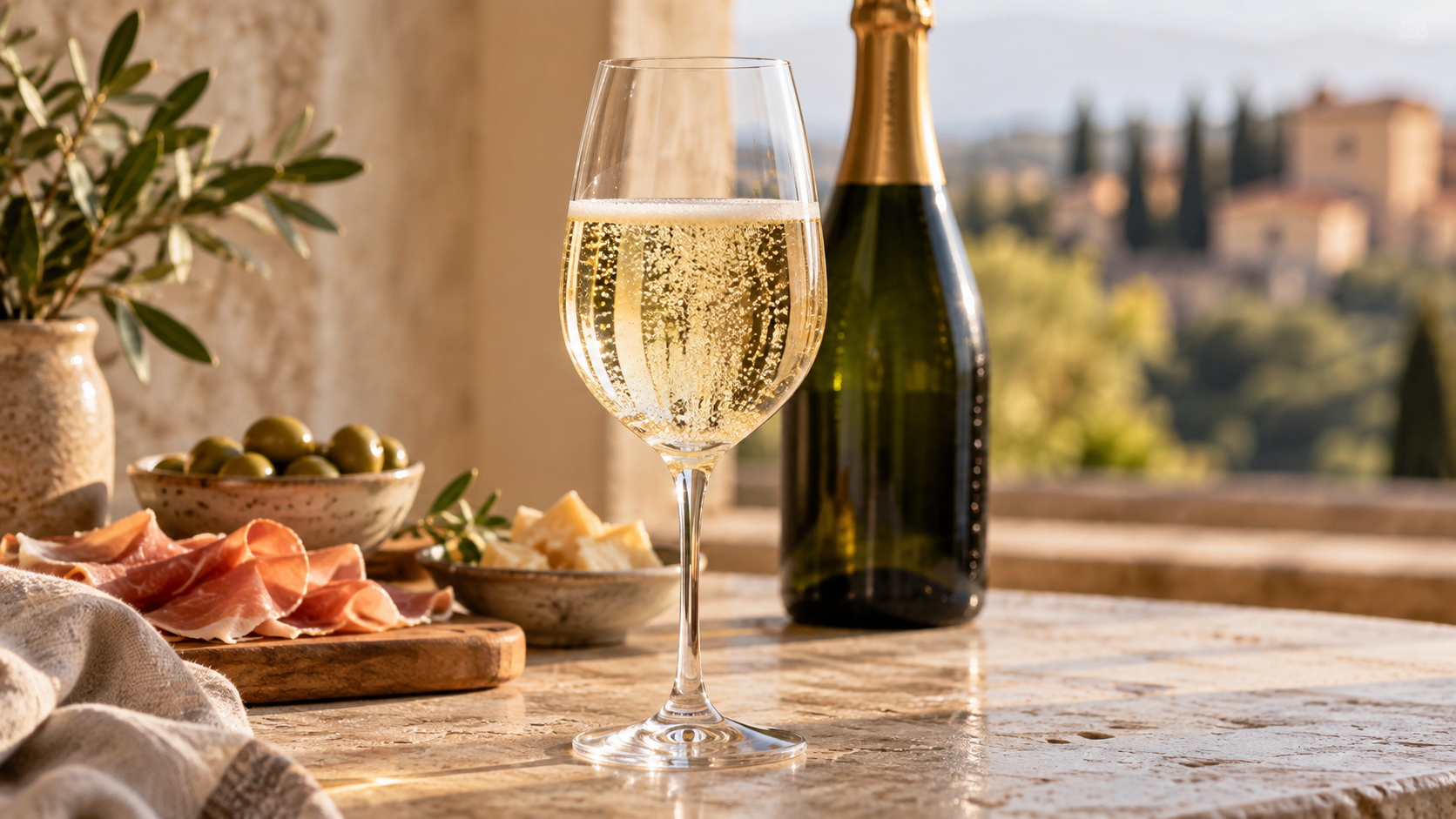
Prosecco’s fresh, fruity profile makes it a natural partner for aperitivo. Serve it with olives, vegetable fritters, mild cheeses, seafood, cured meats or light snacks. Brut and Extra Brut styles can also accompany seafood pasta, risotto, baked fish and vegetable dishes. Extra Dry works well with creamy cheeses and delicate poultry, while the sweeter Dry style can balance some spicy foods or simple fruit desserts.
Franciacorta can move from aperitivo to the dinner table. Brut pairs well with seafood, fried appetizers, risotto and roasted vegetables. Satèn’s softer texture suits delicate starters and white meats. Rosé can stand up to richer dishes, including some meat preparations. A dry Pas Dosé is particularly good with salty foods, shellfish and dishes with a clean, savory finish.
A useful rule is to match the wine’s intensity to the food: keep lighter bottles with delicate dishes, and choose more structured or vintage wines when the meal has richer flavors. Italia Mia’s guide to Italian charcuterie and pairing ideas offers more ideas for building an aperitivo spread.
Which one should you try first?
Choose Prosecco if you want lively fruit, an easy aperitivo bottle or a sparkling wine for a relaxed gathering. Choose Franciacorta if you are curious about bottle-fermented wines with more depth, or want a bottle that can accompany a full meal.
A simple tasting at home can help you find your preference: pour a Brut Prosecco and a Brut Franciacorta side by side, serve them at the right temperature, and taste them with a few small bites. Then try an Extra Dry Prosecco or a Franciacorta Satèn to see how a different sweetness level or texture changes the experience.
Italian sparkling wine is not limited to New Year’s Eve or special occasions. A chilled glass of Prosecco can start a weekday aperitivo; a bottle of Franciacorta can make Sunday lunch feel celebratory. The best bottle is the one you enjoy with good food and company.
External Sources
- Consorzio Tutela Prosecco DOC: styles, sweetness and serving
- Consorzio Tutela Prosecco DOC: FAQ, grapes and serving temperature
- Conegliano Valdobbiadene: food pairings and serving
- Consorzio Franciacorta: method
- Consorzio Franciacorta: styles and pairings
- Consorzio Franciacorta: winery directory