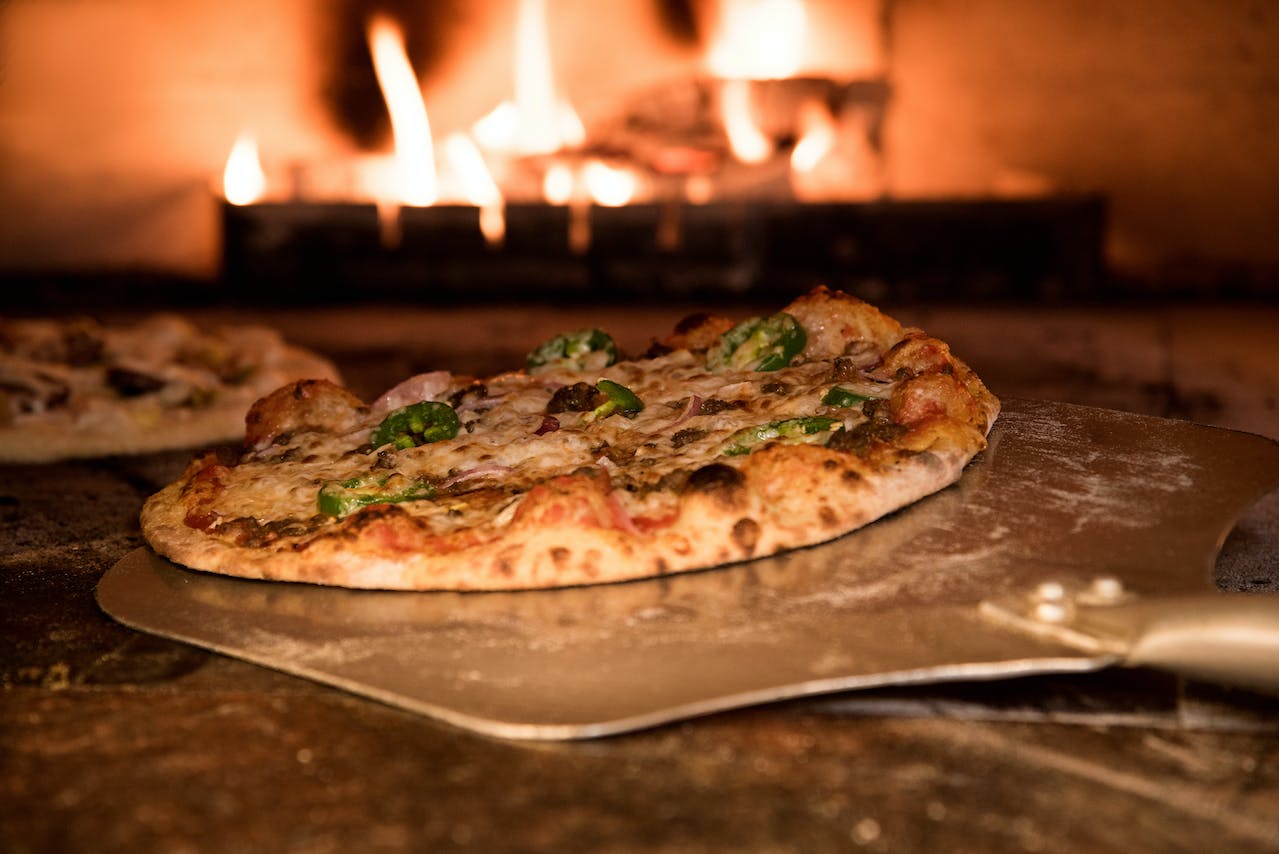
Pizza is one of the simplest dishes in Italian cooking, yet it is surprisingly difficult to perfect. Flour, water, yeast, salt, tomatoes, mozzarella, and olive oil may sound like an ordinary collection of ingredients. In the hands of a skilled pizzaiolo, however, they become something exceptional.
The secret of authentic Italian pizza is not an elaborate recipe or an expensive ingredient. It is the balance between dough, fermentation, heat, and toppings. Every element matters, and none should overpower the others.
In Italy, pizza is also a matter of regional identity. Naples is famous for its soft, flexible pizza with a raised crust. Rome has its own tradition of thin, crisp pizza, while bakeries throughout the country produce delicious rectangular pizzas sold by the slice.
You can explore these differences in our Ultimate Guide to Italian Pizza: From Naples to Rome and Beyond.
But what makes a pizza genuinely authentic? And can you reproduce that quality in your kitchen?
Let’s begin with the tradition that established the international reputation of Italian pizza.
Naples: Where Modern Pizza Found Its Identity
Italy has many regional pizza traditions, from soft Neapolitan pizza to thin Roman pizza and modern pinsa. Discover the differences in our Types of Pizza in Italy guide.
Flatbreads have existed around the Mediterranean for thousands of years. The pizza we recognize today, however, developed in Naples, where inexpensive dough topped with accessible ingredients became an essential part of everyday life.
By the nineteenth century, Neapolitan pizza had established itself as a distinctive local specialty. Tomatoes, introduced to Europe centuries earlier, had become an important ingredient in southern Italian cooking.
The famous Margherita, topped with tomato, mozzarella, and basil, became closely associated with Naples. Its name is traditionally linked to Queen Margherita of Savoy and a visit in 1889, although historians debate the details of that popular story.
Today, Neapolitan pizza has an international reputation, but its cultural importance extends well beyond the finished dish.
In 2017, UNESCO recognized the Art of Neapolitan Pizzaiuolo as part of humanity’s Intangible Cultural Heritage. This recognition celebrates the craftsmanship, knowledge, techniques, and social traditions transmitted through generations of pizza makers.
It is the art of making pizza, rather than pizza as a food product, that received UNESCO recognition.
That distinction matters because authentic pizza is as much about the person preparing it as the ingredients being used.
The Four Ingredients Behind Authentic Pizza Dough
Traditional Neapolitan pizza dough contains only four essential ingredients:
- Wheat flour
- Water
- Salt
- Yeast
There is no need for sugar, butter, milk, or eggs. Under the traditional rules established by the Associazione Verace Pizza Napoletana (AVPN), olive oil is not included in the dough itself.
What makes these basic ingredients special is how they are combined and handled.
Choosing the Right Flour
Many Italian pizzaioli prefer finely milled tipo 00 flour.
However, the designation 00 describes how refined the flour is, not how much protein it contains or how suitable it is for pizza.
A good pizza flour also needs the appropriate gluten-forming characteristics to support stretching and fermentation.
For a home cook, a quality Italian 00 pizza flour is an excellent starting point. Strong bread flour can also produce good results, particularly when baking in a conventional oven.
Water and Hydration
Water affects the consistency, elasticity, and handling of the dough.
The ratio between water and flour is called hydration. A dough containing 600 grams of water for every kilogram of flour has 60% hydration.
Higher hydration can contribute to a lighter, more open crumb, but it also makes the dough more difficult to handle.
For beginners, a hydration level of approximately 60–63% provides a manageable starting point.
Salt and Yeast
Salt adds flavor and helps regulate the behavior of the dough.
Yeast produces the carbon dioxide that allows the dough to rise. The quantity needed depends on fermentation time and temperature.
More yeast does not automatically mean better pizza. In fact, a smaller quantity combined with carefully controlled fermentation often produces better flavor and texture.
The central lesson is simple: good pizza dough requires appropriate proportions and careful handling, not unnecessary ingredients.
Fermentation: Why Great Pizza Takes Time
One of the most important stages in pizza making happens long before the dough reaches the oven.
Fermentation allows yeast to develop gas and flavor while the dough gradually changes in structure.
During this process, enzymes also act on starches and proteins. The resulting dough becomes easier to stretch when properly matured.
A rushed dough can be difficult to shape and may lack flavor. Conversely, excessive fermentation can weaken its structure and make it sticky or prone to tearing.
Traditional Neapolitan pizza makers carefully regulate the amount of yeast, room temperature, and fermentation time.
The AVPN’s published guidelines describe fermentation times generally ranging from 8 to 24 hours, with adjustments for environmental conditions and the flour used.
Many modern pizzaioli also experiment with cold fermentation, allowing dough to mature in the refrigerator for longer periods.
This method can be particularly convenient at home because it makes preparation easier to schedule.
A well-fermented dough should feel elastic, relaxed, and sufficiently strong to stretch without breaking. It should also contain enough gas to expand when exposed to high heat.
And no, longer fermentation does not automatically make pizza healthier or suitable for everyone with digestive problems. Digestibility depends on several factors, including ingredients, baking, portion size, and individual tolerance.
The Art of Stretching Pizza by Hand
Watch an experienced Neapolitan pizzaiolo shaping dough, and you will understand why pizza making is considered a craft.
The process begins with a properly fermented ball of dough.
Using their fingertips, the pizzaiolo presses from the center toward the outside, gradually extending the dough while preserving gas around the edge.
This creates the cornicione, the raised rim characteristic of Neapolitan pizza.
The center remains thin, while the outer ring expands dramatically during baking.
A rolling pin is generally avoided when preparing traditional Neapolitan pizza because it compresses the dough and removes much of the gas that helps create its distinctive structure.
The aim is not a perfectly geometric circle. It is an evenly stretched pizza with a thin center and a light, well-developed crust.
A few irregularities are perfectly natural.
The finished Neapolitan pizza should be flexible rather than rigid. Its center may be soft enough to require a knife and fork, particularly when served immediately from the oven.
The Ingredients: Quality Matters More Than Quantity
Once the dough is ready, the next challenge is choosing the toppings.
A common mistake outside Italy is to assume that a better pizza needs more ingredients.
Italian pizza often demonstrates the opposite.
A few carefully selected ingredients can create a more balanced result than a mountain of cheese, meat, vegetables, and sauces.
Tomatoes
Tomatoes should provide freshness, sweetness, and enough acidity to balance the cheese and dough.
San Marzano tomatoes are particularly associated with Neapolitan pizza, especially the protected San Marzano dell’Agro Sarnese-Nocerino DOP variety.
However, other good-quality Italian peeled tomatoes can also produce excellent sauce.
For a traditional-style pizza, crush the tomatoes by hand or briefly with a food mill. Add a little salt, and avoid making the sauce excessively thick.
You do not normally need to cook the tomatoes beforehand for a classic Neapolitan pizza.
Mozzarella
Two cheeses are especially important in the Neapolitan tradition.
Fior di latte is mozzarella made from cow’s milk. It has a delicate flavor and melts beautifully.
Mozzarella di bufala is made from buffalo milk and has a richer, tangier character.
Both can be excellent, but their moisture levels require attention.
Excess liquid can make the center of a pizza soggy. If the mozzarella is very wet, cut it in advance and allow it to drain before using it.
For more information about Italian cheeses and their culinary uses, read our Guide to Italian Cheese.
Extra Virgin Olive Oil
A little extra virgin olive oil adds aroma, richness, and balance.
On a traditional Margherita, it is often drizzled over the toppings before baking.
Choose an oil with a pleasant flavor that complements rather than overwhelms the tomatoes and mozzarella.
Our Italian Olive Oil Guide explains the different varieties, production methods, and qualities to look for.
Basil and Oregano
Fresh basil provides the familiar fragrance associated with pizza Margherita.
Oregano, particularly dried oregano, is fundamental to pizza Marinara.
Neither herb needs to be applied excessively.
As with the other ingredients, restraint is part of the preparation.
Margherita and Marinara: The Two Essential Pizzas
If you want to understand the essence of authentic Neapolitan pizza, start with two classics.
Pizza Margherita
The traditional Margherita brings together tomato, mozzarella, fresh basil, extra virgin olive oil, and a small amount of salt.
Its appeal lies in the contrast between the slightly acidic tomato, creamy cheese, fragrant basil, and lightly charred dough.
There is nowhere for poor ingredients or careless preparation to hide.
Pizza Marinara
Marinara is even simpler.
It consists of tomato, garlic, oregano, and extra virgin olive oil.
Despite its name, it traditionally contains neither seafood nor cheese.
A well-made Marinara is one of the clearest demonstrations of a pizzaiolo’s ability. Without mozzarella, the quality of the tomatoes, dough, and baking becomes particularly noticeable.
When trying a new traditional pizzeria, I would start with one of these two pizzas before exploring more elaborate combinations.
The Pizza Oven: Understanding the Importance of Heat
A traditional Neapolitan pizza oven reaches temperatures that an ordinary domestic oven cannot match.
According to the AVPN guidelines, traditional wood-fired ovens operate at approximately 430–480°C (806–896°F), with pizza typically baking in just 60–90 seconds.
The combination of intense heat from the oven floor and radiant heat from above produces several important results.
The dough expands rapidly, creating an airy outer crust. The surface browns while the center remains soft, and the toppings cook without requiring a long baking time.
This is why traditional Neapolitan pizza has a characteristic texture that is difficult to reproduce at home.
Small dark spots, sometimes described as leopard spotting, may appear around the crust. They can be a natural result of intense baking, but excessive burning and bitterness are not signs of quality.
It is also a mistake to attribute the entire flavor of wood-fired pizza to smoke. Proper heat distribution, dough quality, fermentation, and the balance of toppings are at least as important.
Can Electric Ovens Produce Authentic Pizza?
Yes, electric pizza ovens can produce outstanding results, particularly models designed to reach very high temperatures.
Traditional AVPN-certified preparation follows specific rules, including the use of a wood-fired oven. However, a good pizza made in an electric oven should not automatically be dismissed as inferior.
The real question is whether the equipment can deliver the appropriate heat and baking conditions for the style of pizza being prepared.
How to Make Excellent Italian Pizza at Home
You do not need to own a professional pizzeria oven to make excellent pizza.
You do, however, need realistic expectations.
A domestic oven will generally produce a somewhat different crust from a pizza baked in Naples at nearly 480°C. That does not mean the result cannot be delicious.
Here is a practical recipe inspired by traditional Italian techniques.
Ingredients for Three Pizzas
For the dough:
- 500 g Italian 00 pizza flour or strong bread flour
- 310 g water
- 14 g fine salt
- 1 g instant dry yeast
For a classic Margherita topping:
- 300–350 g good-quality peeled tomatoes
- 250–300 g fior di latte mozzarella, drained
- Fresh basil leaves
- Extra virgin olive oil
- Salt to taste
Step 1: Prepare the Dough
Combine the flour and yeast in a large bowl.
Gradually add the water, mixing until a rough dough forms. Add the salt and continue mixing.
Knead until the dough becomes reasonably smooth and elastic. You can do this by hand or with a stand mixer fitted with a dough hook.
The dough should feel slightly tacky but should not be excessively sticky.
Step 2: Allow the Dough to Rest
Cover the bowl and leave the dough at room temperature for approximately 60–90 minutes.
Divide it into three portions of roughly 275 g each.
Shape each portion into a smooth ball and place it in a lightly covered, food-safe container with enough space to expand.
Refrigerate for approximately 12–24 hours.
This is a practical home adaptation rather than a claim to reproduce every requirement of the traditional Neapolitan method.
Step 3: Bring the Dough Back to Temperature
Remove the dough from the refrigerator approximately two to three hours before baking.
Keep it covered while it becomes more relaxed and easier to stretch.
Actual timing will vary with room temperature.
If the dough resists stretching, allow it to rest a little longer rather than forcing it.
Step 4: Prepare the Toppings
Crush the peeled tomatoes and season lightly with salt.
Cut the mozzarella into small pieces and drain any excess moisture.
Keep the toppings simple. Too much sauce or cheese can prevent the center from baking properly.
Step 5: Preheat the Oven Thoroughly
Place a pizza stone or baking steel in the oven and preheat it at the highest suitable setting, ideally 250–300°C (482–572°F), depending on the appliance.
Allow approximately 45–60 minutes for the baking surface to become thoroughly hot, following the manufacturer’s safety instructions.
A properly heated surface helps the bottom of the pizza cook quickly.
Step 6: Stretch and Top the Pizza
Dust the work surface lightly with flour.
Press the dough from the center outward, leaving a slightly thicker rim.
Gently stretch it into a round shape approximately 25–30 cm across.
Transfer the dough to a lightly floured pizza peel, then add a thin layer of tomato, mozzarella, basil, and a modest drizzle of olive oil.
Work efficiently so the dough does not stick to the peel.
Step 7: Bake and Serve
Slide the pizza onto the heated stone or steel.
Depending on your oven and temperature, baking may take approximately five to eight minutes, sometimes longer.
Look for a properly browned crust, melted cheese, and a base that has cooked through.
Serve immediately.
The result will not be identical to a pizza baked in a professional Neapolitan oven, but it can still capture much of the flavor and pleasure of authentic Italian pizza making.
If you are building an Italian kitchen from scratch, our Italian Pantry Essentials guide can help you choose useful staple ingredients.
How to Recognize a Good Italian Pizzeria
An authentic Italian pizzeria does not necessarily need antique furniture, a rustic dining room, or a dramatic wood-fired oven.
The quality of the finished pizza is a more reliable guide.
Here is what I would look for:
- A well-developed crust: Light, flavorful, properly baked, and appropriate for its regional style.
- Balanced toppings: Enough tomato, cheese, and seasoning to create flavor without overwhelming the dough.
- Good ingredients: Fresh mozzarella, quality tomatoes, and olive oil used with care.
- Proper baking: A cooked base and crust without excessive burning or raw dough.
- Consistency: Similar quality from one pizza to the next, even when the pizzeria is busy.
- A clear identity: A pizzeria that understands the style it prepares rather than trying to imitate every regional tradition at once.
It is worth remembering that a crisp Roman pizza is not less authentic than a soft Neapolitan one.
Italy has many legitimate pizza traditions, each with its own methods and expectations.
What Does an Authentic Pizza Certification Mean?
Several organizations and regulatory systems recognize aspects of Italy’s pizza-making heritage, but they should not be confused with one another.
The Associazione Verace Pizza Napoletana (AVPN) was established in 1984 to defend and promote traditional Neapolitan pizza. It publishes detailed preparation rules and certifies participating pizzerias that meet its requirements.
Pizza Napoletana STG, or Specialità Tradizionale Garantita, is a European Union designation recognizing a defined traditional production method. It is different from a geographical designation that requires a product to come from one specific area.
UNESCO recognition, meanwhile, concerns the cultural practice and knowledge of Neapolitan pizza makers, not a quality label for individual pizzas or restaurants.
These distinctions help explain why not every excellent Italian pizzeria carries the same certification.
Certification can be useful, but the final judgment still depends on the quality of the pizza.
Authentic Pizza Is More Than a Recipe
Making a delicious pizza is only part of the Italian experience. Our How to Eat Pizza Like an Italian guide explains ordering customs, table etiquette, and how Italians enjoy pizza in everyday life.
In Italy, pizza is not reserved for special occasions.
It is an affordable dinner, a meeting with friends, a family tradition, and occasionally the subject of surprisingly serious arguments about dough, ingredients, and regional styles.
A traditional pizzeria is often a lively place. The oven is busy, the pizzaiolo works quickly, and pizzas arrive at the table ready to be eaten while still hot.
Unlike the large pizzas commonly shared in some other countries, individual round pizzas are the normal restaurant serving in much of Italy.
There is also an important distinction between restaurant pizza and street food. A freshly baked Neapolitan pizza is usually served whole, while pizza al taglio is cut into portions and often sold by weight.
For more about Italian dining customs, see our How to Enjoy Pizza Like an Italian guide.
The experience of eating pizza in Italy is deeply connected to the country’s broader food culture: good ingredients, local traditions, conviviality, and taking pleasure in an uncomplicated meal.
The Final Secret of Authentic Italian Pizza
After all the discussions about flour, fermentation, mozzarella, tomatoes, and oven temperatures, the secret of authentic Italian pizza is remarkably straightforward.
Each ingredient and technique has a purpose.
The flour needs enough strength to create the right dough. Fermentation develops flavor and structure. Hand stretching preserves the air in the crust. High heat transforms the dough rapidly, and carefully chosen toppings complete the pizza without hiding its character.
Great pizza does not require an extravagant combination of ingredients.
Sometimes the finest pizza is simply a Margherita, taken straight from the oven, with its raised crust, fragrant basil, melted mozzarella, and bright tomato sauce.
That is the real pleasure of Italian pizza: making something extraordinary from a handful of ordinary ingredients.
Buon appetito!
External Sources
- Associazione Verace Pizza Napoletana – Official Preparation Guidelines
- UNESCO – Art of Neapolitan Pizzaiuolo
- European Union – Pizza Napoletana Traditional Speciality Guaranteed Regulation