When someone asks me what to eat in Italy, I usually start with another question: where are you going? Carbonara belongs naturally on a Roman menu, pesto tells a story about Liguria, and a freshly filled cannolo makes particular sense in Sicily.
Nevertheless, certain dishes provide a wonderful introduction to Italian cooking. These twenty selections bring together familiar favorites and regional classics, with enough variety to take you beyond pizza and pasta.
This is a personal selection, rather than a statistical ranking of Italy’s most popular meals. Use it to recognize dishes on restaurant menus, decide what to order, and understand why the place where you eat matters.
For a more detailed geographical guide, see What to Eat in Italy: All 20 Regions Explained.
How an Italian Meal Works
A traditional menu usually separates antipasti, primi, secondi, contorni and dolci.
Antipasti open the meal. Primi include pasta, risotto and soups. Secondi are typically meat, fish or other substantial dishes, while contorni are separately ordered sides such as vegetables or potatoes. Dolci are desserts.
You do not need to order every course. An antipasto and a primo, or a secondo with vegetables, can make a perfectly satisfying meal. Pizza commonly serves as a meal in its own right.
Aperitivo is a separate custom involving a drink and accompanying food, rather than simply another name for an antipasto. For more on restaurant customs, read Italian Food Etiquette.
Antipasti and Street Food
1. Bruschetta al Pomodoro
Toasted bread, ripe tomatoes, olive oil, garlic and sometimes basil create one of Italy’s simplest pleasures. The quality of the bread and tomatoes matters more than elaborate presentation.
Bruschetta works beautifully as an antipasto, especially during tomato season. Pronounce it “broo-SKET-ta,” with a hard “k” sound.
2. Insalata Caprese
Associated with Capri and Campania, caprese combines tomatoes, mozzarella, basil and olive oil. Buffalo mozzarella and cow’s-milk mozzarella offer different textures and flavors; either can make a satisfying version.
Balsamic glaze appears in some interpretations, but it is not an essential ingredient. I prefer the dish when the tomatoes and mozzarella remain the focus.
3. Arancini and Arancine
Sicily’s fried rice specialties have a crisp coating surrounding rice and a savory filling. Ragù and cheese are familiar options, alongside numerous local variations.
You will encounter both names: arancine is common in Palermo, while arancini is widely used in Catania. They are substantial enough for a quick lunch or a street-food stop.
Pasta, Rice and Soup
4. Spaghetti alla Carbonara
Carbonara is closely associated with Rome. Its familiar contemporary ingredients are guanciale, eggs, Pecorino Romano and black pepper.
The creamy consistency comes from the egg-and-cheese mixture and careful handling of heat, rather than added cream. Spaghetti and rigatoni are both common choices. This is a dish worth trying where Roman cooking is the restaurant’s specialty.
5. Tagliatelle al Ragù
Bologna’s celebrated combination pairs ribbon-shaped egg pasta with a slowly cooked meat sauce. The ragù includes a vegetable base and tomato, with variations between kitchens.
Expect the sauce to coat the pasta rather than bury it. Tagliatelle al ragù is the local reference point behind the many “spaghetti Bolognese” adaptations served abroad.
6. Lasagne alla Bolognese
For the Bolognese style, layers of pasta alternate with ragù, béchamel and Parmigiano Reggiano. Green pasta made with spinach is a characteristic choice.
Other Italian lasagne have different identities. Neapolitan versions, for example, can include ricotta, small meatballs and other rich fillings. Calling every combination of pasta, tomato and cheese “the authentic Italian lasagna” misses that diversity.
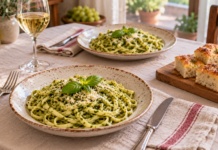
7. Pasta al Pesto
Liguria’s basil pesto combines basil, garlic, pine nuts, olive oil and grated cheeses. Trofie and trenette are especially associated with it.
Some preparations also include potatoes and green beans. The sauce should retain its fresh aroma, making this a good choice for anyone who appreciates a pasta dish built around herbs rather than meat or tomato.
8. Orecchiette con Cime di Rapa
Puglia’s little ear-shaped pasta is paired with cime di rapa, often translated as broccoli rabe or turnip greens. Garlic, olive oil, chili and anchovies commonly complete the preparation.
The appeal lies in the balance between the greens’ bitterness and the savory seasoning. Vegetarian diners should ask about anchovies rather than assume a vegetable-based sauce contains none.
9. Pasta alla Norma
Associated with Catania, pasta alla Norma brings together tomato, fried eggplant, basil and ricotta salata.
The cheese is firm and salty, quite different from fresh ricotta. This combination makes a satisfying introduction to Sicilian pasta cooking, particularly when eggplant is in season.
10. Risotto alla Milanese
Saffron gives this Milanese risotto its golden color and distinctive aroma. Properly prepared, the rice remains identifiable within a flowing, creamy consistency.
It may be served as a primo or alongside ossobuco. The pairing is famous, but a plate of saffron risotto can also be enjoyed on its own.
11. Tortellini in Brodo
Tiny filled pasta served in broth is strongly associated with Bologna and Modena. Traditional fillings commonly include pork, prosciutto, mortadella and Parmigiano Reggiano.
The broth is central to the experience. Although particularly comforting in cold weather, tortellini in brodo also belongs to festive and family meals throughout the year.
12. Ribollita
This Tuscan soup combines vegetables, beans and bread, often including cavolo nero. It expresses the practical ingenuity of cooking that makes good use of inexpensive ingredients and leftovers.
Its name refers to reheating or boiling again. Expect a thick, substantial dish rather than a light broth. Ribollita deserves a place alongside Italy’s more internationally famous pasta dishes.
Pizza
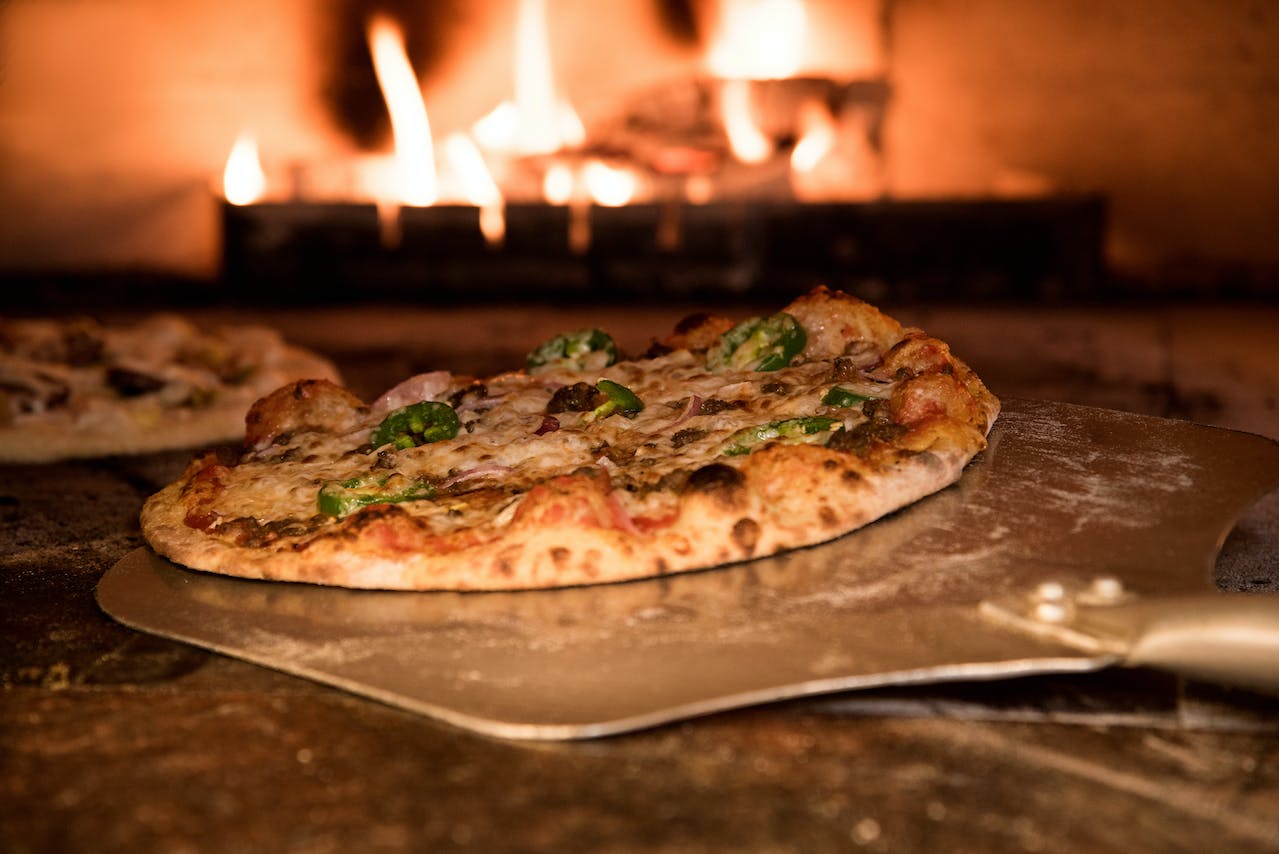
13. Pizza Margherita
Tomato, mozzarella, basil and olive oil make Margherita an excellent way to appreciate a pizzeria’s dough and ingredients.
In Naples, the familiar style has a soft, flexible center and a raised rim. Cow’s-milk fior di latte is common; buffalo mozzarella is another option. For other regional styles, see Types of Pizza in Italy.
Meat and Seafood
14. Ossobuco alla Milanese
Veal shanks are slowly braised until tender, with the marrow-filled bone remaining at the center of each portion. Gremolata, a mixture usually involving lemon zest, parsley and garlic, adds freshness.
Recipes vary, including in their use of tomato. Saffron risotto is a classic accompaniment, making this one of Milan’s most recognizable meals.
15. Saltimbocca alla Romana
Thin veal slices, prosciutto and sage form the foundation of this Roman specialty. Butter and white wine commonly contribute to the sauce.
Despite its reputation, saltimbocca need not be a heavy meal. Order a vegetable contorno alongside it, remembering that sides may be listed and charged separately.
16. Bistecca alla Fiorentina
Florence’s famous steak is a thick, bone-in cut traditionally grilled and served rare. Restaurants often price it by weight, so establish the approximate size and total cost before ordering.
It is frequently suited to sharing. If you prefer thoroughly cooked beef, discuss that preference before choosing this particular dish.
17. Fritto Misto di Mare
A mixed seafood fry can include calamari, small fish and prawns, depending on the location and kitchen. A light coating and careful frying should let the seafood remain recognizable.
This is particularly appealing on the coast. Ask what the day’s mixture includes, especially if you have a preference or an allergy.
Desserts
18. Tiramisù
Coffee-soaked savoiardi, mascarpone cream and cocoa create one of Italy’s best-known desserts. Some recipes include alcohol, while others do not.
Preparations also vary in how the eggs are handled. Anyone needing to avoid uncooked eggs should ask the restaurant about its recipe rather than assume every version is suitable.
19. Cannoli Siciliani
Cannoli pair crisp pastry shells with a sweet ricotta filling, often decorated with pistachios, candied fruit or chocolate.
A shell filled close to serving time retains a better contrast with the creamy center. In Sicily, the filling commonly uses sheep’s-milk ricotta, although recipes differ.
20. Gelato
Gelato is as much a separate afternoon pleasure as a restaurant dessert. Dairy-based flavors and fruit sorbets offer different textures and ingredients.
Try flavors that interest you rather than choosing by appearance alone. Ask about nuts, milk and other allergens when necessary, and remember that ingredient quality matters more than an impressive display.
Choosing What to Order
My advice is to start with the place, then look at the menu. Choose carbonara in a Roman trattoria, pesto in Liguria, tortellini in Emilia-Romagna and Sicilian specialties while traveling around the island.
Seasonality helps too. A summer caprese and a winter ribollita offer different pleasures because they respond to different ingredients and weather.
For a longer meal, combine courses without feeling obliged to order everything. Bruschetta followed by pasta might be enough. A shared steak with vegetables can be another satisfying approach.
Above all, leave room for dishes you have never heard of. These twenty classics are an introduction to Italian food, while local menus often reveal the most interesting part of the journey.
Continue with What to Eat in Italy: All 20 Regions Explained or read about Italian Sunday Lunch for the family traditions surrounding a more elaborate meal.
External Sources
Italia.it: Italian Pasta Shapes and Regional Recipes
Italia.it: Typical Food and Dishes in Lazio
Italia.it: Sicilian Street Food
Italia.it: Typical Food and Dishes in Tuscany