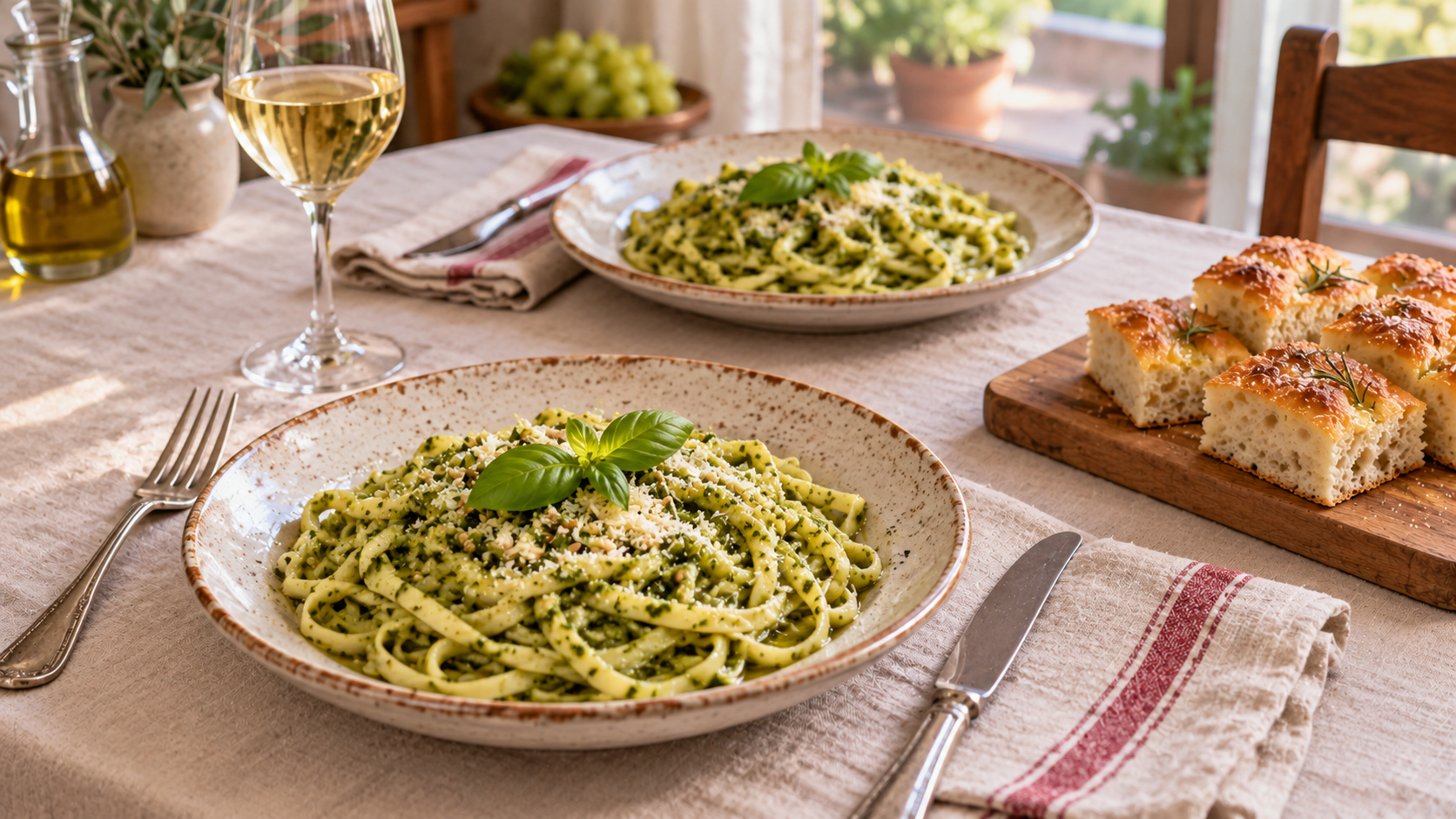
 Famous Italian recipes tell the story of a country through its kitchens. Saffron risotto brings Milan to the table, basil pesto recalls Liguria, and a tray of cannoli carries the flavors of Sicily. Together, these dishes show how much variety sits behind the familiar phrase “Italian food.”
This collection brings together 15 classics, with ingredient quantities, practical instructions and tips for cooking them at home. Some are quick enough for a weekday dinner. Others reward a leisurely afternoon, especially lasagne, pizza and filled rice balls.
These are approachable home-kitchen versions, rather than claims that every family follows one definitive recipe. Where shortcuts or adaptations are used, they are identified. For more regional inspiration, explore Italia Mia’s Italian regional dishes and recipes.
Before You Start
All quantities use metric measurements. Pasta and rice weights refer to uncooked ingredients; bean weights refer to cooked, drained beans. Oven temperatures are for a conventional oven. Preparation times are approximate, and dough should be judged by its rise as well as the clock.
Grate cheese fresh for smoother pasta sauces, drain mozzarella well, and reserve pasta water before draining. Choose an extra virgin olive oil you enjoy: our guide to Italian olive oil explains its regional variety and kitchen uses.
1. Pizza Margherita
Associated with: Naples, Campania
Makes: 3 medium pizzas
Time: About 45 minutes active, plus 3–4 hours rising
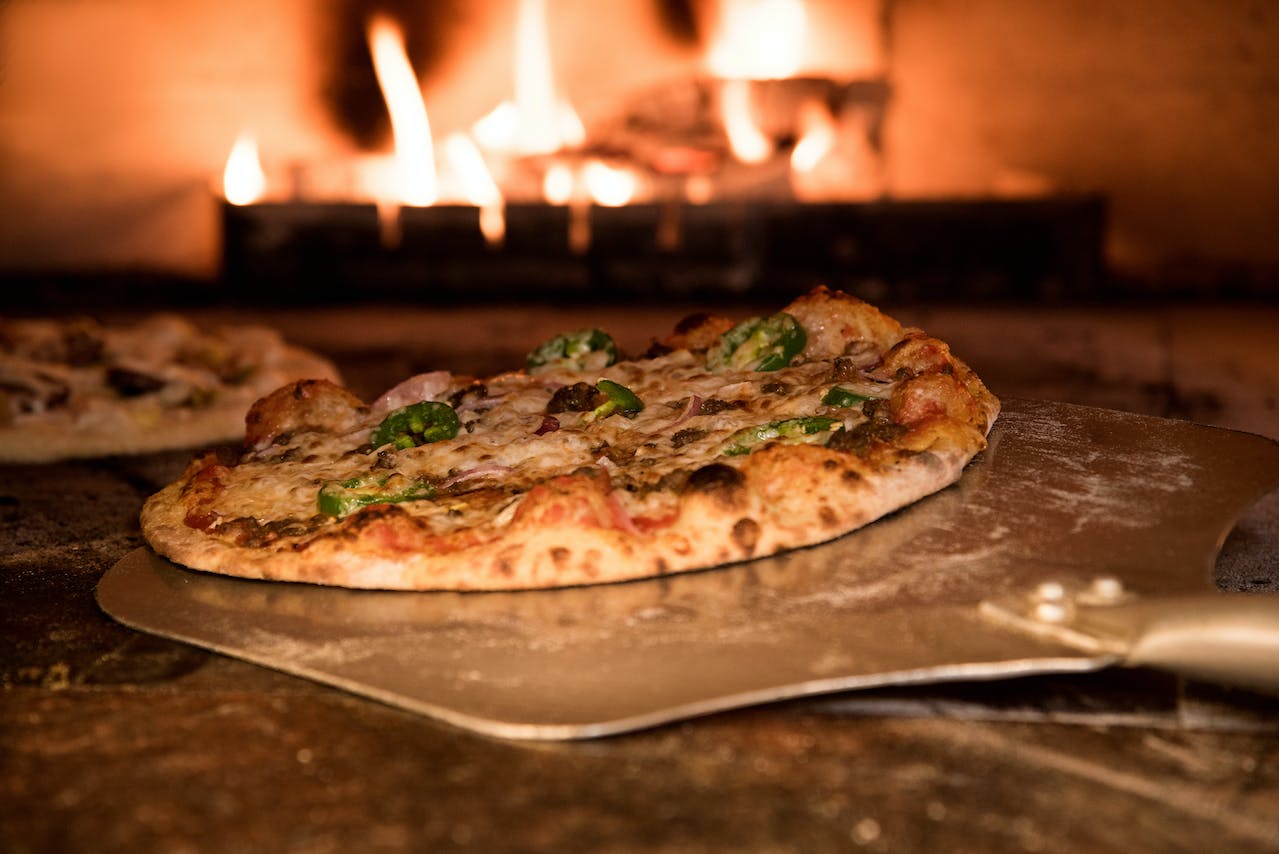
Tomato, mozzarella and basil are enough to make an excellent pizza when the dough and baking are right. This same-day recipe is adapted for a domestic oven; it does not reproduce the conditions of a traditional Neapolitan pizza oven.
Ingredients
- 500 g strong white bread flour
- 325 ml lukewarm water
- 3 g instant yeast
- 10 g fine salt
- 300 g canned peeled tomatoes, crushed
- 250 g mozzarella, drained and torn
- A handful of basil leaves
- 2 tablespoons extra virgin olive oil
- A little flour for shaping; salt for the tomatoes
Method
- Mix flour and yeast, add water, then salt. Knead for 8–10 minutes until smooth and elastic.
- Cover and leave at room temperature until roughly doubled, about 2–3 hours. Divide into three balls, cover and rest for another hour.
- Heat the oven to 250°C/480°F, or its maximum safe setting, with an oven-rated pizza stone, steel or heavy tray inside. Allow at least 45 minutes to heat thoroughly.
- Stretch each ball into a thin disc with a thicker rim. Season the tomatoes lightly and spread a thin layer over the dough. Add mozzarella and a little oil.
- Transfer carefully using a floured pizza peel. Bake one at a time for approximately 8–12 minutes, until the base is cooked and the rim browned. Add basil before serving.
Kitchen tip: If the mozzarella releases a lot of liquid, add it halfway through baking. See our fuller guide to Italian pizza dough, toppings and baking for more detail.
2. Spaghetti alla Carbonara
Associated with: Rome, Lazio
Serves: 4
Time: 25 minutes
Carbonara gets its creamy texture from eggs, cheese, rendered guanciale fat and pasta water. Cream is unnecessary; controlling the heat is the important part.
Ingredients
- 400 g spaghetti
- 150 g guanciale, cut into small strips
- 4 egg yolks and 1 whole egg
- 90 g finely grated Pecorino Romano
- Freshly ground black pepper
- Salt for the pasta water
Method
- Cook the guanciale in a large frying pan over medium-low heat for 8–10 minutes, until its fat has rendered and the edges are crisp. Remove from the heat.
- Beat the yolks and whole egg with the pecorino and plenty of pepper.
- Cook the spaghetti in lightly salted water. Reserve a mug of cooking water, then drain.
- Toss the pasta with the guanciale and its fat. Allow the pan to cool briefly, then stir in the egg mixture off the heat.
- Toss vigorously, adding warm pasta water a tablespoon at a time until glossy. Serve immediately.
Kitchen tip: A sizzling pan will scramble the eggs. Pasteurized eggs are a useful choice because the sauce is only gently heated.
3. Lasagne alla Bolognese
Associated with: Emilia-Romagna
Serves: 6
Time: About 3 hours, including simmering and resting
This version layers meat ragù with béchamel and pasta. Green spinach pasta is a classic Bolognese choice, although plain egg-pasta sheets also work for this home preparation.
Ingredients
- 250 g dried oven-ready lasagne sheets, or the amount needed for your dish
- 100 g grated Parmigiano Reggiano
- 2 tablespoons olive oil
- 1 small onion, 1 carrot and 1 celery stalk, finely chopped
- 400 g minced beef and 150 g minced pork
- 100 ml dry white wine
- 400 g passata
- 150 ml whole milk for the ragù
- 150–250 ml water or unsalted stock, as needed
- For the béchamel: 60 g butter, 60 g plain flour and 750 ml milk
- Salt, black pepper and a little grated nutmeg
Method
- Soften the onion, carrot and celery in oil for 10 minutes. Add the meat and brown thoroughly. Pour in the wine and let it reduce.
- Add passata, the 150 ml milk and some stock. Season and simmer gently for about 90 minutes, stirring occasionally and adding liquid as needed. Keep the ragù moist.
- For the béchamel, melt the butter, stir in flour and cook for 1 minute. Gradually whisk in the 750 ml milk. Simmer until lightly thickened; season with salt and nutmeg.
- Heat the oven to 180°C/350°F. In a roughly 20 × 30 cm baking dish, spread a little sauce, then alternate pasta, ragù, béchamel and parmesan. Finish with béchamel and parmesan.
- Cover loosely with foil and bake for 25 minutes. Uncover and bake for another 15–20 minutes, or until the pasta is tender and the top golden. Rest for 15 minutes before cutting.
Kitchen tip: Follow the pasta packet’s liquid and cooking requirements; some sheets need pre-boiling.
4. Trofie al Pesto Genovese
Associated with: Liguria
Serves: 4
Time: 25 minutes
Fresh basil gives this pasta its fragrance. A mortar produces a lovely texture, but a food processor makes a practical home alternative.
Ingredients
- 400 g dried trofie or trenette
- 50 g basil leaves, washed and thoroughly dried
- 30 g pine nuts
- 1 small garlic clove
- 50 g finely grated Parmigiano Reggiano
- 20 g finely grated pecorino
- 80–100 ml extra virgin olive oil
- Salt
Method
- Crush the garlic and pine nuts in a mortar, then gradually work in the basil and a pinch of salt. Alternatively, pulse these ingredients briefly in a food processor.
- Stir in both cheeses and enough olive oil to form a soft sauce.
- Cook the pasta in salted water. Reserve some cooking water before draining.
- Transfer the pasta to a serving bowl. Add the pesto and a small splash of cooking water, then toss until evenly coated.
Kitchen tip: Keep pesto away from direct heat. Long blending or frying dulls its fresh flavor.
5. Risotto alla Milanese
Associated with: Milan, Lombardy
Serves: 4
Time: 35–40 minutes
Saffron gives this risotto its golden color and distinctive aroma. This accessible version omits bone marrow, which appears in some traditional preparations.
Ingredients
- 320 g Carnaroli or Arborio rice
- 1 small onion, very finely chopped
- 60 g butter, divided
- 100 ml dry white wine
- About 1.2 liters hot light beef or vegetable stock
- 0.15–0.2 g saffron threads
- 60 g grated Parmigiano Reggiano
- Salt, if needed
Method
- Steep the saffron in a small cup of hot stock for 15 minutes.
- Soften the onion in 30 g butter over low heat. Add the rice and stir for 2 minutes.
- Add the wine and allow it to reduce. Pour in a ladle of hot stock and stir regularly.
- Continue adding stock as the rice absorbs it. Stir in the saffron and its liquid halfway through. Cook for approximately 16–20 minutes, until tender with a slight bite.
- Remove from the heat and beat in the remaining butter and parmesan. Add a little stock if necessary, cover for 2 minutes, then serve.
Kitchen tip: Finished risotto should spread gently across the plate rather than sit in a stiff mound.
6. Bucatini all’Amatriciana
Associated with: Amatrice, Lazio
Serves: 4
Time: 30 minutes
Guanciale, tomato and pecorino create a deeply savory sauce. Bucatini are popular for this dish, while spaghetti are another excellent choice.
Ingredients
- 400 g bucatini
- 150 g guanciale, cut into strips
- 400 g canned peeled tomatoes, crushed
- 50 ml dry white wine
- 80 g grated pecorino
- A small pinch of dried chili, optional
- Salt for the pasta water
Method
- Cook the guanciale in a large pan over medium-low heat until golden and its fat has rendered.
- Add the wine carefully and let it reduce. Stir in tomatoes and optional chili.
- Simmer gently for 15–20 minutes, breaking up any large tomato pieces.
- Cook the pasta until just short of al dente. Transfer it to the sauce with a splash of cooking water and toss for 1–2 minutes.
- Remove from the heat and stir in most of the cheese. Serve with the remainder.
Kitchen tip: Taste before adding salt; guanciale and pecorino already contribute plenty.
7. Cacio e Pepe
Associated with: Rome, Lazio
Serves: 4
Time: 20 minutes
The ingredient list is short, but this pasta needs attention. Finely grated cheese and water that is warm rather than boiling help create a smooth sauce.
Ingredients
- 400 g spaghetti or tonnarelli
- 180 g finely grated Pecorino Romano
- 2 teaspoons freshly crushed black pepper, or to taste
- Salt for the pasta water
Method
- Cook the pasta in a broad pan with enough lightly salted water to cover it comfortably, stirring frequently.
- Toast the pepper in a separate dry pan for about 30 seconds. Add a small ladle of pasta water and switch off the heat.
- Let another small ladle of cooking water cool until warm. Gradually stir it into the pecorino in a large bowl to make a thick paste.
- Drain the pasta, reserving more water. Toss it with the pepper water, then allow it to stop steaming fiercely.
- Add the pasta to the cheese bowl and toss vigorously. Loosen with warm cooking water, a spoonful at a time, until creamy.
Kitchen tip: Do not put the cheese sauce over a strong flame: excessive heat makes it clump.
8. Parmigiana di Melanzane
Associated with: Southern Italy
Serves: 6
Time: About 1 hour 30 minutes, including resting
Eggplant parmigiana brings together tender vegetables, tomato sauce and melted cheese. Its precise origins are disputed, and regional and family versions vary.
Ingredients
- 1 kg eggplants, sliced lengthways about 5 mm thick
- 700 g passata
- 1 garlic clove
- 2 tablespoons olive oil, plus oil for frying
- 250 g mozzarella, thoroughly drained and sliced
- 100 g grated Parmigiano Reggiano
- A handful of basil leaves
- Salt
Method
- Gently cook the garlic in 2 tablespoons olive oil, add passata and salt, and simmer for 20 minutes. Remove the garlic and add a few basil leaves.
- Pat the eggplant slices dry. Fry in batches in hot oil until golden on both sides, then drain well on kitchen paper.
- Heat the oven to 190°C/375°F. Spread a little sauce in a medium baking dish.
- Layer eggplant, tomato sauce, mozzarella, parmesan and basil. Repeat, finishing with sauce and parmesan.
- Bake for 30–35 minutes, until bubbling. Leave to settle for 15 minutes before serving.
Kitchen tip: For an oven-cooked adaptation, brush the eggplant with oil and roast at 220°C/425°F until tender before assembling.
9. Ribollita
Associated with: Tuscany
Serves: 6
Time: About 1 hour 15 minutes
This substantial soup gives stale bread a second life. Beans, leafy greens and olive oil make it satisfying without meat, and reheating allows the flavors to come together.
Ingredients
- 3 tablespoons extra virgin olive oil, plus more to serve
- 1 onion, 2 carrots and 2 celery stalks, diced
- 2 garlic cloves, chopped
- 200 g canned tomatoes
- 500 g cooked cannellini beans, drained
- 300 g cavolo nero, tough stalks removed and leaves sliced
- 200 g savoy cabbage, sliced
- 1 liter vegetable stock, plus more as needed
- 250 g stale country bread, sliced or torn
- Salt and black pepper
Method
- Soften the onion, carrots and celery in olive oil for 10 minutes. Add garlic, then tomatoes, and cook for another 5 minutes.
- Mash half the beans. Add all the beans, greens and stock to the pot.
- Simmer gently for 35–40 minutes, until the vegetables are tender. Season to taste.
- Stir in the bread and cook gently for another 10 minutes, adding stock if necessary.
- Serve with olive oil, or cool promptly, refrigerate and reheat thoroughly the following day with a splash of water.
Kitchen tip: Choose firm country bread; soft sliced sandwich bread breaks down too quickly.
10. Orecchiette con Cime di Rapa
Associated with: Puglia
Serves: 4
Time: 30 minutes
The slight bitterness of turnip greens balances garlic, anchovies and olive oil. This is a particularly good introduction to the regional cooking explored in our Puglia travel guide.
Ingredients
- 400 g dried orecchiette
- 600 g trimmed cime di rapa, roughly chopped
- 4 anchovy fillets in oil, drained
- 2 garlic cloves, sliced
- 4 tablespoons extra virgin olive oil
- A pinch of dried chili
- Salt
Method
- Bring a large pot of lightly salted water to the boil. Add the pasta.
- Add the greens during the final 5–7 minutes of cooking, allowing more time for thicker stems.
- Meanwhile, gently warm the garlic, anchovies and chili in olive oil in a wide pan. Stir until the anchovies dissolve; avoid browning the garlic.
- Drain the pasta and greens, reserving some water. Toss them in the flavored oil, adding a splash of cooking water to bring everything together.
Kitchen tip: Broccoli rabe or rapini is the closest commonly available substitute. Ordinary broccoli makes a different but enjoyable variation.
11. Sicilian Arancini with Mozzarella
Associated with: Sicily
Makes: About 12 small rice balls
Time: About 1 hour active, plus chilling
These crisp rice balls are known as arancini or arancine in different parts of Sicily. This simplified cheese-filled version is a manageable starting point before attempting a ragù filling.
Ingredients
- 300 g Arborio rice
- About 850 ml light vegetable stock, plus more if needed
- A small pinch of saffron
- 30 g butter
- 40 g grated Parmigiano Reggiano
- 120 g firm mozzarella, cut into 12 cubes
- 100 g plain flour
- About 150 ml water for the batter
- 150 g fine dry breadcrumbs
- Neutral oil for deep-frying
- Salt, if needed
Method
- Bring the stock and saffron to a simmer. Add the rice and cook over low heat, stirring often, until tender and the liquid is absorbed. Add a little extra hot stock if needed.
- Stir in butter and parmesan. Spread in a shallow tray, cool promptly and refrigerate until cold, preferably within an hour of cooking.
- Divide into 12 portions. With damp hands, flatten each portion, enclose a mozzarella cube and seal into a firm ball.
- Whisk flour and water into a smooth, lightly coating batter. Dip each ball in batter, then breadcrumbs.
- Heat oil to 170–175°C/340–350°F in a deep, heavy pan, never more than half full. Fry in small batches for about 5–7 minutes, until golden and hot through. Drain and serve.
Kitchen tip: Seal the cheese completely inside the rice to prevent leaks. Use the chilled rice within 24 hours.
12. Saltimbocca alla Romana
Associated with: Rome, Lazio
Serves: 4
Time: 25 minutes
Thin veal, prosciutto and sage make a quick main course with a savory pan sauce. Serve with potatoes, spinach or a simple salad.
Ingredients
- 8 small, thin veal escalopes, about 500 g total
- 8 small slices prosciutto crudo
- 8 sage leaves
- 2 tablespoons plain flour
- 30 g butter
- 1 tablespoon olive oil
- 100 ml dry white wine
- Black pepper
Method
- Place one slice of prosciutto and one sage leaf on each escalope. Secure with a toothpick.
- Lightly flour only the underside of the veal. Heat the butter and oil in a wide pan.
- Cook flour-side down for about 2 minutes, then turn briefly to cook the prosciutto side. Work in batches and cook the veal through without letting it toughen.
- Transfer to warm plates. Add the wine to the pan and simmer for 1–2 minutes, scraping up the cooking juices.
- Spoon the sauce over the meat and remove the toothpicks before serving.
Kitchen tip: Taste before salting; the prosciutto usually provides enough seasoning.
13. Focaccia Genovese
Associated with: Genoa, Liguria
Makes: One approximately 30 × 40 cm tray
Time: About 40 minutes active, plus 2½–3½ hours rising
Olive oil, a soft crumb and salty dimples make this bread irresistible while still warm. This home version works well for sandwiches or alongside a bowl of soup.
Ingredients
- 500 g strong white bread flour
- 325 ml lukewarm water
- 5 g instant yeast
- 10 g fine salt
- 30 ml extra virgin olive oil for the dough
- 2 tablespoons olive oil for the tray
- For the topping: 40 ml olive oil, 40 ml water and 3 g fine salt
Method
- Mix flour, yeast and water. Add the 10 g salt and 30 ml oil, then knead for about 10 minutes. The dough will be soft and slightly sticky.
- Cover and leave until doubled, about 1½–2 hours.
- Oil the tray and gently stretch the dough toward the corners. If it springs back, rest for 15 minutes and try again. Cover and leave for 45–60 minutes, until puffy.
- Whisk the topping ingredients together. Press deep dimples into the dough with oiled fingertips and pour the mixture evenly over it. Rest for 20 minutes while the oven heats to 220°C/425°F.
- Bake for 20–25 minutes, until golden above and cooked underneath. Transfer to a rack.
Kitchen tip: The topping should collect in the dimples; resist adding more flour to dry the surface.
14. Tiramisù
Associated with: Northeastern Italy
Serves: 8
Time: 25 minutes, plus at least 6 hours chilling
Coffee, mascarpone and cocoa make this one of Italy’s most recognizable desserts. Its origins are debated. This version uses pasteurized eggs and leaves out alcohol.
Ingredients
- 500 g mascarpone
- 4 pasteurized eggs, separated
- 100 g caster sugar, divided
- 250 g savoiardi ladyfingers
- 300 ml strong coffee, cooled
- 2 tablespoons unsweetened cocoa powder
Method
- Beat the yolks with 70 g sugar until pale and thick. Mix in the mascarpone gently until smooth.
- In a clean bowl, whisk the whites until foamy. Gradually add the remaining sugar and whisk until they hold firm peaks.
- Fold the whites into the mascarpone mixture in three additions.
- Dip the savoiardi briefly in cooled coffee. Arrange a layer in an approximately 20 × 25 cm dish, cover with half the cream, then repeat.
- Cover and refrigerate for at least 6 hours. Dust with cocoa just before serving. Keep refrigerated and eat within 2 days.
Kitchen tip: Use pasteurized eggs suitable for whipping, since this dessert is not cooked. Brief dipping prevents a watery base.
15. Cannoli Siciliani
Associated with: Sicily
Makes: 12 medium cannoli
Time: 20 minutes, plus draining and chilling
Crisp shells and sweet ricotta are the essential contrast in a good cannolo. This shortcut recipe uses ready-made shells, so you can prepare the filling without pastry tubes or deep-frying.
Ingredients
- 12 ready-made medium cannoli shells
- 500 g well-drained sheep’s-milk ricotta, or firm cow’s-milk ricotta
- 120 g icing sugar, sifted
- 50 g small dark chocolate chips
- 30 g chopped unsalted pistachios
- Candied orange peel, optional
- Extra icing sugar for dusting
Method
- If the ricotta is wet, drain it overnight in a lined sieve in the refrigerator. Weigh out 500 g after draining.
- Press the ricotta through a sieve, then gently mix with the icing sugar until smooth.
- Fold in the chocolate chips and refrigerate the filling for at least 30 minutes.
- Spoon into a piping bag and fill the shells from both ends shortly before serving.
- Dip the exposed filling in pistachios, add optional candied orange and dust lightly with icing sugar.
Kitchen tip: Store the shells dry and the filling refrigerated separately. Filling too early softens the pastry.
Bring the Recipes Together
You do not need to cook a large Italian feast to enjoy these dishes. A plate of pesto pasta followed by salad is enough for a relaxed lunch. Ribollita can be dinner on its own, while lasagne and parmigiana suit a table of family or friends.
For a weekend project, make focaccia while a pot of ragù simmers, or prepare tiramisù the evening before a meal. Start with one recipe, learn the texture and timing, and return to it until the method feels familiar. That confidence matters more than an elaborate menu.
Five Cookbooks to Explore Italian Cooking Further
As an Amazon Associate, Italia Mia earns from qualifying purchases.
- Essentials of Classic Italian Cooking — Marcella Hazan — A useful foundation for classic Italian recipes and cooking techniques.
- The Silver Spoon — The Silver Spoon Kitchen — A comprehensive reference for traditional Italian home cooking.
- Lidia’s Mastering the Art of Italian Cuisine — Lidia Bastianich and Tanya Bastianich Manuali — Recipes and practical guidance on ingredients, tools and essential techniques.
- Pasta Grannies: The Official Cookbook — Vicky Bennison — Regional pasta recipes and stories from Italian grandmothers, ideal for exploring handmade pasta.
- Flour Water Salt Yeast — Ken Forkish — A bread-and-pizza companion for learning about dough, fermentation and home baking.
External Sources and Further Reading
These recipes are independently written home-kitchen adaptations. The resources below offer additional context on regional traditions; they are not claims of testing or endorsement of these versions.
- Accademia Italiana della Cucina: regional recipe directory — a reference for regional dishes; access to individual recipes may require registration.
- Associazione Verace Pizza Napoletana: pizza regulations and method — traditional Neapolitan pizza standards, distinct from the domestic-oven adaptation above.