 Growing up in a small Italian seaside town, I often found myself on my bicycle, heading to the alimentari, the local grocery store my mother and grandmother preferred. It was about three miles away, but they trusted that particular shop for its products, familiar faces, and dependable quality.
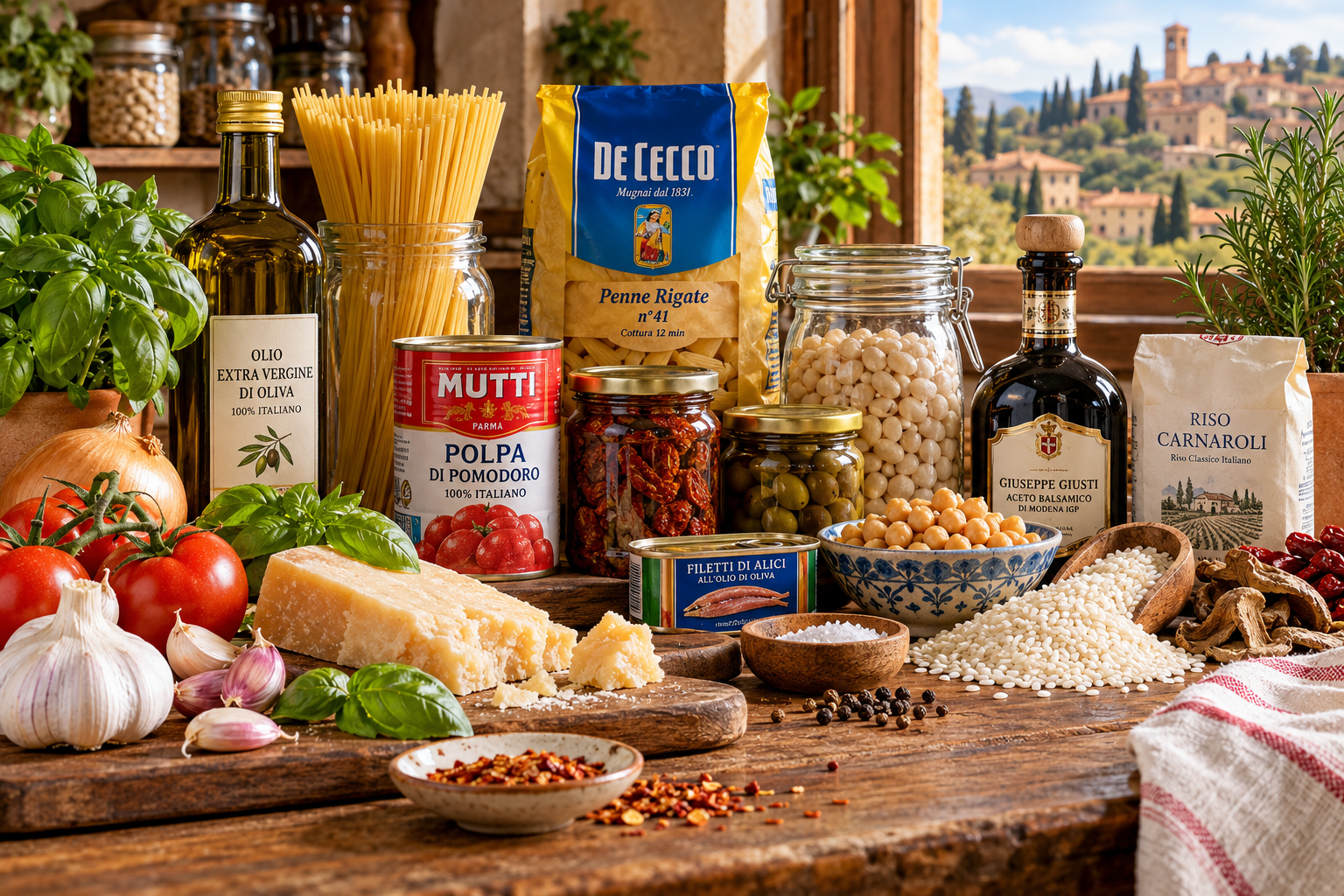
I usually carried a shopping list. It rarely contained anything extraordinary: pasta, tomatoes, olive oil, cheese, beans, perhaps anchovies or a few fresh herbs. Yet those simple ingredients could become a delicious lunch, a family dinner, or something special for unexpected guests.
That is what I still appreciate about the traditional Italian pantry. You don’t need dozens of expensive ingredients or complicated recipes. You need a sensible collection of good products, an understanding of how to use them, and the pleasure of cooking.
Whether you live in Italy, the United States, or elsewhere, these are the Italian pantry essentials I recommend keeping at home.
Affiliate disclosure: As an Amazon Associate, Italia Mia earns from qualifying purchases. The shopping links in this article lead to Amazon.com and Amazon.it searches, where you can compare products, sellers, and current prices.
1. Pasta: The Foundation of an Italian Pantry
Pasta is probably the first ingredient people associate with Italian cooking, and for good reason. It is affordable, versatile, satisfying, and easy to store.
I like to keep several shapes rather than buying large quantities of just one.
Long pasta such as spaghetti, linguine, and bucatini is particularly suitable for olive oil, garlic, seafood, and many classic tomato sauces.
Short pasta such as penne, rigatoni, fusilli, and farfalle works beautifully with vegetables, meat sauces, and more substantial preparations.
Small pasta shapes such as ditalini, stelline, and orzo are useful for soups, especially those made with beans or vegetables.
For everyday cooking, look for pasta made from durum-wheat semolina. Many good Italian brands also produce bronze-die pasta, which has a slightly rougher surface that helps sauce adhere.
De Cecco, Rummo, Garofalo, and La Molisana are among the familiar Italian brands worth considering.
Learn more about the history and traditions of Italian pasta.
Shop Italian pasta:
De Cecco pasta on Amazon.com | De Cecco pasta on Amazon.it
2. Extra-Virgin Olive Oil: The Most Versatile Ingredient
If I had to choose just one ingredient that defines much of Italian home cooking, it would be extra-virgin olive oil.
It forms the base of countless recipes, from simple tomato sauce to vegetables, soups, seafood, and pasta. It is also wonderful when used uncooked over bread, salads, and finished dishes.
You do not need an expensive bottle for every purpose.
I suggest keeping a dependable extra-virgin olive oil for everyday cooking and, if your budget allows, a more distinctive regional oil for finishing food.
Contrary to a widespread misconception, extra-virgin olive oil is suitable for ordinary sautéing and many other cooking methods. You do not need to switch automatically to products labeled light or extra-light. Those terms generally describe flavor or refinement rather than fewer calories.
Italy produces olive oils with remarkably different personalities. Tuscan oils can be assertive and peppery. Ligurian varieties are often more delicate. Sicilian and Puglian oils may offer pronounced fruity, bitter, or spicy notes.
To understand the differences, read our Italian olive oil guide and best Italian olive oil buying guide.
My advice: Buy oil in dark glass or a metal tin, keep it away from heat and sunlight, and choose a size you will use while its flavor remains fresh.
Shop Italian olive oil:
Partanna Sicilian olive oil on Amazon.com | Partanna olive oil on Amazon.it
3. Tomatoes: The Starting Point for Countless Sauces
There is nothing quite like a perfectly ripe summer tomato. However, good canned tomatoes are indispensable when fresh tomatoes are out of season.
My pantry usually includes three different tomato products.
Whole peeled tomatoes: These are ideal for pasta sauces, pizza, soups, and slow-cooked dishes. They can be crushed by hand or broken up while cooking.
Passata di pomodoro: This smooth tomato purée is particularly useful for quick sauces and preparations where you do not want tomato pieces.
Tomato paste: Concentrated tomato paste adds intensity to sauces, stews, and braised dishes. I prefer the version sold in a tube because it is easy to use in small quantities.
San Marzano tomatoes are especially well known, but not every can carrying that name is a certified product. Genuine Pomodoro San Marzano dell’Agro Sarnese-Nocerino DOP carries the protected designation.
Mutti is another widely available Italian brand that offers reliable everyday tomato products.
I rarely feel the need to buy a prepared pasta sauce. With tomatoes, garlic, olive oil, basil, and a little salt, you already have the foundation of something delicious.
There is also no general need to add sugar. If a sauce tastes particularly sharp, a little naturally sweet carrot may help balance the flavor. Simmering uncovered concentrates the sauce and develops flavor, but does not necessarily remove its acidity.
Shop Italian tomatoes:
Mutti Italian tomatoes on Amazon.com | Mutti tomatoes on Amazon.it
4. Garlic, Onions, Carrots, and Celery
These humble vegetables are the beginning of many excellent Italian dishes.
Garlic, or aglio, is especially important in central and southern Italian cooking. A few cloves gently heated in olive oil can provide enough flavor for an entire pasta dish.
Onions are equally important, particularly when preparing soffritto.
A traditional soffritto often combines finely chopped onion, carrot, and celery, cooked gently in olive oil until softened. It provides the aromatic base for ragù, vegetable soups, braised meats, and many regional recipes.
Garlic can also be included in a soffritto when appropriate. Italian recipes vary by region and household, so there is no universal rule requiring garlic and onion to be kept separate.
Keep onions and garlic in a cool, dry, well-ventilated place. Carrots and celery belong in the refrigerator.
For a quick meal, try cooking a little garlic in olive oil, adding cooked spaghetti, some chili flakes, and a splash of pasta water. Finish with parsley.
Simple ingredients, handled well, can make an exceptionally satisfying dinner.
5. Herbs, Spices, and Chili Peppers
Fresh herbs are essential to Italian cooking, but it is also worth maintaining a small collection of dried seasonings.
These are the ones I use most frequently:
- Basil (basilico): For tomato sauces, pesto, and Caprese salad.
- Parsley (prezzemolo): For seafood, vegetables, soups, and pasta.
- Rosemary (rosmarino): Excellent with roasted potatoes, beans, chicken, and meat.
- Sage (salvia): Particularly good with butter, gnocchi, and filled pasta.
- Oregano (origano): Used with tomatoes, pizza, and southern Italian dishes.
- Thyme (timo): A versatile seasoning for vegetables and slow cooking.
- Chili peppers (peperoncino): Essential for dishes such as spaghetti all’arrabbiata.
- Nutmeg (noce moscata): Frequently used in béchamel, spinach fillings, and fresh pasta preparations.
- Saffron (zafferano): The defining aromatic ingredient of risotto alla Milanese.
If possible, keep a small basil plant in your kitchen or on a balcony.
When basil is abundant, I enjoy making pesto with garlic, pine nuts, olive oil, and suitable grated cheeses. A mortar produces a traditional texture, although a food processor is a practical alternative.
Dried herbs should be kept in tightly closed containers away from light and heat. Replace them when their aroma fades.
6. Beans, Lentils, and Chickpeas
Legumes are among the most economical and satisfying ingredients in Italian cooking.
They are deeply connected to cucina povera, the traditional cooking of ordinary families who relied on seasonal vegetables, bread, grains, and legumes rather than expensive cuts of meat.
My favorites include:
Cannellini beans: Creamy white beans commonly served with olive oil, garlic, sage, and vegetables.
Borlotti beans: Speckled beans that are particularly good in soups, stews, and pasta e fagioli.
Chickpeas (ceci): Excellent for pasta e ceci, vegetable soups, and salads.
Lentils (lenticchie): Popular throughout Italy and traditionally eaten at New Year, when they symbolize prosperity.
I keep both dried and canned legumes. Dried beans offer flexibility and can be economical, while canned varieties are convenient when dinner needs to be ready quickly.
One of my favorite simple lunches is a bowl of cannellini beans dressed with extra-virgin olive oil, parsley, a little salt, and freshly ground black pepper.
Add good bread and you have a complete, comforting meal.
7. Rice for Risotto
Ordinary long-grain rice is not the best choice for traditional Italian risotto.
For its characteristic creamy texture, you need rice varieties that release starch during cooking while retaining enough structure to remain pleasantly firm.
Three Italian varieties deserve attention.
Carnaroli: My preferred all-purpose risotto rice. It maintains its texture particularly well and is forgiving during cooking.
Arborio: Widely available and capable of producing a creamy risotto, although it requires attention to avoid overcooking.
Vialone Nano: Particularly associated with northeastern Italy and excellent for soft, flowing risotti.
For a classic risotto, gently cook onion in butter or olive oil, add the rice, toast it briefly, and gradually incorporate hot stock.
Finish with butter and Parmigiano Reggiano, when appropriate, to create the creamy texture Italians call mantecatura.
A package of Carnaroli is a worthwhile addition even if you prepare risotto only occasionally.
Shop Italian risotto rice:
Riso Gallo Carnaroli on Amazon.com | Riso Gallo Carnaroli on Amazon.it
8. Polenta and Other Grains
Polenta is particularly important in northern Italian cooking.
Made from ground corn, it can be served soft and creamy alongside mushrooms, cheeses, stews, or braised meats.
Once cooled and firm, polenta can also be sliced, grilled, or pan-fried.
Traditional polenta requires time and stirring, although instant varieties offer a convenient solution for everyday cooking.
I like keeping a package of polenta in the pantry because it provides an excellent alternative to pasta or rice.
Farro, barley, and other grains are also useful for soups and salads. Their presence reflects the broader regional diversity of Italian cuisine across all 20 regions.
9. Vinegar: Wine Vinegar and Balsamic
A well-stocked Italian pantry should contain at least one wine vinegar and one good balsamic vinegar.
Red wine vinegar is useful in dressings, marinades, and certain cooked dishes.
White wine vinegar has a lighter profile and works well with vegetables, fish, and delicate sauces.
Balsamic vinegar is a different ingredient altogether.
An everyday Aceto Balsamico di Modena IGP is a practical choice for dressings, marinades, and finishing dishes.
Traditional balsamic vinegar carrying a DOP designation is a more specialized product, produced under stricter rules and aged for many years. It is generally used sparingly.
A few drops over Parmigiano Reggiano, strawberries, or grilled vegetables can be wonderful.
To understand the differences between products, read our complete guide to Italian balsamic vinegar.
Shop Italian balsamic vinegar:
Giusti balsamic vinegar on Amazon.com | Giusti balsamic vinegar on Amazon.it
10. Preserved Seafood: Tuna, Anchovies, and Clams
Preserved seafood is a practical part of many Italian kitchens.
A good tin of tuna in olive oil can turn a simple salad into a satisfying lunch. Combine it with cannellini beans, red onion, parsley, and olive oil.
Anchovies are another ingredient I always recommend.
They add savory depth to sauces, cooked greens, and pasta dishes. When gently heated in olive oil, anchovy fillets break down and become part of the sauce.
Try them with garlic, chili flakes, parsley, and spaghetti.
Capers and olives make excellent companions, especially in southern Italian recipes.
Canned clams can also be useful for a quick pasta dish, although fresh clams remain my preference whenever they are available.
Look for preserved seafood packed in good-quality oil or carefully prepared in brine. Always check the storage instructions, particularly after opening.
11. Capers, Olives, and Preserved Vegetables
Italian cooking makes wonderful use of ingredients preserved in salt, oil, or vinegar.
Capers (capperi) are indispensable in many Mediterranean recipes. Salt-packed capers are especially flavorful, although they usually need to be rinsed before use.
Olives (olive) provide an immediate addition to salads, pasta sauces, and antipasto plates. Taggiasca, Castelvetrano, and other regional varieties offer different flavors and textures.
Artichokes (carciofini) preserved in oil are excellent with bread, cheese, and cured meats.
Sun-dried tomatoes (pomodori secchi) add concentrated flavor to pasta, vegetables, sandwiches, and rice dishes.
I also enjoy keeping a jar of grilled peppers or eggplant when I know that preparing a meal from scratch may not be convenient.
These ingredients are particularly useful for an impromptu aperitivo or a simple meal built around bread and cheese.
12. Italian Cheese: Essential, but Refrigerated
Cheese is indispensable in an Italian kitchen, although it generally belongs in the refrigerator rather than on the pantry shelf.
My essentials include:
Parmigiano Reggiano: Useful for grating over pasta, finishing risotto, and eating in small pieces.
Pecorino Romano: A stronger sheep’s-milk cheese essential to dishes such as cacio e pepe and carbonara.
Grana Padano: A versatile hard cheese suitable for numerous everyday recipes.
Mozzarella: Best purchased fresh and enjoyed according to its storage instructions.
Ricotta: Useful for pasta fillings, savory preparations, and desserts.
Mascarpone: Indispensable for tiramisù and certain creamy desserts.
I prefer buying a wedge of hard cheese and grating it as needed rather than relying on large containers of pre-grated cheese.
For a more detailed comparison, including storage and regional differences, see our guide to Italian cheese.
Remember that mozzarella, ricotta, mascarpone, and most other cheeses require appropriate refrigeration. Even hard cheeses should be stored according to their packaging instructions.
13. Italian Coffee: An Everyday Ritual
No discussion of my family’s Italian pantry would be complete without coffee.
Offering someone a caffè is one of the simplest forms of Italian hospitality.
For generations, the stovetop moka pot has been a familiar presence in Italian kitchens. Today, espresso machines and capsule systems are also common.
The important thing is to choose coffee suitable for your brewing method.
Lavazza, illy, Kimbo, and Pellini offer numerous blends, from mild and aromatic to dark and intense.
Ground coffee intended for a moka pot is not necessarily ideal for an espresso machine. Check the packaging rather than choosing by brand alone.
Our guide to Italian coffee brands explains how to compare them.
If you enjoy traditional stovetop coffee, you may also like our guide to the Italian moka pot.
Shop Italian coffee:
Lavazza coffee on Amazon.com | Lavazza coffee on Amazon.it
14. Breadcrumbs, Flour, and Other Useful Basics
Some of the most useful Italian ingredients are also the least expensive.
Breadcrumbs (pangrattato) are used for meatballs, vegetable gratins, breaded cutlets, and numerous regional dishes.
You can buy them ready-made, but I often prefer making them from leftover dry bread.
Flour (farina) is another basic ingredient. Italian 00 flour is useful in many recipes, although the appropriate protein content depends on whether you are making fresh pasta, pizza, bread, or pastry.
Fine salt and sea salt are worth keeping for cooking and finishing dishes.
Black pepper should ideally be freshly ground.
Dried porcini mushrooms are another excellent ingredient for risotto, sauces, and soups. Rehydrate them according to the package instructions and filter their soaking liquid if using it in a dish.
A small quantity of each can provide considerable variety without taking up much shelf space.
15. Fresh Ingredients and Cured Meats Worth Keeping Nearby
Not everything essential to Italian cooking can be stored in a cupboard.
When I shop, I also consider a few fresh and refrigerated ingredients.
Prosciutto crudo, pancetta, guanciale, and regional salami are useful for antipasti, sandwiches, and certain traditional recipes.
Guanciale is especially important for authentic Roman preparations such as amatriciana and carbonara.
Pancetta works well in soups, vegetable dishes, and pasta sauces.
Fresh lemons, seasonal vegetables, eggs, and a few good cheeses complete the everyday selection.
For more ideas on enjoying these products, explore our Italian prosciutto and charcuterie guide.
Buy perishable ingredients in reasonable quantities, keep them refrigerated as required, and use them within their recommended storage period.
How to Organize and Store Your Italian Pantry
Good organization helps prevent waste and makes everyday cooking easier.
I recommend keeping dried pasta, rice, polenta, legumes, flour, and breadcrumbs in a cool, dry place. Airtight containers can help protect opened packages from moisture and pantry pests.
Olive oil should be kept away from direct sunlight and the heat of the stove.
Store garlic and onions in a ventilated location, separate from ingredients that require refrigeration.
For canned foods, check the condition of the packaging and the best-before dates. Rotate your supplies so that older products are used first.
Once opened, canned tomatoes, beans, and seafood require refrigeration. Transfer leftovers to an appropriate food container and follow the recommended use period.
Fresh cheese, cured meats, and refrigerated pesto should never be treated as shelf-stable simply because they are sold in sealed packaging.
A good pantry is not necessarily a large pantry. It is one where everything has a purpose and where ingredients are used while still at their best.
Five Easy Italian Meals from Your Pantry
One of the pleasures of keeping these ingredients on hand is knowing that dinner rarely requires an elaborate shopping trip.
1. Spaghetti aglio, olio e peperoncino
Cook spaghetti, warm garlic and chili in olive oil, and combine everything with a little reserved pasta water. Finish with parsley.
2. Pasta al pomodoro
Make a simple sauce with canned tomatoes, olive oil, garlic or onion, and fresh basil. Toss with your favorite pasta.
3. Pasta e ceci
Combine chickpeas, garlic, rosemary, stock, and small pasta. The result is a comforting dish that can be prepared almost entirely from pantry ingredients.
4. Risotto with dried porcini
Rehydrate porcini mushrooms, prepare a basic risotto with Carnaroli rice, and finish with butter and Parmigiano Reggiano.
5. Cannellini bean and tuna salad
Combine drained cannellini beans, tuna in olive oil, red onion, parsley, and lemon juice. Serve with bread.
For more inspiration, discover 20 iconic Italian dishes.
How to Buy Authentic Italian Products Outside Italy
Italian ingredients are increasingly available outside Italy, but attractive packaging does not always guarantee Italian origin.
Look beyond Italian flags, familiar names, and marketing descriptions.
For products whose geographical origin matters, check the country of production and the applicable certification.
DOP (Protected Designation of Origin) and IGP (Protected Geographical Indication) identify foods protected under European geographical-indication rules. They are particularly relevant to certain cheeses, cured meats, balsamic vinegar, and regional specialties.
However, many excellent Italian products do not carry either designation.
If you live in the United States, our dedicated guide to authentic Italian pantry staples available in America explains how to identify products and compare well-known brands.
And if you are visiting Italy, take some time to browse a local supermarket. Our article on what to buy in an Italian supermarket offers additional suggestions.
The Real Secret of an Italian Pantry
I still think about those bicycle trips to the alimentari when I open my kitchen cupboards.
My mother and grandmother did not need dozens of unusual ingredients to prepare memorable meals. They depended on familiar products, seasonal vegetables, good olive oil, and recipes they knew almost instinctively.
That approach remains valuable today.
Start with good pasta, tomatoes, olive oil, garlic, onions, beans, rice, and a few seasonings. Add preserved seafood, vinegar, and other regional ingredients as you discover the dishes you enjoy.
Buy quality where it makes a noticeable difference, but do not confuse Italian cooking with expensive shopping.
The real secret of an Italian pantry is not how much you keep in it. It is knowing how to turn a few simple ingredients into something worth sharing.
External Sources
- European Commission — Geographical Indications and Quality Schemes
- International Olive Council — Olive Oils
- USDA — Shelf-Stable Food Safety and Storage