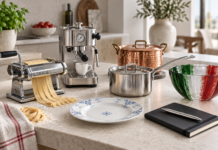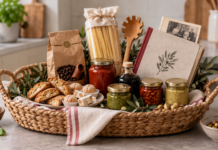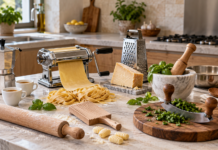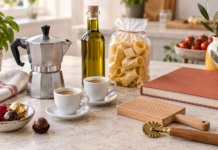

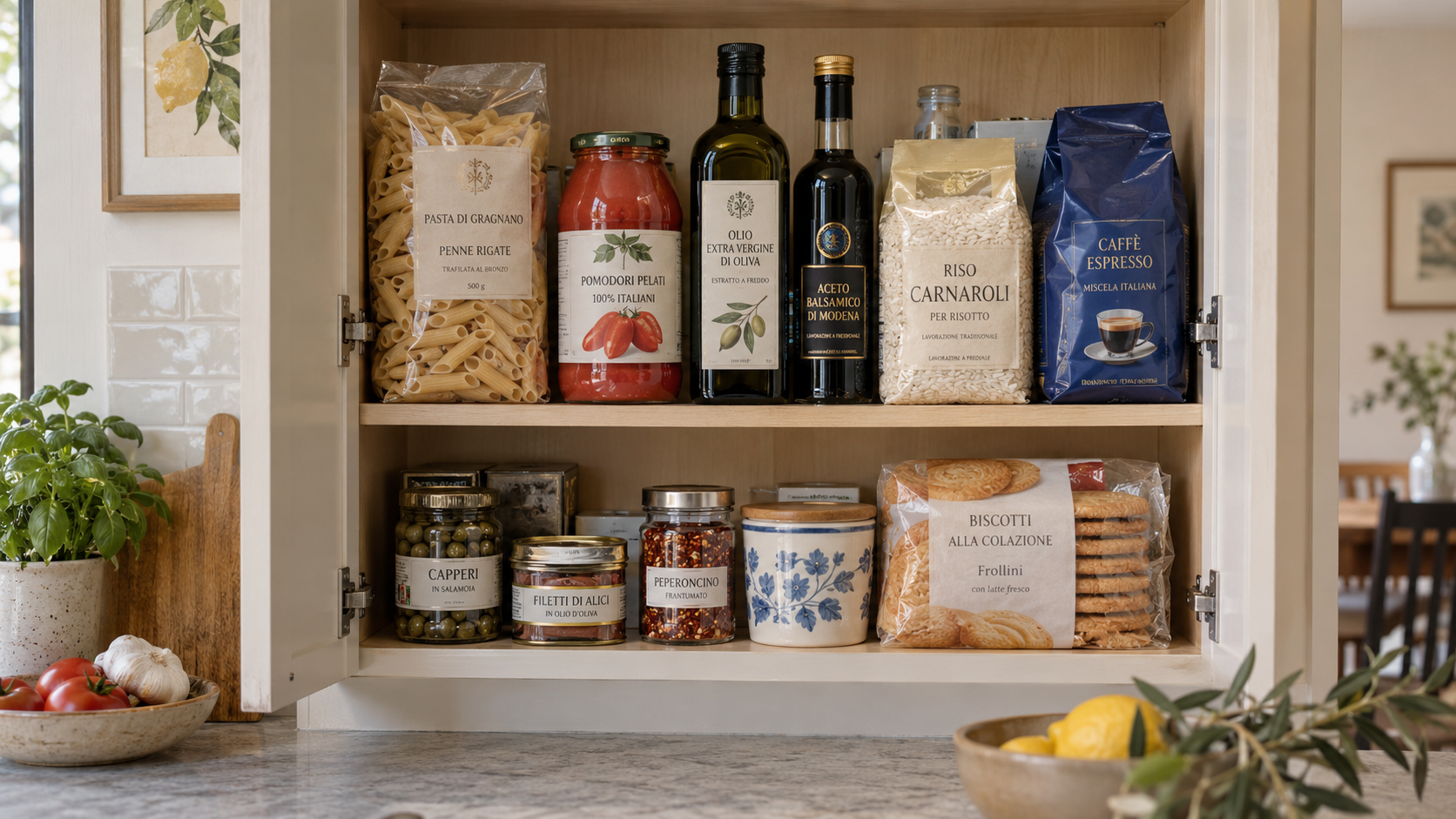
 A well-stocked Italian pantry is not defined by dozens of complicated ingredients. It begins with a few dependable products: good dried pasta, tomatoes, extra-virgin olive oil, vinegar, preserved seafood, rice, coffee and biscuits.
Many authentic Italian products are now available in American supermarkets and online. The difficulty is distinguishing foods genuinely produced in Italy from products that merely use Italian names, colors or imagery.
“Imported from Italy,” “Product of Italy,” DOP and IGP designations are useful indicators, but every category requires slightly different scrutiny. Here is what to look for—and several dependable products that Americans can order online.
Disclosure: As an Amazon Associate, Italia Mia may earn from qualifying purchases. Product availability and prices can change.
How to Recognize an Authentic Italian Product
Before adding anything to your cart, read the label carefully.
“Product of Italy” generally indicates that the food was produced in Italy. “Italian-style,” “Italian recipe” and similar phrases describe a style rather than an origin. A package decorated with the Italian flag does not necessarily contain an Italian-made product.
European geographical designations offer additional protection:
DOP, or Denominazione di Origine Protetta, identifies a product whose production, processing and preparation are tied to a defined geographical area.
IGP, or Indicazione Geografica Protetta, connects at least one important stage of production to a particular region.
These designations are especially valuable when buying San Marzano tomatoes, balsamic vinegar, olive oil and regional specialties. However, many excellent everyday Italian products do not carry a DOP or IGP seal.
Dried Italian Pasta
Good dried pasta should taste pleasantly wheaty and remain firm when cooked correctly. Look for pasta made in Italy from durum-wheat semolina and water. A rough, slightly opaque surface is useful because it helps sauce cling to the pasta.
Bronze-die extrusion, frequently described as “bronze cut,” creates that rougher surface. Slow drying can also help preserve the pasta’s structure and flavor, although these production details do not automatically guarantee that one brand will suit every recipe.
De Cecco is a reliable and widely distributed Abruzzo producer. Its spaghetti, linguine, rigatoni and short shapes are suitable for everyday dishes.
Shop De Cecco pasta on Amazon.com
Rummo, from Benevento in Campania, is particularly appreciated for pasta that maintains a firm texture.
Shop Rummo pasta on Amazon.com
Garofalo produces pasta in Gragnano, a Campanian town historically associated with pasta making. Some Garofalo products bear the Pasta di Gragnano IGP designation.
Shop Garofalo pasta on Amazon.com
Keep several shapes rather than buying only spaghetti. Penne and rigatoni work well with substantial sauces, linguine suits seafood, and smaller shapes such as ditalini are useful for pasta e fagioli and vegetable soups.
Italian Canned Tomatoes
Canned tomatoes are among the most useful ingredients in an Italian pantry. Whole peeled tomatoes are the most versatile choice because they can be crushed by hand for pasta sauce, pizza, soups and braised dishes.
Mutti, based in Emilia-Romagna, offers peeled tomatoes, finely chopped tomatoes and passata that are widely available in the United States.
Shop Mutti Italian tomatoes on Amazon.com
Not every can labeled “San Marzano” contains protected San Marzano tomatoes. The full protected name is Pomodoro San Marzano dell’Agro Sarnese-Nocerino DOP. Genuine certified cans carry the DOP symbol, the consortium identification and a numbered label.
Shop San Marzano DOP tomatoes on Amazon.com
Cento is a familiar American importer and distributor with several Italian tomato products. Check the description and the can itself because the company sells multiple varieties with different certifications and origins.
Shop Cento Italian tomatoes on Amazon.com
Passata is another essential product. This smooth, uncooked tomato purée is convenient for quick sauces, soups and dishes in which tomato pieces are not desired.
Extra-Virgin Olive Oil
Olive oil deserves the most careful label reading. “Packed in Italy” does not necessarily mean that all the olives were grown in Italy.
For genuinely Italian oil, look for wording such as “100% Italian extra-virgin olive oil” and examine the stated origin of the olives. The formal definition of extra-virgin olive oil describes oil obtained directly from olives by mechanical means.
A harvest date, when provided, is more informative about freshness than a distant best-before date. A dark glass bottle or metal tin helps protect the oil from light. Store it away from the stove and use it regularly rather than keeping an expensive bottle open for years.
Partanna Sicilian extra-virgin olive oil has a robust character suited to bruschetta, beans, grilled vegetables and finishing pasta.
Shop Partanna extra-virgin olive oil on Amazon.com
Frantoia Barbera is another Sicilian oil with a distinctly fruity profile.
Shop Frantoia Barbera olive oil on Amazon.com
Monini offers several oils at different prices. Read the origin statement because its selection includes both Italian oils and blends.
Shop Monini extra-virgin olive oil on Amazon.com
Consider keeping two bottles: an affordable oil for cooking and a more distinctive regional oil for finishing dishes at the table.
Balsamic Vinegar
Authentic balsamic vinegar ranges from accessible everyday condiments to costly traditional vinegar aged for many years.
Aceto Balsamico di Modena IGP is made under protected production rules using grape must and wine vinegar. The label must carry the protected geographical indication, and the EU IGP symbol should be visible.
Products labeled “invecchiato” must meet an extended aging requirement. Under current specifications, the term indicates more than three years in wooden vessels, while “riserva” denotes more than five years.
Giuseppe Giusti of Modena produces several balsamic vinegars, from practical everyday versions to denser and more complex selections.
Shop Giusti balsamic vinegar on Amazon.com
Acetaia Leonardi is another Modena producer offering IGP vinegar and higher-end condiments.
Shop Leonardi balsamic vinegar on Amazon.com
For salad dressings and marinades, an everyday IGP vinegar is usually sufficient. A thicker, better-quality balsamic is better used sparingly over Parmigiano Reggiano, strawberries, roasted vegetables or grilled meat.
Capers
Capers add acidity, saltiness and a concentrated Mediterranean flavor to pasta, fish, salads and sauces. Italian cooks use them in dishes such as puttanesca, caponata, vitello tonnato and salsa verde.
Salt-packed capers generally offer a firmer texture and cleaner flavor than capers stored in vinegar. Rinse them thoroughly and, if especially salty, soak them briefly in fresh water before use.
Capers from Pantelleria, a volcanic island between Sicily and Tunisia, are particularly prized. Look for the protected name Cappero di Pantelleria IGP.
Shop Pantelleria IGP capers on Amazon.com
If certified Pantelleria capers are unavailable, choose Italian salt-packed capers with a clearly stated origin.
Shop Italian salt-packed capers on Amazon.com
Anchovies
A few anchovy fillets can transform a dish without making it taste overtly fishy. When gently dissolved in olive oil, they add savory depth to tomato sauces, sautéed greens, breadcrumbs and salad dressings.
Agostino Recca offers Sicilian anchovy fillets in oil as well as whole salted anchovies for cooks who prefer to clean and prepare them traditionally.
Shop Agostino Recca anchovies on Amazon.com
Delicius is a Parma-based company with anchovy fillets sold in jars and tins.
Shop Delicius anchovies on Amazon.com
After opening a jar, keep the anchovies refrigerated and covered with oil. Use them in spaghetti aglio e olio, bagna càuda, pasta with broccoli, puttanesca or a simple sauce of butter and anchovies.
Rice for Risotto
American long-grain rice cannot reproduce the texture of a traditional risotto. Italian risotto rice releases starch while retaining a firm center, producing the characteristic creamy consistency without the addition of cream.
Carnaroli is often favored for its ability to maintain its shape and tolerate a slightly longer cooking time. Arborio is widely available and becomes creamy readily, although it can overcook more quickly. Vialone Nano is excellent for fluid, all’onda-style risotti and is closely associated with northeastern Italy.
Riso Scotti offers imported Arborio and Carnaroli rice in the United States.
Shop Riso Scotti risotto rice on Amazon.com
Riso Gallo is another established Italian producer with several risotto varieties.
Shop Riso Gallo risotto rice on Amazon.com
For the best result, add hot broth gradually, stir enough to encourage starch release and stop cooking while the grains still retain a slight bite. Finish off the heat with butter and cheese—a step known as mantecatura.
Italian Coffee
Italian coffee culture is based more on roasting, blending and preparation than on Italian-grown beans. Coffee plants are not commercially cultivated in Italy on the scale associated with major coffee-producing countries, but Italian companies have developed internationally influential roasting traditions.
Lavazza offers blends for moka pots, espresso machines and automatic coffee makers. Qualità Rossa and Crema e Gusto are familiar choices, while Super Crema is popular for bean-to-cup machines.
Shop Lavazza coffee on Amazon.com
Illy is known for its consistent Arabica blend and distinctive pressurized tins.
Shop Illy coffee on Amazon.com
Kimbo, founded in Naples, is a good choice for those who prefer a darker southern Italian roasting style.
Shop Kimbo coffee on Amazon.com
Match the grind to the equipment. A moka pot requires coffee ground finer than drip coffee but generally coarser than the grind used in a pump-driven espresso machine.
Italian Biscuits
Italian biscuits are generally less sweet than many American cookies, which makes them particularly suitable for breakfast or an afternoon coffee.
Mulino Bianco produces some of Italy’s most recognizable breakfast biscuits. Macine have a rich cream flavor, Abbracci combine cocoa and cream dough, and Baiocchi sandwich hazelnut-and-cocoa filling between small biscuits.
Shop Mulino Bianco biscuits on Amazon.com
Gentilini, a historic Roman company, makes Osvego biscuits and other traditional varieties suited to tea, coffee and milk.
Shop Gentilini biscuits on Amazon.com
Balocco offers wafers, breakfast biscuits and seasonal baked goods.
Shop Balocco biscuits on Amazon.com
When buying biscotti, remember that the Italian word simply means biscuits or cookies. The hard, twice-baked Tuscan biscuits commonly called biscotti in America are more specifically known as cantucci and are traditionally served with Vin Santo.
A Practical Starter Pantry
You do not need to purchase every product at once. A useful first order could include:
• Two pasta shapes, such as spaghetti and rigatoni
• Whole peeled tomatoes and one bottle of passata
• Extra-virgin olive oil
• Aceto Balsamico di Modena IGP
• Salt-packed capers
• A jar of anchovy fillets
• Carnaroli or Arborio rice
• Coffee appropriate for your preferred brewing method
• One package of Italian breakfast biscuits
With these basics, you can prepare numerous Italian dishes without relying on premade sauces: spaghetti al pomodoro, puttanesca, risotto, pasta with anchovies and breadcrumbs, bruschetta, bean soups and simple vegetable dishes.
For additional shopping ideas, see Italia Mia’s guide to the best Italian products available on Amazon.com.
External Sources
Consortium for the Protection of San Marzano DOP Tomatoes
Consortium for the Protection of Balsamic Vinegar of Modena
CREA guide to extra-virgin olive oil labeling