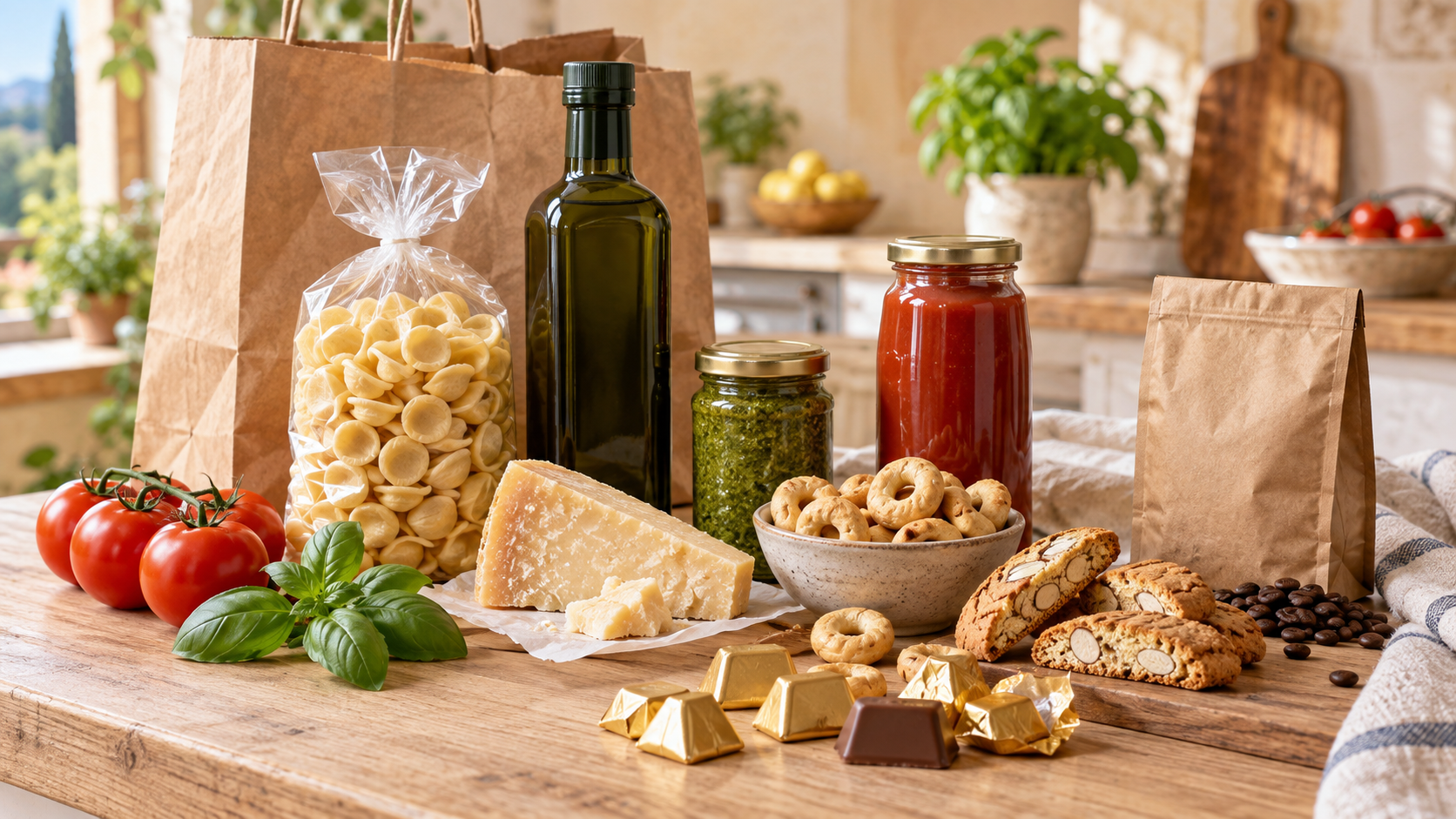
 What to Buy in an Italian Supermarket: 15 Foods Worth Trying and Taking Home
One of the most revealing places to visit in Italy has no admission ticket, famous paintings or guided tours.
It is the neighborhood supermarket.
Beyond the automatic doors lies a small portrait of everyday Italian life: shelves of pasta shapes you may never have cooked, biscuits intended for breakfast, cheeses labeled by their age, and a deli counter where someone is ordering precisely two hundred grams of mortadella.
For travelers, these shops offer more than inexpensive groceries. They provide an opportunity to discover regional flavors, assemble a memorable lunch and find gifts that will actually be enjoyed.
A packet of unfamiliar pasta or a good bag of coffee can bring back more of a holiday than another souvenir magnet.
The challenge is knowing what deserves space in your basket—and eventually your suitcase.
This guide explores what to buy in an Italian supermarket, how to read the most useful labels, and which foods are better enjoyed during your trip rather than carried home.
Why Visit a Supermarket During Your Italian Vacation?
Restaurants show you how Italians cook for their guests. Supermarkets offer a glimpse of what people keep in their kitchens.
You might notice an entire section devoted to tomato products, several kinds of rice for risotto, or an unexpectedly wide choice of preserved vegetables.
The selection also changes with geography. A shop in Liguria may give more attention to pesto and local olive products, while one in Piedmont may offer an inviting assortment of hazelnut sweets.
A supermarket visit is particularly useful if you are staying in an apartment, preparing a picnic or traveling on a limited budget. Italia Mia’s Italy on a Budget guide explains how simple food shopping can fit into an affordable vacation without sacrificing the pleasure of eating well.
However, do not assume every supermarket is inexpensive or every product on its shelves is Italian. Small convenience stores in tourist centers can charge more, and Italian supermarkets sell imported goods just like supermarkets elsewhere.
Read the label, compare prices and let curiosity guide you.
1. Dried Pasta in Shapes You Cannot Easily Find at Home
Pasta is an obvious purchase, but the most interesting choice may not be another packet of spaghetti.
Look for a shape associated with the area you are visiting or a format that is difficult to find where you live.
Examples include orecchiette for vegetable sauces, paccheri for substantial sauces, and smaller shapes for soups. Italy’s regional pasta traditions offer plenty of possibilities beyond the familiar international selection.
Check whether the pasta contains eggs if dietary requirements matter. Also distinguish dried pasta from fresh pasta that requires refrigeration.
Buying tip: Choose a sturdy shape in a compact package. Fragile nests and long, thin strands may not survive an overfilled suitcase.
For a more meaningful purchase, remember the dish you enjoyed on your trip and buy the pasta needed to recreate it.
2. Extra Virgin Olive Oil
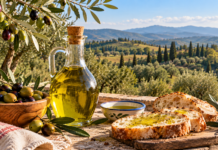
A well-chosen bottle of extra virgin olive oil can become one of the most useful things you bring home from Italy.
Start with the words olio extra vergine di oliva. Then look beyond the Italian-looking packaging to the origin information.
An Italian brand name or an Italian bottling address does not, by itself, establish that the olives were grown in Italy. If that is important to you, select a bottle with a clear Italian-origin declaration.
Choose a manageable size rather than automatically buying the largest bottle. Dark glass or a suitable tin is practical, and the oil should be kept away from heat and light.
Italia Mia’s Italian olive oil buying guide explores the subject in greater detail.
Buying tip: Buy oil because you want to use it, not simply because the bottle looks decorative.
3. Parmigiano Reggiano
The cheese section is a good place to discover how much maturation can change a familiar food.
Parmigiano Reggiano must mature for at least 12 months. Packages marked 24 or 36 months offer an opportunity to explore older versions with a more developed flavor and texture.
Rather than buying a large quantity of one age, consider two small pieces to compare during your stay.
Look for the full name, Parmigiano Reggiano, on the label. A generic package of grated cheese is not necessarily the same product.
Buying tip: A small wedge is useful for both eating in pieces and grating over pasta. Follow its storage instructions, and check destination-country rules before treating it as an international souvenir.
4. A Regional Pecorino
Pecorino means sheep’s-milk cheese, but it does not describe one single flavor.
Some versions are young and relatively mild; others are mature, firm and strongly savory. The cheese you would grate over pasta may be quite different from the one you would serve with bread and fruit.
Look for a named regional variety, and check whether the label says fresco, semistagionato or stagionato.
At a staffed counter, ask which cheese is suitable for eating on its own.
Buying tip: Tell the assistant how you plan to use it. “For a sandwich” and “for grating over pasta” may lead to very different recommendations.
5. Italian Coffee
The coffee aisle can be as confusing as the wine section if you buy only by the attractiveness of the package.
First, match the coffee to your equipment:
- In grani means whole beans.
- Macinato means ground coffee.
- Per moka indicates suitability for a moka pot.
- Capsules must match the system you own.
A package designed for a moka pot is not automatically the right grind for every espresso machine or filter brewer.
Small sealed bags are practical gifts, particularly when the recipient already enjoys making coffee at home.
To understand the place coffee occupies in daily life, explore Italia Mia’s guide to Italian coffee culture.
Buying tip: Choose the brewing method first and the brand second.
6. Pesto
Pesto can turn an apartment dinner into something satisfying with very little preparation.
Compare refrigerated and shelf-stable versions, paying attention to ingredients and storage requirements. Recipes vary: different products may use different oils, nuts and cheeses.
If you are looking for a basil-forward sauce, do not choose only by the green color or a picture of Genoa on the packaging.
Refrigerated pesto is best treated as food for the trip unless you have a reliable way to maintain the required temperature.
Buying tip: For a journey home, select a sealed product explicitly suitable for room-temperature storage before opening. A screw-top jar does not necessarily mean the contents are shelf-stable.
7. Balsamic Vinegar
The balsamic shelf contains products intended for quite different purposes.
Read the full product name. Aceto Balsamico di Modena IGP, traditional balsamic vinegar carrying a DOP designation, and a squeeze bottle of balsamic glaze should not be treated as interchangeable purchases.
A useful everyday vinegar may be exactly what you need for salads and vegetables. A special finishing product makes more sense if you plan to use small amounts over a completed dish.
Check the ingredient list rather than assuming that thickness alone proves quality.
Buying tip: Decide how you will use the vinegar before paying for an elaborate bottle or gift box.
8. Taralli
Taralli are a particularly convenient purchase for travelers: small, savory and easy to share.
The crisp ring-shaped versions associated with Puglia make an appealing snack or accompaniment to a simple aperitivo. Regional variations exist, so do not assume every tarallo has the same ingredients or texture.
Try a plain version before moving to fennel, chili or other flavorings.
They are useful on train journeys, at an apartment or alongside cheese and olives.
Buying tip: Check the ingredients if you avoid animal fats or have allergies, and protect the packet from being crushed.
9. Grissini and Other Crisp Breads
Grissini are Italy’s familiar breadsticks, but supermarket selections can include very different sizes, textures and flavorings.
They work well with a picnic lunch, cheese or an assortment of vegetables and dips. Other crisp breads can be equally interesting, especially when they reflect the region you are visiting.
Their disadvantage is fragility. A generous package may arrive home as a bag of crumbs.
Buying tip: Choose a small, well-protected pack—or enjoy it during your holiday and save suitcase space for something sturdier.
10. Italian Biscuits
The biscuit aisle offers an enjoyable introduction to Italian breakfast habits.
Alongside chocolate-covered treats and filled biscuits, you will find relatively simple varieties intended to accompany milk, coffee or tea.
Cantucci, amaretti and other regional-style biscuits can also make pleasant gifts. Texture matters: some are crisp and firm, while others are soft and more delicate.
Read the ingredients carefully, particularly for almonds, other nuts, milk and eggs.
Buying tip: Buy one unfamiliar packet early in the trip. If you enjoy it, you can return for more instead of committing your entire gift budget to an attractive box.
11. Savoiardi
Savoiardi are light sponge biscuits best known internationally for their role in tiramisù.
They are a practical purchase for anyone who would like to recreate an Italian dessert after returning home. Unlike mascarpone, a sealed packet does not require a refrigerated journey.
Choose a package that can be protected from crushing and follow the storage instructions once opened.
Italia Mia’s tiramisù history, recipe and variations guide offers inspiration for putting them to use.
Buying tip: Pair savoiardi with a small bag of coffee for a simple cooking-themed gift.
12. Gianduiotti and Hazelnut Chocolate
For a compact sweet souvenir, look for gianduiotti: the distinctive chocolates associated with Turin and its hazelnut-chocolate tradition.
Piedmont’s food heritage includes gianduiotti made with cocoa, sugar and hazelnuts, alongside several other regional sweets.
Compare the ingredients and packaging, especially if you are choosing a gift for someone with food allergies.
Individually wrapped chocolates are convenient for sharing, but summer temperatures can turn even a beautifully presented box into a disappointing purchase.
Buying tip: Buy chocolate near the end of the trip and keep it out of parked cars and direct sunlight.
13. Pistachio Cream
A jar of pistachio cream can be tempting, but the product name does not tell the whole story.
Check the pistachio percentage and the other ingredients. Sweet pistachio cream, unsweetened pistachio paste and savory pistachio pesto serve different purposes.
For breakfast or dessert, you may want a sweet spread. For cooking, a less sweet product may be more useful.
Also look carefully at origin claims. A Sicilian-looking label is not the same as a clear statement about where the pistachios were grown.
Buying tip: Choose by composition and intended use, not simply by how green the cream appears.
14. Risotto Rice
Rice is an excellent choice for travelers who cook regularly.
Look for a variety intended for risotto, such as Carnaroli, Arborio or Vialone Nano, and use the cooking guidance on the package as a starting point.
Plain rice gives you more flexibility than a ready-seasoned risotto mixture. You can recreate a mushroom, vegetable or cheese risotto without being tied to a sachet of flavoring.
A small packet is sturdy and easy to pack, although its weight can add up.
Buying tip: Buy a size you will realistically use rather than treating every pantry staple as a bulk purchase.
15. Tomato Preserves: Passata, Pelati and Concentrate
The tomato aisle is especially useful if you plan to cook during your stay.
Three terms are worth recognizing:
- Passata: strained tomato purée.
- Pelati: peeled tomatoes, commonly sold whole.
- Concentrato di pomodoro: concentrated tomato paste.
These are ingredients, not necessarily complete pasta sauces. That flexibility is part of their appeal.
Tomato preserves can help you make a straightforward meal with pasta, olive oil and whatever vegetables you find locally.
Buying tip: Glass bottles and cans are heavy, so this is usually a stronger purchase for your apartment kitchen than for a long flight home.
What to Buy for Lunch Rather Than Your Suitcase
Not everything worth buying should leave Italy.
Fresh bread, mozzarella, burrata, deli meats and prepared dishes may be the most enjoyable supermarket discoveries of the trip. They are also purchases that require attention to storage and timely consumption.
A simple lunch might include bread, a small portion of cheese or sliced meat, tomatoes, seasonal fruit and water.
Choose what you can eat promptly, and keep perishable food at the temperature required by its label. Vacuum packaging does not make a refrigerated product safe to carry around all day.
Supermarket shopping should complement restaurant meals, not replace every opportunity to experience local cooking.
For a broader introduction to planning meals and sightseeing, see Italy for First-Time Visitors.
How to Order at an Italian Deli Counter
At a busy staffed counter, look for a numbered-ticket dispenser. If there is one, take a ticket and wait until your number is called.
Quantities are often expressed in etti:
- Un etto is 100 grams.
- Due etti is 200 grams.
- Mezzo etto is 50 grams.
“Due etti di mortadella, per favore” means “Two hundred grams of mortadella, please.”
If you would like thin slices, you can add tagliata sottile. Pointing politely at the product and giving the quantity is also perfectly reasonable.
Begin with buongiorno and finish with grazie. Italia Mia’s Italian greetings and etiquette guide explains these small but useful everyday interactions.
How to Read Italian Food Labels
A few words can make shopping considerably easier.
| Italian term | Meaning |
|---|---|
| Ingredienti | Ingredients |
| Conservare in frigorifero | Keep refrigerated |
| Dopo l’apertura | After opening |
| Peso netto | Net weight |
| Prezzo al chilo | Price per kilogram |
| In grani | Whole beans, when used for coffee |
| Macinato | Ground |
| Stagionato | Aged or matured |
| Senza glutine | Gluten-free |
| Senza lattosio | Lactose-free |
For allergies, always check the complete label rather than relying on the front-of-pack description or a translation of the product name.
What Do DOP and IGP Mean?
DOP is the Italian abbreviation corresponding to Protected Designation of Origin, or PDO. IGP corresponds to Protected Geographical Indication, or PGI.
For food products, PDO requires production, processing and preparation to take place in the defined geographical area. PGI generally requires at least one of those stages to occur there, with the product linked to that area through a quality, reputation or other characteristic.
These designations help identify products made under particular specifications. They are not a universal taste ranking, and a food without one is not automatically inferior.
How to Avoid Overspending
The most useful number on the shelf is often the unit price.
Compare euros per kilogram or liter, not just the price printed in the largest type. A smaller package can appear cheaper while costing substantially more for the same quantity.
Other useful habits include:
- Check whether a promotional price requires a loyalty card.
- Compare store-brand and branded products.
- Buy unfamiliar foods in small quantities first.
- Avoid paying extra for souvenir-style packaging unless you genuinely want it.
- Consider what is already available at home.
If you can buy the same pasta in your local shop, use your limited luggage space for something more distinctive.
For help choosing where to shop, consult Italia Mia’s guide to supermarkets in Italy. This article focuses on the contents of your basket rather than ranking individual chains.
Taking Italian Food Home: What to Check Before Buying
Three separate questions matter:
- Is the food allowed into your destination country?
- Does it meet airport-security and airline baggage requirements?
- Can you transport it under its required storage conditions?
An item can satisfy one requirement and fail another.
Check official destination-country guidance before buying meat, dairy, fresh produce or other agricultural products. Commercial packaging and vacuum sealing do not override import restrictions.
Travelers entering the United States should declare all food and agricultural items and check the current rules for their specific purchases. Declaration does not guarantee that an item will be admitted.
For oils, sauces and spreads, check the cabin-baggage rules applying to your departure and any connecting airports.
Keep original labels and receipts. When in doubt, enjoy the food in Italy rather than risking confiscation or an unsuitable journey.
A Simple First-Time Shopping Basket
You do not need to buy all fifteen foods.
For an enjoyable introduction, choose:
- One unfamiliar dried pasta shape.
- One small package of coffee suitable for your equipment.
- One packet of savory snacks.
- One regional biscuit or chocolate.
- One locally interesting cheese to eat during the trip.
If you have suitable luggage space, add olive oil or another pantry ingredient you know you will use.
This approach leaves room for discovery without turning a quick grocery visit into an expensive suitcase-filling exercise.
Frequently Asked Questions
Are Italian supermarkets good places to buy food souvenirs?
Yes. They can be useful for packaged foods, coffee, biscuits and pantry ingredients. Specialist shops may offer a broader selection of artisan products or more detailed advice.
Is everything sold in an Italian supermarket made in Italy?
No. Check origin information and ingredient labels rather than relying on Italian-language packaging.
What should I buy if I only have hand luggage?
Compact dry foods may be easier to pack than bottles, jars or refrigerated products. However, destination import requirements still apply, and sauces or spreads may fall under airport liquid restrictions.
Should I buy cheese or cured meat to take home?
Only after checking both destination-country rules and storage requirements. If either is uncertain, buy a small amount to enjoy during your stay.
Do I need to weigh fruit and vegetables myself?
Store practices vary. Look for scales and instructions in the produce section, or ask a staff member before joining the checkout line.
The Best Food Souvenir Is Something You Will Use
The pleasure of shopping for food in Italy does not depend on finding the most expensive product.
It might be a packet of biscuits that becomes your new breakfast favorite, a different pasta shape, or coffee that brings the memory of your holiday into an ordinary morning.
A supermarket cannot replace a visit to a producer, a neighborhood bakery or a skilled cheesemonger. But it can reveal a quieter side of Italian food culture: the ingredients people choose for everyday life.
Buy thoughtfully, read the labels and leave room for something unfamiliar.
The most satisfying souvenir may be the one you eventually finish.
Related Italia Mia Guides
- Italy on a Budget: Affordable Travel Guide
- Italian Supermarkets: Shopping Options and Practical Advice
- Best Italian Olive Oil: Brands, Regions and Buying Guide
- Italian Coffee Culture: Espresso, Cappuccino and the Italian Bar
- Tiramisù: History, Original Recipe and Italian Variations
- Italian Greetings and Etiquette
External Links
- European Commission: Geographical Indications and Quality Schemes Explained
- Parmigiano Reggiano Consortium
- Consortium for the Protection of Balsamic Vinegar of Modena
- Italia.it: Italian Pasta Shapes and Recipes
- Italia.it: Turin and Its Chocolate
- U.S. Customs and Border Protection: Bringing Agricultural Products into the United States