
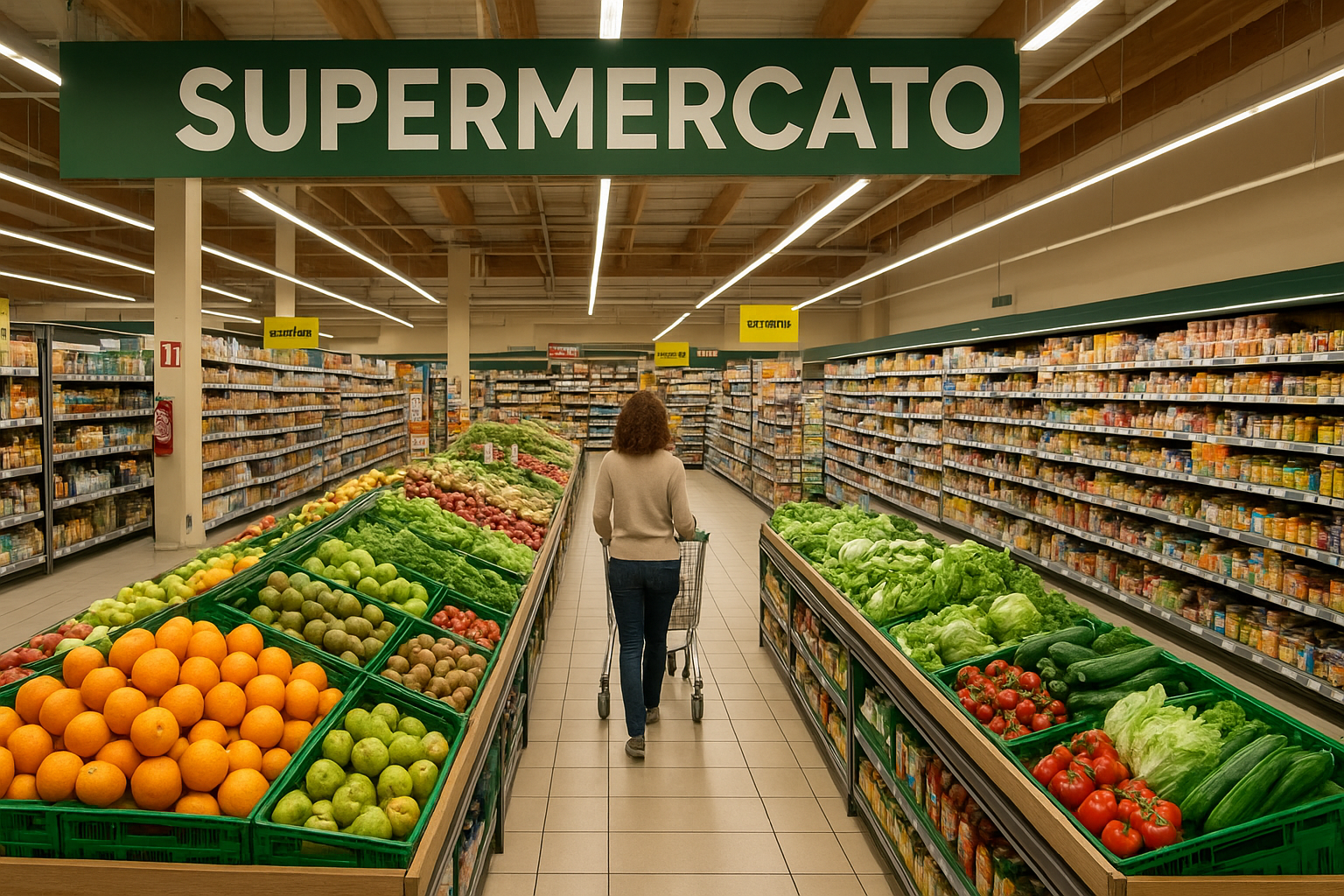
 Shopping in an Italian supermarket is an experience in itself. The pasta aisle may occupy half a corridor, the deli counter is treated with great seriousness, and shelves change noticeably from one region to another.Whether you live in Italy, are planning a longer stay or simply need groceries during a vacation, choosing the right supermarket can save money and introduce you to products you might never find at home.There is no single “best” supermarket for every shopper. Some chains excel at low prices, others are known for fresh produce and private-label products, while a few provide particularly convenient home delivery. Store quality, prices and services can also vary by city and individual branch.After comparing selection, value, convenience, customer satisfaction and online shopping options, these are the supermarket chains I would consider first.
Italy’s Best Supermarkets at a Glance
-
Supermarket Best for Price level Online shopping Conad Nationwide convenience and regional products Moderate Available in participating areas Coop Private labels, quality and responsible sourcing Moderate Varies by regional cooperative Esselunga Overall quality, fresh food and delivery Moderate to high Excellent in covered areas Eurospin Lowest-cost everyday shopping Low Limited and location-dependent Lidl Value, weekly promotions and international products Low Limited grocery delivery Aldi Simple discount shopping Low Generally limited MD Affordable Italian groceries Low Varies by location Famila Balanced prices and family shopping Moderate Available in some areas NaturaSì Organic and environmentally conscious shopping High Available in selected areas Carrefour Urban convenience and a broad assortment Moderate to high Available in many covered areas 1. Conad: Best for Nationwide Convenience
Conad is one of the most useful supermarket chains for travelers and residents because it operates through a large network of independently managed cooperatives.
Stores appear under several formats, including Conad City, Conad Superstore and Spazio Conad. A small Conad City may be convenient for a few groceries in a historic center, while larger branches generally provide better prices, more fresh food and a wider selection.
One of Conad’s strengths is its attention to regional products. Depending on where you shop, you may find local cheeses, cured meats, pasta, sauces, wines and baked goods alongside familiar national brands.
Conad’s private-label ranges cover everyday basics, premium Italian specialties, organic foods and products for specific dietary requirements. Its Carta Insieme loyalty program provides access to selected discounts and promotions.
Online ordering, home delivery and in-store collection are offered through participating stores, but coverage and conditions differ by location. Check your postal code before preparing a large order.
Best for: Shoppers who want a convenient supermarket with a good combination of national brands, private labels and regional Italian foods.
2. Coop: Best for Trusted Private-Label Products
Coop is not one completely uniform national company. It is a system of regional consumer cooperatives, which means the selection, promotions and online services can differ across Italy.
Its greatest strength is its broad private-label assortment. Coop-branded products cover basic groceries, organic foods, environmentally conscious household items, premium specialties and products designed for particular nutritional needs.
Coop is generally not the cheapest option in every category, but I find it a dependable choice for shoppers who care about ingredient information, sourcing and consistent quality.
Larger Ipercoop stores offer food, household supplies, small appliances and other everyday necessities under one roof. Smaller Coop stores are particularly common in parts of central and northern Italy.
Home delivery and collection services are managed by the relevant regional cooperative, so visitors should consult the website for the Coop operating in their destination.
Best for: Private-label quality, responsible shopping and a strong selection of Italian groceries.
3. Esselunga: Best Overall Shopping Experience
Esselunga has a particularly strong presence in northern and central Italy. It is widely appreciated for organized stores, reliable fresh produce, attractive deli counters and an extensive assortment.
Prices can be higher than at a discount chain, but the difference may be worthwhile when freshness, convenience and selection matter more than finding the absolute lowest price.
Esselunga’s prepared-food department is especially useful for travelers staying in an apartment. It is possible to assemble an easy dinner from salads, roast meats, vegetables, cheeses, bread and ready-made dishes without relying on a restaurant every evening.
The Fidaty loyalty program offers personalized promotions and points. Esselunga also operates one of Italy’s most developed grocery-shopping services, with home delivery and Clicca e Vai collection in covered locations.
Best for: Fresh food, prepared meals, dependable quality and well-developed online ordering.
4. Eurospin: Best for the Lowest Prices
Eurospin is one of Italy’s leading discount chains and an excellent option for keeping grocery expenses under control.
The stores rely heavily on private-label products rather than offering every famous brand. This allows Eurospin to keep prices low while still providing most household essentials, including pasta, canned tomatoes, coffee, biscuits, dairy products, frozen foods and cleaning supplies.
According to Altroconsumo’s supermarket price research, Eurospin continues to be one of the strongest choices for shoppers building a basket around the least-expensive available products.
Selection is more limited than at Esselunga, Coop or a large Conad, and the presentation is functional rather than luxurious. However, many shoppers combine a weekly Eurospin trip for basic groceries with occasional visits to a traditional supermarket, butcher, bakery or produce market.
Best for: Budget-conscious residents, families and visitors preparing their own meals.
5. Lidl Italia: Best Discount Supermarket for Variety
Lidl combines discount prices with a wider and more frequently changing selection than many traditional low-cost stores.
In addition to everyday Italian groceries, Lidl is known for themed international food weeks, seasonal products, bakery sections and rotating non-food offers. Its Italian private-label lines include cheeses, cured meats, pasta, sauces, olive oil and regional specialties.
The Lidl Plus app provides digital coupons, personalized promotions and access to current offers. Grocery home delivery is not a consistent nationwide service, so shoppers should not assume it will be available in every city.
Lidl is particularly useful if you want to control spending without giving up variety. The temporary weekly offers can be appealing, although they can also encourage unplanned purchases.
Best for: Discount prices, an interesting product mix and frequent app-based promotions.
6. Aldi: Best for Fast, No-Frills Shopping
Aldi has expanded in Italy but remains more geographically limited than Lidl or Eurospin. Its stores are concentrated mainly in northern Italy, with a growing presence in other areas.
The experience is deliberately straightforward: compact stores, a controlled selection, private-label products and regularly changing special offers.
Aldi is a good choice for shoppers who prefer to finish quickly instead of comparing many versions of the same product. Fresh produce, bakery products, meat, dairy items and household essentials are all available, but the assortment is narrower than in a traditional hypermarket.
Its regional availability is the main limitation. Before including Aldi in your plans, use the company’s store locator to confirm that a branch is near your destination.
Best for: Efficient discount shopping and good-value everyday essentials.
7. MD: Best Italian-Owned Discount Alternative
MD is an Italian discount chain with stores across much of the country. It competes directly with Eurospin, Lidl, Aldi, Penny and other low-price retailers.
The chain offers private-label groceries, fresh food, household products and recurring promotional items. Prices are generally competitive, making MD useful for a large weekly shop.
The quality and size of individual branches can vary. A larger, recently renovated MD may have a more substantial fresh-food selection than a small neighborhood branch.
I would compare MD with the nearest Eurospin or Lidl rather than assuming that one chain will always be cheaper. Weekly promotions and the products in your usual shopping basket can make a noticeable difference.
Best for: Affordable Italian private-label products and low-cost weekly shopping.
8. Famila: Best Balance of Brands and Value
Famila belongs to the Selex network and is particularly strong in several regional markets. It offers a more traditional supermarket experience than a hard-discount chain, with national brands, private-label alternatives and staffed fresh-food counters.
Recent Italian supermarket price comparisons have placed Famila among the most competitive traditional chains for a mixed basket containing branded, private-label and inexpensive products.
This makes it a sensible compromise for families that want recognizable brands and a broad assortment without automatically paying premium-supermarket prices.
Online ordering may be available through local services such as CosìComodo, but participation depends on the store and destination.
Best for: Families seeking a practical balance between assortment, recognizable brands and value.
9. NaturaSì: Best for Organic Food
NaturaSì specializes in organic and biodynamic products. Its stores carry fresh produce, grains, dairy alternatives, vegetarian and vegan foods, environmentally conscious household products and items for special diets.
It is considerably more expensive than a discount supermarket, so it may not be the best place for an entire weekly shop. However, it is useful when you want certified organic ingredients or products that can be difficult to find elsewhere.
NaturaSì received the highest score among national supermarket chains in Altroconsumo’s 2026 customer-satisfaction survey. Shoppers particularly valued its product quality, selection and environmental focus.
Best for: Organic groceries, natural products and specialized dietary choices.
10. Carrefour Italia: Best for Urban Convenience
Carrefour operates several formats in Italy, ranging from small Carrefour Express shops to supermarkets and larger stores.
The Express branches are particularly common in cities and tourist districts. They are convenient for drinks, breakfast ingredients or a few items on the way back to a hotel, but their prices can be higher than those at a full-size supermarket outside the historic center.
Larger Carrefour stores provide a much broader assortment, including branded goods, private-label products, international foods and household supplies.
Online shopping and delivery are available in numerous locations, although coverage, charges and delivery times depend on the address and local service.
Best for: Convenient city-center shopping, long opening hours and a wide choice in larger branches.
Which Is the Cheapest Supermarket in Italy?
For a basket based mainly on the least-expensive products, Eurospin is usually one of the best places to begin. Aldi, In’s Mercato, Lidl and MD are also strong discount options.
For a more realistic mixed basket containing national brands, supermarket private labels and budget products, Famila often performs well among traditional supermarkets.
However, there is no cheapest chain for every person or city. Prices vary according to the branch, weekly promotions, package sizes and the products you regularly buy.
The smartest strategy is often to divide your shopping:
-
Buy pasta, canned goods, cleaning products and other basics at a discount supermarket.
-
Choose meat, cheese and prepared food at a store with a good staffed counter.
-
Purchase seasonal produce at a supermarket or neighborhood market after comparing quality.
-
Use loyalty cards only when the discounts apply to items you genuinely need.
-
Compare the price per kilogram or liter rather than the package price.
-
Check digital flyers before making a large weekly shop.
Grocery Delivery and Online Supermarkets in Italy
Online grocery shopping has improved considerably, but availability remains highly local. A chain may provide home delivery in Milan, Florence or Bologna while offering only collection—or no online service—in a smaller town.
Esselunga provides home delivery and Clicca e Vai collection in its covered territories. Conad offers Spesa a Casa and Ordina e Ritira through participating stores. Coop’s services are organized by regional cooperatives, while Carrefour provides delivery in selected locations.
Everli also connects shoppers with numerous supermarket chains. A personal shopper selects the products in a local store and delivers them during the chosen time window. The chains available depend on your address.
Before ordering, compare:
-
Delivery charges
-
Minimum order value
-
Available delivery windows
-
Product substitutions
-
Loyalty-card benefits
-
Whether prices match those in the physical store
During weekends and holidays, popular time slots may fill quickly.
What Visitors Should Know About Italian Supermarkets
Italian supermarkets are easy to navigate, but a few customs may be unfamiliar.
When buying loose fruit and vegetables, you may need to place the produce in a bag, weigh it yourself and attach the printed label before reaching the checkout. Use the disposable glove provided when handling unpackaged produce.
At a staffed deli counter, take a numbered ticket if there is a dispenser. Quantities are commonly requested in grams: un etto means 100 grams, while due etti means 200 grams.
Bags are normally charged separately, so bringing a reusable shopping bag is helpful. Larger supermarkets may also require a coin or token to release a shopping cart.
City-center convenience stores are useful but often more expensive. If you are staying for several days, look for a full-size supermarket a short distance outside the most heavily visited area.
Sunday and holiday hours vary considerably. Some stores remain open all day, others close early, and smaller branches may not open at all. Always check the individual store listing rather than relying on the chain’s general website.
What to Buy in an Italian Supermarket
A supermarket visit can also become part of the travel experience. Look beyond familiar international brands and explore regional pasta, sauces, cheeses, cured meats, biscuits, preserves and wines.
Italia Mia’s guide to what to buy in an Italian supermarket highlights 15 foods worth tasting or taking home.
For a wider introduction to local specialties, explore Italian delicacies by region and our guide to Italy’s most popular dishes.
Travelers trying to reduce meal costs may also find useful ideas in Italy on a Budget. A supermarket picnic made with fresh bread, cheese, fruit and regional specialties can be both less expensive and more memorable than an ordinary tourist meal.
Final Verdict
If price is the priority, I would begin with Eurospin, Lidl, Aldi or MD. For the strongest combination of fresh food, assortment and online service, Esselunga is difficult to beat where it operates. Conad and Coop are dependable choices for regional products and everyday shopping, while Famila offers a good balance between price and selection.
NaturaSì is the specialist choice for organic products, and Carrefour is particularly convenient in large cities.
The best solution may not be one supermarket at all. Many Italians shop at two or three different places, choosing each one for what it does best. That practical approach gives you better value—and a more interesting taste of everyday life in Italy.
External Links
-