Reviewed September 30, 2026
Italy’s pizza traditions include soft Neapolitan rounds, crisp Roman pizzas, slices cut from large trays, and filled dough cooked in the oven or fryer. Understanding these differences makes ordering more enjoyable—and helps separate regional traditions from modern inventions.
Some names describe the dough or cooking method. Others, such as Margherita and Diavola, describe toppings that can appear on several kinds of base. For more Italian food guides, visit Italia Mia’s Cuisine section.
Read How to Eat Pizza Like an Italian: Etiquette, Traditions and Tips. Discover how Italians really enjoy pizza. Learn the traditions, ordering customs, regional styles, toppings and dining etiquette that make eating pizza in Italy a unique experience.
Neapolitan Pizza: Soft, Flexible, and Quickly Baked
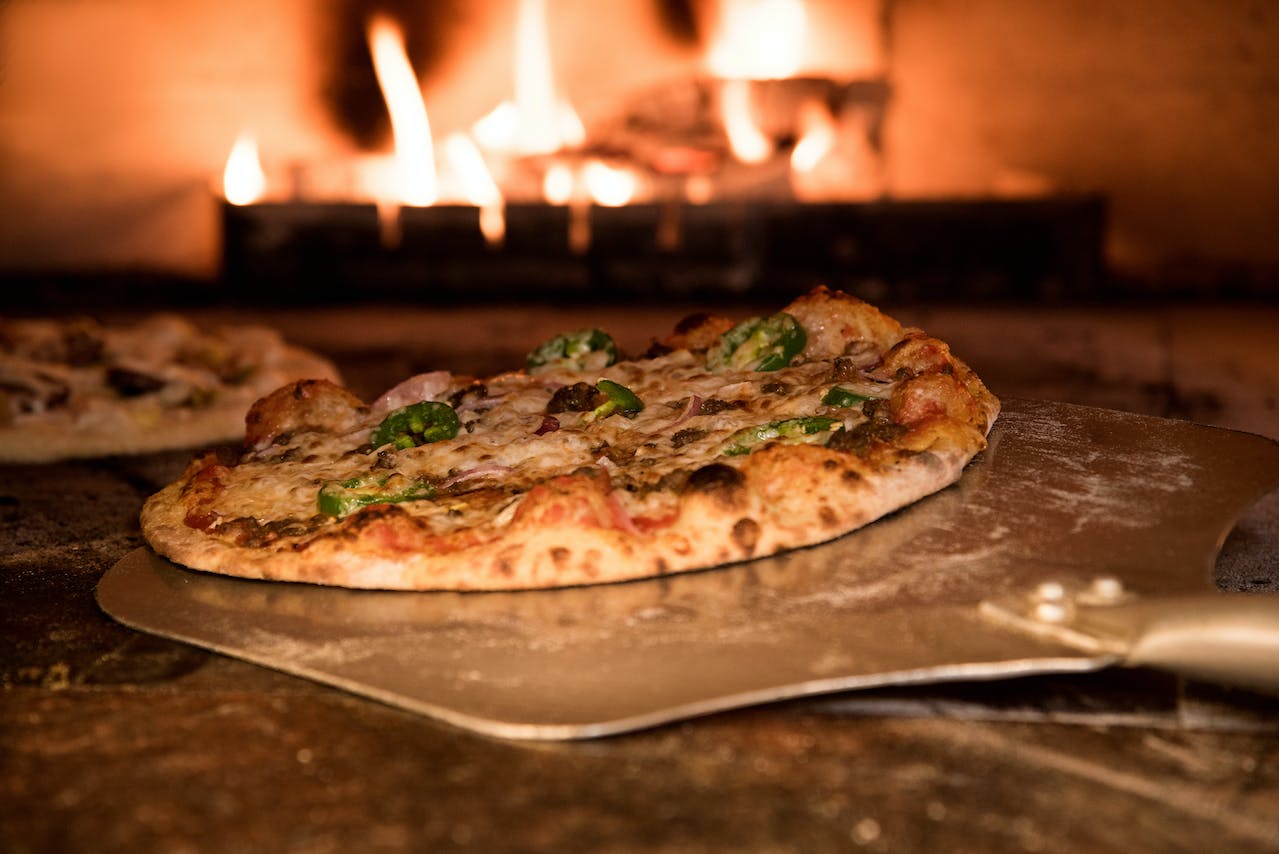
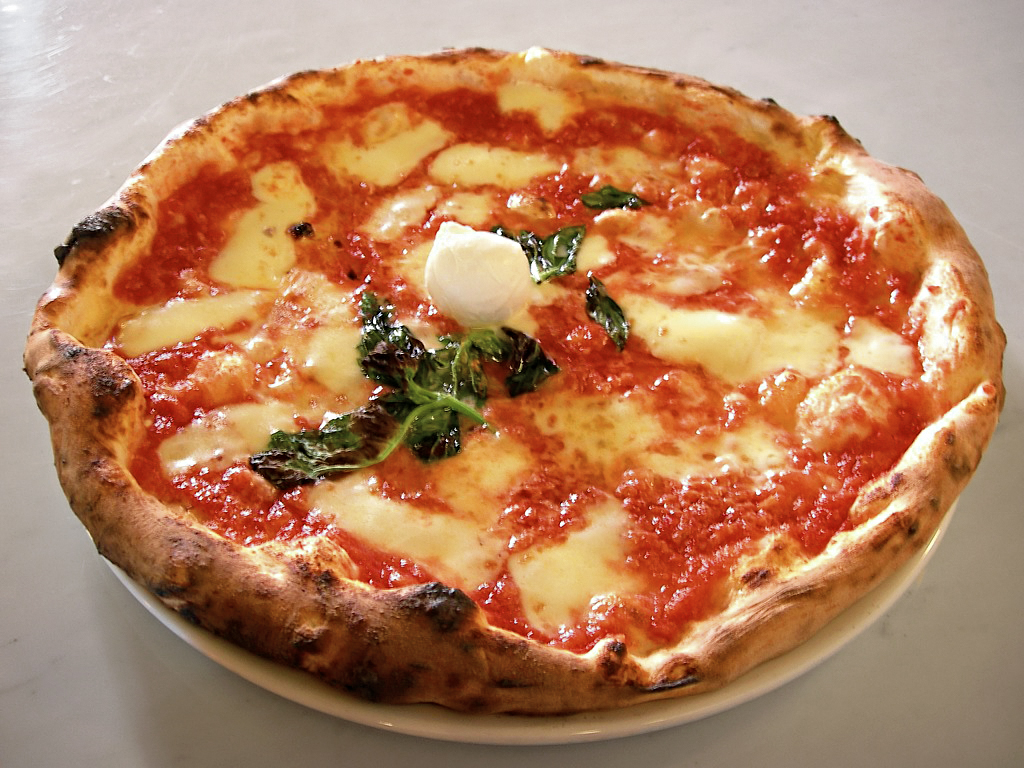
Naples is central to the development of modern pizza. Traditional pizza napoletana has a thin, flexible center and a raised rim called the cornicione. Its texture is generally soft rather than uniformly crunchy.
The Associazione Verace Pizza Napoletana sets standards for its certified pizzas. These include rapid baking, generally lasting 60–90 seconds. Wood-fired ovens are traditional, but the association’s current rules also allow approved gas and electric alternatives.
Two defining classics are Margherita, with tomato, mozzarella, basil, and oil, and Marinara, with tomato, garlic, oregano, and oil. Margherita can use cow’s-milk fior di latte or buffalo mozzarella; buffalo mozzarella is not a universal requirement.
Margherita: A Famous Story with Earlier Roots
The familiar story links Margherita pizza to Raffaele Esposito and Queen Margherita’s visit to Naples in 1889. It should be presented as a traditional account rather than proof that tomato-and-mozzarella pizza was invented that year.
The AVPN itself notes that combinations of ingredients associated with today’s Margherita appeared in earlier pizzas. The royal story is part of pizza’s cultural history, but the dish developed within an existing Neapolitan tradition.
Roman Pizza: Thin Rounds and Pizza by the Slice
Roman pizza tonda is known for its thin base and crisp texture. It differs from the soft, flexible Neapolitan style even when the toppings are similar.
Pizza al taglio means pizza sold by the cut. In Rome, it is commonly cut to order and priced by weight. Pizza in teglia is baked in a tray, while pizza in pala is shaped and transferred with a paddle to bake directly on the oven floor.
These formats can have an airy interior and crisp underside. “Roman pizza” therefore describes more than one preparation, rather than a single fixed topping combination.
Pinsa Romana: A Modern Creation from 2001
Pinsa Romana is a modern product associated with Corrado Di Marco. Di Marco dates its creation to 2001 and explicitly states that it does not come from ancient Rome.
Its name draws on the Latin verb pinsere, meaning to press, but that linguistic connection does not establish an ancient recipe.
Di Marco’s original formulation uses wheat, rice, and soy flours. Pinsa is typically oval, with a crisp exterior and an airy, soft interior, and can carry toppings ranging from tomato and mozzarella to vegetables, cheeses, and cured meats.
Describe these qualities as texture and preparation. Claims that pinsa is automatically healthier or easier to digest than pizza should not be presented as established facts merely because a producer uses them in marketing.
Pizza Fritta: Naples’ Fried-Pizza Tradition
Pizza fritta is cooked in hot oil rather than baked. Filled versions can contain ricotta, provola or fior di latte, cicoli, salami, and sometimes tomato. Montanara is another preparation: fried dough with toppings, sometimes finished in the oven.
Fried pizza became closely associated with Naples’ postwar street-food culture. However, fried dough and filled preparations have earlier roots, including examples discussed in nineteenth-century Neapolitan cookbooks. It is more accurate to describe the postwar years as an important period in its popularity than as a certain invention date.
Calzone and Panzerotto: Related but Distinct
A calzone is dough folded around a filling and sealed before cooking. Neapolitan calzone has a documented nineteenth-century history; fillings vary by place and pizzeria.
The Puglian panzerotto is a related regional specialty, commonly a fried crescent filled with tomato and mozzarella. Other fillings also exist. Regional terminology can overlap, but “panzerotto” should not be used as a universal synonym for every fried calzone.
Pizza al Padellino: A Turin Specialty
Associated with Turin, pizza al padellino rises and bakes in a small round pan. The result is a thicker individual pizza with a soft interior and a browned base. It offers another way to experience how shaping and baking change pizza’s texture.
Dough, Fermentation, and Digestibility Claims
To understand how flour, hydration, fermentation, and oven temperature influence the finished pizza, read our guide to authentic Italian pizza-making, including practical instructions for preparing pizza at home.
Long fermentation, high hydration, and flour blends describe how dough is made. They do not, on their own, demonstrate that every diner will digest a finished pizza more comfortably.
Likewise, an airy crust does not establish that a pizza contains fewer calories. Any nutritional comparison needs information about the actual recipe, portion, and toppings.
Ordinary wheat-based pizza and pinsa contain gluten. Adding rice flour or using a long fermentation does not make them gluten-free. People with celiac disease need suitable gluten-free ingredients and preparation that prevents cross-contact.
Choosing Your Pizza in Italy
Choose Neapolitan pizza for a soft, flexible base; Roman tonda for a thin, crisp round; and pizza al taglio when you want to sample different slices. Try pinsa for its oval shape and contrasting textures, or calzone and pizza fritta for filled preparations.
Treat topping names separately from these styles. Margherita, Capricciosa, Diavola, and Quattro Formaggi can appear on different bases, and their exact ingredients vary between menus. Ask what is included rather than assuming every pizzeria follows the same recipe.
External Sources
Di Marco: The History of Pinsa Romana
AVPN: International Pizza Regulations
AVPN: Stories of Pizza and Margherita’s Earlier Roots
Italia.it: Different Types of Pizza in Italy