 Making Italian coffee at home begins with a simple question: what would I actually like to drink?
Sometimes the answer is a small, strong coffee from a moka pot. Sometimes it is an espresso, or a cappuccino with warm milk and soft foam. Each needs a slightly different approach, but none should turn a pleasant daily ritual into an examination.
My advice is to start with one brewing method, choose coffee ground for that method, and learn what a few small adjustments do to the flavor. Here is how I would approach it, with links to our more detailed coffee guides along the way.
Choose Your Brewing Method First
For a traditional stovetop coffee, I would start with a moka pot. It makes a concentrated brew without requiring an espresso machine or much counter space.
For espresso and regular cappuccinos, a home espresso machine gives you more control over extraction and milk preparation. It also asks for more attention to grinding, cleaning, and technique.
A capsule machine offers convenience, although you must buy capsules compatible with its particular system.
These methods produce different results. A moka makes its own distinctive coffee, with less pressure than an espresso machine. I would enjoy it for that character rather than expect the same crema or texture as a café espresso.
For help choosing equipment, see our guides to the stovetop moka and espresso machines.
Choose Coffee That Matches Your Equipment
I would check the brewing method on the package before choosing by brand or the attractiveness of the tin.
Coffee marked for moka is a sensible starting point for a stovetop pot. A traditional espresso machine needs a finer grind, while a French press generally calls for a coarser one.
Whole beans give you flexibility if you have a suitable grinder. Ground coffee is convenient, especially when you use one brewing method consistently.
Buying an Italian brand does not mean buying beans grown in Italy. The Italian connection usually comes from the company, roasting, blending, and preparation traditions.
Our guide to Italian coffee brands, beans, and ground coffee explains those choices in more detail.
I would begin with a small package. Once you know you enjoy the result, buying more makes sense.
How to Make Coffee with a Moka Pot
The moka is where I would begin if you want a straightforward introduction to Italian coffee at home.
First, choose a size that suits how much you normally drink. The “cups” used to describe moka capacity are small coffee servings, not breakfast mugs. Check that the pot also suits your stove, particularly if you use induction.
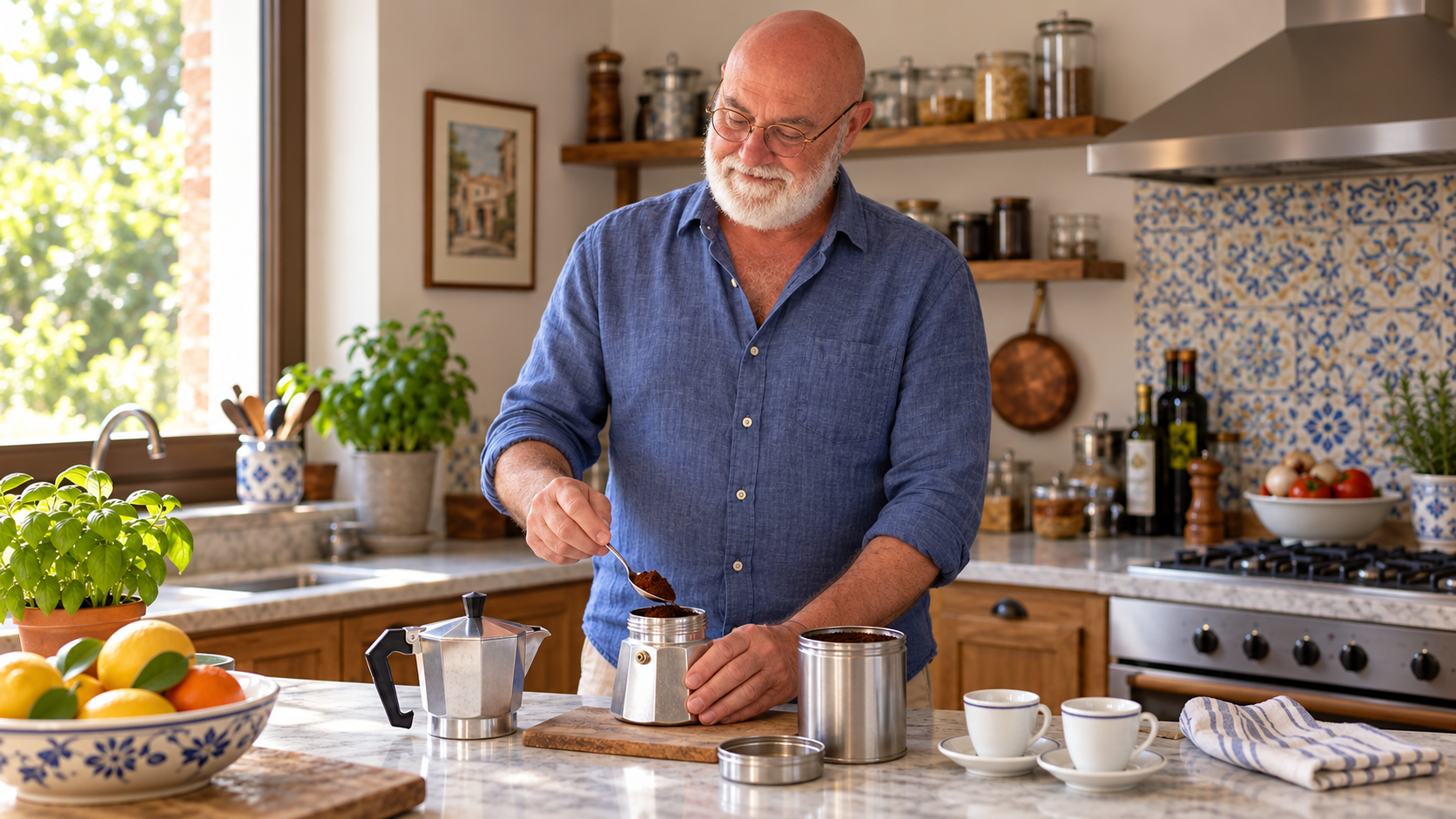
For a standard moka, follow this routine alongside the instructions supplied with your model:
- Fill the lower chamber with fresh water to the manufacturer’s indicated level, without covering the safety valve. Bialetti’s standard instructions use room-temperature water.
- Insert the funnel and fill it loosely with coffee ground for moka. Level the surface without creating a mound or pressing the grounds down.
- Remove loose grounds from the rim. Check that the filter and gasket are correctly positioned, then screw the chambers together securely.
- Place the pot over gentle heat. On a gas stove, keep the flame beneath the base, away from the handle.
- Stay nearby while the coffee brews. Remove the pot from the heat as brewing finishes; avoid leaving it on the stove through prolonged sputtering.
- Carefully stir the coffee in the upper chamber before serving, so the earlier and later portions mix.
The detail I would remember above all is this: do not tamp moka coffee. Filling the basket loosely is different from preparing an espresso basket.
Use only water in the lower chamber. If you want milk with your coffee, heat it separately and add it to the cup.
How to Make Espresso at Home
With a traditional espresso machine, I would aim for consistency before experimenting.
Let the machine and portafilter warm up as the manufacturer recommends. Use a clean, dry basket, add a dose appropriate to its capacity, distribute the grounds evenly, and tamp them level.
A small scale helps you measure both the dry coffee and the espresso reaching the cup.
For a double basket designed to hold around 18 grams, a useful starting recipe is:
18 grams of ground coffee, producing approximately 36 grams of espresso.
That is a 1:2 brewing ratio: one part dry coffee to two parts finished espresso by weight. It is a starting point, not a requirement for every bean or machine.
Many conventional espresso recipes begin around 25–30 seconds, although pre-infusion and machine design affect how you interpret the timing. Taste should guide the final adjustment.
If the shot rushes through and tastes thin or sharply sour, try a slightly finer grind while keeping the dose and target yield unchanged. If it barely flows, try a slightly coarser grind.
I would change one thing at a time. Changing the grind, dose, and quantity in the cup together makes it difficult to understand what helped.
For equipment choices, our espresso machine guide is the place to continue.
How to Make Cappuccino at Home
For cappuccino, I would prepare the coffee first and give just as much attention to the milk.
Start with cold milk in a clean pitcher. With a steam wand, introduce a little air near the surface, then position the tip to create a gentle rolling movement. The aim is smooth, glossy milk with fine bubbles.
A milk thermometer makes the learning stage easier. Around 60–65°C is a useful target; there is no need to bring the milk to a boil. Pour it into the espresso soon after steaming.
If you do not have a steam wand, an electric frother can prepare milk separately. Strong moka coffee with frothed milk also makes an enjoyable breakfast drink, even though the coffee base differs from espresso.
I would choose a cup that leaves room for both coffee and milk without turning the drink into an oversized mug of foam.
Our guide to Italian espresso and cappuccino cups explains how to match cup capacity to what you drink.
Make the Drink You Enjoy
Once you can prepare the coffee itself, a few familiar variations are easy to understand.
Caffè: an espresso when ordered in an Italian bar.
Caffè macchiato: espresso with a small amount of milk or milk foam.
Cappuccino: espresso with steamed milk and foam.
Caffè latte: coffee with a more generous amount of warm milk.
Americano: espresso diluted with hot water.
At home, I would let preference guide the proportions. If you want a longer, gentler drink, adding hot water to a finished espresso gives you control over its strength without continuing to extract through the grounds.
For the customs behind these drinks, read our guide to Italian coffee culture, espresso, cappuccino, and the Italian bar.
Fix One Problem at a Time
When a cup disappoints, I would check the preparation before replacing the equipment.
If moka coffee tastes harsh, check the heat and how long the pot remains on the stove after brewing. Also consider whether the roast itself is darker than you enjoy.
If espresso tastes unbalanced, keep a note of the dose, finished weight, and brewing time. Those three details give you a useful basis for the next attempt.
If coffee tastes flat, check how long the package has been open and whether the brewer needs cleaning.
If a milk drink seems weak, try less milk before using more coffee.
My practical rule is to repeat the same preparation once before changing it. One disappointing cup may reflect an uneven dose or a moment of distraction rather than a problem with the coffee.
Clean the Equipment After the Coffee
I would make cleaning part of the brewing routine, while everything is still easy to deal with.
Let a moka cool completely before opening it. Follow its care instructions, clean the filter and gasket area, and dry the components before storing them. For a Bialetti Moka Express, follow the manufacturer’s water-only cleaning guidance rather than putting it in the dishwasher.
For an espresso machine, follow the cleaning and descaling schedule for your model. After steaming milk, wipe and purge the wand as instructed.
Coffee preparation becomes much easier when the next cup begins with clean equipment.
My Starting Point for Better Coffee at Home
If you are starting from scratch, I would choose one suitable brewer, a small package of correctly ground coffee, and cups that fit the drink.
Then I would concentrate on making that combination work.
There is time later to compare blends, buy a grinder, or experiment with espresso recipes. The first goal is more modest and more useful: a cup you enjoy enough to want to make again tomorrow.
External Sources
Bialetti: Preparing moka coffee without pressing the grounds
Bialetti: Moka Express instruction manual
Breville: A beginner’s guide to dialing in espresso