Italy has long been regarded as one of the healthiest countries in the world. Images of colorful markets overflowing with tomatoes, olive oil, fresh fish, seasonal vegetables, and fruit have helped cement the country’s reputation as the birthplace of the Mediterranean diet.
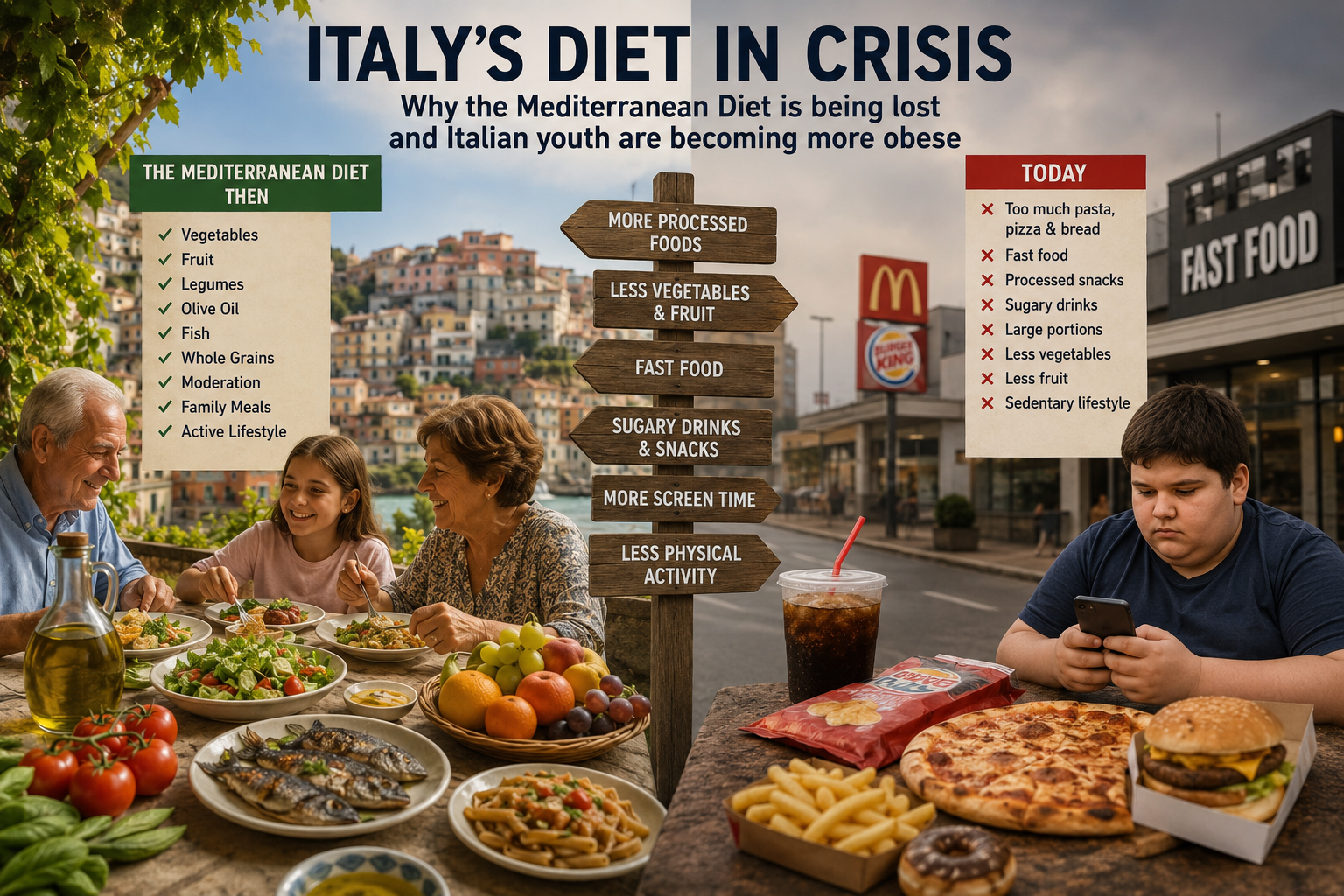
For decades, this traditional way of eating has been associated with exceptional longevity, low rates of cardiovascular disease, and one of the highest life expectancies anywhere on Earth. UNESCO even recognized the Mediterranean diet as an Intangible Cultural Heritage of Humanity because it represents much more than a list of foods—it is a lifestyle centered around fresh ingredients, family meals, moderation, and physical activity.
Yet the reality in modern Italy tells a different story.
Many Italians, especially younger generations, no longer eat the traditional Mediterranean diet that made their grandparents among the healthiest people in Europe. Instead, highly processed foods, sugary drinks, oversized portions, fast food, and excessive consumption of refined carbohydrates have become increasingly common.
The result is alarming: childhood obesity and overweight rates have risen significantly, placing Italy among the European countries with some of the highest levels of excess weight among children.
The Mediterranean Diet Was Never About Unlimited Pasta
One of the biggest misconceptions outside Italy is that the Mediterranean diet simply means eating lots of pasta and pizza.
It doesn’t.
Traditional Italian meals were built around vegetables.
Pasta was often a modest first course, not the centerpiece of an enormous meal. It was accompanied by vegetable soups, beans, seasonal greens, salads, legumes, olive oil, and fruit. Meat appeared less frequently than today, while fish was common in coastal regions.
Bread was eaten in moderation and often accompanied vegetable-based dishes rather than processed meats and cheeses.
Desserts were generally reserved for Sundays and celebrations.
Olive oil replaced butter, while fresh ingredients dominated daily cooking.
The true Mediterranean diet is rich in:
- Vegetables
- Fruit
- Legumes
- Whole grains
- Olive oil
- Fish
- Nuts
- Moderate dairy
- Limited red meat
- Very little processed food
This balance—not pasta alone—is what researchers associate with lower risks of heart disease, diabetes, stroke, and several cancers.
Modern Italy Looks Increasingly Western
Over the past forty years, Italy’s eating habits have changed dramatically.
Urbanization, busy work schedules, convenience foods, and global fast-food chains have transformed how many families eat.
Instead of preparing meals from scratch using seasonal ingredients, many households increasingly rely on packaged products requiring minimal preparation.
Breakfast has shifted from traditional foods toward sugary cereals, packaged pastries, and sweet snacks.
Lunch is often eaten quickly.
Dinner frequently includes ready-made meals or takeaways.
Many children snack several times a day on chips, sweets, chocolate bars, and sugary beverages.
These dietary changes closely resemble eating patterns found in countries traditionally associated with higher obesity rates.
Young Italians Eat More Processed Foods
Several nutrition studies have shown that adherence to the Mediterranean diet is steadily declining among younger Italians.
Teenagers and young adults consume:
- More processed snacks
- More sugary soft drinks
- More fast food
- More processed meat
- More sweets
- Fewer vegetables
- Less fruit
- Fewer legumes
Fresh produce remains widely available throughout Italy, but convenience often wins over tradition.
The BBC has reported that nutrition experts are increasingly concerned that many young Italians consume excessive amounts of refined carbohydrates—including pasta, pizza, and bread—while failing to balance them with sufficient vegetables, legumes, fruit, and physical activity. The issue is not that these traditional foods are inherently unhealthy, but that they are often eaten in larger portions and as part of a less balanced dietary pattern than the classic Mediterranean model.
Childhood Obesity Is Rising
Perhaps the greatest concern involves children.
Italy continues to report relatively high levels of childhood overweight and obesity compared with many other European countries, although public health initiatives have shown gradual improvements in recent years.
Nutrition experts point to several contributing factors:
- Excess calorie intake
- Frequent snacking
- Sugary beverages
- Reduced physical activity
- Increased screen time
- Larger portion sizes
- Lower fruit and vegetable consumption
Children today often spend far less time playing outdoors than previous generations.
Physical inactivity compounds the effects of poor dietary habits.
Too Much Pasta Isn’t the Problem
It would be simplistic to blame pasta alone.
Traditional Italian pasta dishes generally contained moderate portions alongside vegetables, legumes, and olive oil.
Today’s meals can be very different.
Large plates of refined pasta may be accompanied by:
- White bread
- Pizza
- Sugary drinks
- Desserts
- Processed meats
This creates meals dominated by refined carbohydrates while lacking fiber-rich vegetables and fruit.
Nutritionists emphasize that the overall dietary pattern—not any single food—is what matters most.
Fast Food Is More Popular Than Ever
Global restaurant chains have expanded rapidly across Italy over the past three decades.
While Italians still value local cuisine, fast food has become increasingly popular among younger consumers.
Fast-food meals typically contain:
- High calories
- Saturated fat
- Salt
- Sugar
- Ultra-processed ingredients
Combined with soft drinks and desserts, these meals can easily exceed daily energy requirements.
Convenience also plays an important role.
Busy families may choose takeaway meals several times each week instead of cooking at home.
Fruit and Vegetables Are Losing Ground
One of the defining characteristics of the Mediterranean diet is the abundance of plant-based foods.
Historically, vegetables appeared at nearly every meal.
Today, surveys indicate that many Italians fail to meet recommended daily intakes of fruit and vegetables.
Fresh produce remains affordable compared with many other European countries, yet consumption has gradually declined among younger age groups.
Instead, packaged snacks often replace fruit between meals.
The Lifestyle Has Changed Too
The Mediterranean diet has never been just about food.
Traditional Mediterranean living also included:
- Walking every day
- Manual work
- Family meals
- Smaller portions
- Cooking at home
- Seasonal eating
- Social interaction
Modern lifestyles often involve:
- Long hours sitting
- Cars instead of walking
- Smartphones
- Video games
- Less home cooking
- More food delivery services
These changes contribute to weight gain even when calorie intake changes only modestly.
Can Italy Rediscover Its Traditional Diet?
Many public health experts believe the Mediterranean diet remains Italy’s greatest nutritional asset.
Schools, physicians, and nutrition organizations continue promoting healthier eating habits through educational campaigns encouraging children to consume more fruit, vegetables, legumes, and whole grains while limiting ultra-processed foods and sugary drinks.
Fortunately, the ingredients needed for a genuine Mediterranean diet remain widely available throughout Italy.
Returning to traditional eating does not require expensive superfoods or restrictive diets.
Instead, it means embracing the same principles that helped previous generations enjoy long, healthy lives:
- Plenty of vegetables
- Fresh fruit every day
- Beans and legumes several times a week
- Fish regularly
- Olive oil as the primary fat
- Moderate portions of pasta and bread
- Minimal processed food
- Less sugar
- More walking
- More meals shared with family
Final Thoughts
Italy remains one of the world’s culinary capitals, but its eating habits are evolving rapidly. While pasta, pizza, and bread continue to play an important role in Italian cuisine, they were never intended to dominate the diet at the expense of vegetables, fruit, legumes, and other nutrient-rich foods.
The growing prevalence of overweight and obesity among Italian children and adolescents reflects a broader shift toward a more Westernized lifestyle characterized by ultra-processed foods, sugary beverages, larger portions, and reduced physical activity. Traditional staples like pasta and pizza can still fit within a healthy Mediterranean diet when eaten in moderation and balanced with plenty of plant-based foods.
Rediscovering the authentic Mediterranean way of eating may be one of Italy’s most effective strategies for improving public health—not by abandoning beloved traditional foods, but by restoring the balance that made the Mediterranean diet famous around the world.