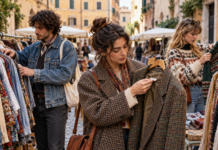
 A cool morning, a warm afternoon and dinner outside after sunset: dressing between seasons asks more of your clothes than a straightforward summer or winter day. The most useful Italian-inspired wardrobe starts with lightweight knitwear, a softly constructed jacket and layers that remain comfortable when worn together—or separately.
Italy has a useful expression for this approach: vestirsi a cipolla, or dressing like an onion. The idea is practical. Each layer has a purpose, and removing one should leave you with an outfit that still works.
You do not need an entirely new wardrobe. Begin with the pieces you already wear, identify the gap that makes changing temperatures awkward, and choose fabrics and proportions that work across several combinations.
Affiliate disclosure: Italia Mia may earn a commission if you purchase through the Italist links in this article, at no additional cost to you.
Start with the day you actually have
Think about how much time you spend outdoors, whether you walk or drive, and where you will be after sunset. Someone commuting on foot in Milan needs a different outer layer from someone having a leisurely lunch on the Tuscan coast.
A useful arrangement has three parts: a comfortable base, a removable knit and a jacket suited to the forecast. For rain or a windy waterfront, that final layer may need to be a weather-resistant shell rather than a blazer. Unlined tailoring is not rainwear.
Make sure you can carry the layer you remove. A fine cardigan folds into a bag more easily than a substantial knitted jacket; that difference matters during a day of sightseeing.
Lightweight knitwear: choose the fabric and the knit
Fiber content gives you a starting point, but thickness, stitch density and construction influence how warm a sweater feels. A dense cotton knit can be heavier than a fine wool one. “Lightweight” should describe the actual garment, not simply its material.
| Fabric | A useful role | What to check |
|---|---|---|
| Fine merino wool | A crew neck, cardigan or knitted polo for cool mornings | Smoothness against your skin, weight and the care label |
| Cotton | An easy layer for milder days | Bulk at cuffs and underarms, and whether the hem keeps its shape |
| Cotton–linen blends | Textured knits for warmer afternoons | Opacity, surface texture and how readily the fabric creases |
| Wool–silk blends | A fine layer under tailoring | Exact percentages, transparency and care requirements |
| Lightweight cashmere | A soft layer when you want warmth with little bulk | Knit density, surface shedding and whether you will maintain it carefully |
Fine merino for a flexible middle layer
A simple merino crew neck can sit over a T-shirt and beneath a jacket without adding much bulk. A cardigan gives you more control: open it when you warm up, fasten it when the temperature drops, or remove it altogether.
Try the garment against your neck or inner forearm if possible. Comfort is personal, and a fabric described as soft may still irritate sensitive skin. Choose a neckline that works with your usual shirts rather than buying a shape that requires a second purchase.
Cotton and cotton–linen for milder weather
Cotton knitwear works well when you want the appearance of a sweater without a particularly warm layer. Check its weight: a thick cable knit can be cumbersome under a jacket even when the fiber itself sounds suitable for spring.
A cotton–linen blend introduces a drier texture that suits chinos, relaxed trousers and skirts. Expect some creasing. If you prefer a smooth finish throughout the day, choose a different fabric rather than spending the season trying to press away its character.
Cashmere and blends: buy for your routine
A fine cashmere sweater can be useful on chilly evenings, but softness alone does not establish durability or value. Look at the neckline, seams, cuffs and density, and consider the friction it will encounter beneath bag straps and jackets.
Blends deserve individual attention. Read the percentages, then assess the finished garment. A small amount of stretch may help a particular design, while a blend with only a modest proportion of a luxury fiber should be judged accordingly.
Browse women’s knitwear on Italist or men’s knitwear on Italist, comparing composition, cut and care instructions on each listing.
Unlined jackets: understand what you are buying
An unlined jacket has little or no conventional lining through the body, although sleeves or selected areas may still be lined. An unstructured jacket uses reduced internal shaping. The descriptions refer to different features: a jacket can be unlined and still have a defined shoulder or chest.
Neither description guarantees a cool garment. The outer fabric, weave and overall construction still matter.
For versatile tailoring, consider a softly cut blazer in navy, olive, tobacco or a muted neutral. Wool, cotton and linen blends can all work, depending on the actual cloth. Turn the jacket inside out: exposed seams should be neatly finished, pockets securely attached and the interior comfortable against your layers.
A cotton overshirt offers a more casual option. Wear it open over a fine knit or fastened over a T-shirt. Avoid piling a thick overshirt, bulky sweater and fitted jacket into the same outfit; the layers need room to move.
Browse men’s jackets and coats on Italist or women’s jackets and coats on Italist. These are broad categories: check individual descriptions for lining, padding and fabric weight before choosing a between-season layer.
Fit: try the whole outfit together
The most useful fitting-room test is to wear the layers you intend to combine.
Fasten the jacket over your knit. Look for pulling around the button, pressure across your back and sleeves that grip your upper arms. Reach forward, sit down and bend your elbows. You should be able to move without constantly readjusting the clothes.
For a conventional tailored fit, the shoulder seam should sit close to your shoulder point; deliberately dropped shoulders follow a different design. Judge the intended silhouette rather than assuming every garment should fit identically.
Check the knit’s hem too. A long sweater may bunch beneath a short jacket, while a cropped cardigan changes the proportions of low-rise trousers. Neither is automatically wrong, but the combination should look deliberate and feel comfortable.
When shopping online, compare available measurements with a similar garment you own. A familiar size number is only a starting point, especially across different designers.
Four combinations that make layering easier
For a city day
Wear a cotton T-shirt, fine merino crew neck, unlined blazer and straight trousers. Keep the base layer presentable enough to wear alone when the afternoon warms up. Navy, ecru and olive make an easy starting palette.
For lunch followed by an evening out
Combine a simple top, lightweight cardigan and softly tailored trousers or a midi skirt. Add a light jacket for the journey home. A cardigan with neat buttons can carry the outfit when the jacket comes off.
For a casual weekend
Try a knitted polo beneath a cotton overshirt with dark jeans or chinos. Keep the polo fine enough to avoid bulk around the collar. Tobacco, washed blue and cream work together without requiring an exact color match.
For a short trip
Pack two base tops, one fine sweater, one cardigan, two bottoms and an outer layer suited to the forecast. Choose colors that let each knit work with both bottoms. Wear the bulkiest piece while traveling and leave space for the layer you take off.
Care that preserves shape and finish
Always start with the garment’s care label. “Wool,” “cashmere” or “cotton” does not, by itself, establish whether an item can be machine washed. Trims, dyes and construction matter too.
For wool knitwear, follow the specified washing method and use a suitable detergent. Support the garment when wet, avoid wringing and dry it flat unless the label explicitly allows another method. Fold dry sweaters for storage rather than leaving them hanging and stretching at the shoulders. Airing between wears can help reduce unnecessary washing.
Remove surface pills gently with a tool suitable for the knit, following its instructions. Take particular care around loose stitches, seams and delicate open knits.
Treat a tailored jacket according to its own label: an unlined interior does not make it washable. Let it air after wearing, use a hanger that supports its shoulders, and seek professional cleaning when required. Keep pockets light so that keys and phones do not distort a soft jacket’s shape.
Before storing seasonal clothing, make sure it is clean and completely dry. A little attention at the end of the season makes the next change in weather much easier.
Buy the missing layer
Before paying, name three outfits the garment will complete. If you cannot, reconsider the color, shape or purpose.
For a wardrobe full of shirts and jackets, the useful purchase may be a fine cardigan. If you already have plenty of knitwear, a softly cut blazer could make those pieces work for dinner or less formal meetings.
Our guide to shopping for clothing and accessories on Italist offers more advice on comparing listings and checking manufacturing origin. An Italian label or an Italian boutique does not automatically mean that every garment was made in Italy.
Before ordering, check the complete delivered price and current return conditions for your destination. Choose the garment for the days you will wear it: comfortable layers, useful pockets, manageable care and enough room to move.