

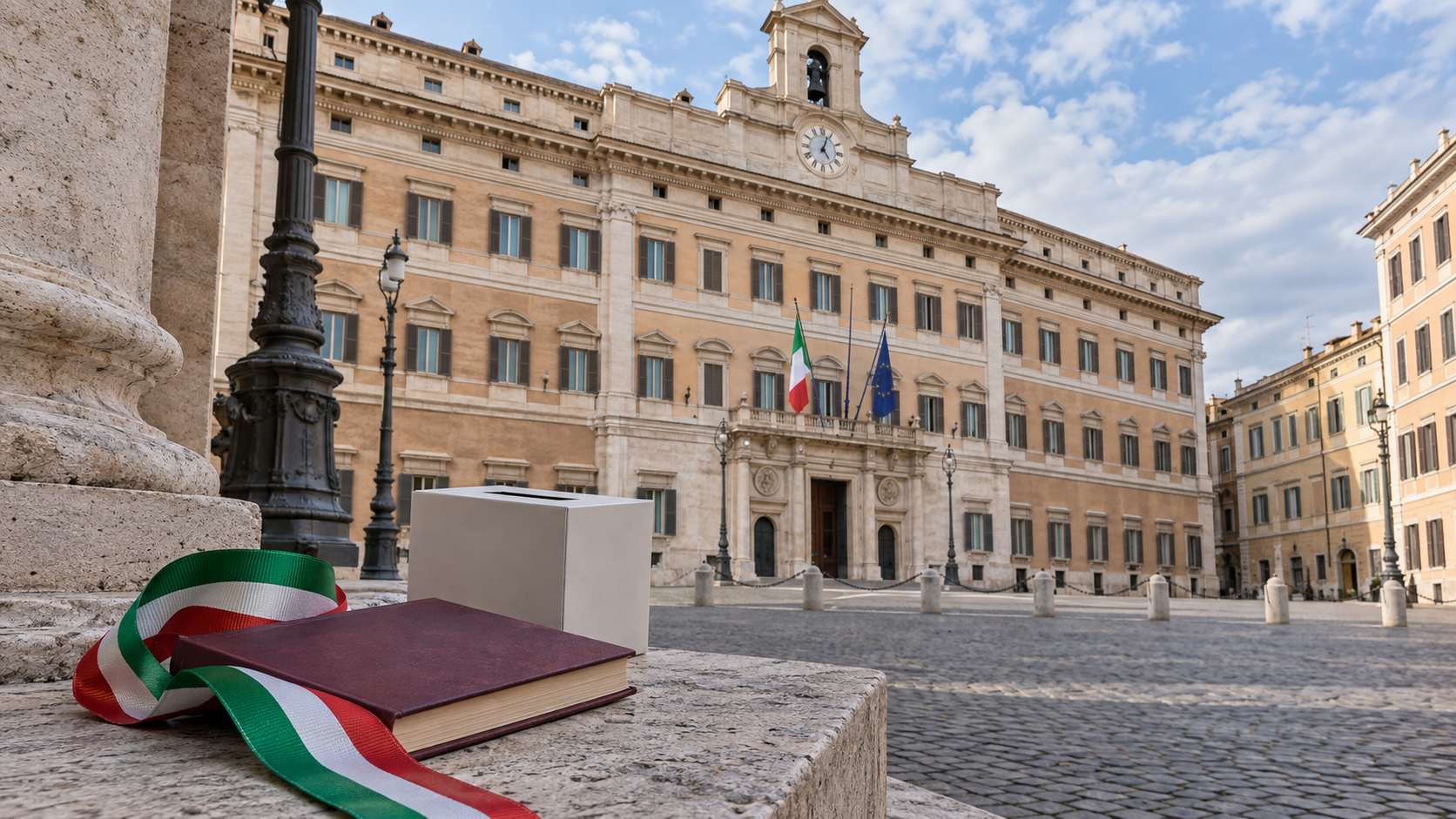
 Italy’s Political Landscape in 2026
Italy’s political landscape has changed considerably since Giorgia Meloni became prime minister in October 2022. Her conservative coalition has proved more durable than many observers expected, bringing an unusual degree of government continuity to a country historically associated with short-lived administrations.
In September 2026, Meloni’s government became the longest-serving administration in the history of the Italian Republic. Supporters present this longevity as evidence that Italy has entered a new period of political stability. Critics respond that remaining in office is not the same as resolving the country’s deeper economic, social and institutional problems.
At the same time, Italy continues to debate the historical roots of Meloni’s party, the boundaries between conservatism and the far right, and whether certain political developments represent a genuine threat to democratic institutions.
These questions require care. Italy remains a constitutional democracy with competitive elections, an active opposition, independent courts and a diverse civil society. Describing the country as having “returned to fascism” would therefore be inaccurate. Nevertheless, controversies involving political symbolism, media independence, civil liberties and the concentration of executive power explain why the subject continues to generate concern.
The Meloni Government and Its Coalition
The government is led by three principal center-right parties.
Brothers of Italy
Fratelli d’Italia, or Brothers of Italy, is headed by Giorgia Meloni and remains the dominant party in the governing coalition. Its political identity combines national conservatism, support for traditional family values, stricter immigration policies and an emphasis on Italian sovereignty.
The party has roots in the postwar Italian right. Its predecessors include the National Alliance and, further back, the Italian Social Movement, or MSI, which was founded after the Second World War by figures associated with the defeated Fascist regime.
This history does not automatically define every present-day member or policy of Brothers of Italy. Meloni has repeatedly stated that the Italian right has left fascism behind, and her government operates within Italy’s democratic and constitutional system. However, the party continues to use the tricolor flame in its emblem, a symbol inherited from the MSI tradition. For critics, that continuity makes a complete separation from the past difficult to demonstrate.
The League
Matteo Salvini’s League remains part of the governing coalition. Once primarily a northern regionalist movement, it evolved under Salvini into a nationalist party focused on immigration, security, European Union policies and greater regional autonomy.
Salvini’s political challenge is now twofold. He must distinguish the League from the larger Brothers of Italy while also defending its right flank against newer movements competing for voters attracted to harder positions on migration, national identity and social policy.
Forza Italia
Forza Italia is led by Antonio Tajani, a former president of the European Parliament and a longtime figure in Silvio Berlusconi’s political movement.
Following Berlusconi’s death in 2023, Tajani worked to present Forza Italia as the more moderate, pro-European and business-oriented member of the governing alliance. The party often acts as a counterweight to some of the more nationalist tendencies within Brothers of Italy and the League, especially on European and international questions.
Italy’s Divided Opposition
The opposition remains politically fragmented.
Democratic Party
The center-left Democratic Party, led by Elly Schlein, is the largest opposition force. It campaigns on public healthcare, employment protections, environmental policy, social equality and stronger civil rights.
Schlein has attempted to move the party toward a more progressive identity while retaining voters closer to the political center. Her central strategic problem is building a credible electoral alliance among parties that disagree on economic policy, foreign affairs and political leadership.
Five Star Movement
Former prime minister Giuseppe Conte leads the Five Star Movement. Once an anti-establishment force that resisted traditional left-right classifications, the movement has increasingly positioned itself on social welfare, opposition to military escalation and criticism of the government’s economic priorities.
Five Star and the Democratic Party sometimes cooperate, but tensions remain over foreign policy, leadership and the terms of a possible center-left coalition.
Greens, Left and Centrist Parties
The Green and Left Alliance represents environmentalist and left-wing voters, while Action, Italia Viva and other smaller centrist formations compete for the reformist middle ground.
Together, the opposition parties can attract a substantial share of the electorate. Their continuing difficulty is transforming that support into a unified and convincing alternative to the center-right coalition.
A New Challenge From the Farther Right
The emergence of Roberto Vannacci and his Futuro Nazionale movement has added a new element to Italian politics.
Vannacci, a former army general elected to the European Parliament on the League’s ticket before creating his own party, has promoted positions farther to the right than those normally expressed by the Meloni government. His rise has placed pressure on both the League and Brothers of Italy by competing for voters who believe the governing coalition has become too moderate.
This development complicates the claim that Meloni represents the most extreme point in Italian politics. Her government remains firmly on the right, but it now also faces competition from a movement seeking to push the national debate further in that direction. Reports in September 2026 placed Futuro Nazionale at approximately eight percent in some polls, although polling support can change rapidly and should not be confused with an election result.
Why Does Fascism Remain Part of the Debate?
Fascism is not simply a historical subject in Italy. Benito Mussolini’s dictatorship abolished political freedoms, used systematic violence against opponents, imposed censorship, enacted racial laws and led the country into a disastrous war.
The democratic Republic created after 1945 was explicitly founded on anti-fascist principles. The Italian Constitution protects political pluralism while prohibiting the reorganization of the dissolved Fascist Party.
Modern controversies therefore carry unusual historical weight. Roman salutes, fascist chants, portraits of Mussolini and symbols associated with the dictatorship are not interpreted as ordinary partisan gestures. They evoke a regime responsible for repression, racial persecution and war.
The annual commemoration at Acca Larentia in Rome illustrates this tension. The event remembers three young right-wing activists killed in 1978 during Italy’s violent “Years of Lead.” Remembering victims of political violence is legitimate, but images of participants performing mass Roman salutes have repeatedly provoked national controversy.
In 2026, the event again became a focus of political tension after activists from the Brothers of Italy youth movement were attacked while putting up commemorative posters. Meloni condemned the violence and called for national reconciliation. Political violence from any ideological direction must be rejected, but the continuing presence of fascist gestures at related gatherings prevents the anniversary from becoming an uncontested moment of remembrance.
Is the Meloni Government Fascist?
The most accurate answer is that this remains a disputed political judgment rather than an established fact.
Those who reject the label make several important points:
- The government came to power through democratic elections.
- Opposition parties continue to operate freely.
- Elections remain competitive.
- Courts have ruled against government initiatives.
- Italy remains integrated into the European Union and NATO.
- Meloni has publicly rejected nostalgia for fascism.
- The government has followed a broadly pro-European and pro-Western foreign policy.
Critics, however, argue that democratic erosion does not usually begin with the immediate abolition of elections. It can develop gradually through pressure on journalism, restrictions on protest, hostility toward minorities, the normalization of authoritarian language and attempts to weaken institutional checks on executive power.
The useful question is therefore not whether contemporary Italy precisely reproduces Mussolini’s dictatorship. It clearly does not. The more relevant question is whether policies, rhetoric and political culture are strengthening or weakening the pluralist principles of the postwar Republic.
Institutional Reform and the Limits of Government Power
Meloni has argued that Italy needs stronger and more stable governments. One of her most ambitious proposals has been the so-called premierato, a constitutional reform intended to strengthen the position of the prime minister through direct popular election.
Supporters believe such a system could reduce government instability and give voters a clearer mandate. Opponents fear it could weaken Parliament and alter the balancing role of the president of the Republic.
By September 2026, the premierato project had stalled. This demonstrates both the government’s ambition to reshape Italian institutions and the ability of the existing political system to slow or resist major constitutional change.
The government suffered a separate defeat in March 2026, when voters rejected its judicial reform by approximately 54 percent to 46 percent. The proposed changes included separating the career paths of judges and prosecutors and restructuring the judiciary’s self-governing bodies. The referendum result showed that voters remain capable of directly blocking a major government initiative.
The Security Law and the Right to Protest
Security and public order have become central elements of the government’s program. Supporters argue that stronger measures are necessary to protect police officers, infrastructure and public safety.
Civil-rights organizations have warned that some provisions could criminalize forms of peaceful resistance and discourage legitimate protest. Particular concern has focused on increased penalties connected with unauthorized demonstrations, protests inside prisons and migrant detention facilities, and offenses involving public officials.
The controversy reflects a fundamental democratic tension: a government has a responsibility to maintain public order, but security legislation must remain proportionate and must not suppress peaceful dissent. Human Rights Watch reported that international bodies, including the United Nations and the Council of Europe’s human rights commissioner, had raised concerns about the measures.
Media Freedom and RAI
Another major dispute concerns political influence over the media, especially RAI, Italy’s public broadcaster.
Political involvement in RAI appointments did not begin with the Meloni government. Italian governments of different political orientations have long attempted to influence the broadcaster. Nevertheless, journalists and monitoring organizations have expressed renewed concern about editorial pressure, governance and the financial independence of public-service media.
The European Commission’s 2026 Rule of Law Report examined media pluralism, protections for journalists, conflicts of interest and the independence of public broadcasting. It also continued to call attention to issues involving defamation law, political financing and the absence of a fully independent national human-rights institution.
Readers can compare coverage through Italia Mia’s guide to Italian newspapers and follow major developments in Italian news in English.
Immigration, Citizenship and National Identity
Immigration remains one of the most divisive subjects in Italian politics.
The government emphasizes border controls, agreements with countries of origin and transit, faster repatriation of migrants without legal status, and stronger action against human-smuggling networks. Supporters argue that Italy cannot manage Mediterranean migration without greater control and European cooperation.
Critics question whether some policies comply with international refugee protections and human-rights standards. They also argue that the political debate too often treats migrants primarily as a security issue instead of addressing legal migration, labor shortages and integration.
Citizenship is part of the same dispute. Italy continues to base citizenship largely on ancestry rather than birth in the country. Proposals to make citizenship more accessible to children educated in Italy repeatedly divide the right and left.
For people trying to understand how these political decisions affect everyday life, Italia Mia’s Living in Italy section provides practical information about residency, employment and integration.
LGBTQ+ Rights and Social Policy
The Meloni government identifies strongly with traditional family policy and has opposed expanding some forms of legal recognition for same-sex parents.
Supporters see these positions as a defense of the traditional family and caution against commercial surrogacy. LGBTQ+ organizations argue that the policies create insecurity for children and unequal treatment for same-sex couples.
Italian courts remain an important counterbalance. Constitutional Court decisions have affected the recognition and adoption rights of children raised by same-sex parents, showing again that the government does not exercise unlimited authority. Readers can explore the broader history and current situation in Italia Mia’s LGBTQ in Italy section.
The Economy Behind the Political Debate
Political arguments about identity often receive the greatest attention, but many voters are more immediately concerned about wages, taxes, healthcare, pensions and the cost of living.
The Meloni government points to employment growth, lower unemployment and improved confidence in Italy’s public finances. Its relative stability has also reassured financial markets at a time when several other European countries have experienced political upheaval.
The underlying economic picture remains mixed. ISTAT projected employment growth of 0.7 percent for 2026 and an unemployment rate of 5.5 percent, but it also expected inflation to accelerate and household consumption growth to slow.
Long-term problems—including low productivity, regional inequality, an aging population, pressure on public healthcare and high government debt—remain unresolved. These practical concerns may ultimately influence the next election more than ideological debates.
Italy Is Stable, but the Debate Is Far From Settled
Italy in 2026 is neither experiencing a simple return to twentieth-century fascism nor conducting an ordinary political transition without cause for scrutiny.
The Meloni government has demonstrated political durability and international pragmatism. It has not abolished democratic elections or eliminated the opposition, and important government reforms have been stopped by Parliament, the courts or voters.
At the same time, the historical lineage of Brothers of Italy, recurring displays of fascist symbolism, pressure surrounding public media, restrictions affecting protest and efforts to strengthen executive authority justify continued public attention.
The strongest defense against authoritarian politics is not the careless use of historical labels. It is the active protection of free elections, independent courts, pluralistic media, peaceful protest and equal citizenship.
Italy’s democracy remains alive and contested. Its future will depend not only on political leaders, but also on voters, journalists, judges, civic organizations and the willingness of Italians to confront their history without allowing it to be either exploited or forgotten.
External Links
- Italian Government – President of the Council of Ministers
- Italian Chamber of Deputies
- Italian Senate
- Constitution of the Italian Republic – Italian Senate
- European Commission: 2026 Rule of Law Report
- ISTAT: Outlook for the Italian Economy, 2026–2027
- Human Rights Watch: World Report 2026—Italy
- ANSA: Result of the 2026 Judicial Reform Referendum