

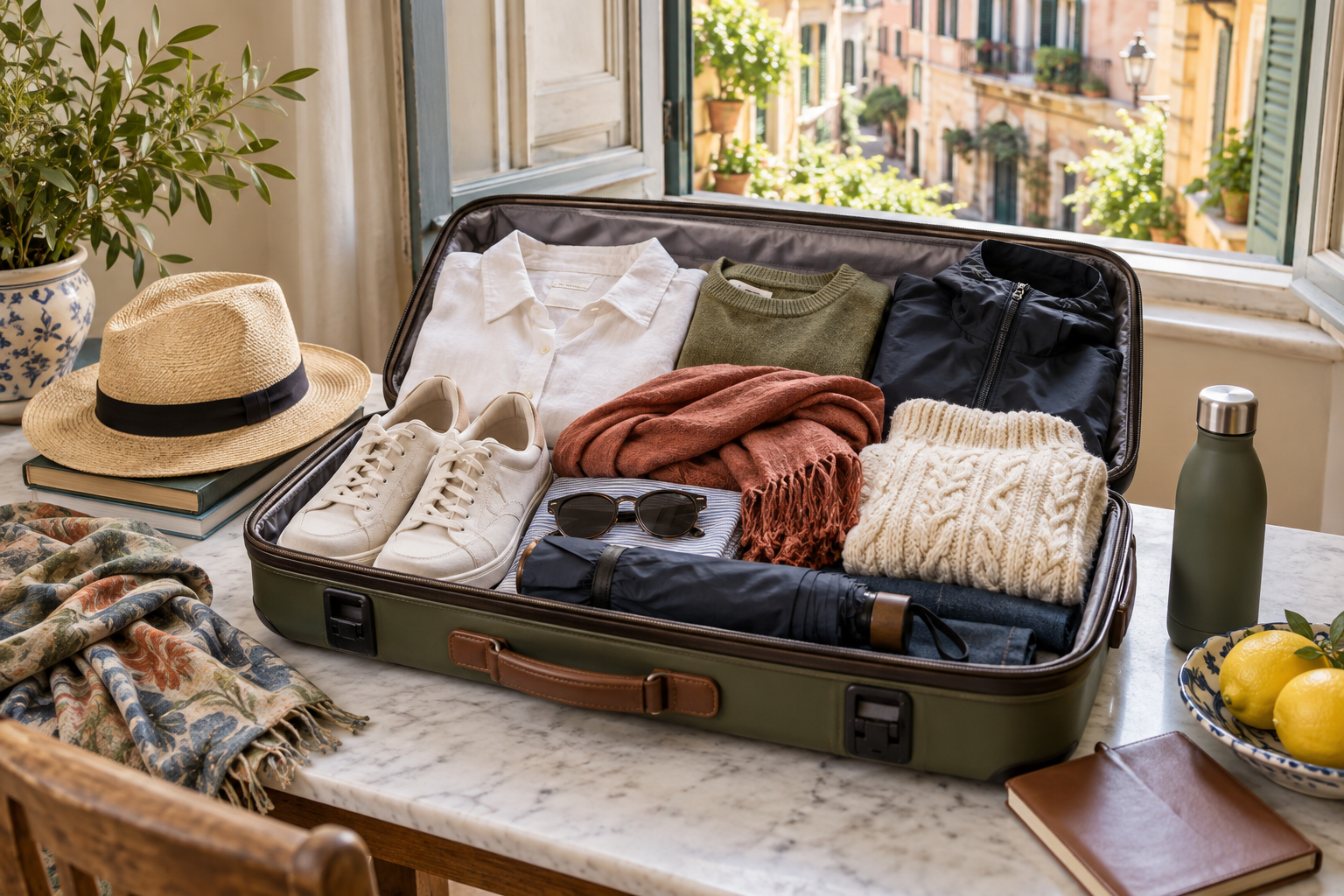
 Packing for Italy is not simply a question of looking stylish. The right clothes should keep you comfortable while walking on cobblestones, riding trains, visiting churches, eating outdoors and adapting to weather that can change considerably between regions.
Italy has several distinct climates. Milan, Venice and the Alpine regions can be cold and damp in winter, while Sicily and southern Italy remain comparatively mild. Summers are hot in much of the country, but evenings in the mountains and along some coastal areas may still feel cool.
The most useful approach is to pack versatile clothes that can be layered, combined and worn more than once.
What Do People Wear in Italy?
Italians generally dress neatly, but travelers do not need designer clothing or formal outfits. Clean, well-fitting and practical clothes are appropriate almost everywhere.
In large cities, neutral colors and simple combinations make it easier to move from sightseeing to a restaurant without changing. Athletic clothing is common, but a complete gym outfit may look out of place at dinner or in a historic city center.
A reliable travel wardrobe might include:
• Comfortable walking shoes
• Lightweight trousers or jeans
• Breathable shirts and tops
• A sweater or cardigan
• A light jacket
• One slightly dressier outfit
• A scarf or wrap
• A compact rain jacket or umbrella
Above all, choose clothing that fits your itinerary. Someone visiting museums and restaurants in Florence needs different equipment from a traveler hiking in the Dolomites.
What to Wear in Italy in Spring
Spring is one of the most pleasant times to visit Italy, but it can also be unpredictable. March may still feel wintry in northern Italy, while May can feel almost like summer in Rome, Naples and Sicily.
Layers are essential. Start with a breathable shirt, add a sweater or cardigan and carry a light water-resistant jacket. You may experience cool mornings, warm afternoons and rain within the same day.
For a spring trip, pack:
• Short- and long-sleeved shirts
• Lightweight sweaters or cardigans
• Comfortable trousers or jeans
• A water-resistant jacket
• A compact umbrella
• Walking shoes with good traction
• A scarf for cool evenings and church visits
• Sunglasses
A packable rain jacket is more practical than a heavy coat because it takes up little room and can be carried during day trips.
Water-resistant shoes are particularly useful in Venice, Milan and other northern destinations, although no ordinary travel shoe should be expected to protect you during Venice’s occasional high-water conditions.
What to Wear in Italy in Summer
Italian summers can be extremely hot, especially in cities where stone streets and buildings retain heat. Choose breathable fabrics such as linen, lightweight cotton and moisture-wicking blends.
Loose trousers, knee-length skirts, summer dresses and lightweight shirts are generally more comfortable than thick denim. Dark colors absorb more heat, while very light fabrics may become transparent in strong sunlight.
A summer packing list should include:
• Breathable T-shirts and shirts
• Lightweight trousers, skirts or dresses
• Comfortable shorts for casual sightseeing
• A light cardigan or wrap
• Walking sandals or breathable shoes
• Sunglasses
• A sun hat
• Sunscreen
• A reusable water bottle
• A swimsuit for coastal destinations and hotel pools
A packable sun hat and an insulated reusable water bottle are worthwhile additions for long sightseeing days.
Air conditioning in Italian hotels, restaurants and trains may be less powerful than many American visitors expect. However, museums and high-speed trains can sometimes feel surprisingly cool, so carrying one light layer remains useful.
Dressing for Churches in Summer
Many Italian churches expect visitors to dress respectfully. Requirements vary, but covering the shoulders and avoiding very short shorts, skirts or revealing clothing is the safest approach.
The Vatican Museums specifically prohibit sleeveless or low-cut garments, shorts above the knee, miniskirts and hats. These rules also apply to the Sistine Chapel, St. Peter’s Basilica and the Vatican Gardens. Consult the official Vatican Museums visitor information before visiting.
A lightweight travel shawl or wrap can cover bare shoulders, while loose linen trousers or a below-the-knee skirt provide comfort without causing problems at religious sites.
Men should carry a shirt with sleeves and avoid very short athletic shorts when churches are part of the day’s itinerary.
What to Wear in Italy in Fall
September can remain hot in central and southern Italy, while November may be wet and chilly. Fall travelers should therefore pack for both warm afternoons and cool evenings.
Recommended items include:
• T-shirts and long-sleeved shirts
• A medium-weight sweater
• Long trousers or jeans
• A light raincoat
• A warmer jacket for late fall
• A compact umbrella
• Water-resistant walking shoes
• A scarf
A compact windproof travel umbrella is particularly useful from October onward. A jacket with a removable lining is another good choice because it can adjust to different regions and temperatures.
If you are traveling between northern and southern Italy, dress in layers instead of packing separate wardrobes. The weather in Milan or Turin may be cool and rainy while conditions in Palermo remain mild.
What to Wear in Italy in Winter
Winter clothing depends heavily on where you are going. Northern cities can be cold, foggy and damp. Snow is possible in some areas and common in the Alps and Dolomites. Rome is generally milder but can feel cold in the evening, while southern Italy usually has moderate temperatures with periods of rain and wind.
For winter, consider packing:
• A warm coat
• Sweaters
• Long-sleeved base layers
• Long trousers
• Warm socks
• Water-resistant shoes or boots
• A scarf, hat and gloves
• A compact umbrella
A thermal base layer provides warmth without taking up the space of another bulky sweater. Merino-wool travel socks are also useful because they provide warmth and can be worn with walking shoes or boots.
For mountain destinations, ordinary city clothing is not sufficient. Pack proper insulated outerwear, waterproof footwear and appropriate equipment for the planned activity.
The Most Important Item: Comfortable Shoes
Italy often involves much more walking than travelers anticipate. Historic centers have cobblestones, uneven paving, stairways and pedestrian zones where taxis cannot always take you directly to your hotel.
Choose shoes with:
• Good arch support
• A cushioned sole
• Reliable traction
• Enough room for the toes
• A secure heel
• Materials appropriate for the season
Browse comfortable walking shoes for travel or water-resistant walking shoes before your trip.
Never begin an Italian vacation with completely new shoes. Wear them for several days at home first. If possible, bring two pairs so that you can alternate them and allow damp shoes to dry.
Sneakers are widely worn in Italy, including by Italians. A clean, simple pair in a neutral color works for sightseeing and most casual restaurants. Flip-flops are better reserved for beaches and pools.
What to Wear to Restaurants
Most Italian restaurants do not require formal clothing. A tidy shirt, blouse, dress, trousers or dark jeans will be suitable for the majority of establishments.
For an elegant restaurant, opera performance or luxury hotel, include one smart-casual outfit. Men might pack a collared shirt, lightweight trousers and loafers or clean leather sneakers. Women might choose a simple dress, blouse with trousers or an elegant skirt.
Beachwear, gym clothing and rubber flip-flops are best avoided away from pools and beaches, especially at dinner.
Choosing a Safe and Practical Day Bag
A small crossbody bag or compact backpack is more convenient than a large handbag. It should close securely and hold your telephone, wallet, water bottle, glasses and a light layer.
Keep valuables in a zipped interior compartment, particularly on crowded public transportation and around major attractions. Do not place a wallet or telephone in an open back pocket.
Consider a secure crossbody travel bag or an anti-theft travel backpack. The best choice is lightweight, comfortable and small enough to manage on buses and trains.
Essential Accessories for Italy
A few inexpensive accessories can make an Italian trip considerably easier.
Compression packing cubes help organize a suitcase and separate clean clothes from laundry.
A portable power bank is useful when maps, train tickets and reservations are stored on your telephone.
A small laundry bag, stain-removal pen and travel-size detergent make it easier to rewear clothes during a longer trip.
Blister bandages should be carried in your day bag rather than left at the hotel.
Do You Need a Power Adapter?
American plugs do not fit most Italian outlets. Italy operates on a 230-volt, 50-hertz electrical supply and commonly uses Type C, F and L connections. A plug adapter changes the shape of the plug; it does not change the voltage.
Most modern telephone, tablet and laptop chargers accept both American and European voltage, but check the label for an input range such as “100–240V.” Appliances designed only for 120 volts may require a voltage converter and may still be unsuitable for travel. Electrical Safety First’s Italy adapter guide provides additional electrical information.
A compact Italy travel plug adapter with USB ports can charge several low-power devices. Travelers bringing grounded or high-powered equipment should select an adapter specifically rated for that use.
A Simple One-Week Italy Packing List
For a typical seven-day trip, a practical wardrobe might include:
• Three or four tops
• Two pairs of trousers, skirts or shorts
• One sweater or cardigan
• One weather-appropriate jacket
• One church-appropriate outfit
• One smart-casual dinner outfit
• Two pairs of comfortable shoes
• Seven sets of underwear
• Four or five pairs of socks
• Sleepwear
• A scarf or wrap
• A compact umbrella
• A day bag
• Necessary medications
Laundry services and self-service laundromats are available in most cities, so you do not need a separate outfit for every day. Packing fewer pieces also makes train travel easier, particularly when you must lift your own bag onto a luggage rack or carry it up station stairs.
Final Packing Advice
Check the forecast for each destination shortly before departure. A forecast for Rome will not tell you what conditions to expect in Venice, the Dolomites or Sicily. Italia Mia’s Italy weather page can help you begin planning.
Choose clothing that can be layered, repeated and combined. Prioritize comfortable shoes, a practical day bag and protection from rain or sun. Pack one respectable outfit for churches and restaurants, but do not worry about competing with Italian fashion.
The best Italy packing list is not the longest one. It is the one that allows you to walk comfortably, enter the places you want to visit and adapt to the weather without carrying unnecessary luggage.
External Sources
Italia.it – Official Italian Tourism Website
Vatican Museums – Useful Information for Visitors
Electrical Safety First – Travel Adapter for Italy
Disclosure: Italia Mia may earn a commission from qualifying purchases made through Amazon affiliate links, at no additional cost to the buyer.