

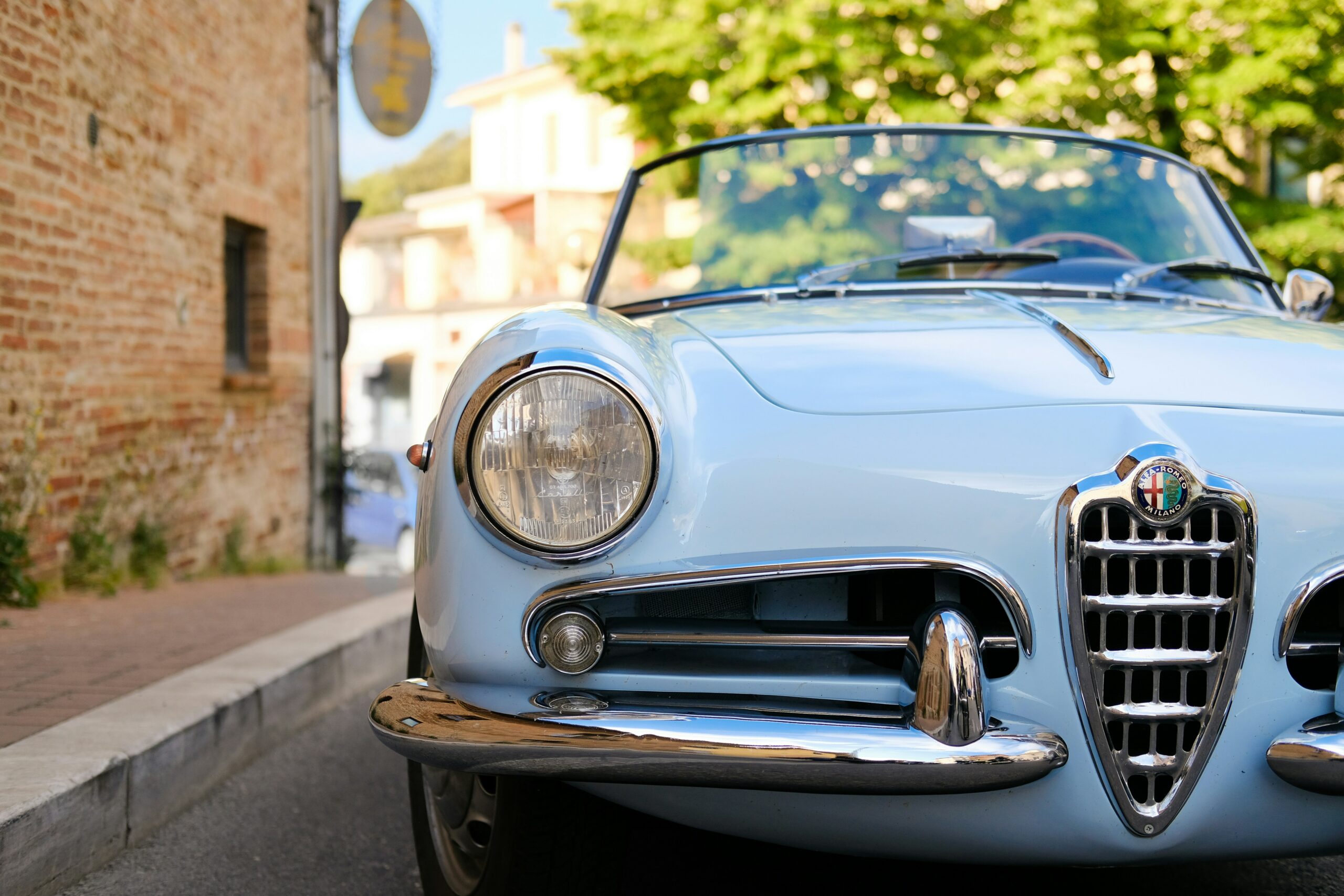
Driving in Italy Can Be the Best — or Most Stressful — Part of Your Vacation
There are two very different ways to experience Italy by car.
One is cruising through the Tuscan countryside with vineyards on either side of the road, stopping at a medieval hill town because it looks interesting, and discovering a trattoria you would never have reached by train.
The other is accidentally entering a restricted traffic zone in Florence, circling Rome looking for parking, taking the wrong lane at an autostrada toll booth and receiving a traffic fine months after returning home.
Both experiences are entirely possible.
Driving in Italy is not inherently difficult, but it rewards preparation. The road system, signs, parking regulations and driving culture can differ considerably from what visitors from the United States, Canada, Australia and other countries are accustomed to.
Before deciding whether to rent a car, read Italia Mia’s complete guide to driving in Italy for a broader look at Italian roads and driving culture.
For the practical side of renting a car, however, these are the things you really need to know.
1. First Ask Yourself Whether You Actually Need a Car
The first mistake many visitors make happens before they even get behind the wheel: they rent a car for an itinerary that does not require one.
If your vacation consists mainly of Rome, Florence, Venice, Milan, Bologna and Naples, a car can be more inconvenience than advantage.
Italian high-speed trains connect major cities efficiently, while historic centers are generally best explored on foot or by public transportation.
A car becomes much more useful when exploring:
- Tuscany’s countryside and smaller villages
- Umbria
- Rural Puglia
- Sicily and Sardinia
- The Dolomites
- The Italian Lakes
- Wine regions
- Mountain communities
- Beaches away from major towns
- Small villages with limited public transportation
For many visitors, the ideal Italian vacation combines the two: trains between major cities and a rental car for the countryside.
Our Italy for First-Time Visitors guide explains when a car makes sense as part of a larger Italian itinerary.
2. You Drive on the Right
Italy drives on the right-hand side of the road, as do the United States, Canada and most continental European countries.
Overtaking is normally done on the left.
On multi-lane roads and autostrade, do not remain unnecessarily in the left lane. Move back to the right after passing.
Italian drivers may approach quickly from behind when you occupy a passing lane. Rather than speeding up or competing with them, safely move right and let them pass.
3. Check Your Driving-Licence Requirements Before Leaving Home
Visitors should not assume that their domestic driving licence alone is sufficient.
Licences issued by EU and EEA countries are generally recognized in Italy.
For drivers holding licences issued by non-EU/EEA countries, Italian law requires the valid foreign licence to be accompanied by an International Driving Permit (IDP) or an official translation into Italian, subject to the applicable international rules.
An IDP does not replace your licence. Carry both.
This is particularly important for American visitors. Obtain the necessary documentation before traveling rather than waiting until you arrive in Italy.
Requirements can vary according to nationality, residency status and the country issuing the licence, so verify the current rules before departure.
4. Rental Companies Can Have Their Own Requirements
Legal permission to drive and a rental company’s requirements are not necessarily identical.
Rental companies commonly require:
- A valid driving licence
- Passport or acceptable identification
- A credit card in the primary driver’s name
- Minimum driving experience
- Compliance with minimum or maximum age policies
Some companies impose additional fees on younger drivers, and policies vary significantly.
Do not simply choose the lowest advertised rental price. Read the conditions concerning deposits, insurance, mileage, fuel and additional drivers before paying.
5. An Automatic Transmission May Cost More
Manual-transmission cars remain common in Italy.
If you cannot comfortably drive a manual, specifically reserve an automatic rather than assuming one will be available.
Automatic cars can be more expensive and availability may be more limited, particularly at smaller rental locations.
Book early during the summer season.
If you can drive a manual confidently, you may have a wider selection of vehicles and potentially lower rental costs.
6. Smaller Cars Are Often Better
A large SUV may seem attractive when booking from home.
It may seem considerably less attractive when you are trying to pass another vehicle on a narrow Tuscan road or enter a medieval parking garage.
Italian historic towns frequently have:
- Narrow streets
- Tight corners
- Small parking spaces
- Compact garages
- Narrow ramps
Unless you need substantial luggage space, a compact or midsize car is often the most practical choice.
This is one situation where bigger is definitely not always better.
7. ZTL May Be the Most Important Three Letters to Learn
ZTL stands for Zona a Traffico Limitato — Limited Traffic Zone.
These restricted areas are common in historic city centers.
Rome, Florence, Bologna, Pisa and many other Italian cities use them to restrict unauthorized traffic.
A ZTL entrance is generally marked by signs, and many are monitored electronically.
Cameras can record your licence plate when you enter.
The rental company may later receive the violation notice, identify you as the renter, charge an administrative fee and forward your information to the authorities.
The actual traffic fine may arrive separately.
The result can be a very expensive wrong turn.
8. Never Follow Another Car Into a ZTL
A common tourist mistake is assuming that if another vehicle enters a street, you can follow it.
That vehicle may belong to:
- A resident
- Taxi
- Bus
- Delivery company
- Disabled permit holder
- Authorized business
- Hotel guest whose plate has been registered
Your rental car may not have the same authorization.
Follow the signs, not the car in front of you.
ZTL operating hours can also vary by city, day and season. Never assume that a ZTL is always active—or always inactive.
9. Your Hotel May Be Able to Register Your Licence Plate
If your hotel is located inside a ZTL, contact it before driving into the historic center.
Hotels and authorized accommodations in some cities may be able to register a guest’s vehicle for permitted access under local procedures.
Do not assume this happens automatically.
Ask the hotel:
- Whether you may legally drive to the property
- Which entrance you should use
- Whether your licence plate must be registered
- Where you should park
- Whether there are hours when access is prohibited
Get instructions before arriving.
10. GPS Is Helpful, but Road Signs Take Priority
Google Maps, Apple Maps, Waze and built-in navigation systems can make driving in Italy dramatically easier.
But navigation software is not a legal authority.
A GPS may occasionally direct you toward:
- A ZTL
- Pedestrianized street
- Temporarily closed road
- Road unsuitable for your vehicle
- Restricted historic center
If your GPS says turn and a road sign says you cannot enter, obey the road sign.
11. Learn Italy’s Basic Speed Limits
Unless road signs specify otherwise, the standard limits for passenger cars are generally:
- 50 km/h in built-up areas
- 90 km/h on secondary and local extra-urban roads
- 110 km/h on main extra-urban roads
- 130 km/h on motorways
These are maximum limits, not target speeds.
Weather, roadworks, local restrictions and individual roads can require lower speeds.
Always follow posted limits.
12. Speed Cameras Are Common
Italy uses numerous systems to enforce speed limits.
You may encounter fixed or mobile Autovelox speed cameras along urban roads, highways and secondary roads.
Do not assume that slowing down only when you see a camera is enough.
Italian authorities also use other forms of electronic enforcement.
The simplest strategy is the least exciting one: respect the posted limit.
13. Tutor Is Different From a Normal Speed Camera
On sections of the Italian motorway network, motorists may encounter the Tutor system.
Rather than simply measuring your speed at one point, average-speed enforcement can monitor travel over a road section.
That means braking just before a camera does not necessarily solve the problem.
If you are driving on Italian motorways, maintain a legal and reasonably consistent speed.
For a detailed explanation of motorway driving, see Italia Mia’s Italian Autostrade Guide.
14. Most Italian Autostrade Have Tolls
Many major Italian motorways are toll roads.
On a traditional closed toll system, you normally take a ticket when entering and pay when leaving according to the route and vehicle class.
Payment options depend on the toll plaza and lane.
Many toll booths accept:
- Cash
- Credit or debit cards
- Electronic toll systems
Look carefully at the symbols above the lanes before entering.
15. Be Careful With Telepass Lanes
Electronic toll lanes are designed for vehicles equipped with compatible electronic payment devices.
Do not enter a lane reserved exclusively for electronic toll payment unless your rental vehicle has an appropriate device or your rental agreement includes the service.
Rental companies increasingly offer electronic toll options, but conditions and fees vary.
Ask when collecting the car.
If you do not have an electronic toll device, choose a lane displaying the appropriate cash or card symbol.
16. Not Every Autostrada Is Tolled
Although many Italian motorways charge tolls, some important routes are free.
Italy’s motorway network is operated by several concessionaires and public road authorities, so toll arrangements differ by road and region.
Do not assume every road marked with an “A” requires payment.
The Italia Mia guide to Italian autostrade, tolls and toll-free motorways explains the system in greater detail.
17. Understand Italy’s Parking Colors
Parking markings are extremely useful once you understand them.
As a general rule:
Blue lines indicate paid parking.
Look for nearby signs and payment machines for the applicable hours and rates.
White lines generally indicate free parking, although restrictions may apply.
Yellow lines are normally reserved for specific authorized users or categories.
Never rely solely on the color of the lines. Read the accompanying signs because local restrictions, resident permits, time limits and street-cleaning rules may apply.
18. Learn to Use the Parking Disc
Some parking spaces allow free parking for a limited period but require a disco orario, or parking disc.
The disc displays the time you arrived.
Rental cars may already have one. If not, they are inexpensive and commonly available.
Look for the parking sign indicating the maximum permitted time.
Do not assume a white parking space means you can leave the vehicle indefinitely.
19. Parking Outside Historic Centers Is Often the Smartest Strategy
Trying to drive directly to a hotel, museum or restaurant in an Italian historic center can create unnecessary stress.
A better strategy is often:
- Find a parking garage or lot outside the historic center.
- Park the car.
- Walk or take public transportation.
This is especially useful in cities such as Florence, Bologna, Siena, Lucca and many smaller historic towns.
You avoid ZTL problems, narrow streets and the endless search for parking.
20. Fuel Stations Work Differently Than Many Americans Expect
Italian fuel stations generally sell:
- Benzina — gasoline/petrol
- Gasolio — diesel
Make absolutely certain you know which fuel your rental car uses.
Putting gasoline into a diesel vehicle—or diesel into a gasoline vehicle—can cause serious damage.
Check the rental agreement, fuel cap or vehicle documentation if you are uncertain.
21. Self-Service and Servito Are Not the Same
At many Italian filling stations you may see self-service and servito options.
With self-service, you pump the fuel yourself.
With servito, an attendant fills the vehicle for you, and the price per liter may be higher.
Some stations have automated payment systems when attendants are not present.
If you are unfamiliar with the machine, take your time. Do not drive away without understanding whether payment was successfully completed.
22. Roundabouts Require Attention to Signs
Roundabouts are widespread throughout Italy.
Do not rely on a blanket assumption that traffic already circulating in every roundabout always has priority.
Priority depends on the road signs and markings.
At the common modern configuration where vehicles entering the roundabout face a Give Way/Yield sign, vehicles already circulating have priority.
But Italian priority rules make it important to observe the actual signs at each roundabout.
Slow down, identify your exit, watch the lane markings and signal appropriately.
23. Scooters Can Appear From Almost Anywhere
In cities such as Rome, Naples, Milan, Florence and Palermo, scooters and motorcycles are an integral part of traffic.
They may:
- Pass between lanes
- Move alongside stopped cars
- Appear beside you at traffic lights
- Overtake in confined spaces
- Enter your blind spot quickly
Check mirrors carefully before changing lanes or opening a door.
Do not attempt to imitate experienced scooter riders or aggressively block them.
Be predictable.
24. Italian Drivers May Follow More Closely Than You Expect
Visitors—especially Americans—sometimes find Italian driving intimidating.
You may encounter drivers who:
- Follow relatively closely
- Change lanes rapidly
- Overtake assertively
- Accelerate quickly
- Use the horn more frequently
- Expect slower traffic to move right
Do not interpret every horn or close vehicle as a personal confrontation.
Maintain your lane, leave adequate space, signal clearly and let faster drivers pass when safe.
Trying to “teach someone a lesson” by blocking the passing lane is both dangerous and pointless.
25. A Fine Can Follow You Home
Returning your rental car does not necessarily mean that your Italian traffic adventures are over.
Electronic systems may record violations involving:
- ZTL access
- Speeding
- Bus lanes
- Traffic lights
- Other restricted areas
The authorities may obtain the renter’s information from the rental company.
The rental company can also charge a contractual administrative fee for processing a violation, separate from the government fine itself.
Consequently, a charge from the rental company does not necessarily mean the fine has already been paid.
Read any correspondence carefully.
What About Drinking and Driving?
Italy’s general legal blood-alcohol limit for ordinary drivers is 0.5 g/l, while stricter zero limits apply to certain categories, including novice and professional drivers.
The safest approach for tourists is much simpler:
If you are driving, don’t drink.
This is particularly sensible when exploring wine regions, where wine tastings may be part of the itinerary.
Consider using a designated driver, taxi, organized tour or accommodation within walking distance.
Seat Belts and Mobile Phones
Seat belts are mandatory for drivers and passengers.
Holding and using a mobile phone while driving is prohibited; hands-free use is permitted under the applicable rules.
Set your navigation before moving whenever possible.
If you need to reprogram the route, find a safe place to stop.
Headlights and Tunnels
Italian lighting rules may differ from those in your home country.
Lights are required in circumstances specified by Italian road law, including driving outside built-up areas and through tunnels.
Modern rental vehicles often manage daytime running lights automatically, but do not assume every lighting requirement is automatic.
Learn the basic controls before leaving the rental facility.
What Should Be in the Car?
Vehicles should carry required safety equipment, including a warning triangle and reflective safety vest.
A rental company should provide legally required equipment, but it is worth checking before leaving.
Locate the vest before you need it.
If it is buried underneath all your luggage in the trunk when you have to exit the vehicle during an emergency, it is not particularly useful.
Winter Driving Requires Additional Preparation
If you are visiting northern Italy, the Apennines or mountain areas during colder months, winter equipment requirements may apply.
Depending on the road, season and local regulations, winter tires or snow chains may be required.
Rental companies in affected regions generally offer appropriate equipment, but confirm this when booking.
Do not assume that because the weather is mild in Rome or Florence, conditions will be similar in the Alps or Dolomites.
Italian Road Signs: Learn the Colors
One useful shortcut for visitors is understanding directional sign colors.
In general:
- Green directional signs are associated with motorways
- Blue signs are commonly used for extra-urban roads
- White directional signs are commonly used in urban areas
Brown signs often identify tourist, historic or cultural attractions.
Learning a handful of signs before your trip can make navigation significantly less stressful.
What to Do If the Car Breaks Down
If you experience a breakdown, move the vehicle to a safe location whenever possible.
On an autostrada, use an emergency area or shoulder where available and do not remain unnecessarily exposed to moving traffic.
Wear the reflective vest before leaving the vehicle when required and use the warning triangle appropriately.
Contact the rental company’s roadside-assistance service.
Save its emergency number in your phone when you collect the vehicle rather than trying to find the paperwork during an emergency.
Emergency Number in Italy
The European emergency number is 112.
It can be used for emergencies requiring police, ambulance, fire or other emergency assistance.
If an accident involves injuries or creates a dangerous situation, prioritize safety and contact emergency services.
Rental-Car Insurance: Read the Details
Insurance terminology can be confusing.
Your rental may include some basic coverage while still leaving you responsible for a substantial deductible or excess.
Optional products may reduce that liability.
Before accepting or declining additional insurance, determine:
- What damage is covered
- The deductible/excess
- Whether wheels and tires are covered
- Whether glass is covered
- Whether underbody damage is covered
- Whether theft is covered
- Whether your credit card provides rental-car coverage in Italy
Photograph or video the car when you collect it.
Record existing scratches, dents, wheel damage and windshield chips.
Do the same when returning it.
Be Especially Careful on Narrow Rural Roads
Some of Italy’s most beautiful destinations have roads that were never designed for modern traffic.
In Tuscany, Liguria, Sicily, the Amalfi Coast, the Dolomites and many medieval towns, you may encounter roads barely wide enough for two vehicles.
Slow down before blind curves.
Do not assume that because the GPS calls something a road, it will resemble a highway.
Sometimes the most scenic drives are also the most demanding.
Should You Drive the Amalfi Coast?
The Amalfi Coast is spectacular.
It can also be stressful.
The famous coastal road includes narrow sections, curves, buses, scooters, pedestrians and heavy seasonal traffic.
Parking can be extremely difficult.
For confident drivers traveling outside peak periods, driving can be memorable. For nervous drivers visiting during the busiest summer weeks, ferries, buses or private transportation may be considerably more enjoyable.
A rental car is a tool—not an obligation.
When a Car Makes Italy Extraordinary
After all these warnings, it would be easy to conclude that driving in Italy should be avoided.
That would be a mistake.
Outside the major cities, a car can reveal an entirely different country.
You can leave Florence and wander through Chianti.
You can drive through the Val d’Orcia and stop in Pienza, Montalcino or a village that was not even on your itinerary.
You can explore inland Sicily, rural Puglia, the mountains of Abruzzo or the hill towns of Umbria.
You can follow a coastal road simply because it looks beautiful.
For inspiration, see Italia Mia’s Best Driving Routes in Italy.
This freedom is the real reason to rent a car in Italy.
The Best Strategy: Train + Car
For many international visitors, the most efficient Italian itinerary does not involve choosing between trains and cars.
Use both.
For example:
Rome → Florence: train
Florence → Tuscany countryside: rental car
Tuscany → Bologna: return the car and take the train
Or:
Milan → Venice: train
Venice → Dolomites: rental car
This avoids driving and parking in large cities while preserving the freedom to explore rural areas.
Quick Checklist Before Driving Away From the Rental Office
Before leaving the rental location, check:
- Driving licence
- IDP or official translation if required
- Rental agreement
- Insurance documentation
- Fuel type
- Fuel-return policy
- Existing vehicle damage
- Emergency equipment
- Roadside-assistance number
- Automatic or manual transmission
- Electronic toll device, if included
- Navigation system
- Parking disc
- Headlight controls
- Spare tire or tire-repair kit
Spend five minutes familiarizing yourself with the vehicle.
It can save considerable trouble later.
Final Advice for Driving in Italy
Driving in Italy becomes much easier once you stop expecting Italian roads to work exactly like roads at home.
The biggest problems for tourists usually aren’t dramatic driving situations. They are small misunderstandings: entering a ZTL, choosing the wrong toll lane, parking in the wrong place, misunderstanding a road sign or failing to obtain the correct driving documents.
Prepare for those details and the experience changes completely.
Use trains where trains make sense.
Rent a car where a car gives you freedom.
Avoid driving into historic city centers unless you know exactly where you are going.
Respect speed limits and restricted zones.
And once you reach the countryside, slow down occasionally.
Italy is one of those countries where the road between two destinations can be as memorable as the destinations themselves.
Related Italia Mia Guides
For more information about traveling by car and planning your Italian vacation:
- Driving in Italy: A Complete Guide to Italian Roads, Drivers, Traffic, and Survival Tips
- Italian Autostrade Guide: History, Tolls, Major Routes & Free Motorways
- The Best Driving Routes in Italy: Scenic Roads, Hidden Gems and Culinary Delights
- Italy for First-Time Visitors: The Complete Guide to Your First Italian Vacation
External Links
For regulations and information that can change, always verify current requirements with official sources before traveling:
- Automobile Club d’Italia (ACI) — Italian Highway Code and foreign driving licences
- Italian Ministry of Infrastructure and Transport
- Official Italy Tourism Website — Driving in Italy
- European Union — Road Rules and Safety in Italy


