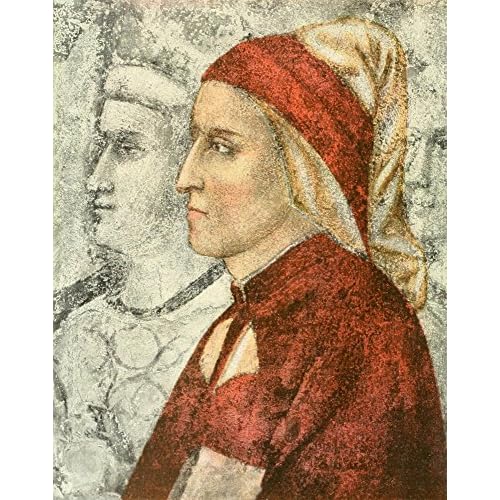
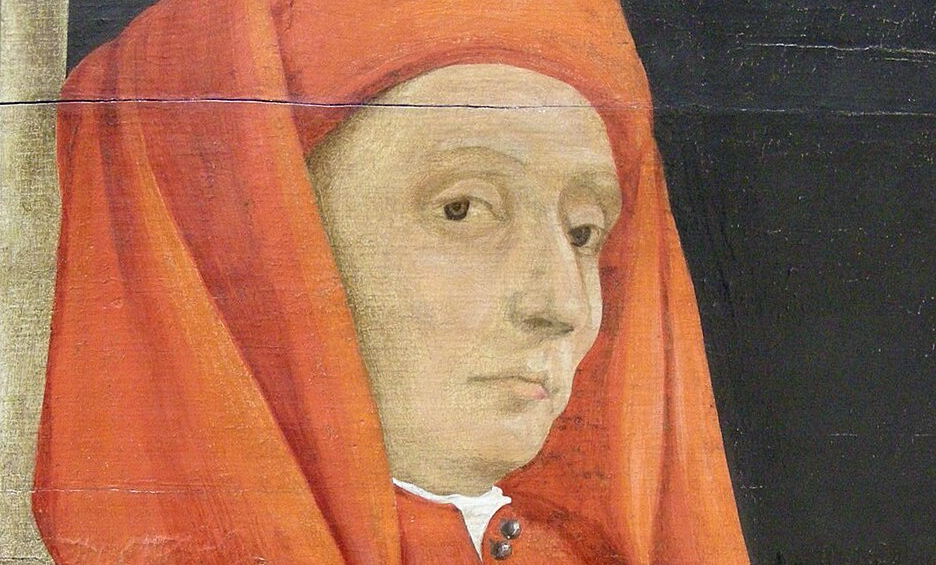
 Giotto di Bondone stands at one of the great turning points in Western art. Working around 1300, he inherited a visual tradition shaped by Byzantine formality, gold backgrounds and symbolic figures, yet he gave sacred stories a new physical and emotional presence. His people appear to occupy real space. They turn, embrace, grieve, recoil and look at one another with convincing human feeling.
Giotto did not single-handedly invent the Renaissance, nor did he completely abandon medieval art. He remained a medieval artist whose subjects, patrons and purposes were overwhelmingly religious. What changed was the way he made those subjects visible. By giving figures weight, buildings depth and emotions dramatic clarity, he helped establish a visual language that later artists—including Masaccio, Michelangelo and Raphael—would develop further.
His surviving paintings can be seen in Padua, Florence, Assisi, Rome, Rimini and several European museums. Together, they explain why Giotto is regularly described as a founder of modern European painting and an essential precursor of the Italian Renaissance.
Early Life: Between History and Legend
Giotto was probably born around 1267 in or near Vespignano, in the Mugello countryside north of Florence. The precise place and date of his birth remain uncertain, and much of the familiar story of his childhood comes from writers who lived long after him.
According to a famous legend repeated by Giorgio Vasari, the painter Cimabue discovered the young Giotto drawing a sheep on a rock. Cimabue was supposedly so impressed by the boy’s ability that he brought him into his workshop. Another traditional story describes Giotto painting a fly so convincingly on one of Cimabue’s pictures that the older master tried to brush it away.
These anecdotes are entertaining, but they should not be treated as documented biography. Giotto may have trained with Cimabue, and his early art certainly developed in a world influenced by Cimabue, Roman painters such as Pietro Cavallini and the sculptural naturalism of Nicola and Giovanni Pisano. Nevertheless, no surviving contract confirms the apprenticeship.
By the beginning of the 14th century, Giotto had become a celebrated master with a substantial workshop. He received commissions from wealthy banking families, Franciscan and Dominican churches, cardinals, the Angevin court in Naples and the civic authorities of Florence.
Giotto was not an isolated genius working alone. He was the head of an organized workshop capable of completing large and technically demanding decorative programs. This collaborative system also helps explain why scholars continue to debate the authorship of several works associated with his name.
How Giotto Changed Western Painting
Italian painting before Giotto was not devoid of emotion or observation, but religious images often followed established conventions. Bodies could appear elongated and weightless, settings might be compressed, and differences in scale frequently expressed spiritual importance rather than physical distance.
Giotto made biblical events feel as though they were taking place in a world governed by gravity. His figures have broad shoulders and solid bodies beneath their robes. They stand firmly on the ground, overlap one another and inhabit architectural or landscape settings that suggest measurable space.
His greatest innovation may have been his ability to organize emotion. Instead of depending on decorative detail alone, he used gestures, facial expressions and the direction of each figure’s gaze to lead viewers through a story. A bowed head, an outstretched arm or a meeting of eyes could communicate grief, fear, tenderness or betrayal.
Giotto’s painted architecture did not yet follow the mathematically consistent linear perspective developed in 15th-century Florence. Nevertheless, his rooms, thrones, balconies and chapels function as believable settings for human action. This new relationship between figures and space became fundamental to the development of Renaissance painting.
Readers interested in the wider historical context can consult Italia Mia’s guide to Italian art movements and periods.
The Assisi Frescoes and the Attribution Debate
The Basilica of Saint Francis in Assisi is central to any account of Giotto, but it also presents one of the most complicated attribution problems in European art.
Twenty-eight scenes from the life of Saint Francis decorate the lower walls of the nave in the Upper Basilica. The cycle illustrates episodes such as Francis renouncing his possessions, preaching to the birds, receiving approval for his religious rule and experiencing the stigmata.
The stories unfold in carefully organized spaces populated by figures whose gestures and physical presence helped transform narrative painting. Buildings are shown with a new concern for depth, while the characters interact in ways that make the religious stories easier to understand.
The cycle was traditionally attributed to the young Giotto, sometimes working with assistants. That attribution was strengthened by early literary references connecting him with Assisi and by similarities between certain scenes and works associated with him elsewhere.
However, there is no surviving contract identifying Giotto as the painter of the Saint Francis cycle. Scholars have also identified significant variations in technique, design and execution. Technical examinations have revealed differences between some of the Assisi frescoes and Giotto’s securely attributed work in Padua.
Various parts of the Upper Basilica decoration have consequently been assigned to assistants, Roman painters, the Master of the Saint Francis Legend or the so-called Master of Isaac.
The debate should not be simplified into a choice between “entirely painted by Giotto” and “not painted by Giotto.” Large medieval fresco projects were usually collaborative. A master could develop the overall program, prepare designs, paint selected passages and supervise assistants responsible for other areas.
Some scholars continue to defend a substantial role for Giotto, while others believe the cycle was created largely by a group of Roman-trained painters. Visitors should therefore regard the Upper Basilica frescoes as a crucial monument associated with Giotto and his artistic world while recognizing that their precise authorship remains unresolved.
The Scrovegni Chapel: Giotto’s Greatest Surviving Achievement
Giotto’s most complete and securely attributed fresco masterpiece is the Scrovegni Chapel, also known as the Arena Chapel, in Padua.
Enrico Scrovegni commissioned the decoration of the family chapel, and Giotto painted its interior between 1303 and 1305. The chapel was originally connected to the Scrovegni family palace, which stood on land containing the remains of a Roman arena.
The frescoes cover nearly every available surface. Thirty-nine principal narrative episodes recount the lives of the Virgin Mary and Christ, beginning with Mary’s parents, Joachim and Anne, and continuing through the Annunciation, Nativity, Passion, Crucifixion and Resurrection.
Personifications of the Virtues and Vices occupy the lower walls, while the entrance wall is dominated by the Last Judgment. Enrico Scrovegni himself appears in the Last Judgment presenting a model of the chapel to the Virgin.
Giotto created a remarkably unified visual environment. The deep blue vaulted ceiling evokes heaven, while the narrative scenes are arranged in orderly horizontal registers. Painted marble panels, architectural borders and simulated frames give the interior a coherent structure.
Among the most celebrated scenes is the Lamentation. Christ’s body is surrounded by grieving followers as angels twist through the sky in anguish. A barren diagonal ridge directs attention toward Christ and Mary, whose faces meet at the emotional center of the composition.
Several foreground figures turn their backs to the viewer. This unusual device makes the spectator feel physically included in the gathering rather than positioned outside it.
In the Kiss of Judas, the confrontation between Christ and his betrayer becomes the still center of a turbulent crowd. Spears, torches and raised arms intensify the confusion, while Christ and Judas stare directly at one another. Giotto transforms a familiar religious subject into a psychologically charged encounter.
The chapel also contains moments of tenderness and quiet observation. In the Meeting at the Golden Gate, Joachim and Anne embrace with an intimacy rarely seen in earlier monumental painting. Throughout the cycle, gestures and glances connect figures across each composition, making emotion part of the structure of the image.
The Scrovegni Chapel is included in Padua’s UNESCO-listed 14th-century fresco cycles. Visitor numbers and the amount of time spent inside the chapel are controlled to protect its fragile environment. Advance reservation is essential through the official Padova Musei website.
The Ognissanti Madonna
The monumental Ognissanti Madonna, painted around 1300–1305 and now displayed in the Uffizi Gallery, retains the traditional gold background and enthroned Virgin found in medieval altarpieces.
However, Mary’s body has greater volume, the throne suggests architectural depth, and the angels occupy overlapping layers of space. The figures appear to exist within a shared environment rather than being arranged entirely according to symbolic hierarchy.
The painting makes Giotto’s achievement especially clear when viewed near works by Cimabue and Duccio. Giotto did not reject inherited religious imagery; he made it more physically persuasive.
Visitors can learn more from the official Uffizi page dedicated to the Ognissanti Madonna.
The Bardi and Peruzzi Chapels in Florence
The Basilica of Santa Croce contains two important fresco cycles created by Giotto and his workshop for powerful Florentine banking families.
The Peruzzi Chapel contains scenes from the lives of Saint John the Baptist and Saint John the Evangelist. Their exact date remains uncertain, although they are frequently placed around 1310.
These murals were executed largely on dry plaster rather than entirely in true fresco, which contributed to their deterioration. Despite their damaged condition, their carefully constructed architecture and solemn gestures had a profound influence on later Florentine painters.
The Bardi Chapel presents episodes from the life of Saint Francis. The cycle includes Francis renouncing his worldly possessions, receiving approval for the Franciscan rule, appearing before the sultan, receiving the stigmata and being mourned after his death.
The paintings belong to Giotto’s mature career. Figures communicate through gazes and controlled movements, while the architectural settings help clarify the meaning of each event.
A major study and conservation campaign conducted by the Opera di Santa Croce and the Opificio delle Pietre Dure was completed in 2026. The project improved the frescoes’ legibility and revealed new information about Giotto’s materials, working methods and collaboration with his assistants.
Current information about the frescoes and their conservation is available from the Opera di Santa Croce.
The Santa Maria Novella Crucifix
Giotto’s large painted Crucifix in the Basilica of Santa Maria Novella is another landmark in the development of Italian painting.
Earlier medieval crucifixes often showed Christ in a more formal or symbolic manner. Giotto emphasized the weight of Christ’s body as it hangs from the cross. The torso bends, the head falls forward, and the blood and physical suffering are made unmistakably visible.
The work demonstrates how Giotto used anatomy, gravity and observation to bring sacred imagery closer to human experience. It was not simply intended to illustrate an event. It encouraged worshippers to respond emotionally to Christ’s sacrifice.
Giotto as an Architect
In 1334, Florence appointed Giotto master builder of the Cathedral of Santa Maria del Fiore and superintendent of the city’s public works.
His architectural fame is associated above all with the cathedral’s bell tower, now universally known as Giotto’s Campanile. Giotto designed the lower section and began construction, but he died before the tower was completed.
Andrea Pisano continued the project, followed by Francesco Talenti. The finished tower therefore reflects the contributions of several designers, although its polychrome marble surface and close visual relationship with the cathedral preserve Giotto’s original conception.
The tower rises approximately 85 meters above Piazza del Duomo. Visitors who climb its 414 steps are rewarded with expansive views of the cathedral, Brunelleschi’s dome and the historic center of Florence.
Tickets and visiting information are available from the official Opera del Duomo website.
Giotto’s Career in Naples and Milan
Giotto’s reputation extended far beyond Tuscany. He worked for the Angevin court of King Robert of Naples between approximately 1328 and 1333.
Most of the paintings associated with his Neapolitan period have been destroyed or survive only in fragments, making it difficult to reconstruct the full scope of the commission. Documentary evidence nevertheless shows that Giotto was treated as an important court artist.
Near the end of his life, he also worked in Milan for Azzone Visconti. These paintings have been lost.
Their disappearance reminds us that the surviving works represent only a portion of Giotto’s career. Contemporary records describe a highly sought-after master whose workshop moved between important religious, courtly and civic centers.
Important Panel Paintings
Although Giotto is most famous for his frescoes, several panel paintings are essential to understanding his career.
The double-sided Stefaneschi Triptych in the Vatican Museums was commissioned by Cardinal Jacopo Stefaneschi for Old Saint Peter’s Basilica. Painted by Giotto with assistance from his workshop, it includes images of Christ, Saint Peter and the martyrdoms of Saints Peter and Paul.
Because the altarpiece could be seen from both directions, both sides were elaborately painted. Cardinal Stefaneschi appears holding a miniature representation of the triptych itself.
The Stigmatization of Saint Francis in the Louvre was created for the Church of San Francesco in Pisa. Its principal scene shows Francis receiving the wounds of Christ, while smaller episodes below recount events from his life.
The panel bears an inscription identifying Giotto and is particularly important when considering his relationship with Franciscan imagery.
Other significant works include the Badia Polyptych in the Uffizi, the Baroncelli Polyptych in Santa Croce and painted crucifixes in Florence, Padua and Rimini.
Since Giotto managed a busy workshop, museums often distinguish between works painted directly by the master, works created with assistants and works attributed primarily to his followers.
Where to See Giotto’s Art
Padua
The Scrovegni Chapel contains Giotto’s best-preserved and most complete fresco cycle. The nearby Eremitani Civic Museums display a painted Crucifix originally associated with the chapel.
Florence
The Uffizi Gallery displays the Ognissanti Madonna and Badia Polyptych. Santa Croce contains the Bardi and Peruzzi chapels and the Baroncelli Polyptych. Santa Maria Novella preserves Giotto’s monumental Crucifix, while Piazza del Duomo is home to his famous bell tower.
Assisi
The Upper Basilica of Saint Francis preserves the debated cycle of 28 scenes from the life of Saint Francis. The Lower Basilica also contains frescoes connected with Giotto and his workshop.
Rome
The Vatican Pinacoteca displays the Stefaneschi Triptych, painted by Giotto with assistance from members of his workshop.
Rimini
The Tempio Malatestiano preserves a large Crucifix generally dated to the early 14th century. It is an important surviving trace of Giotto’s activity on Italy’s Adriatic coast.
Paris
The Louvre displays the Stigmatization of Saint Francis, one of Giotto’s most important panel paintings outside Italy.
London
The National Gallery holds a small Pentecost attributed to Giotto and his workshop.
Travelers planning a wider cultural itinerary can also consult Italia Mia’s guides to Italy’s greatest art cities and where to see Italy’s most important artworks.
Giotto’s Influence and Legacy
Giotto’s influence spread rapidly through central and northern Italy. Painters such as Taddeo Gaddi and Maso di Banco continued aspects of his Florentine style, while artists in Rimini, Padua and other cities adapted his spatial clarity and emotional storytelling.
His achievement was recognized during his lifetime. Dante referred to Giotto’s growing fame in the Divine Comedy, contrasting it with the reputation of Cimabue. Boccaccio later praised his ability to imitate nature, while Renaissance writers presented him as the artist who restored painting after a long period of decline.
Modern art history treats that simple story of decline and rebirth more cautiously. Byzantine and medieval artists were not merely waiting for Giotto to teach them realism, and Giotto himself depended on earlier traditions and contemporary innovations.
His greatness lies in how powerfully he combined those influences and made sacred history immediate to the viewer.
In the Scrovegni Chapel, the mourners surrounding Christ do not seem like distant symbols. Their grief is communicated through their bodies, faces and gestures. In the Ognissanti Madonna, the Virgin occupies a throne that appears to have real depth. In Santa Croce, saints move through buildings that help shape the drama unfolding inside them.
These changes helped turn painting into a convincing world rather than simply a decorated surface. That is why Giotto remains both a great medieval master and one of the indispensable figures in the story of the Renaissance.
External Sources
Padova Musei Civici: History of the Scrovegni Chapel
Uffizi Galleries: Giotto’s Ognissanti Madonna
Opera di Santa Croce: Giotto and the Bardi Chapel Restoration
Vatican Museums: Giotto and Assistants, Stefaneschi Triptych
Louvre Collections: Saint Francis of Assisi Receiving the Stigmata
Metropolitan Museum of Art: Italian Painting of the Later Middle Ages