
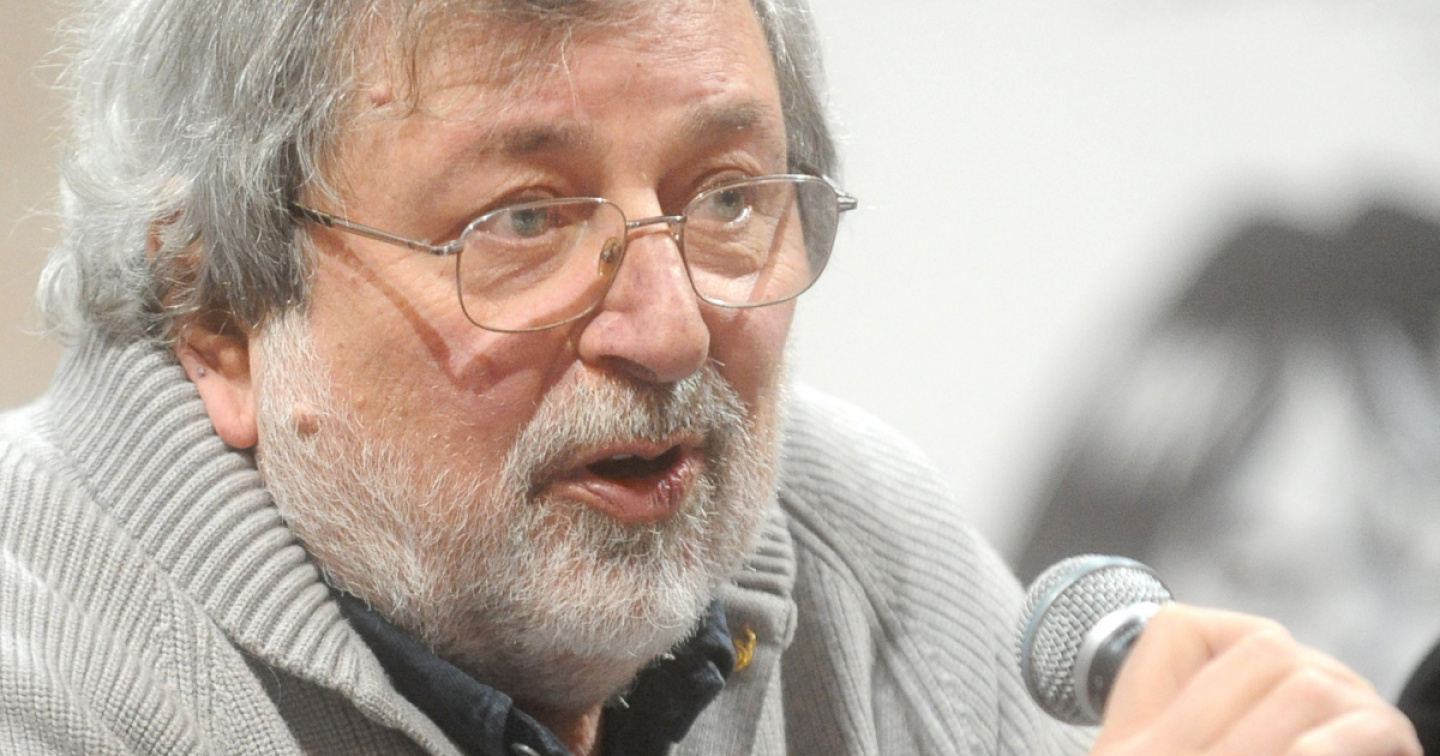
 Francesco Guccini (1940–2026) could make a song feel like a conversation that had wandered through a library, an old friendship and half a century of Italian history. His voice was rough and unmistakable; his lyrics could be learned by heart, argued over and sung together. Across six decades, he wrote about war, rebellion, love, memory, aging and the places that make a person who they are.
He belongs at the center of Italy’s cantautore tradition, alongside artists such as Fabrizio De André and Franco Battiato. Yet Guccini’s world was entirely his own: the Apennine village, the Bologna street, the railway, the lost friend and the uneasy question that remains after a song ends.
From Modena to Pàvana and Bologna
Guccini was born in Modena on June 14, 1940. He spent formative years in Pàvana, an Apennine village near the border between Emilia-Romagna and Tuscany. The mountains, local speech and memories of village life would later run through both his songs and prose. Bologna became another essential part of his identity: a city of students, arguments, friendships, music and long evenings.
These places gave Guccini more than settings. They gave him contrasting ways of seeing time. In Bologna, he could observe a changing generation; in Pàvana, he could hear older words and stories in danger of disappearing. His work repeatedly moves between those two impulses: to confront the present and to preserve what it leaves behind.
The Songwriter Before the Star
Guccini first became widely known through songs performed by others. In the 1960s, Équipe 84 recorded “Auschwitz,” while Nomadi brought songs including “Dio è morto” and “Noi non ci saremo” to a broad audience. His own debut album, Folk Beat n. 1, appeared in 1967, initially credited simply to “Francesco.” It already contained the themes that would define him: historical conscience, distrust of easy answers and concern for ordinary lives.
“Auschwitz,” subtitled “La canzone del bambino nel vento,” approaches the Holocaust through a child’s perspective. “Dio è morto” gives voice to a generation rejecting hypocrisy and inherited certainties while still searching for hope. Both demonstrate how Guccini could address immense subjects in language people remembered and sang.
For a wider view of the movement he helped shape, read ItaliaMia’s guide to the Italian cantautori.
Radici and the Songs That Defined Him
The 1972 album Radici was a turning point. Its title means “roots,” but Guccini’s idea of belonging was never merely nostalgic. He wanted to know how families, places and inherited stories shape the present. The album includes “Il vecchio e il bambino,” an encounter between generations set against a damaged landscape, and “La locomotiva,” the dramatic tale of a railway worker’s revolt.
“La locomotiva” became his great concert finale. Its gathering pace made the story feel immediate, while audiences turned its closing passages into a collective performance. Guccini could be theatrical without losing his conversational manner: he still sounded like someone telling a story directly to the room.
Other essential songs reveal his range. “Canzone per un’amica” makes private loss public without flattening it into sentiment. “Incontro” considers the distance between the people we were and the people we become. “Eskimo” uses a garment and an old relationship to revisit the hopes of a political generation. “L’avvelenata” is sharp, funny and openly irritated with the expectations placed on a songwriter. A listener drawn to the sweep of “La locomotiva” may find the quieter Guccini in “Autogrill” or “Canzone delle domande consuete.”
Politics, Doubt and Independence
Guccini’s songs are inseparable from the political climate in which many were written, but they resist being reduced to slogans. “La locomotiva” became an anthem of rebellion. “Auschwitz” insists on historical remembrance. “Dio è morto” attacks empty conventions, including careerism in politics. “Eskimo” looks back at the passions of the 1970s with affection, irony and disappointment.
What holds these songs together is moral attention. Guccini asks what people believe, what they do with those beliefs and what happens when certainty meets lived experience. His narrators can be angry, idealistic or rueful; they are rarely simple mouthpieces. That complexity helps explain why the songs remained meaningful after the immediate arguments of their era had changed.
His approach offers an illuminating comparison with De André’s portraits of outsiders. Both writers brought social criticism into popular music, but Guccini often placed the argument inside his own memories, doubts and unmistakably spoken voice.
A Writer Beyond Music
Guccini’s literary career was substantial. In books including Cròniche epafàniche and Vacca d’un cane, he drew on childhood, local culture and the expressive possibilities of regional speech. He also wrote fiction with Loriano Macchiavelli, including Macaronì, bringing his interest in place, character and the past into the crime novel.
The books make clear that language itself was one of Guccini’s subjects. A remembered expression or village name could carry a whole vanished social world. The same instinct animates his songs: details that seem modest at first become a way to talk about identity and historical change.
The Later Recordings and His Final Years
Guccini continued recording and performing for decades. L’ultima Thule, released in 2012, was his final album of new songs. He later returned to the studio for collections of traditional material, including Canzoni da intorto. His later years gave more space to writing and to the cultural memory of the places he loved.
Guccini died in August 2026 at the age of 86. The response to his death reflected a rare kind of attachment: listeners remembered particular songs, but also the experience of growing older alongside the person who wrote them.
Selected Performances
The 1982 RTSI concert is an excellent introduction to Guccini on stage. Recorded for Swiss Italian television, it brings together early songs such as “Auschwitz” and “Dio è morto” with later work. It also shows the essential relationship between his speaking voice and singing voice: the story continues even when the music pauses.
For one concentrated performance, watch “La locomotiva” live at RTSI. Its force comes from the steady escalation of Guccini’s delivery as much as from the song’s subject.
To hear “Auschwitz,” “Dio è morto” and “La locomotiva” together in their live context, the complete RTSI concert is the best starting point. Then return to the recordings and compare how each song changes when an audience is present.
Why Guccini’s Legacy Endures
Guccini expanded what an Italian popular song could hold. A song could recount political violence, preserve the sound of an Apennine village, question a generation’s ideals or examine a single fleeting encounter. His writing had literary ambition, but its strength came from being heard aloud and shared.
New listeners can begin with Radici, move to “Incontro” and “Eskimo,” and then hear a live concert. From there, the books reveal that the storyteller behind the guitar was working with the same materials all along: place, memory, conscience and the words people leave behind. Explore more of that tradition in ItaliaMia’s history of Italian singer-songwriters and its guide to Italian music.
External Sources
Francesco Guccini’s official biography
Official discography
Official bibliography
Treccani: Francesco Guccini
Rai Teche: Francesco Guccini