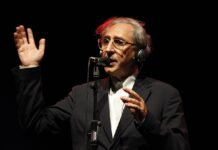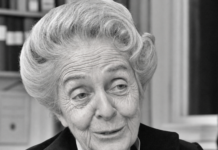

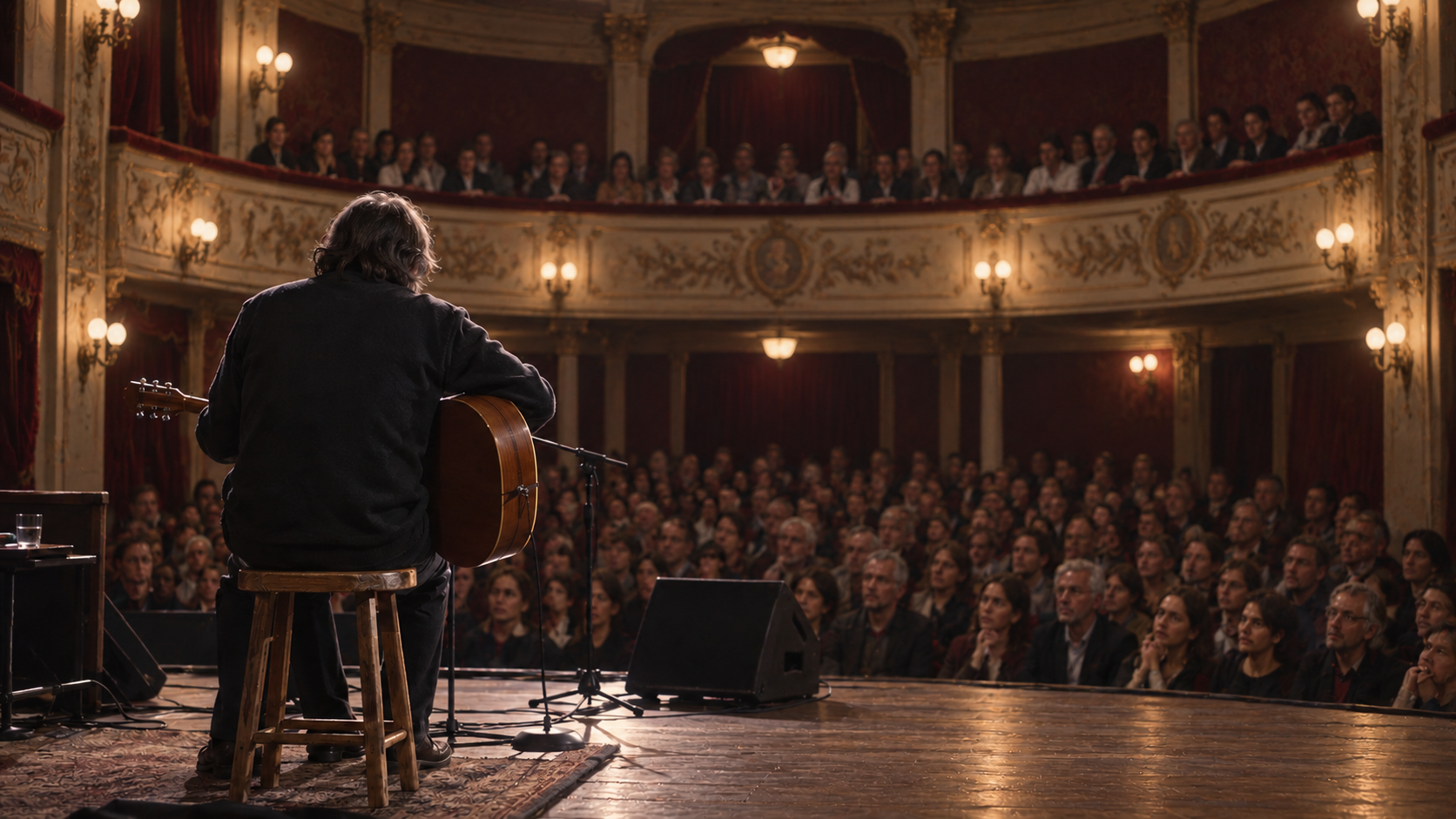
 Few Italian singer-songwriters have inspired the affection, respect and intense interpretation surrounding Fabrizio De André. More than two decades after his death, his songs remain part of Italy’s shared cultural memory. They are performed in theaters and town squares, studied in schools and universities, and passed from one generation to the next.
De André wrote about people whom respectable society preferred not to see: prisoners, prostitutes, rebels, soldiers, Indigenous peoples, religious outsiders and people living at the margins. He approached them without sentimentality, finding dignity and humanity where others saw only scandal or failure.
His work brought together French chanson, Italian folk traditions, medieval poetry, modern literature and Mediterranean music. The result was a body of songs whose carefully constructed words often read like short stories or poems.
Childhood and Youth in Genoa
Fabrizio Cristiano De André was born in the Genoese neighborhood of Pegli on February 18, 1940. During the Second World War, his family temporarily left Genoa for the countryside near Asti in Piedmont before returning to the Ligurian capital after the conflict.
The Genoa of De André’s youth was a port city of striking contrasts. Its grand palaces and prosperous commercial families existed beside crowded alleys, sailors’ lodgings, taverns and neighborhoods inhabited by people from many social and cultural backgrounds.
These contrasts would later become central to his songwriting. De André was fascinated by the narrow streets of the historic center and by those who lived beyond conventional definitions of respectability.
He studied at a classical high school and later enrolled in law at the University of Genoa, but he did not complete his degree. Music, literature and the unconventional life of the city increasingly mattered more to him than a traditional professional career.
The Genoese School of Singer-Songwriters
During the late 1950s and early 1960s, Genoa became the birthplace of one of the most important movements in modern Italian music. De André belonged to a circle that included Luigi Tenco, Gino Paoli, Bruno Lauzi and Umberto Bindi.
These artists became associated with the so-called “Genoese school,” although it was never a formally organized group. They challenged the polished romantic formulas that dominated much of Italian popular music, introducing psychological complexity, social observation and the influence of French chanson and American jazz.
De André was particularly influenced by French singer-songwriter Georges Brassens. He translated and adapted several of Brassens’s songs, absorbing his irony, irreverence and sympathy for social outsiders. The music of Jacques Brel, Leonard Cohen and Bob Dylan also contributed to De André’s artistic development.
His friendship with writer and actor Paolo Villaggio produced the nickname “Faber,” which remained attached to him throughout his life. It reportedly referred both to De André’s fondness for Faber-Castell pencils and to the similarity between “Faber” and his first name.
La canzone di Marinella and Early Recognition
De André began recording songs around the beginning of the 1960s, but he initially remained better known within intellectual and musical circles than among the general public.
An important turning point came with “La canzone di Marinella.” The song transforms the death of a young woman into a delicate, almost timeless ballad. Rather than describing her through the judgment of society, De André gives her a moment of beauty and tenderness.
When Mina recorded the song in 1967, her interpretation introduced it to a much larger audience and helped establish De André as an important songwriter.
Other early songs revealed the themes that would define his career. “La guerra di Piero” presented war from the viewpoint of an individual soldier rather than through patriotic rhetoric. “Bocca di Rosa” celebrated a woman whose independence scandalizes a small town. “Via del Campo” found beauty and humanity among the marginalized inhabitants of Genoa’s old quarter.
These characters were not presented as moral examples. They were complicated, imperfect people, but De André insisted that their lives deserved to be heard.
Poetry, Literature and the Concept Album
De André’s songs frequently drew inspiration from literature, history and religious texts. His work was intellectually ambitious, but he rarely sounded like a lecturer. Literary ideas became stories, characters and unforgettable images.
The 1968 album “Tutti morimmo a stento” explored death, addiction, childhood suffering and social exclusion. It was one of Italy’s earliest examples of a concept album, with individual songs contributing to a larger thematic vision.
“La buona novella,” released in 1970, reinterpreted the life of Jesus through the apocryphal gospels. De André focused on the human experiences surrounding the sacred story, particularly those of Mary, Joseph and the people condemned alongside Christ.
The album appeared during a period of political protest, and some listeners initially considered its religious subject too distant from contemporary struggles. De André, however, saw the figure of Jesus as one of history’s great revolutionaries and the gospel story as a denunciation of power, intolerance and injustice.
In 1971, he released “Non al denaro non all’amore né al cielo,” inspired by Edgar Lee Masters’s “Spoon River Anthology.” The original book consists of epitaphs spoken by the dead of an imaginary American town. De André transformed selected characters into songs about envy, ambition, science, love and personal failure.
“Storia di un impiegato,” released in 1973, confronted the political atmosphere following the protests of 1968. Its story follows a frustrated office worker whose attempted rebellion leads to violence, imprisonment and a different understanding of collective action.
These records demonstrated that an Italian popular album could function as a complete literary and musical work rather than simply as a collection of unrelated songs.
Love, Religion and Social Outsiders
De André is often described as the singer of the marginalized, but his writing was broader than any single political label. He distrusted institutions, easy moral judgments and people who claimed the authority to decide who was respectable.
His sympathies were libertarian and anti-authoritarian. He criticized war, the abuse of power and the hypocrisy of both religious and secular institutions. At the same time, his treatment of faith was more complex than simple hostility toward religion.
“La buona novella,” “Spiritual,” “Preghiera in gennaio” and other compositions reveal a continuing engagement with Christian ideas of mercy and redemption. His criticism was generally directed at institutional power and moral exclusion rather than at the search for spiritual meaning.
Love in De André’s songs could be tender, sensual, destructive or impossible. He resisted idealized romance, preferring relationships marked by vulnerability and contradiction. Even his most beautiful love songs carry an awareness of separation, mortality or regret.
From Reluctant Performer to the PFM Concerts
For many years, De André was reluctant to appear in concert. He considered himself primarily a writer of songs and was uncomfortable with the expectations and exposure associated with live performance.
He finally began performing regularly during the 1970s. One of the most important chapters of his live career was his collaboration with the progressive-rock group Premiata Forneria Marconi, better known as PFM.
The 1978–1979 concerts gave De André’s songs new arrangements shaped by rock instrumentation, improvisation and the exceptional musicianship of the band. Pieces such as “Il pescatore” acquired an energy very different from their original studio versions.
The resulting live recordings introduced his work to new audiences and demonstrated that his precisely written songs could survive radical musical transformation. Readers interested in other artists who reshaped modern Italian popular music can also explore Italia Mia’s biographies of Lucio Battisti and Franco Battiato.
Sardinia and the Kidnapping
De André developed a profound connection with Sardinia, where he and his partner, singer Dori Ghezzi, established a rural home and farm.
On August 27, 1979, the couple was kidnapped by members of Sardinia’s criminal kidnapping network. They were held captive in the mountains for nearly four months before being released after the payment of a ransom.
The experience inevitably affected De André, but his public response surprised many people. While condemning those who organized the crime, he distinguished them from some of the men who guarded the prisoners. He attempted to understand the poverty, isolation and social conditions from which they came.
This attitude did not excuse the kidnapping. It reflected the same determination found throughout his songs: to examine a person’s circumstances before passing judgment.
“Hotel Supramonte,” released on the 1981 album commonly known as “L’Indiano,” emerged from the emotional experience of captivity. The album also drew parallels between the historical suffering of Native Americans and the experience of Sardinian communities confronted by outside power.
Crêuza de mä and the Mediterranean
In 1984, De André released one of his greatest achievements, “Crêuza de mä,” created with multi-instrumentalist Mauro Pagani.
The album was sung almost entirely in Genoese, a language deeply connected to the maritime identity of De André’s birthplace. Its music drew from sounds and instruments associated with different parts of the Mediterranean rather than reproducing a single regional folk tradition.
The title refers to one of the narrow paths descending toward the sea in Liguria. The songs evoke sailors, travelers, ports, war, food, desire and encounters between cultures.
At a time when English-language pop and standardized Italian dominated much of the recording industry, creating such an ambitious album in Genoese was a daring decision. De André treated dialect not as a picturesque remnant of the past but as a living language capable of expressing complex modern ideas.
“Crêuza de mä” is now regarded as a landmark of Italian popular music and an early masterpiece of the musical movement later marketed internationally as world music.
Le nuvole and Anime salve
De André continued exploring regional languages and the relationship between individuals and power in his later work.
“Le nuvole,” released in 1990, combined Italian with Genoese, Neapolitan and Sardinian. The album used satire, theatricality and traditional musical forms to criticize political corruption, consumerism and cultural conformity.
His final studio album, “Anime salve,” appeared in 1996 and was created with fellow Genoese singer-songwriter Ivano Fossati. Its title can suggest both “saved souls” and “solitary souls.”
The album returned to people living outside dominant society while employing rich, atmospheric arrangements. “Prinçesa” recounts the journey of a transgender woman searching for her identity. “Khorakhané” focuses on Rom people, while the closing “Smisurata preghiera” offers an extraordinary reflection on solitude, freedom and the oppressive will of the majority.
Rather than softening with age, De André’s compassion became increasingly expansive. His last album summarized a lifetime spent defending individual dignity against judgment and conformity.
Ten Essential Fabrizio De André Songs
“La canzone di Marinella” — The ballad that introduced De André to a wider audience and revealed his ability to transform tragedy into poetic storytelling.
“La guerra di Piero” — A quietly devastating antiwar song centered on the fate of an ordinary soldier.
“Bocca di Rosa” — The story of a sexually independent woman whose arrival exposes the hypocrisy of a provincial community.
“Via del Campo” — A portrait of marginalized lives in Genoa’s historic center, remembered for its compassion and unforgettable melody.
“Amore che vieni, amore che vai” — A meditation on the changing and transient nature of love.
“Il pescatore” — A concise narrative about compassion, justice and the silent understanding between two strangers.
“Fiume Sand Creek” — A song inspired by the 1864 massacre of Cheyenne and Arapaho people in the United States.
“Hotel Supramonte” — An intimate and emotionally controlled response to the kidnapping experienced by De André and Dori Ghezzi.
“Crêuza de mä” — A musical journey through Genoa and the Mediterranean, sung in Genoese.
“Smisurata preghiera” — The final song on De André’s last studio album and one of the clearest expressions of his defense of individual freedom.
Where New Listeners Should Begin
Listeners wanting an introduction to De André can begin with “In direzione ostinata e contraria,” a broad retrospective collection spanning his career. Search for available editions on Amazon.com.
After that introduction, the concept albums are best heard in their entirety rather than as disconnected tracks. “La buona novella,” “Non al denaro non all’amore né al cielo,” “Crêuza de mä” and “Anime salve” reveal four very different stages of his artistic development.
Physical recordings, biographies and other collections can be found through this targeted selection of Fabrizio De André music and books on Amazon.com.
More biographies of the artists, writers, filmmakers and historical figures who shaped Italy can be found in the Italia Mia Italian biographies section, while the Italian music section covers performers and musical traditions from opera to contemporary pop.
Death and National Mourning
De André was diagnosed with lung cancer in 1998, forcing him to interrupt his final concert tour. He died in Milan on January 11, 1999, at the age of 58.
His funeral was held in Genoa and attended by an enormous crowd. The response demonstrated that an artist who had often spoken for outsiders had become one of the most widely loved voices in Italy.
The affection did not end with public mourning. Streets, schools, libraries and cultural spaces across Italy have since been named for him. His manuscripts and work have become subjects of scholarly research, while new performers continually reinterpret his songs.
Why Fabrizio De André Still Matters
De André’s importance cannot be explained simply by calling him a poet who used music. His songs work because words, voice, melody, character and arrangement form a unified whole.
His grave, controlled singing style allowed the stories to occupy the foreground. He did not demand admiration for his vocal technique. Instead, the listener’s attention moved toward the soldier hesitating in the snow, the woman condemned by her neighbors, the sailor returning from the sea or the solitary person resisting the expectations of the majority.
He also expanded the possibilities of Italian songwriting. An album could engage with medieval poetry, apocryphal gospels, American literature, political violence or minority languages without losing its emotional force.
Above all, De André asked listeners to look again at people they had been taught to dismiss. His songs rarely provide uncomplicated heroes, villains or answers. They offer something more lasting: the possibility that understanding another human being must begin before judgment.
External Sources
Fabrizio De André — Treccani Encyclopedia
Fabrizio De André Official Website
Centro Studi Fabrizio De André — University of Siena