
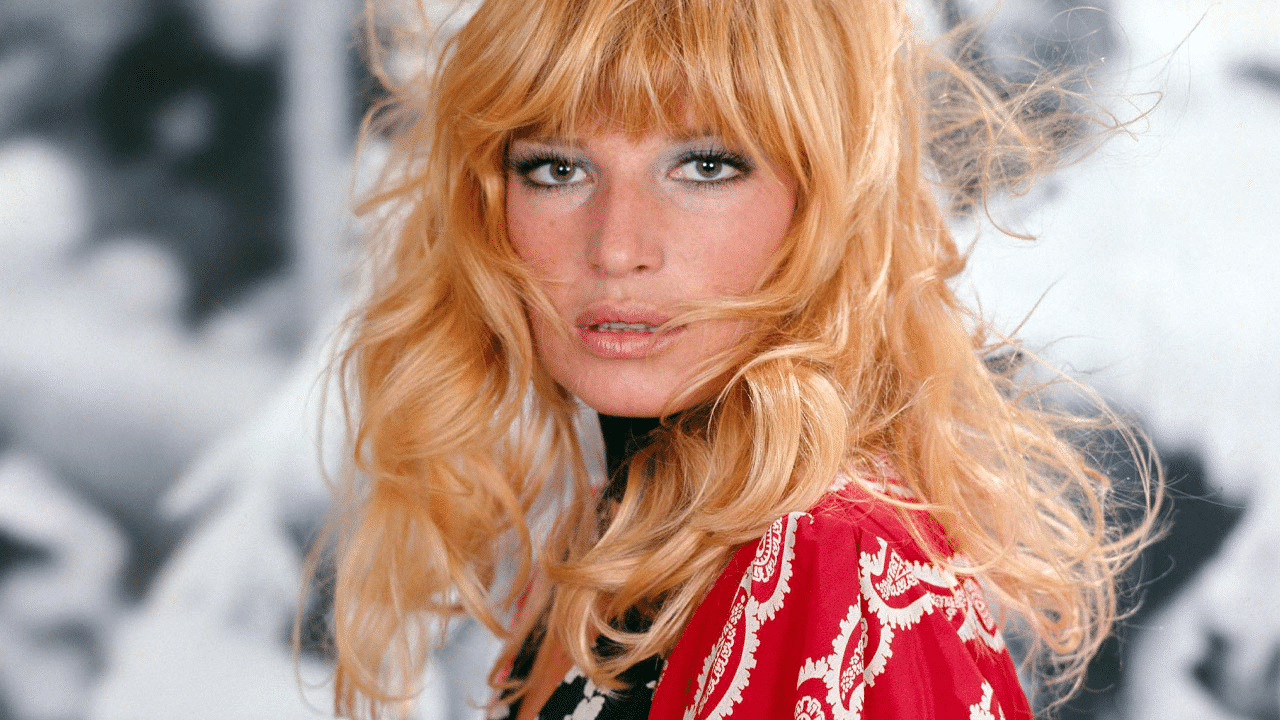
Monica Vitti could make a silence feel unsettled and a comic outburst feel painfully human. International audiences remember her walking through the mysterious landscapes of Michelangelo Antonioni’s films; Italian audiences also remember the voice, timing and irreverence that made her a beloved comedy star.
Both belong at the center of her story. To watch only her celebrated dramas is to miss an actress who could be exuberant, awkward, mischievous and wonderfully unpredictable.
This guide explores Monica Vitti’s life, her defining films, her work with Italy’s great comic filmmakers, and the performances that make the best introduction to her extraordinary range.
Monica Vitti at a Glance
| Detail | Information |
|---|---|
| Birth name | Maria Luisa Ceciarelli |
| Born | November 3, 1931, Rome, Italy |
| Died | February 2, 2022, Rome, aged 90 |
| Profession | Actress, screenwriter and director |
| International breakthrough | L’avventura (1960) |
| Essential dramatic films | L’avventura, La notte, L’eclisse, Red Desert |
| Landmark comedy | La ragazza con la pistola (1968) |
| Feature directorial debut | Scandalo segreto (1990) |
| Major career honor | Golden Lion for Lifetime Achievement, Venice, 1995 |
Before Antonioni: Theatre, Training and a Distinctive Voice
Born Maria Luisa Ceciarelli, Vitti trained at Rome’s Accademia d’Arte Drammatica, graduating in 1953. Theatre provided the foundation of her acting, while early screen appearances and dubbing work helped her find a place in the film industry.
Her husky voice became one of her most recognizable qualities. It could sound intimate, weary, teasing or indignant, sometimes shifting between those registers within a single exchange.
Comedy was already present in her early career. Mario Amendola’s Le dritte (1958), about three women trying to persuade reluctant boyfriends to marry, offers an early glimpse of the performer later embraced by mass audiences. The familiar account of a solemn dramatic actress suddenly discovering comedy therefore misses an important part of her development.
What changed was the scale of the opportunities available to her.
Monica Vitti and Michelangelo Antonioni
Vitti’s association with Antonioni began with dubbing work on Il grido (1957), for which she supplied Dorian Gray’s Italian voice. Their subsequent professional and personal partnership produced some of European cinema’s most influential films.
These works asked viewers to pay attention to hesitation, distance and behavior that dialogue could not fully explain. Vitti gave those uncertainties a human presence.
For the broader context, read Italia Mia’s guide to the masters of postwar Italian cinema, which places Antonioni alongside Fellini, Visconti, Rossellini and De Sica.
L’avventura (1960): The Breakthrough
L’avventura begins with a disappearance during a boating excursion near Sicily. Vitti plays Claudia, whose missing friend Anna leaves behind both an unanswered mystery and a troubling emotional situation.
As Claudia grows closer to Anna’s boyfriend, Sandro, attraction becomes inseparable from guilt and uncertainty. The film gradually shifts the viewer’s attention from finding an explanation to observing the people who must live without one.
Vitti makes Claudia compelling because she never reduces her to a single feeling. A moment of pleasure can be followed by withdrawal; tenderness can coexist with mistrust. Rather than supplying a tidy psychological explanation, her performance leaves room for conflicting impulses.
Read the full Italia Mia guide to L’avventura for its story, cast, locations and significance.
La notte (1961): A Different Kind of Presence
In La notte, Jeanne Moreau and Marcello Mastroianni play the married couple at the center of the story. Vitti appears as Valentina, the daughter of the industrialist hosting an evening party.
It is an important distinction: Vitti does not lead every film in the celebrated Antonioni cycle. Here, the force of her supporting performance comes partly from its concentration.
Valentina brings intelligence and curiosity to an environment marked by social performance and emotional exhaustion. Her encounters with Mastroianni’s character suggest possibility without providing a simple escape from his marriage or himself.
Watch how Vitti balances playfulness with reserve. The same actress who seems so elusive elsewhere can establish a character through an apparently casual exchange.
L’eclisse (1962): Love in an Impersonal World
In L’eclisse, Vitti plays Vittoria, a woman who ends one relationship and becomes involved with Piero, a stockbroker played by Alain Delon.
The film sets their uncertain attraction against the restless activity of the stock exchange and the striking spaces of modern Rome. Public life seems to move with tremendous purpose, while private life offers few reliable directions.
Vitti’s performance is especially revealing in moments when Vittoria is alone or distracted. Her attention appears to drift away from the conversation toward objects, spaces or sensations that other people barely notice.
For a first viewing, follow those changes of attention. They often tell us more about Vittoria than a conventional declaration of love or dissatisfaction would.
Red Desert (1964): Vulnerability in Color
Antonioni’s first color feature, Red Desert, places Vitti’s Giuliana in an industrial environment of factories, smoke and unsettling color. Richard Harris plays Corrado, a colleague of her husband.
Giuliana’s distress is central to the film, but reducing her to an emblem of modern anxiety makes the performance seem more abstract than it is. Vitti gives her a searching physical presence: she looks for reassurance, contact and somewhere to feel secure.
The relationship between actress and setting is particularly powerful. The landscape does not simply illustrate what Giuliana feels; it surrounds her with sensations that can seem impossible to organize or escape.
Why “Antonioni’s Muse” Is Only Part of the Story
The word “muse” appears frequently in accounts of Vitti’s career. It recognizes an important creative partnership, but it can make acting sound passive.
Her performances demand close attention to craft: the rhythm of a movement, the timing of a response, the decision to hold a look or interrupt it. A director can arrange a composition, but the actor must make a person exist within it.
The BFI’s retrospective Monica Vitti: Creative Force emphasizes this broader identity: a trained theatre performer, comedian, writer and director as well as a defining face of modern cinema.
Watching the dramas beside the comedies makes that creative contribution much easier to see.
La ragazza con la pistola: A Landmark in Italian Comedy
Mario Monicelli’s La ragazza con la pistola (The Girl with a Pistol, 1968) gave Vitti one of her defining popular roles.
She plays Assunta, a Sicilian woman who travels to Britain seeking revenge against the man who abducted and abandoned her. The premise draws on a culture of sexual honor and unequal expectations, but the journey opens the possibility of a different life.
Vitti makes Assunta’s determination funny without removing the seriousness of what has shaped it. The character’s certainty, indignation and encounters with unfamiliar customs create comedy; her capacity to change gives the story its emotional direction.
This is an excellent starting point for viewers who know Vitti only through Antonioni. Her energy fills the screen, yet the performance remains attentive to vulnerability.
For more on the tradition surrounding the film, explore Commedia all’Italiana: History, Directors and Essential Films.
Popular Comedy and the Freedom to Be Complicated
Vitti’s comedy characters could be vain, hungry, jealous, romantic, stubborn or spectacularly mistaken. They did not need to remain dignified to hold the audience’s attention.
That freedom matters. In films where women can too easily become rewards, obstacles or sensible observers of male behavior, Vitti frequently makes female disorder the main event.
Her comic performances also preserve discomfort. A ridiculous argument can reveal a real inequality; an extravagant reaction can conceal humiliation. Laughter does not necessarily solve the problem that produced it.
Dramma della gelosia (1970)
Ettore Scola’s Dramma della gelosia (tutti i particolari in cronaca), also known as The Pizza Triangle, places Vitti alongside Marcello Mastroianni and Giancarlo Giannini.
As Adelaide, a Roman flower seller caught in a troubled love triangle, she moves between romantic longing and exasperation. The film’s comedy is inseparable from jealousy and the emotional pressures placed on its characters.
For viewers interested in the meeting point between her dramatic and comic talents, this is one of the most rewarding choices.
Noi donne siamo fatte così (1971)
Dino Risi’s episodic Noi donne siamo fatte così, known in English as That’s How We Women Are, gives Vitti twelve roles.
Its format makes the film a showcase for changes of voice, posture, temperament and social identity. Rather than developing one character across an entire feature, she repeatedly establishes a new person within a much shorter space.
The appeal is the opportunity to watch an actress transform, sometimes through a remarkably small adjustment.
Monica Vitti and Alberto Sordi
Vitti’s films with Alberto Sordi form another important strand of her career. Their collaborations include Amore mio, aiutami (1969), Polvere di stelle (1973) and Io so che tu sai che io so (1982).
They make an intriguing pairing because neither needs to surrender the scene. A dispute can become a contest between two fully developed comic personalities.
In Polvere di stelle, their partnership moves into the world of travelling entertainers during wartime. The attraction lies in the mixture of performance, ambition and disappointed hopes.
In Io so che tu sai che io so, directed by Sordi, a husband discovers unexpected truths about his wife through secretly filmed footage. The premise turns observation into a marital problem: seeing someone does not necessarily mean understanding them.
Their work together is a useful reminder that popular comedy can become more uncomfortable as it becomes more revealing.
International Films and Later Creative Work
Vitti also worked beyond the familiar division between Antonioni and Italian comedy. Joseph Losey directed her in the pop-art spy adventure Modesty Blaise (1966), while Luis Buñuel cast her in The Phantom of Liberty (1974).
She reunited with Antonioni for The Mystery of Oberwald (1980), an experimental work made on video. The reunion belongs to a different technological and stylistic moment from their early-1960s films.
Her later career included Flirt (1983), directed by Roberto Russo, and her own feature directing debut, Scandalo segreto (Secret Scandal, 1990), in which she also starred.
The move behind the camera extends the story of her career beyond performance. Vitti was interested in how people present themselves and how recording them can alter what becomes visible.
She also published Sette sottane (1993) and Il letto è una rosa (1995), bringing her voice to the page.
Monica Vitti Filmography: Selected Major Films
This selected filmography covers key dramatic, comic and international work; it is not a complete list of screen appearances. Years refer to the films, rather than the ceremonies at which they received awards. Some catalogs use different release years, particularly for The Mystery of Oberwald.
| Year | Film | Director |
|---|---|---|
| 1958 | Le dritte | Mario Amendola |
| 1960 | L’avventura | Michelangelo Antonioni |
| 1961 | La notte | Michelangelo Antonioni |
| 1962 | L’eclisse | Michelangelo Antonioni |
| 1964 | Red Desert / Deserto rosso | Michelangelo Antonioni |
| 1964 | Il disco volante | Tinto Brass |
| 1966 | Modesty Blaise | Joseph Losey |
| 1967 | Ti ho sposato per allegria | Luciano Salce |
| 1968 | La ragazza con la pistola | Mario Monicelli |
| 1969 | Amore mio, aiutami | Alberto Sordi |
| 1970 | Dramma della gelosia | Ettore Scola |
| 1970 | Ninì Tirabusciò, la donna che inventò la mossa | Marcello Fondato |
| 1971 | Noi donne siamo fatte così | Dino Risi |
| 1973 | Polvere di stelle | Alberto Sordi |
| 1973 | Teresa la ladra | Carlo Di Palma |
| 1973 | La Tosca | Luigi Magni |
| 1974 | The Phantom of Liberty / Le fantôme de la liberté | Luis Buñuel |
| 1975 | L’anatra all’arancia | Luciano Salce |
| 1975 | Qui comincia l’avventura | Carlo Di Palma |
| 1978 | Amori miei | Steno |
| 1980 | The Mystery of Oberwald / Il mistero di Oberwald | Michelangelo Antonioni |
| 1982 | Io so che tu sai che io so | Alberto Sordi |
| 1983 | Flirt | Roberto Russo |
| 1986 | Francesca è mia | Roberto Russo |
| 1990 | Scandalo segreto | Monica Vitti |
Awards and Recognition
Vitti won five David di Donatello awards for Best Actress. All five recognized her work in comedy—a telling counterpoint to her international reputation as a dramatic performer.
| Award year | Film |
|---|---|
| 1969 | La ragazza con la pistola |
| 1971 | Ninì Tirabusciò, la donna che inventò la mossa |
| 1974 | Polvere di stelle |
| 1976 | L’anatra all’arancia |
| 1979 | Amori miei |
The Italian Film Academy also records three special recognitions, which should be distinguished from those five competitive acting wins.
Her international honors included a Silver Bear for outstanding single achievement for Flirt at the 1984 Berlin International Film Festival and the Golden Lion for Lifetime Achievement at Venice in 1995.
Five Monica Vitti Films to Watch First
A good introduction should include both the famous dramas and the comedies.
- L’avventura — Begin here for the breakthrough performance and the uncertainty at the heart of her work with Antonioni.
- La ragazza con la pistola — Follow with the force, humor and changing perspective of Assunta’s journey.
- L’eclisse — Return to a quieter register, watching how Vitti communicates through attention and hesitation.
- Dramma della gelosia — Discover the emotional volatility of her comic acting alongside Mastroianni and Giannini.
- Polvere di stelle — Explore her partnership with Sordi and the melancholy beneath theatrical ambition.
Then add Red Desert and Noi donne siamo fatte così to see how differently she could use her body, voice and screen presence.
To continue beyond Vitti, browse Italia Mia’s 30 best Italian movies of all time.
Finding Her Films
Search by both the Italian title and its English alternative. Older Italian films can circulate under several titles, and a search using only one may miss an available edition.
For discs, check the region code and subtitle details on the specific release. For streaming, confirm the offer in your country and whether it is included in a subscription or requires a separate rental.
The viewing information in our L’avventura guide provides a starting point for that film; provider catalogs can change.
Monica Vitti’s Lasting Place in Italian Cinema
Vitti died in Rome on February 2, 2022, aged 90. Her films preserve an unusually wide range of ways to occupy the screen: withdrawn or expansive, thoughtful or impulsive, glamorous or deliberately ungainly.
Her dramatic and comic performances reward being watched together. The comedies make the playfulness in the dramas easier to notice; the dramas sharpen our awareness of hurt and uncertainty beneath the laughter.
Watch Claudia in L’avventura, then Assunta in La ragazza con la pistola. The contrast is striking, but so is the continuity: an actress attentive to women who do not fit comfortably into the lives available to them.
External Links
- BFI: Monica Vitti, 1931–2022
- Treccani: Monica Vitti — Enciclopedia del Cinema
- Italian Film Academy: Monica Vitti’s David di Donatello awards
- European Film Academy: In Memoriam Monica Vitti
- Berlinale: On Monica Vitti
- Criterion: L’eclisse
- Criterion: Red Desert