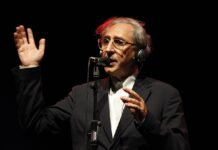

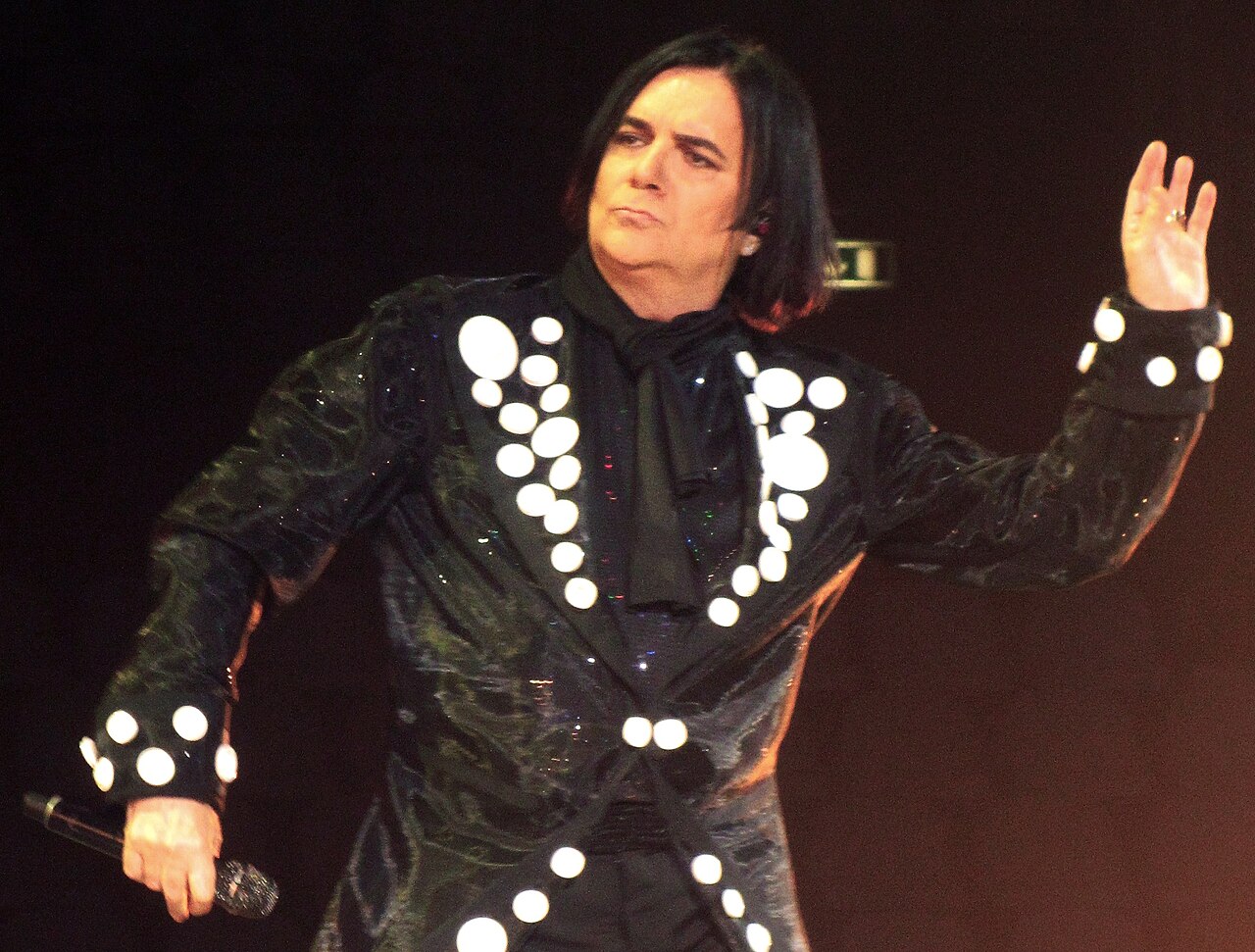
 Renato Zero arrived in Italian popular music dressed as though the stage had no rules. The costumes were extravagant, but the provocation ran deeper: a young Roman singer insisted that people pushed to the margins deserved to be seen and heard. More than five decades later, the spectacle still matters, yet his songs, friendships and remarkably loyal audience explain why he has lasted.
From Rome to the Piper
Born Renato Fiacchini in Rome on September 30, 1950, Zero entered show business through dancing and performance. The Piper, Rome’s influential 1960s club, was central to his early life. There he encountered a circle of future performers that included Loredana Bertè, Mia Martini, Patty Pravo and Stefania Rotolo. Before records made him famous, he worked in stage productions and appeared in cinema. His long apprenticeship gave him an understanding of what an audience could see as well as hear.
The making of Renato Zero
His breakthrough came during the 1970s. Trapezio (1976), Zerofobia (1977), Zerolandia (1978) and Erozero (1979) established a performer who could move from playful provocation to unusually direct emotional writing. “Mi vendo” made a spectacle of self-presentation; “Triangolo” played with suggestion and humor; “Il cielo” showed the intensity beneath the theatrical surface.
Costume became part of the storytelling. Feathers, makeup and extravagant silhouettes challenged expectations about how an Italian male singer should behave. Yet Zero was never confined to a single message or identity. His repertoire addressed loneliness, exclusion, desire, faith, family and solidarity, sometimes from sharply different angles.
The concerts built a world around the records. Zerolandia, his traveling tent show, gave fans a place to gather around a performer who treated their participation as part of the event. They became known as the “sorcini.” What might have remained a passing moment of 1970s excess turned into one of Italian music’s most durable relationships between artist and audience.
Friendships that shaped the story
Zero’s early bond with Loredana Bertè was both personal and professional. They came through the same Roman entertainment scene, shared work before their separate breakthroughs and remained closely associated with Mia Martini. Their friendship later suffered a long rupture. When Zero joined Bertè onstage in La Spezia in August 2025, their embrace publicly marked a reconciliation. Zero subsequently described the renewed closeness as deeply meaningful to him. The history is more interesting for its length and complexity than for any simplified account of who was to blame.
Stefania Rotolo belonged to that early artistic circle too. After her death, Zero remembered her in “Ciao Stefania,” included on Artide Antartide (1981). These connections place his career within a generation of dancers, singers and television performers who learned their craft together before becoming familiar names across Italy.
Giorgio Panariello: from imitation to friendship
The relationship with comedian Giorgio Panariello has a different origin. Panariello’s uncannily accurate Renato Zero impression became one of his defining acts. As Panariello has recounted, Zero once heard a fake interview featuring the imitation and briefly mistook it for his own voice. The story eventually became something both men could enjoy.
In a 2001 episode of Torno sabato, the real Zero and his imitator appeared and sang together. Rai has preserved the performance, while another Rai clip shows them facing one another in a playful exchange. Their easy rapport explains why Panariello is more than a passing celebrity reference in Zero’s story: the impersonation became a shared joke, an enduring public association and a friendship.
Changing without disappearing
The early 1980s were not an uninterrupted ascent. After a less successful stretch, Zero returned to prominence with Voyeur (1989). At the 1991 Sanremo festival, he performed Mariella Nava’s “Spalle al muro,” exchanging some of the visual excess of his earlier years for a stark, mature stage presence. “I migliori anni della nostra vita,” released on Sulle tracce dell’imperfetto (1995), became another defining song. He had found a way to grow older in public without abandoning the emotional directness that made his work distinctive.
Later projects continued to test the scale of his shows, from the symphonic Zerovskij to the three-part Zerosettanta project. In October 2025 he released L’ORAZERO, followed by a tour in 2026. He has remained an active recording and live performer rather than a figure preserved only by nostalgia.
Five Renato Zero videos to watch
“Mi vendo” — official audio: the confrontational energy of Zerofobia.
“Triangolo” — official audio: wit, theatricality and one of his most recognizable songs.
“Il cielo” — official live video: a performance from Figli del sogno that captures the connection with his audience.
“I migliori anni della nostra vita” — official audio: a landmark of his mature repertoire.
“Cercami” — Renato Zero’s YouTube channel: the later voice at its most intimate.
For Zero and Panariello together, watch Rai’s archive clip from Torno sabato.
Why Renato Zero endures
The outrageous clothes gave Zero an entrance, but they do not account for the staying power. His career has survived changes in fashion because he can make a large arena feel like a direct conversation. The songs leave room for humor and contradiction as well as vulnerability. The friendships, including those tested by time, make the public persona recognizably human. To his sorcini, Renato Zero has always been more than a costume: he is a performer who made belonging feel possible.
External Sources
Treccani — Renato Zero biography
Rai Cultura — Renato Zero and the Piper years
Rai Teche — Zero and Panariello on Torno sabato
ANSA — Zero on Bertè and L’ORAZERO
Renato Zero official store — Artide Antartide and “Ciao Stefania”