

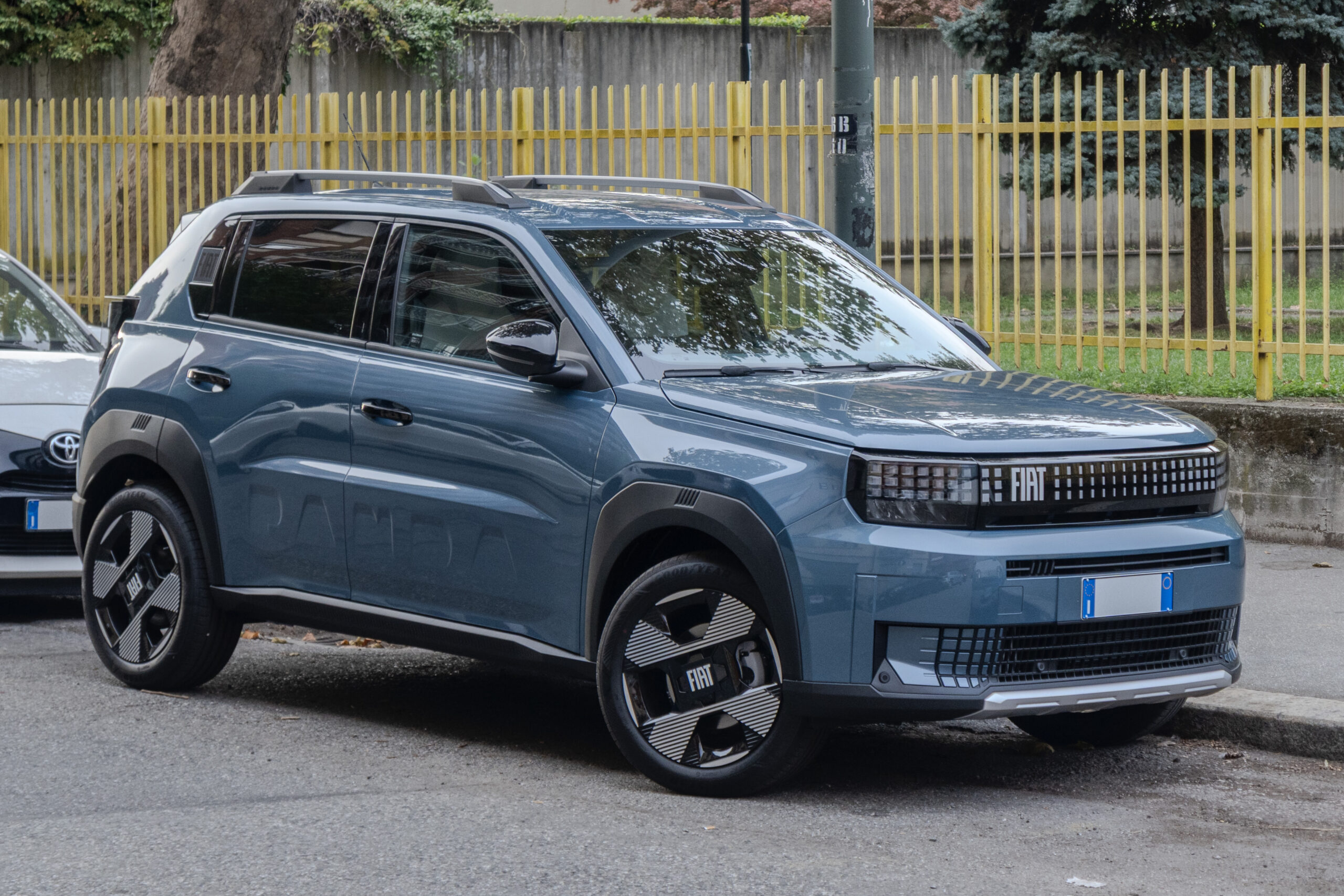
Italy’s transition to electric mobility is accelerating, but the country remains a distinctive car market. Compact vehicles dominate, hybrids are far more common than fully electric cars, and the experience of owning an EV varies considerably between a city apartment, a suburban home and a rural community.
For anyone buying, renting or driving an electric or hybrid car in Italy, the most important questions are practical: Can you charge at home? How extensive is the public network? Are electric cars automatically allowed into restricted traffic zones? Do tax exemptions apply everywhere?
This guide explains the differences between electric and hybrid technologies, the state of the Italian market, charging, incentives, operating costs and the realities of driving an electrified car across Italy.
Italy’s Electric-Car Market Is Growing
Italy adopted fully electric cars more slowly than several other large European markets, partly because of relatively high purchase prices, an ageing national vehicle fleet and the large number of Italians living in apartment buildings without private charging facilities.
The market is now changing more rapidly. According to MOTUS-E, battery-electric cars accounted for almost 8% of new registrations during the first eight months of 2026, compared with 5.1% during the same period of 2025. Approximately 445,000 fully electric cars were circulating in Italy by August 2026.
The previous year had already brought significant growth. UNRAE recorded approximately 95,000 new battery-electric registrations in 2025, giving fully electric cars a 6.2% annual market share. Plug-in hybrids represented another 6.6%.
Conventional hybrids occupy a much larger part of the market. They appeal to motorists who want lower fuel consumption without relying on an external charger, and they are particularly well suited to Italy’s combination of congested cities, short journeys and older residential buildings.
For an overview of the models Italians are currently choosing, see Italia Mia’s guide to the best-selling cars in Italy.
Italy’s Best-Selling Electric and Hybrid Cars
Italian registration figures reveal two very different markets. Hybrid sales remain dominated by familiar compact cars and crossovers, while the fully electric ranking increasingly includes lower-priced models from newer international manufacturers.
The following figures cover new registrations from January through August 2026. Rankings may change when complete annual data become available.
Best-Selling Hybrid Cars
This category includes both mild hybrids and full hybrids that do not require external charging.
| Rank | Model | Registrations |
|---|---|---|
| 1 | Fiat Panda | 75,972 |
| 2 | Jeep Avenger | 23,685 |
| 3 | Toyota Yaris Cross | 22,639 |
| 4 | Toyota Aygo X | 21,291 |
| 5 | Toyota Yaris | 19,339 |
The Fiat Panda remains the clear leader, reflecting Italy’s preference for economical cars that are easy to maneuver and park. Toyota’s strong position demonstrates the continuing popularity of full-hybrid technology, particularly among drivers who want lower urban fuel consumption without installing a charger.
Best-Selling Plug-In Hybrid Cars
Plug-in hybrids combine an externally rechargeable battery with a petrol engine.
| Rank | Model | Registrations |
|---|---|---|
| 1 | BYD Atto 2 | 14,716 |
| 2 | BYD Seal U | 10,177 |
| 3 | Volkswagen Tiguan | 6,213 |
| 4 | BMW X1 | 4,942 |
| 5 | Omoda 9 | 4,046 |
Chinese manufacturers have gained a significant position in this category. BYD occupies the first two places, while established European brands remain important in the family crossover and premium segments.
These vehicles can complete many everyday journeys using electricity, but their real efficiency depends on regular charging. A plug-in hybrid driven mainly with an empty battery may consume considerably more fuel than expected.
Best-Selling Fully Electric Cars
| Rank | Model | Registrations |
|---|---|---|
| 1 | Leapmotor T03 | 22,545 |
| 2 | Dacia Spring | 5,591 |
| 3 | Tesla Model Y | 4,432 |
| 4 | BYD Dolphin Surf | 4,237 |
| 5 | Citroën ë-C3 | 4,207 |
The success of the compact Leapmotor T03 and Dacia Spring shows the importance of price and city-friendly dimensions in Italy’s electric market. The Tesla Model Y serves buyers needing greater range and interior space, while the BYD Dolphin Surf and Citroën ë-C3 strengthen the growing selection of relatively affordable electric cars.
The rankings also demonstrate that Italy’s electric transition is not being led only by premium vehicles. Small cars designed for urban and suburban use are becoming central to the market.
Registration figures are based on UNRAE’s January–August model rankings by fuel type. For the broader market, see Italia Mia’s guide to the best-selling cars in Italy.
Electric, Mild Hybrid, Full Hybrid or Plug-In Hybrid?
The word “hybrid” covers several very different technologies. Understanding the differences is essential before comparing prices or fuel consumption.
Battery-Electric Vehicle
A battery-electric vehicle, normally abbreviated to BEV, has no petrol or diesel engine. It runs entirely on electricity and must be charged from an external power source.
Electric cars are quiet, produce no exhaust emissions while driving and generally require less routine mechanical maintenance than combustion-engine vehicles. Their suitability depends heavily on charging access and the driver’s usual routes.
Mild Hybrid
A mild hybrid uses a small electric motor to assist a petrol or diesel engine. The battery is charged through braking and engine operation and cannot normally propel the car for significant distances by itself.
Mild hybrids can reduce consumption, especially in urban traffic, but they should not be confused with fully electric cars. In practical terms, they are efficient combustion-engine vehicles with electrical assistance.
Full Hybrid
A full hybrid can travel short distances at low speed using electricity alone, although its main energy source remains petrol. The battery recharges automatically through regenerative braking and the engine.
Models such as the Toyota Yaris Hybrid have made this technology familiar throughout Italy. Full hybrids work particularly well in stop-and-go traffic, where repeated braking helps replenish the battery.
Plug-In Hybrid
A plug-in hybrid, or PHEV, combines a combustion engine with a larger battery that can be charged externally. Depending on the model, it may complete many everyday journeys using electricity before the engine starts.
A plug-in hybrid only delivers its intended economic and environmental benefits when it is charged regularly. Using a heavy PHEV without plugging it in can result in disappointing fuel consumption.
Which Type Works Best in Italy?
A fully electric car is most attractive for a driver who can charge at home or at work. It can be especially economical for predictable daily journeys, suburban commuting and regular city use.
A full hybrid is often the simplest choice for motorists who cannot install a charger. It requires no change in refuelling habits and performs efficiently in urban traffic.
A plug-in hybrid can suit drivers who complete short weekday journeys but occasionally travel long distances. However, it makes little financial sense if the battery will rarely be charged.
A mild hybrid offers a familiar driving experience and may reduce fuel consumption, but the savings are normally more modest.
Before buying, consider your most difficult regular journey rather than your average one. A car that handles the weekly motorway trip, winter mountain visit or rural commute comfortably will usually manage shorter journeys without difficulty.
Italy’s Public Charging Network
Italy’s charging network has expanded dramatically. The old figure of approximately 30,000 public charging points is no longer accurate.
MOTUS-E reported 84,564 public charging points by August 2026. The total refers to individual charging connections, not necessarily the number of physical locations. One charging station may contain several separate points.
Coverage remains strongest in northern and central Italy, particularly in Lombardy, Piedmont, Veneto, Emilia-Romagna and Lazio. The network is also growing in southern regions and on the islands, although rural coverage can remain uneven.
Motorway charging has improved significantly. High-power chargers are increasingly available at service areas and near motorway exits, making long-distance electric travel much more realistic than it was only a few years ago.
Drivers should still plan ahead when travelling through remote mountain districts, inland areas of southern Italy or parts of Sardinia and Sicily.
Charger Types in Italy
Most modern electric cars in Europe use two principal connections:
Type 2 is the standard connector for alternating-current charging. It is widely used by home wall boxes, hotel chargers, car parks and slower public charging points.
CCS2 is the principal connection for rapid direct-current charging. It is normally used during motorway journeys or whenever a driver needs to add substantial range quickly.
CHAdeMO can still be found at some charging stations and is used by several older Japanese electric models, but it is increasingly a legacy standard.
Charging speed is determined by both the charger and the vehicle. Connecting a car capable of accepting 50 kW to a 150 kW charger will not make it charge at 150 kW. Battery temperature and state of charge also affect the speed.
Rapid charging normally becomes slower once a battery is approximately 80% full. On a long journey, two shorter charging stops may therefore be faster than waiting for the battery to reach 100%.
Paying for Public Charging
Italy has numerous charging operators, each with its own tariffs, subscriptions and mobile applications. Major networks include Enel X Way, Be Charge, A2A, Atlante, Free To X, Ionity and Tesla.
Many drivers use a mobility-service application or RFID card that provides access to several networks. Direct payment by bank card is becoming more common, particularly at newer rapid chargers, but it should not yet be assumed at every location.
Before beginning a journey, check:
• whether the charger is operational
• its maximum charging speed
• the price per kilowatt-hour or per session
• whether an additional parking or time fee applies
• whether the charger requires an application, RFID card or direct payment
• recent reports from other drivers
Charging maps from individual operators are useful, while multi-network applications can provide a broader overview. Prices vary substantially, and ultra-rapid public charging can cost considerably more than charging at home.
Charging an Electric Car at Home
Home charging is normally the most convenient and economical arrangement. Many owners charge overnight using a dedicated wall box, when the car will remain parked for several hours.
A standard domestic outlet may technically charge some vehicles, but repeated high-power use requires a correctly installed and inspected electrical system. A professionally installed wall box is usually safer, faster and easier to manage.
Residents of condominiums should consult the building administrator before arranging an installation. The route of the electrical cable, allocation of costs, metering and use of communal areas must all be considered.
Italy’s domestic charging incentive currently covers 80% of eligible purchase and installation costs, up to €1,500 for an individual and €8,000 for work on condominium common areas. For the 2026 allocation, eligible installations must be completed between June 26 and December 31, 2026, with applications accepted from September 22, 2026 until January 31, 2027. Conditions and future application periods should always be checked on the official MIMIT domestic charging bonus page.
How Much Does It Cost to Run an Electric Car?
There is no single cost per kilometre because electricity tariffs vary widely.
Home charging is usually the least expensive option, particularly when combined with an appropriate electricity contract or domestic solar panels. Public alternating-current charging normally costs more, while high-power motorway charging is generally the most expensive.
Drivers who depend entirely on rapid public chargers may save less than expected compared with an efficient hybrid. The strongest financial case for an electric car normally belongs to someone who can complete most charging at home or at work.
Maintenance can be less expensive because a fully electric vehicle has no engine oil, exhaust system, conventional gearbox or spark plugs. However, tyres, suspension, air-conditioning, insurance and routine inspections still carry costs. Electric cars can also be relatively heavy, which may increase tyre wear if driven aggressively.
When comparing vehicles, calculate:
• purchase price after any confirmed incentives
• home-charger installation
• annual insurance
• expected home and public charging costs
• road tax
• servicing
• depreciation
• battery warranty
• realistic motorway range
Government Incentives and Road Tax
Italy’s vehicle-purchase incentives have changed repeatedly. Funding, eligibility, income limits, scrappage requirements and vehicle-price ceilings can vary between programs.
Buyers should therefore never assume that an incentive mentioned in an older article is still available. Confirm the current position through the official government portal before signing a purchase contract.
Road-tax rules also vary by region. Fully electric vehicles generally receive a multi-year exemption from the bollo auto, and some regions offer more generous treatment after the initial exemption period. Hybrid concessions are less uniform and may depend on registration date, technology and region.
Provincial registration tax and local benefits can also differ. The dealer, regional tax office or Automobile Club d’Italia should confirm the rules that apply to a specific vehicle and place of residence.
Company-car taxation is more favorable to fully electric and plug-in hybrid vehicles than to conventional cars under the current fringe-benefit system. This has helped increase demand for rechargeable company vehicles, but individual tax advice may be necessary.
Electric Cars, ZTLs and Parking
An electric car does not automatically have unrestricted access to every limited-traffic zone in Italy.
Rules are determined locally. Some municipalities permit electric vehicles to enter particular ZTLs, while others require the number plate to be registered in advance. Certain historic centers maintain restrictions even for zero-emission vehicles.
Parking concessions also vary. A municipality may offer free or discounted parking to electric vehicles, but the benefit may require registration, a permit or use of designated spaces.
Never enter a ZTL solely because the car is electric. Check the municipality’s official website and complete any required registration before travelling. Cameras enforce many Italian restricted zones automatically, and fines may arrive months later.
Vehicles should not remain in a charging space after charging has finished. Operators or municipalities may impose an occupancy charge, parking fee or penalty.
Travelling Long Distances by Electric Car
Driving an EV between major Italian cities is increasingly straightforward, especially along the principal motorway corridors. Routes connecting Milan, Turin, Venice, Bologna, Florence, Rome and Naples have numerous rapid-charging options.
Allow a larger energy reserve when travelling through mountains, during cold weather or at sustained motorway speed. Heating, air-conditioning, gradients and high speed can all reduce range.
A useful long-distance routine is to:
• begin with a high state of charge
• choose a primary charging stop and a backup
• arrive with a reasonable reserve
• use rapid charging mainly between approximately 10% and 80%
• combine charging with a meal or rest break
• confirm overnight charging with the hotel before arrival
A hotel advertising “EV charging” may have only one low-power connection, and it may be occupied. Ask whether the charger can be reserved, which connector it uses and whether a fee applies.
Renting an Electric Car in Italy
An electric rental can work well for a city-based holiday, a journey between major destinations or a stay at accommodations with confirmed charging.
It may be less convenient for an itinerary involving isolated villages, frequent hotel changes or remote rural areas. Visitors unfamiliar with Italian charging networks should download the necessary applications before collecting the car.
Ask the rental company about:
• the charging cable supplied
• compatible charging networks
• battery level required on return
• fees for returning the vehicle undercharged
• roadside assistance for a depleted battery
• whether the rental includes a charging card
Renters must still observe ZTL restrictions. The vehicle being electric does not guarantee access, and the rental company may add an administration fee when forwarding a fine.
Choosing an Electric or Hybrid Model
Italy’s market now includes small urban EVs, family hatchbacks, compact crossovers, luxury cars and electric commercial vehicles. Frequently encountered choices include models from Fiat, Tesla, Renault, Volkswagen, Peugeot, Citroën, BMW, Hyundai, Kia, Volvo and a growing number of Chinese manufacturers.
Brand reputation is only one consideration. Compare the vehicle’s real-world range, charging curve, battery warranty, service network and suitability for narrow streets and small parking spaces.
For a used electric car, request a battery-health report where available. Examine its service history, remaining battery warranty, charging cables, rapid-charging capability and compatibility with current European connectors.
Battery size should match actual needs. A larger battery may provide more range, but it also increases weight, purchase price and charging time. Many Italian drivers who charge at home do not need the largest battery available.
Are Electric Cars Better for the Environment?
Electric vehicles produce no exhaust emissions while being driven, improving local air quality and reducing traffic noise. This is particularly valuable in densely populated Italian cities and areas affected by high concentrations of air pollution.
Manufacturing an electric vehicle—especially its battery—requires substantial energy and raw materials. Its complete environmental impact therefore depends on battery production, vehicle size, annual mileage, electricity generation and eventual recycling.
Over the vehicle’s full life cycle, an electric car charged on the European electricity mix generally produces lower greenhouse-gas emissions than a comparable petrol or diesel car. The advantage increases as electricity generation becomes cleaner.
Hybrids can reduce fuel consumption, but they still burn fossil fuel. Plug-in hybrids achieve their greatest benefit only when charged frequently and driven predominantly in electric mode.
Is an Electric Car the Right Choice in Italy?
An electric car can be an excellent choice when the driver has reliable charging, covers predictable daily distances and intends to keep the vehicle long enough to benefit from lower operating and maintenance costs.
A full hybrid may be more practical for someone without private charging or for a driver who frequently travels through poorly served areas. A plug-in hybrid can provide a useful compromise, but only when regular charging is realistic.
The best decision is not determined simply by technology. It depends on where the car will be parked, how it will be charged and how it will be used.
Italy’s electric transition is no longer theoretical. The country now has a substantial charging network, a rapidly expanding selection of vehicles and increasing numbers of electric drivers. The remaining challenge is ensuring that the infrastructure, taxation and incentives become as predictable as the cars themselves.
Frequently Asked Questions
How many public charging points are there in Italy?
MOTUS-E reported more than 84,000 public charging points by August 2026. These are individual connections rather than physical charging locations.
Can an electric car enter every ZTL?
No. Access rules are set by individual municipalities, and advance number-plate registration may be required.
Is public charging cheaper than petrol?
It can be, but the result depends on the tariff and the vehicle. Home charging is normally the least expensive, while frequent ultra-rapid charging may reduce or eliminate the saving.
Do electric cars pay road tax in Italy?
Fully electric cars generally receive a regional road-tax exemption for an initial period, but the length and subsequent treatment vary by region.
Is a hybrid car charged from a plug?
Only a plug-in hybrid is charged externally. Mild hybrids and full hybrids recharge through the engine and regenerative braking.
Is an electric rental car practical for an Italian vacation?
Yes, particularly between major cities or when hotels provide confirmed charging. A conventional hybrid may be easier for remote or highly flexible itineraries.
External Sources
MOTUS-E — Electric-vehicle and charging data for Italy
UNRAE — Italian automotive market statistics
MIMIT — Domestic charging-station bonus
European Alternative Fuels Observatory
Italia.it and ACI — Driving requirements and rules in Italy