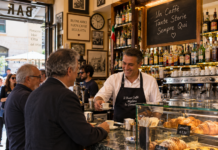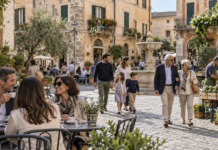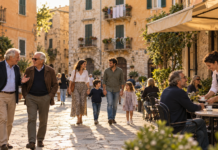
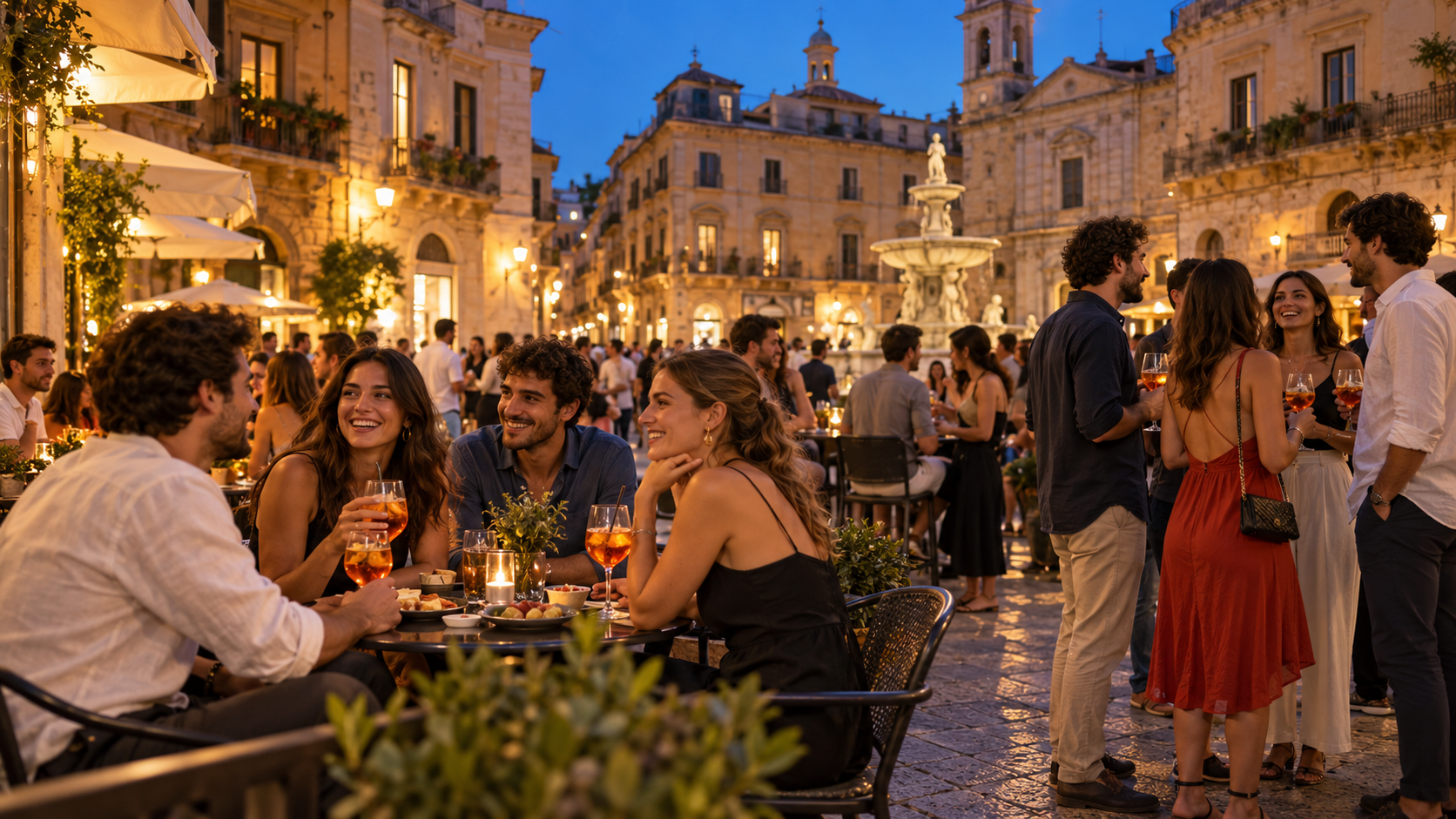
 Italy is famous for art, food and history, but after sunset another side of the country emerges. Historic squares fill with conversation, narrow streets become open-air meeting places, and cafés, wine bars and clubs remain busy until late at night.
Italians commonly call this phenomenon la movida.
Movida is often translated as “nightlife,” but the Italian meaning is broader. It can describe the entire evening social scene of a neighborhood: aperitivo, crowded streets, outdoor drinking, music, restaurants, late-night food and the spontaneous movement of people from one place to another.
At its best, the movida transforms a city into a lively communal space. At its worst, it produces noise, litter, excessive drinking and conflict between visitors, businesses and residents.
Understanding the Italian movida therefore means looking beyond nightclubs. It is a cultural and economic phenomenon—and one of the most visible expressions of how younger Italians use their cities.
What Does “Movida” Mean in Italy?
The word movida comes from the Spanish verb mover, meaning “to move.” Its literal associations include movement, activity and liveliness.
The expression originally became famous through La Movida Madrileña, the explosion of artistic, musical and social freedom that developed in Madrid after the death of Spanish dictator Francisco Franco in 1975.
During the late 1970s and especially the 1980s, young Spanish artists, musicians, filmmakers and performers rejected the cultural restrictions of the dictatorship. Madrid became a center of underground music, experimental cinema, provocative fashion and unconventional nightlife.
Film director Pedro Almodóvar became the movement’s most internationally recognized figure, but the original Movida was much more than an entertainment trend. It represented a generation celebrating newly recovered freedom.
The word entered Italian journalism during the 1980s and 1990s. Over time, however, Italians broadened its meaning. It was no longer used primarily to describe the Spanish cultural movement. It became a convenient term for the lively evening and nighttime activity found in cities and holiday resorts.
Today, when an Italian says that a neighborhood is una zona della movida, the person usually means that its streets are filled with bars, restaurants, young people and late-night activity.
Movida Is More Than Going to a Nightclub
Traditional nightlife tends to suggest a specific destination: a nightclub, concert hall, theater or bar.
Movida is less organized and more fluid.
A typical evening might begin with an Italian aperitivo, continue with dinner or drinks in a piazza, and end with music, dancing or late-night street food. Some participants never enter a club at all.
This is why the street is so important. The real attraction may not be a particular venue but the concentration of people within a walkable district.
A few streets, squares and bars create a social ecosystem in which people can arrive without an exact plan and decide what to do after meeting friends.
| Element | Typical Italian movida experience |
|---|---|
| Starting time | Aperitivo from approximately 6:30 or 7:00 p.m. |
| Main social hours | Approximately 9:00 p.m. to midnight |
| Late-night period | Midnight until 2:00–4:00 a.m., depending on the city |
| Common locations | Piazzas, pedestrian streets, canals, waterfronts and university districts |
| Popular venues | Bars, enoteche, pubs, cocktail bars, music clubs and informal restaurants |
| Typical participants | Students, young professionals, tourists and local residents |
| Peak nights | Thursday through Saturday |
| Busiest season | Late spring through early autumn, especially in coastal destinations |
Times vary considerably. Milan’s after-work aperitivo culture is different from a late summer evening in Naples, while university cities such as Bologna and Padua follow the rhythms of their student populations.
Why Is the Movida So Popular with Young People?
It Makes Socializing Spontaneous
Movida districts allow young people to meet without organizing an elaborate evening in advance. Friends can gather in a familiar square, order a drink and move between different venues.
The informality is part of the appeal. The evening can change as new friends arrive or someone suggests another bar, concert or party.
The Street Becomes a Shared Living Room
Many young Italians live with their parents longer than their counterparts in some other countries. Others share relatively small apartments or rooms with students and coworkers.
Public spaces consequently play an important social role. A piazza, waterfront or pedestrian street becomes an extension of the home—a place where large groups can meet without anyone having to host them.
This use of public space has deep roots in Italian life. Italia Mia’s guide to the Italian piazza explains how squares have served as centers of commerce, ceremony and conversation for centuries.
It Can Be Relatively Affordable
Entry to a famous nightclub may be expensive, but participating in the street-based movida does not necessarily require a large budget.
Someone can buy one drink, share food or simply meet friends in a public square. This accessibility is particularly important for students and young workers with limited disposable income.
Prices have increased considerably in the most fashionable neighborhoods, but the basic ritual remains more inclusive than an evening built entirely around exclusive venues.
Italians Value Face-to-Face Social Life
Digital communication organizes the evening, but it does not replace physical presence. The attraction lies in seeing friends, meeting new people and becoming part of a crowd.
The movida is connected to older Italian rituals such as the evening passeggiata. Both involve occupying public space, observing other people and being seen.
The difference is largely one of age, intensity and timing. The passeggiata may include children, parents and grandparents; the movida generally becomes younger and louder as the evening progresses.
University Life Creates Natural Movida Districts
Bologna, Padua, Turin, Rome, Milan and other cities have large student populations. International exchange programs have made these communities even more diverse.
Areas near universities naturally accumulate inexpensive bars, takeaway restaurants, music venues and meeting places. Graduation celebrations, student events and informal gatherings keep them animated throughout the academic year.
The Mediterranean Climate Encourages Outdoor Life
For much of the year, particularly in central and southern Italy, people can remain outdoors late into the evening.
Historic centers often contain pedestrian streets and closely connected piazzas. Instead of traveling by car between distant venues, participants can walk through an entire nightlife district.
In summer, the phenomenon moves toward beaches, waterfronts and holiday resorts. The Adriatic Riviera around Rimini and Riccione is among Italy’s most established nightlife destinations, combining clubs, beach venues and entertainment extending well beyond midnight.
The Positive Side of the Movida
The movida is sometimes discussed only as a public-order problem, but it also produces substantial benefits.
It Revitalizes Urban Neighborhoods
Restaurants, bars, music venues and small food businesses create employment and attract people to areas that might otherwise become deserted after office hours.
A successful evening district can give a neglected neighborhood a new identity. Former industrial areas, markets and waterfronts have frequently been converted into centers of dining and entertainment.
It Supports Music and Creative Culture
Small venues provide space for DJs, jazz groups, independent bands, comedians and emerging performers. Art exhibitions, book presentations and cultural events often develop alongside nightlife.
This creative element preserves at least a distant connection with the original Spanish Movida, even though the modern Italian use of the word is much broader and more commercial.
It Encourages Social Interaction
Italian cities are particularly beautiful when they are inhabited rather than merely observed. A crowded piazza demonstrates that historic centers can remain living communities instead of becoming open-air museums.
For travelers, joining the evening crowd offers an opportunity to experience contemporary Italian life after spending the day visiting churches, monuments and archaeological sites.
It Contributes to Tourism
Nightlife helps destinations appeal to younger travelers and encourages visitors to stay overnight instead of leaving after a day trip.
Milan’s Navigli, Rome’s Trastevere and the coastal resorts of Romagna have become destinations partly because of their evening atmosphere. Italy’s official tourism portal specifically identifies the Navigli as a center for aperitivo, music and nightlife, while describing Trastevere through its combination of history, traditions and nighttime activity.
The Problems Created by the Movida
The same concentration of people that makes the movida exciting can make everyday life difficult for residents.
Noise and Sleepless Neighborhoods
The most common complaint is noise.
Music from venues is only part of the problem. Hundreds of people talking in narrow streets can create an almost continuous roar. Bottles, motorcycles, car stereos and shouting may continue long after bars begin closing.
For someone visiting for one evening, the atmosphere may feel exhilarating. For someone whose bedroom overlooks the street, it can mean repeated nights without adequate sleep.
This conflict is particularly intense in historic centers, where residences and commercial premises occupy the same buildings.
Litter and Damage to Public Spaces
Disposable cups, bottles, cigarette ends and food containers can accumulate quickly. In areas without sufficient public toilets, residents may also face unpleasant sanitation problems.
Historic monuments, church steps and fountains sometimes become informal seating or drinking areas. Municipalities must balance the public use of these spaces with the need to protect them.
Excessive Alcohol Consumption
Movida does not automatically mean drunkenness, and many participants drink moderately or not at all. Nevertheless, cheap alcohol promotions and drinking in the street can encourage excessive consumption.
The Italian Ministry of Health warns that occasional heavy drinking has become particularly significant among younger people and differs from the traditional Mediterranean pattern of moderate consumption with meals. Selling or serving alcohol to anyone under 18 is prohibited in Italy.
Alcohol can also contribute to road accidents, aggressive behavior and unsafe personal decisions. Visitors should remember that Italy enforces drink-driving limits and that public transportation or a licensed taxi is the safer choice after drinking.
Crowding and Public Safety
Popular streets can become so crowded that movement becomes difficult. Congestion may block entrances, disturb emergency access and create opportunities for pickpocketing.
Crowds also make it easier for disagreements to escalate. Most movida districts are not inherently dangerous, but normal precautions remain sensible:
- Keep valuables secure.
- Do not leave drinks unattended.
- Avoid isolated streets when returning to accommodation.
- Use official taxis or recognized transportation services.
- Stay with friends when drinking late at night.
- Respect police instructions and temporary access restrictions.
The Displacement of Residents
Successful nightlife can raise commercial rents and change the identity of a neighborhood. Traditional shops may be replaced by bars, short-term rentals and businesses designed primarily for visitors.
A district that becomes famous for its authenticity can gradually lose the resident community that created that authenticity.
Municipal “Anti-Movida” Measures
Italian municipalities periodically introduce what newspapers call ordinanze anti-movida. Measures may include:
- Limits on takeaway alcohol sales
- Earlier closing times
- Restrictions on glass bottles
- Noise limits
- Increased police patrols
- Fines for drinking in designated public spaces
- Controlled access to overcrowded streets
- Requirements for venues to clean nearby areas
Rules can change by neighborhood, season and even individual street. Travelers should check local municipal information rather than assuming that regulations are identical throughout Italy.
The term anti-movida can be misleading. The objective is usually not to eliminate nightlife but to make it compatible with residents’ health, public safety and the protection of historic spaces.
The Best Places to Experience the Movida in Italy
Milan: Navigli, Isola and Porta Venezia
Milan offers perhaps Italy’s most polished version of the movida.
The Navigli district is the classic starting point. Bars and restaurants line the canals, especially around Naviglio Grande, Ripa di Porta Ticinese and the Darsena. The evening often begins with aperitivo before shifting toward cocktails, music and crowded streets.
Isola attracts a fashionable mixture of professionals, residents and visitors, while Porta Venezia is known for its cosmopolitan atmosphere and important LGBTQ+ nightlife.
Milan is particularly good for visitors who enjoy stylish cocktail bars, contemporary dining and a distinctly urban crowd.
Turin: San Salvario and the Quadrilatero Romano
Turin’s nightlife is energetic but generally less overwhelming than Milan’s.
San Salvario, between Porta Nuova station and Parco del Valentino, contains cocktail bars, restaurants and late-night venues representing many international cuisines.
The Quadrilatero Romano combines narrow historic streets with wine bars and restaurants. Turin is also one of the natural places to explore the history of Italian aperitivo.
Bologna: The University District
Bologna’s large student population gives the city one of Italy’s most spontaneous evening scenes.
The area around Piazza Verdi, Via Zamboni and Via del Pratello is informal, crowded and youthful. Expect students sitting outdoors, inexpensive drinks, live music and late-night food.
Bologna is not necessarily the place for polished glamour. Its appeal lies in sociability, political discussion, music and the sense that the street belongs to everyone.
Venice: Cannaregio and Campo Santa Margherita
Venice has a quieter and more intimate movida than Milan or Rome.
Young Venetians and university students gather around Campo Santa Margherita, while the Cannaregio district offers bacari, wine bars and canalside meeting places.
The evening often revolves around cicchetti and small glasses of wine rather than large clubs. Visitors should remember that Venice is also a residential city: loud behavior carries easily along its narrow streets and canals.
Florence: Santo Spirito and Santa Croce
In Florence, the movida unfolds among Renaissance buildings and historic squares.
Piazza Santo Spirito in the Oltrarno attracts students, residents and international visitors. The surrounding streets contain wine bars, restaurants and informal drinking spots.
The area around Santa Croce is also lively, although some streets cater heavily to tourists and study-abroad students.
Florence is a good destination for combining museums and monuments during the day with aperitivo and conversation after sunset.
Rome: Trastevere, Monti, Pigneto and San Lorenzo
Rome does not have a single nightlife district. Its enormous size creates several different versions of the movida.
Trastevere is the most famous, with restaurants, bars and crowds moving between Piazza Trilussa and the surrounding lanes. It is picturesque and extremely popular, but can become congested.
Monti offers wine bars and cocktails near the historic center. Pigneto attracts a creative and alternative crowd, while San Lorenzo remains closely associated with university life. Testaccio combines Roman food traditions with clubs and late-night venues.
For more about the ritual that usually begins a Roman evening, see Italia Mia’s complete guide to Italian aperitivo.
Naples: Piazza Bellini, Chiaia and the Historic Center
Naples produces one of Italy’s most intense street-based evening experiences.
Piazza Bellini is a major gathering place for students, artists and young travelers. Bars spill into nearby streets while the archaeological remains visible in the square provide an unmistakably Neapolitan setting.
Chiaia offers more fashionable cocktails and dining. The historic center around Piazza San Domenico Maggiore, Via dei Tribunali and the surrounding lanes is animated by bars, pizzerias and enormous numbers of pedestrians.
In Naples, the street often feels more important than the venue. The atmosphere is informal, theatrical and intensely social.
Bari and Lecce: Southern Street Life
In Bari, the areas around the old town, Piazza del Ferrarese and Piazza Mercantile become lively meeting places, particularly in warm weather.
Lecce has an elegant but relaxed scene built around wine bars, outdoor tables and the Baroque streets of its historic center. Summer brings a large number of visitors heading toward the beaches and towns of Salento.
Anyone planning a longer stay can combine the nightlife with Italia Mia’s guide to the best places to visit in Puglia.
Palermo and Catania: Sicily After Dark
Palermo’s nightlife is dispersed through several historic areas.
La Vucciria is famous for street food, music and late-night crowds, although its atmosphere can be chaotic. Piazza Sant’Anna, La Kalsa and the area around the Teatro Massimo offer different combinations of restaurants, bars and cultural venues.
In Catania, the historic center around Piazza Teatro Massimo, Via Gemmellaro and nearby streets attracts students and young professionals. The mild climate keeps much of the activity outdoors.
Rimini and Riccione: Italy’s Summer Party Coast
For clubs, beach parties and summer entertainment, few areas rival the Riviera Romagnola.
Rimini combines a large beach resort with bars, concerts and clubs. Riccione is associated with fashionable venues, major DJs and nightlife that continues until dawn.
The scene is more commercially organized than the spontaneous street gatherings of Bologna or Naples, but it remains one of the defining destinations of Italian summer nightlife.
Sardinia: Cagliari and the Costa Smeralda
In Cagliari, the Marina, Stampace and Castello districts offer bars, outdoor dining and a local urban atmosphere.
The Costa Smeralda, particularly Porto Cervo, represents the luxury end of Italian nightlife. Expect exclusive clubs, yachts, designer fashion and correspondingly high prices.
For a more accessible summer evening, coastal towns elsewhere on the island combine beach bars, music and informal outdoor gatherings.
How to Experience the Movida Like a Local
Do not arrive too early. Outside the aperitivo period, many nightlife areas do not become animated until after dinner.
Dress according to the destination. Casual clothes are normal in student districts, while fashionable Milanese bars and luxury coastal clubs may expect a more polished appearance—an evening version of la bella figura.
Avoid treating every busy square as a drinking zone. Some municipalities prohibit alcohol in particular public areas, especially from glass containers.
Most importantly, remember that the picturesque streets surrounding you are not stage sets. People sleep, work and raise families above the bars. Keeping voices down when leaving, disposing of rubbish correctly and avoiding doorways are small gestures that make nightlife more sustainable.
Movida, Aperitivo and Passeggiata: What Is the Difference?
These three Italian evening customs overlap, but they are not interchangeable.
| Custom | Main purpose | Typical time | Atmosphere |
|---|---|---|---|
| Passeggiata | Walking, seeing people and socializing | Early evening | Relaxed and intergenerational |
| Aperitivo | Drinks and light food before dinner | Approximately 6:30–9:00 p.m. | Social but usually structured around a bar |
| Movida | Wider nightlife across streets and venues | Evening until late night | Younger, louder and more fluid |
An evening can include all three: a passeggiata through the center, aperitivo with friends and then several hours in a movida district.
A Living Tradition—and a Continuing Debate
The Italian movida is neither simply a party nor merely a public nuisance.
It reveals how Italians use urban space, how young people create communities and how historic neighborhoods adapt to contemporary life. It generates employment, supports restaurants and music venues, and gives cities energy after dark.
It also raises legitimate questions about alcohol, noise, safety and residents’ right to sleep.
The most successful movida districts are not necessarily those with the largest crowds. They are the ones that find a workable balance between entertainment and daily life.
For visitors, the best way to experience the phenomenon is to participate with curiosity and restraint: begin with aperitivo, walk through the neighborhood, try local food, listen to the city and remember that the freedom of the night depends on respect for the people who will still be there the following morning.
Recommended Books About Italian Culture and Travel
Italy Travel Guide — Compare current guidebooks covering Italian cities, entertainment districts, transportation and practical travel planning.
Italian Culture and Customs — Browse books examining Italian social traditions, everyday behavior and contemporary cultural life.
Related Italia Mia Articles
- Italian Aperitivo: Drinks, Food, Etiquette & City Guide
- The Italian Passeggiata: The Art of the Evening Stroll
- The Italian Piazza: History, Architecture and the Heart of Italian Life
- La Bella Figura: The Italian Art of Making a Good Impression
- Italian Daily Life: 15 Everyday Habits That Surprise Visitors
- Italy for First-Time Visitors
External Links
- Treccani: Meaning and history of the word “movida”
- Treccani: The changing Italian meaning of “movida”
- Italia.it: Nightlife and entertainment in Italy
- Italia.it: Milan’s Navigli district
- Italia.it: Trastevere in Rome
- Italian Ministry of Health: Young People and Alcohol
- Italian Ministry of Health: Alcohol—Zero or As Little As Possible