 Italy’s appeal is often described through its monuments, landscapes, food and art. Yet the Italian lifestyle is expressed most clearly in much smaller moments: an espresso taken at the counter, a conversation in the piazza, the evening passeggiata and a Sunday meal that lasts well into the afternoon.
There is no single way of living in Italy. Daily routines in Milan are not identical to those in Naples, and life in a Tuscan village differs considerably from life in central Rome. Age, profession, income and family background also shape individual habits.
Nevertheless, certain customs appear throughout the country. Together, they reveal a culture that places considerable value on human contact, regional identity, good food, public life and the pleasure of doing ordinary things well.
Disclosure: This article contains affiliate links. If you make a purchase or reservation through one of these links, Italia Mia may earn a commission at no additional cost to you.
1. Starting the Day at the Local Bar
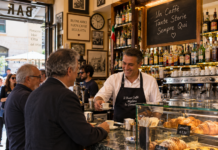
For many Italians, the day begins at a neighborhood bar rather than a large international coffee chain. A customer may enter, greet the barista, order a cappuccino or espresso, exchange a few words and leave within minutes.
The experience is quick, but it is not entirely impersonal. Regular customers often know the staff, and the barista may begin preparing someone’s usual order before it is requested.
Coffee in Italy is both a drink and a way of marking transitions during the day. There may be one after breakfast, another during a work break and an espresso after lunch.
Our guide to Italian coffee culture, espresso and the Italian bar explains the ritual in greater detail.
Many Italian households also prepare coffee with a stovetop moka. Readers who would like to recreate the tradition can browse Italian moka coffee makers on Amazon.
2. Keeping Breakfast Simple
A traditional Italian breakfast is generally lighter and sweeter than breakfast in Britain or the United States.
At home, it might consist of coffee with biscuits, toast, bread and jam or a packaged pastry. At the bar, the familiar combination is a cappuccino and cornetto.
Eggs, bacon, sausages and other savory foods are not impossible to find, particularly in hotels and international cafés, but they are not the usual weekday breakfast for most Italians.
Breakfast is often less about sitting down for a large meal and more about gently beginning the day.
3. Greeting People When Entering a Place
Entering a small shop, waiting room, elevator or neighborhood bar without acknowledging the people present can seem unfriendly.
A simple buongiorno during the day or buonasera later in the afternoon establishes courtesy before any transaction begins. Italians also commonly say arrivederci, grazie or buona giornata when leaving.
Greetings become especially important in smaller communities, where people repeatedly encounter the same shopkeepers, neighbors and professionals.
Visitors can learn the most useful expressions in our guide to Italian greetings and everyday etiquette.
4. Eating Meals at Recognizable Times
Italian schedules have become more flexible, but meals still provide structure to the day.
Lunch is commonly eaten between approximately 12:30 and 2:00 p.m., while dinner usually begins later than in many northern European countries. In southern Italy and during summer, sitting down to dinner at 9:00 p.m. may feel completely normal.
Restaurants often close between lunch and dinner rather than serving continuously. Travelers accustomed to eating whenever convenient may discover that arriving at 4:00 p.m. leaves them with limited options.
Adapting to local meal times is one of the easiest ways to experience a more authentic rhythm of life.
5. Treating Lunch as a Real Meal
Although busy workers increasingly choose quick lunches, the Italian midday meal is still more likely to feel like a proper break than something eaten hurriedly at a desk.
A simple lunch might include pasta, rice, soup, a salad, a panino or a secondo with vegetables. Even when the meal is modest, sitting down and concentrating on the food remains important.
The traditional sequence of antipasto, primo, secondo, contorno and dessert should not be interpreted as an obligatory everyday marathon. Italians frequently order only one or two courses. The principle is more important than the number of plates: food deserves its own time and attention.
6. Protecting the Sunday Lunch Tradition
Sunday lunch remains one of Italy’s most recognizable family rituals.
Parents, adult children, grandparents and relatives may gather around a table for several courses and several hours. Recipes often reflect regional traditions and family history, and the meal may be followed by coffee, conversation, fruit, dessert and perhaps a digestivo.
Not every family observes this tradition every week, but the cultural expectation remains strong. Sunday lunch is not merely about eating; it reinforces relationships across generations.
Explore the dishes and customs behind an Italian Sunday lunch.
For recipes to try at home, browse these Italian cookbooks on Amazon.
7. Shopping for Food Frequently
Large weekly supermarket trips are now common, especially among families with cars. Nevertheless, many Italians continue to buy certain foods several times during the week.
Bread may come from the bakery, meat from a butcher, fruit and vegetables from a street market, and cheese from a specialized food shop. Frequent shopping makes it easier to buy fresh ingredients in smaller quantities.
Independent shops also provide something supermarkets cannot always reproduce: familiarity. A trusted vendor may recommend the ripest fruit, explain how to prepare an unfamiliar vegetable or reserve a preferred cut of meat for a regular customer.
8. Choosing Seasonal and Regional Ingredients
Italian cooking is closely connected to place and season.
Spring brings artichokes, asparagus and fresh peas. Summer fills markets with tomatoes, peaches, melons and zucchini. Autumn introduces mushrooms, chestnuts, truffles and new olive oil. Winter encourages soups, polenta, legumes and slow-cooked dishes.
Regional identity is equally important. Pesto belongs to Liguria, orecchiette are associated with Puglia, risotto has deep northern roots, and Sicily has culinary traditions shaped by centuries of Mediterranean exchange.
This is why asking for “typical Italian food” can be too broad. The more revealing question is: “What is typical here?”
9. Discussing Food While Eating Food
It is entirely normal for a table of Italians to discuss the next meal while finishing the current one.
People debate ingredients, compare restaurants, exchange recipes and explain how a grandmother prepared a familiar dish. These conversations are not necessarily signs of culinary obsession. Food provides a shared language connecting geography, memory, family and personal taste.
Opinions can be firm. Someone may insist that a sauce requires a particular pasta shape or that a familiar recipe should never contain a certain ingredient.
Such disagreements are usually part of the pleasure.
10. Taking the Passeggiata
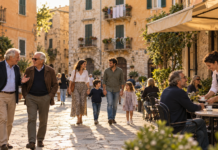
In the late afternoon or early evening, Italians of all ages may walk through the center of town, along the seafront or around the main square.
The passeggiata is not primarily exercise and does not require a destination. It is an opportunity to see other people, meet friends, have a gelato, look into shop windows and participate in public life.
The precise time changes with the season. In hot southern towns, the summer passeggiata may not begin until the temperature becomes comfortable in the evening.
Read more about the Italian passeggiata and the art of the evening stroll.
11. Meeting in the Piazza
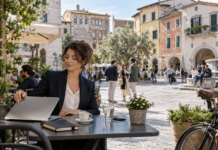
The piazza is more than an attractive architectural space. It is the shared living room of an Italian town.
Children play, teenagers meet friends, older residents sit on benches, couples walk, markets appear and cafés spread their tables across the pavement. A piazza may host political gatherings, concerts, religious processions and local festivals while continuing to function as an ordinary meeting place.
In smaller communities, simply spending time in the main square helps newcomers understand local rhythms and become familiar faces.
Discover how the Italian piazza remains at the heart of community life.
12. Enjoying Aperitivo Before Dinner
Aperitivo occupies the space between the working day and the evening meal.
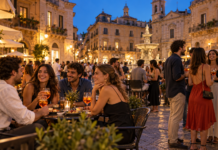
Friends or colleagues meet for a spritz, wine, beer or non-alcoholic drink accompanied by olives, nuts, chips or small prepared dishes. In some cities, the food selection becomes substantial enough to be called apericena.
The purpose is not simply to consume a discounted meal. Aperitivo creates a social pause: a chance to decompress, talk and decide how the rest of the evening will unfold.
Our complete guide to Italian aperitivo covers drinks, food and local etiquette.
Travelers can experience the tradition through a Florence food tour with local aperitivo offered through Weekend in Italy. Check current availability and booking conditions before reserving.
13. Making Conversation Part of Everyday Errands
A trip to the bakery or pharmacy may include more conversation than visitors expect.
A customer might discuss the weather, ask about someone’s family, comment on a local event or complain about traffic before completing the transaction. These exchanges can make service appear slower, but they also transform anonymous errands into social encounters.
This does not mean every Italian is naturally extroverted. It reflects a society in which relationships often grow through repeated face-to-face contact.
For someone moving to Italy, returning to the same bar, market stall and neighborhood shops can gradually create a valuable local network.
14. Speaking With the Hands as Well as the Voice
Italian gestures are famous internationally, sometimes to the point of caricature. Yet gestures genuinely form part of everyday communication.
Hands may reinforce a question, express disbelief, indicate that something is perfect or communicate an entire reaction without words. Their meaning depends on context, region and facial expression.
Visitors should be cautious about copying gestures they do not understand. Some are harmless and playful, while others may be dismissive or insulting.
The safest approach is to observe gestures as part of the richness of Italian conversation rather than treating them as a performance.
15. Paying Attention to La Bella Figura
La bella figura is often translated as making a good impression, but its meaning extends beyond clothing.
Appearance matters, particularly in social settings, but so do manners, posture, behavior and the way a person handles a situation. Being appropriately dressed, greeting people properly and avoiding public embarrassment can all be part of presenting oneself well.
It does not mean that Italians are always formally dressed. Modern Italian style can be casual, practical and understated. The essential idea is appearing intentional rather than careless.
Our article on la bella figura explores how this principle influences style and social behavior.
16. Maintaining Strong Family Connections
Italian families have changed significantly, and the traditional multigenerational household is no longer universal. However, family ties continue to shape daily decisions.
Adult children may live near their parents, grandparents often help with childcare, and relatives remain involved in holidays, celebrations and practical matters. Frequent phone calls and family group chats have simply added modern technology to an older pattern of regular contact.
Family closeness can provide substantial emotional and practical support. It can also produce obligations, opinions and occasional interference.
The Italian family is affectionate, complicated and continually evolving.
17. Expressing Strong Regional and Local Identity
An Italian may identify not only with the country but also with a region, province, town or neighborhood.
Local dialects, recipes, festivals, football clubs and historical rivalries remain meaningful. Two towns separated by a short drive may prepare the same dish differently and insist that only one version is correct.
This local attachment explains why Italy feels so culturally varied. Traveling from Piedmont to Sicily does not simply reveal different scenery; it introduces different culinary traditions, speech patterns, architecture and social rhythms.
Understanding Italy therefore requires looking beyond national stereotypes and discovering its twenty distinct regions.
18. Using Public Spaces as Extensions of Home
Italian social life frequently unfolds outdoors.
Cafés place tables on sidewalks, neighbors talk from balconies, families gather in parks and friends meet on church steps. In coastal towns, the promenade becomes especially active after sunset. In hill towns, a bench overlooking the countryside may serve as an informal meeting place.
Climate helps, but architecture matters as well. Historic centers were designed around walkable streets and shared spaces long before the arrival of cars.
Even a short walk can therefore become a social activity rather than merely a way of moving from one place to another.
19. Celebrating Local Festivals and Traditions
Italy’s calendar is filled with patron-saint festivals, food fairs, religious processions, historical reenactments, open-air concerts and sagre dedicated to local products.
Some celebrations attract international visitors, while others remain intensely local. A small town may spend months preparing decorations, costumes, food stands and fireworks for one important weekend.
These events strengthen community identity and connect contemporary life with older traditions. For visitors, they offer an opportunity to experience a destination beyond its permanent monuments.
The official Italia.it events and travel portal can help travelers identify seasonal celebrations and regional experiences.
20. Finding Pleasure in Ordinary Moments
The expression dolce far niente—the sweetness of doing nothing—is often used to market an idealized version of Italian life. Real Italians work, commute, pay bills, face bureaucracy and rush through busy days like everyone else.
Still, Italian culture often preserves space for small pleasures.
It may be a coffee taken with a friend, ten minutes of conversation after lunch, an evening walk, a carefully prepared plate of pasta or a Sunday afternoon with family.
The Italian lifestyle is not simply about slowing everything down. It is about recognizing which moments should not be rushed.
How Visitors Can Experience the Italian Lifestyle
The best way to understand Italian life is to spend time in ordinary places.
Stay in a residential neighborhood, return to the same café, visit a local market and walk through the center during the evening passeggiata. Learn a few greetings, respect local meal times and ask which dishes are typical of the area.
A cooking class can provide a particularly enjoyable introduction because it connects food with family traditions, regional ingredients and conversation. Weekend in Italy offers a Florence cooking and tasting experience as well as a Venetian cooking class. Verify schedules, prices and cancellation conditions on the booking page.
For a longer visit, compare hotels and accommodations throughout Italy on Trip.com. Staying several nights in one place makes it easier to move beyond sightseeing and notice the routines that give a neighborhood its character.
The Italian Lifestyle Is Local, Social and Personal
No list of habits can describe more than 59 million individuals. Italy contains fast-moving cities, quiet villages, industrial communities, farming regions, tourist resorts and isolated mountain towns.
Yet several themes repeatedly emerge: relationships matter, food carries memory, public spaces encourage contact and regional identity remains powerful.
The Italian lifestyle is not a formula that can be purchased or copied perfectly. It is a way of giving attention to daily life—one coffee, meal, greeting, walk and conversation at a time.
External Sources
Italia.it — Official Italian Tourism Website
Italia.it — Slow Tourism in Italy
Visit Tuscany — A Day in Florence’s Food Culture
Visit Tuscany — Experiencing Florence Like a Local