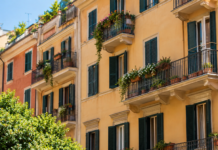
 The photographs are almost irresistible: a stone house in a medieval Sicilian village, a narrow balcony overlooking tiled roofs and a price lower than the cost of dinner. Italy’s famous “€1 houses” have generated headlines around the world, often described in the United States as homes for $1.
The houses are real. The symbolic €1 price can also be real. However, nobody should confuse the advertised price with the cost of acquiring, renovating and maintaining a habitable property in Italy.
A one-euro house is normally an abandoned or severely neglected property offered through a municipal regeneration program. The symbolic price attracts buyers willing to invest money and time in a town that has lost residents. In return, the buyer accepts conditions that may include renovation deadlines, financial guarantees and compliance with local architectural regulations.
For the right person, restoring one of these houses can be a rewarding project and an opportunity to become part of a small Italian community. For someone expecting an effortless bargain, it can become an expensive legal and construction commitment in a place that may be difficult to reach and even harder to resell.
First, It Is Usually €1—not $1
The initiatives are commonly called “case a 1 euro,” meaning houses for one euro. International headlines often translate this into “$1 homes,” but the transaction takes place in euros.
The difference between one euro and one dollar is insignificant because the real costs begin after the symbolic purchase price.
There is no single national €1-house program. Individual municipalities establish their own rules, publish their own notices and determine which properties are available. Some homes remain privately owned until the transfer, while others have been acquired by the municipality.
In certain programs, €1 is only the opening price. Interested buyers submit competing offers, and the house is awarded to the highest or most suitable bidder.
Sambuca di Sicilia, for example, has operated an official municipal program offering properties with a symbolic starting price. Its published documentation establishes specific obligations for successful buyers. A rule reported about Sambuca, Mussomeli or another participating town should never be assumed to apply everywhere in Italy.
Before paying for a flight or submitting personal information, locate the current public notice—known as a bando—on the municipality’s official website. If there is no active notice, current property list and documented application procedure, do not rely on an old newspaper article or an unofficial form circulating online.
Why Italian Towns Sell Houses for a Symbolic Price
Many participating towns have experienced decades of depopulation. Younger residents moved to larger cities or abroad, owners died without maintaining inherited properties, and buildings in historic centers gradually became unsafe.
An abandoned house is not merely unattractive. A deteriorating roof can damage adjoining properties, while an unstable façade can create a public-safety hazard. Restoring these buildings can bring residents, tradespeople, customers and economic activity back to streets that have been empty for years.
The municipality is therefore not giving away a completed home. It is transferring a problem—and an opportunity—to a buyer who agrees to solve it.
What Does a €1 House Really Cost?
There is no universal answer. A small but structurally sound house requiring new utilities and finishes is very different from a roofless ruin in an earthquake-sensitive area.
Location within the village also matters. Carrying building materials through a narrow historic lane where trucks cannot enter can significantly increase labor and transport expenses.
The following figures are approximate planning ranges rather than quotations:
| Expense | Illustrative range |
|---|---|
| Purchase price or winning bid | €1 to several thousand euros or more |
| Refundable guarantee or surety, if required | Often several thousand euros |
| Registration and transfer taxes | Statutory minimums and applicable taxes |
| Notary and transaction costs | Approximately €1,500–€4,000+ |
| Geometra, architect, engineer and surveys | Approximately €2,000–€10,000+ |
| Renovation | Roughly €800–€2,500+ per square meter |
| Utility reconnection or replacement systems | Several thousand euros or more |
| Travel, accommodation and project supervision | Highly variable |
| Annual taxes, insurance and maintenance | Ongoing |
A 70-square-meter property requiring a complete structural and systems renovation could easily become an €80,000–€150,000 project. A larger ruin, a protected building, extensive seismic work, difficult access or premium finishes can push the final cost considerably higher.
The correct comparison is not “€1 versus €100,000.” It is the total cost of the finished project versus the cost of buying an already habitable home in the same area.
In parts of rural Italy, usable properties may already be available for €25,000–€70,000. Paying more at the beginning can be cheaper, faster and far less stressful than restoring a symbolic-price ruin.
Hidden Expense No. 1: The Winning Price May Not Be €1
Some municipalities use a competitive procedure. When several people want the same property, buyers submit bids above the symbolic starting price.
Buildings in better condition, with good access, attractive views or outdoor space naturally attract greater interest. The winning price may therefore be several thousand euros rather than one euro.
Even when the final bid remains low, paying more does not cancel the obligations contained in the municipal notice. The buyer must read both the general program regulations and the technical documents for the individual property.
Hidden Expense No. 2: The Guarantee Deposit
Many programs require a deposit, bank guarantee or insurance surety to ensure that the buyer completes the promised renovation.
The money may eventually be refundable, but it can remain unavailable for several years. Bank guarantees and insurance sureties may also involve application charges, commissions and renewal costs.
The guarantee could be forfeited if the buyer abandons the project, misses a deadline or fails to complete the required work.
Before making an offer, confirm:
- The amount of the guarantee
- The acceptable form of the guarantee
- How long it must remain valid
- Whether it must be renewed
- What conditions trigger forfeiture
- Exactly when and how it will be released
A refundable guarantee is not the same as a cost, but it remains an important cash-flow commitment.
Hidden Expense No. 3: Taxes and the Notary
Italian property transfers normally require a notary. The notary verifies legal aspects of the transaction, prepares the deed, collects the applicable taxes and registers the transfer.
Even if the property costs only €1, the professional and administrative work does not cost €1.
When residential property is purchased from a private seller without the “prima casa” benefit, registration tax is generally 9 percent under the ordinary rules, subject to a statutory minimum. Fixed mortgage and cadastral taxes may also apply.
Eligible main-home purchases may qualify for a reduced 2 percent registration-tax rate, subject to specific requirements and minimum amounts. Transactions subject to VAT follow a different tax structure.
When the necessary legal conditions are satisfied, taxes may be calculated using the property’s cadastral value rather than the token purchase price.
Ask the notary for a written estimate based on:
- The individual property
- The identity and nationality of the buyer
- Whether the purchase qualifies as a main home
- The cadastral value
- Whether the seller is a private owner or business
- The structure of the municipal program
Do not estimate the closing taxes by simply calculating 9 percent of €1.
Hidden Expense No. 4: Technical Professionals and Paperwork
The notary handles the legal transfer, but the buyer also needs independent technical due diligence.
A local geometra, architect or engineer should inspect the property and compare its actual condition with municipal planning records and the cadastral plan.
The investigation should examine:
- Ownership and title history
- Cadastral plan and boundaries
- Urban-planning compliance
- Unpermitted additions or alterations
- Structural stability
- Seismic requirements
- Heritage and landscape restrictions
- Shared walls, roofs, stairs and access rights
- Water, sewerage, electricity and gas connections
- The feasibility of the proposed renovation
- The likely cost of completing the work
An irregularity in the records can delay building permits or prevent the proposed renovation. Never assume that an old building is automatically compliant simply because it has existed for generations.
Hidden Expense No. 5: A Ruin Can Need Almost Everything
The lowest-priced houses tend to be the properties other buyers have rejected.
Common problems include:
- Collapsed or leaking roofs
- Water infiltration
- Unstable masonry
- Rotten floors and beams
- Obsolete or missing electrical systems
- No functioning plumbing
- Missing bathrooms
- Inadequate drainage
- No heating system
- Broken windows and doors
- Structural movement
- Damp and mold
Old walls can conceal further damage that becomes visible only after work begins. Asbestos or other hazardous materials may require specialist removal.
If the house shares walls, stairs or a roof with an abandoned neighboring property, the renovation may depend on another owner’s cooperation.
A realistic budget should include a contingency of at least 15–25 percent. For a severely deteriorated or poorly documented building, even that reserve may be insufficient.
Renovation Deadlines Are Contractual Obligations
Municipal programs generally require successful buyers to complete specific steps within fixed periods.
These may include:
- Submitting a renovation plan
- Appointing qualified professionals
- Obtaining building permits
- Beginning construction
- Completing the required work
- Providing evidence of completion
The deadlines vary between municipalities and individual programs. A buyer might be required to submit technical plans within a few months and finish the renovation within one to three years.
Delays caused by unavailable contractors, permit revisions, material shortages or unexpected structural damage do not necessarily excuse the buyer.
Before signing, ask whether extensions are possible, who has the authority to approve them and what happens if a deadline is missed.
This is especially important for overseas buyers. Managing an Italian renovation remotely is possible, but it requires a trusted local professional with clearly defined responsibilities, regular reporting and control over contractor payments.
Renovating in a Historic Center
Many €1 houses stand in historic centers where exterior changes are restricted.
The municipality or heritage authority may regulate:
- Windows and shutters
- Roof tiles
- Balconies
- Doors
- Façade materials and colors
- Air-conditioning equipment
- Satellite dishes
- Solar panels
- Exterior lighting
These regulations protect the architectural character that attracted the buyer in the first place. However, they can also make the project slower and more expensive.
A beautiful architectural rendering is meaningless until a qualified local professional confirms that the proposed changes can receive approval.
Buying a House Does Not Give You Italian Residency
Property ownership and immigration status are separate matters.
Buying a house does not automatically give a non-EU citizen the right to:
- Live in Italy year-round
- Work in Italy
- Obtain a residence permit
- Qualify for citizenship
- Remain beyond the period permitted to visitors
EU citizens benefit from freedom of movement but must still follow registration requirements when settling in Italy.
Non-EU citizens require an appropriate visa and residence permit for long-term stays. Owning a home can provide an address, but it does not replace a visa’s financial, insurance, employment or other eligibility requirements.
Italia Mia’s guide to moving to Italy as an expat explains the wider relocation process.
Readers considering a longer stay should also consult our guide to Italian visas for expats and digital nomads.
Can Americans and Other Foreigners Buy?
EU and EEA citizens can generally purchase property under the same basic framework as Italian citizens.
For buyers from outside the EU or EEA, the notary may need to verify legal residency or the condition of reciprocity. Reciprocity generally considers whether the buyer’s country grants comparable property rights to Italian citizens.
Exemptions and international agreements may apply, so this question should be resolved before submitting a binding offer.
Americans can commonly purchase Italian real estate, but the notary should still confirm the circumstances of the individual transaction.
Foreign buyers also need an Italian tax identification number called a codice fiscale. Non-residents can apply through the Italian tax authorities or, in qualifying circumstances, an Italian consular office.
Anyone who cannot fully understand the documents should appoint an independent bilingual lawyer. The municipality, selling owner and real-estate agent are not substitutes for the buyer’s own legal adviser.
Annual Costs Continue After Renovation
Completing the work does not end the financial commitment. Depending on how the property is used and classified, continuing expenses can include:
- IMU municipal property tax, particularly for second homes
- TARI waste charges
- Electricity, water, gas and internet
- Utility standing charges
- Condominium or shared-building expenses
- Insurance
- Routine repairs
- Periodic roof and façade work
- Garden or land maintenance
- Security and property inspections
- Accounting assistance for rental income
Main residences can receive favorable tax treatment, but simply describing a house as a “first home” is not sufficient. Legal residence, deadlines, cadastral classification and other requirements matter.
If the property will remain empty for extended periods, arrange ventilation, leak inspections, mail collection and emergency access. A small plumbing or roof problem can become serious structural damage before the owner’s next visit.
The Resale Problem
The conditions that made the house inexpensive may also make it difficult to sell.
A beautiful restoration does not guarantee that the local property market will value the building at the amount spent on it. If renovated houses in the town sell for €50,000, investing €150,000 in a €1 property will not automatically create a €150,000 asset.
Ask how many comparable properties have actually sold, not merely how many are advertised.
Investigate:
- The year-round population
- Medical services
- Grocery stores and pharmacies
- Internet quality
- Road access
- Public transportation
- Distance from an airport or railway station
- Winter weather
- Local employment
- Demand for long-term housing
A village may be lively and enchanting in August but extremely quiet in January.
Do Not Assume You Can Turn It Into an Airbnb
Some buyers justify the renovation cost by planning to operate a vacation rental. That income should never be assumed.
Short-term rentals can involve:
- Municipal or regional registration
- National identification requirements
- Guest reporting
- Income taxes
- Tourist-tax collection
- Safety obligations
- Insurance
- Condominium restrictions
- Professional cleaning
- Local property management
- Seasonal vacancies
A remote village may receive visitors during a festival or in summer but attract very little demand during the rest of the year.
Prepare a conservative business plan based on realistic occupancy and professional management costs. If the project is financially viable only with constant bookings, it is probably too risky.
Compare the €1 House With Other Affordable Properties
Before applying, inspect ordinary properties for sale in the same municipality and surrounding area.
Italia Mia’s guide to buying a fixer-upper in Italy explains the broader renovation market.
Our overview of the least expensive places to live in Italy can also help buyers compare different towns and regions.
An inexpensive conventional house may provide several advantages:
- A clear asking price
- More time for inspections
- Fewer municipal obligations
- No compulsory renovation deadline
- Functioning utilities
- Better access to financing
- The ability to move in gradually
- A more predictable resale value
The €1 house may still be the better choice, but it should win after a complete comparison—not because its advertised price is more dramatic.
A Safer Step-by-Step Buying Process
1. Start With the Official Municipal Notice
Confirm that applications are currently open. Download the complete bando, property schedule, floor plan, photographs and application form.
If you do not read Italian confidently, obtain a professional translation of the legally important documents.
2. Visit the Building in Person
Never bid solely from attractive exterior photographs.
Inspect the interior, roof, access route and adjoining buildings. If you hope to live in the town, visit outside the main tourist season.
3. Hire Your Own Technical Expert
Choose a geometra, architect or engineer who represents you rather than the seller.
Request a written condition report, planning review, preliminary scope of work and realistic renovation estimate.
4. Consult a Notary Before Committing
Confirm eligibility, ownership, transfer taxes, deed expenses, reciprocity requirements and the legal effect of the municipal obligations.
5. Obtain Itemized Contractor Estimates
One approximate verbal estimate is not sufficient.
Written estimates should define:
- The work included
- Materials and finishes
- Taxes
- Professional fees
- Permit costs
- Exclusions
- Payment stages
- Expected completion dates
- Responsibility for unexpected work
6. Calculate the Entire Project
Include the purchase or bid price, guarantee, taxes, notary, technical professionals, permits, construction, utilities, furnishings, travel, temporary accommodation, insurance and contingency reserve.
7. Plan for Remote Supervision
If you cannot remain in Italy throughout the project, appoint a qualified person to supervise the work.
Require written progress reports, photographs and confirmation of completed milestones before authorizing payments.
8. Keep an Emergency Reserve
Do not invest every available euro in the initial construction contract. Keep funds available for delays, emergency stabilization, legal advice and the continuing costs of ownership.
Questions to Ask Before You Apply
- Is €1 the final sale price or the opening bid?
- How will competing applications be evaluated?
- Is a guarantee required?
- When will the guarantee be returned?
- What could cause it to be forfeited?
- Which deadlines apply to plans, permits, commencement and completion?
- What penalties apply if the buyer withdraws or finishes late?
- Is the building safe enough to inspect?
- Are there cadastral, planning, inheritance or boundary problems?
- Is the property subject to heritage restrictions?
- Are utilities connected, disconnected or unavailable?
- Can construction vehicles reach the building?
- Are any walls, roofs or stairs shared?
- Can the renovated house legally be rented?
- What annual taxes and charges will apply?
- What prices do completed homes actually achieve in the town?
Who Should Buy a €1 House?
The ideal buyer is not simply someone searching for cheap real estate. It is someone who wants a long-term restoration project, accepts uncertainty, has funds beyond the purchase price and appreciates the realities of a small Italian town.
The project may suit someone who:
- Has a realistic budget of tens of thousands of euros or more
- Can visit regularly or employ reliable local supervision
- Is prepared to use Italian professionals
- Can tolerate bureaucracy and delays
- Values the town and property beyond their investment potential
- Does not need immediate rental income
- Has sufficient funds for unexpected construction work
A €1 house is generally unsuitable for someone who:
- Needs an immediately habitable home
- Has a very limited or inflexible budget
- Expects guaranteed rental income
- Cannot visit or supervise the project
- Requires a quick completion date
- Assumes ownership creates residency rights
- Expects to recover every euro when selling
The Verdict: Real Opportunity, Misleading Price
Italy’s €1-house programs are not scams when they are administered through an official municipality and supported by proper legal documentation.
The misleading element is the suggestion that one euro buys a finished Italian lifestyle.
What the buyer actually acquires is the right—and the obligation—to rescue a neglected building. The final result may still represent good value, particularly for someone who loves the town and wants to participate in its revival.
The decision must be based on the completed cost, legal obligations and realities of living in the location—not on the number printed in a headline.
Sometimes the smartest Italian bargain is the €1 ruin. Sometimes it is the €40,000 house down the street with a sound roof, functioning utilities and no renovation deadline.
The only way to know is to price both honestly.
External Sources
- Municipality of Sambuca di Sicilia: Official €3 House Program
- Municipality of Sambuca di Sicilia: Buyer FAQ
- Italian Revenue Agency: Home-Purchase Taxes and Benefits
- Italian Revenue Agency: Tax Identification Number for Foreign Citizens
- Italian Notariat: Notarial Services for Foreigners
- Italian Ministry of Foreign Affairs: Rights and Reciprocity